Martinis, page 2
43 recipes, page 2 of 2
Base Spirit
Difficulty Level
Gypsy Queen
The Gypsy Queen is vodka and Bénédictine at two to one with a dash of Angostura, stirred and served up. It is a very simple drink and an unusual one, because it uses vodka the way most recipes use gin: as the base of a stirred, spirit-forward cocktail rather than as a neutral carrier for fruit. That turns out to be the point of it. Vodka contributes no flavour of its own, so the Bénédictine is completely exposed. Every one of its herbs, its honey sweetness and its warm spice arrives with nothing else in the glass to argue with or hide behind. If you want to know what Bénédictine actually tastes like, this is the drink to make. It is recorded from New York in the 1940s, which puts it a decade ahead of the vodka boom the Moscow Mule set off. The name belongs firmly to its era. The recipe has outlasted it.
Hanky Panky
Ada Coleman ran the American Bar at the Savoy from 1903 to 1926, the first and for nearly a century the only woman to hold the post, and mixed for Mark Twain, the Prince of Wales and anyone else London considered worth knowing. The Hanky Panky was built for the actor Charles Hawtrey, who arrived exhausted and asked for something with a point to it. Coleman’s answer, by her own account after much experimenting, made Hawtrey declare it the real hanky-panky, and the name never left. The structure is a sweet martini with a twist of genius: equal parts gin and sweet vermouth, seasoned with a barspoon and a half of Fernet Branca. That small dose of Milan’s great bitter amaro runs through the drink like a dark thread, menthol and roots under the vermouth’s plush, and makes the Hanky Panky the first great amaro-accented cocktail, decades ahead of the fashion. It drinks like velvet with a conscience: rounded and warming at the front, bitter and cooling at the finish, with the orange twist bridging the two. One of the very few pre-war cocktails that needs no modernising at all.
Income Tax
The Income Tax is a Bronx with two dashes of Angostura in it. Gin, both vermouths, fresh orange juice, and then a small levy of bitters entered against the sweetness. The name is a straight-faced joke about the era's newest certainty. Two dashes is a small change with a large return. Clove and gentian dry the Bronx's sunny finish, give the two vermouths some structure to sit in, and move the drink from something that belongs at brunch to something that belongs at the aperitif hour. It appears in the 1920s and reaches the canon through Harry Craddock's Savoy Cocktail Book of 1930. Between it and the Bronx there is a genuinely useful choice rather than a hierarchy: the Bronx for optimism, the Income Tax for realism, and the name settles which of the two drinks better in April. Both are worth keeping in the repertoire, and they are one ingredient apart.
Japanese Cocktail
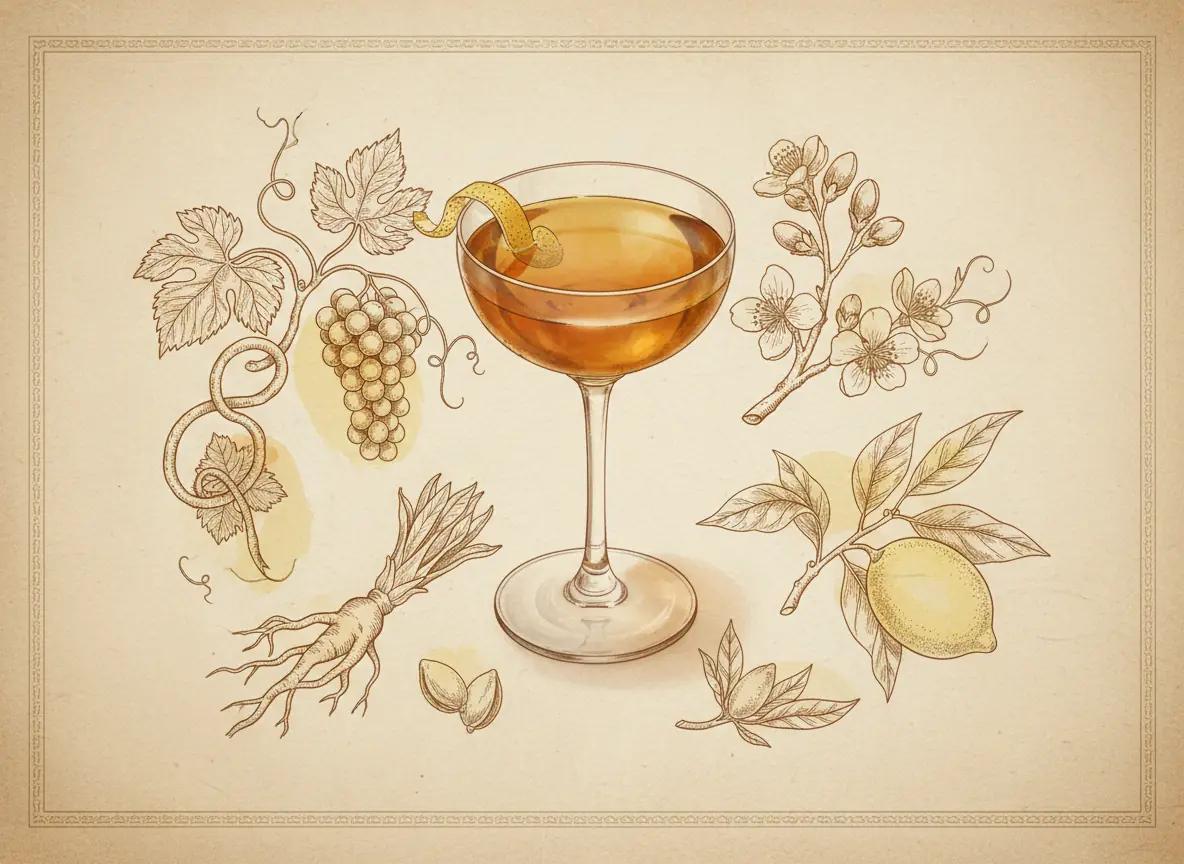
The Japanese Cocktail has nothing to do with Japan. Jerry Thomas created it in 1862 at his New York bar, naming it in honour of the Kanrin Maru mission, the first Japanese delegation to visit the United States. The name is a tribute rather than a flavour direction: there are no Japanese ingredients and no eastern technique anywhere in it. At its core it is three ingredients, and the apparent simplicity is deceptive. Orgeat is a notoriously variable thing, ranging from thin almond cordial to a genuinely complex, nut-forward syrup with real body and a mild bitterness from the almond skin. What goes into this glass determines everything, because there is nowhere at all to hide. This is a cognac drink at its most direct. No citrus to round the edges, no soda to extend the pour: spirit, sweetness and spice, stirred cold and served immediately. It is also one of very few nineteenth-century recipes to survive without a single modern adjustment, which says something about how well Thomas judged the proportions.
Last Word
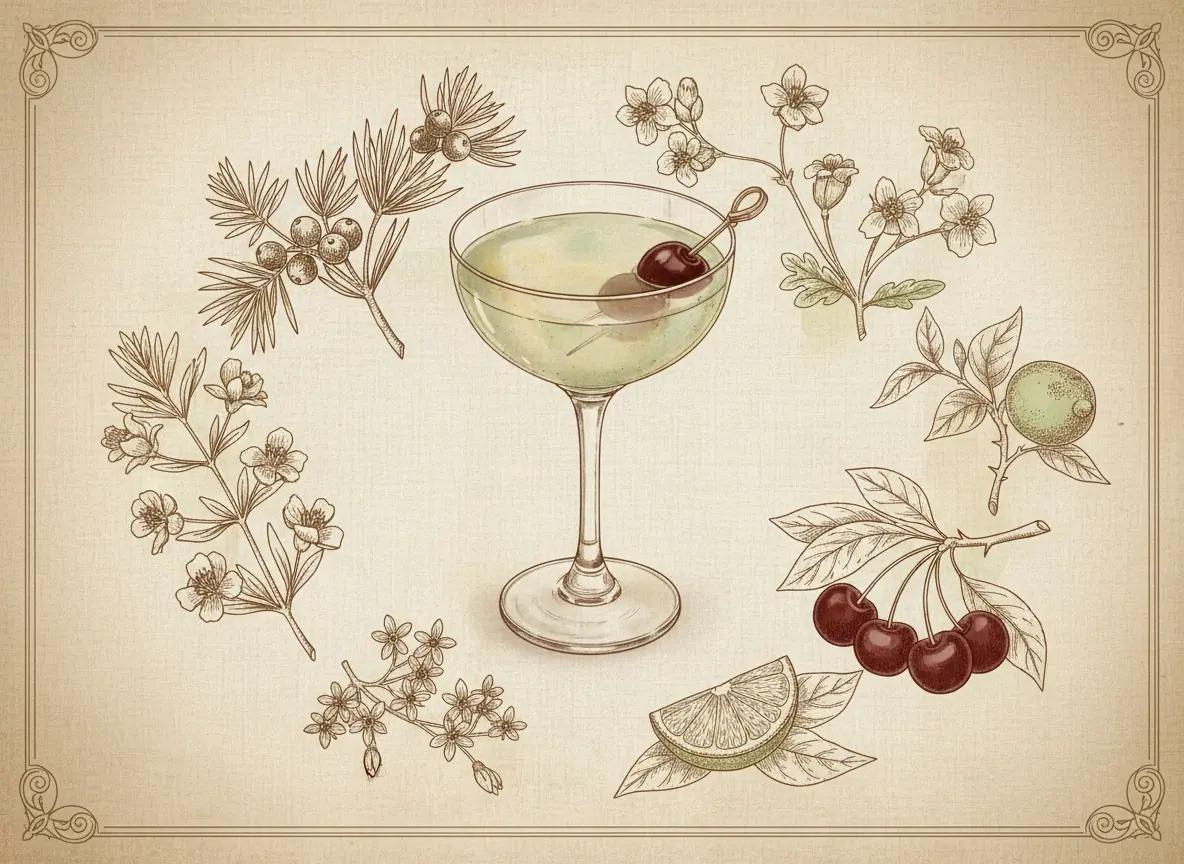
The Last Word is one of the great equal-parts cocktails: gin, green Chartreuse, maraschino liqueur, and fresh lime juice in identical measures, shaken and served up. No component leads and no component follows. Each of the four is assertive enough to dominate a lesser recipe, and the fact that none dominates this one is the drink’s central achievement. It originated at the Detroit Athletic Club around 1915, documented by Ted Saucier in his 1951 book Bottoms Up and attributed to vaudeville performer Frank Fogarty, who allegedly introduced it to the club. It disappeared almost entirely during and after Prohibition and was rediscovered in the early 2000s by Seattle bartender Murray Stenson, who found it in Saucier’s book and put it on the menu at the Zig Zag Café. From there it spread through the craft cocktail world and has not left. The revival was deserved. Green Chartreuse brings herbal intensity, maraschino brings cherry sweetness and a faint bitter almond note, fresh lime brings tartness, and gin holds it together. Each sip reveals a different component leading depending on where in the glass you are. It is a drink worth paying attention to.
Left Bank Martini
The Left Bank Martini puts dry white wine where the vermouth would go. Gin leads, elderflower liqueur supplies the sweetness and the perfume, and a crisp unoaked white does the job of the aromatised wine without bringing botanicals of its own. That substitution is the whole design. Vermouth is wine plus herbs, and those herbs argue with elderflower. Take them away and the blossom has the glass to itself, which is exactly what a drink built to introduce an elderflower liqueur needs. It was made in 2006 at London's Cabinet Room for that liqueur's launch, a year before the bottle became ubiquitous, and named for Saint-Germain-des-Prés, the Parisian quarter on the left bank of the Seine that also gave the bottle its name. Launch cocktails rarely outlive the party. This one entered the repertoire. It is shaken rather than stirred, which is unusual for anything calling itself a martini, and it lands cold, floral and unapologetically pretty.
Martinez
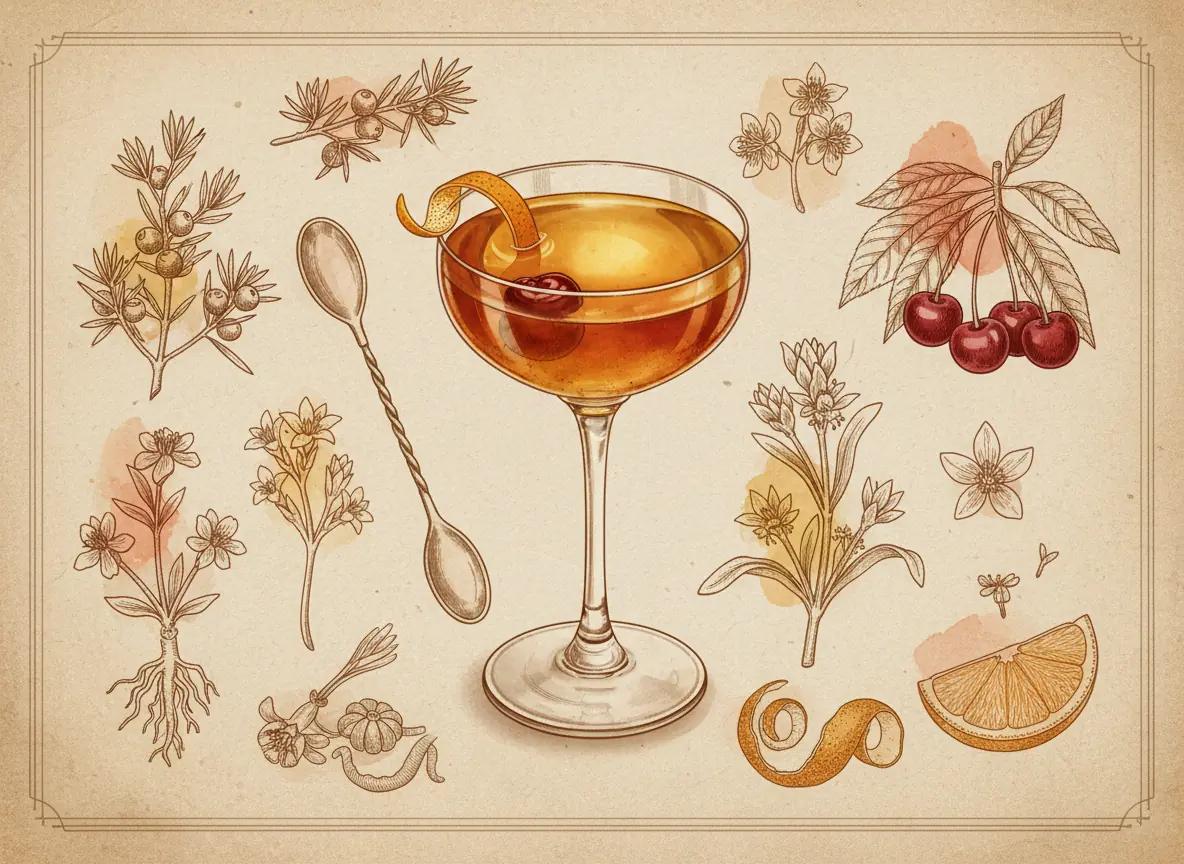
The Martinez is the oldest documented ancestor of the Martini and the drink from which the entire stirred gin cocktail tradition most likely descends. It appeared in Jerry Thomas's 1887 bar guide in a form recognisable today: gin, sweet vermouth, maraschino, and bitters, stirred and served cold. The Martini took the format, swapped sweet vermouth for dry, removed the maraschino, and produced something cleaner and less complex. Whether that represents progress or loss depends entirely on which drink you are holding. The Martinez is richer, more layered, and more demanding of attention than the Martini it inspired. The sweet vermouth brings body and fruit character that dry vermouth does not; the maraschino introduces a dry cherry and almond note that sits underneath the gin without announcing itself; the bitters tie everything together. The official specification builds it at equal parts on London Dry with orange bitters, and that is the recipe above: drier, sharper, and more clearly a relative of the Martini. The nineteenth-century reading uses Old Tom, a shorter vermouth measure and Angostura, and it is carried below with its own proportions.
Martini
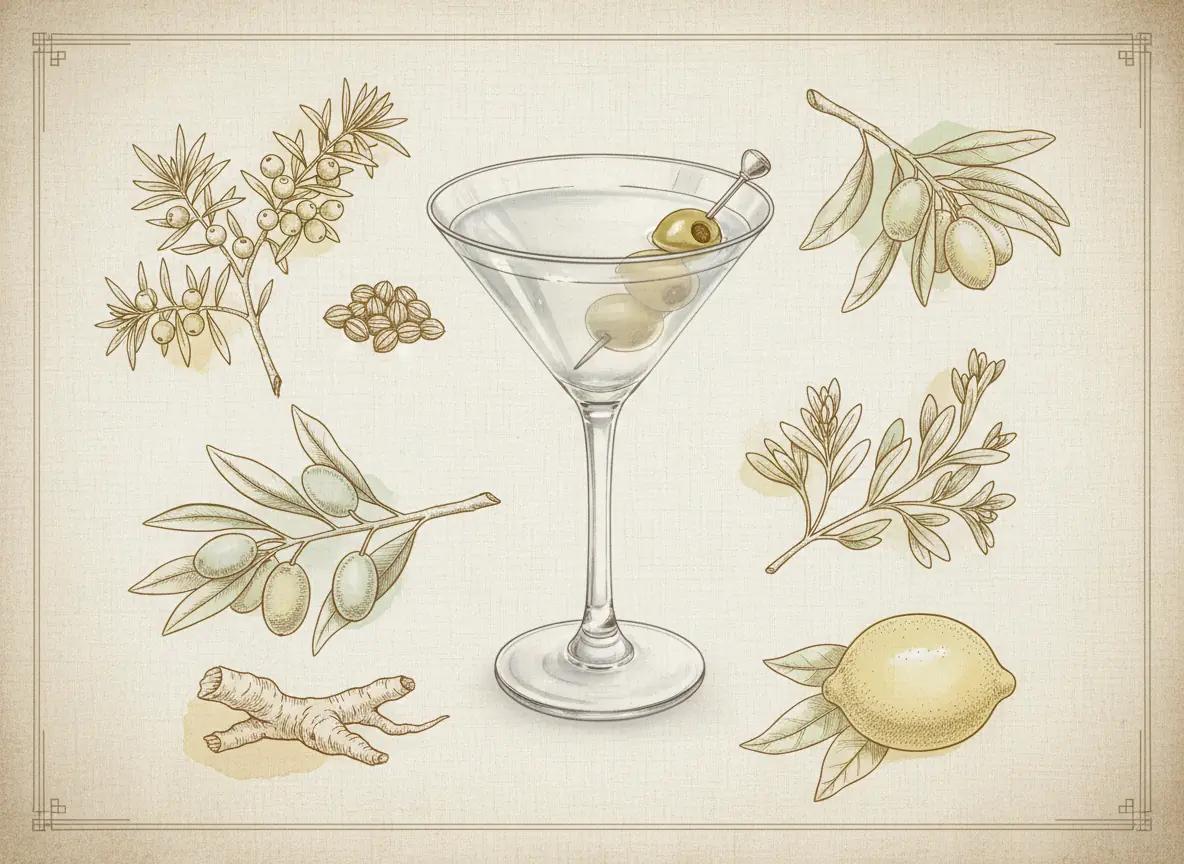
The Martini is the most argued-about drink in the history of bartending. The disputes over ratio, gin versus vodka, stirred versus shaken, olive versus twist have run for over a century, and most are preference dressed up as correctness. The Martini tolerates a wide range of builds. What it does not tolerate is imprecision or poor ingredients. The version documented here is a gin Martini at the official ratio of six parts gin to one of dry vermouth, stirred, served cold, with a lemon twist. At that ratio the vermouth reads as a mineral edge and a wine note behind the juniper rather than an equal partner, which is where the modern consensus has settled. Wetter builds are set out below and none of them is wrong. The fashion for extremely dry Martinis, with the vermouth reduced to a rinse or omitted entirely, produces what is technically chilled gin. There is nothing wrong with chilled gin. It is not a Martini. The vermouth matters as much as the gin. Treat it as perishable, keep it refrigerated, and replace it within four weeks.
Metropole
The Metropole is a brandy martini: cognac and dry vermouth in equal measure, with two dashes of Peychaud's and one of orange bitters. It was the house drink of the Hotel Metropole off Times Square, which was pre-Prohibition Broadway's address for sporting men, chorus girls and gamblers. The hotel is best remembered for something that happened outside it. In July 1912 the gambler Herman Rosenthal was shot dead on the pavement having just left the bar, and the scandal that followed reached into the New York police department and helped close an era. The drink outlived the building by a century. What makes it interesting now is the bitters. Peychaud's is normally the Sazerac's bottle and very little else, and here it is doing something quite different: anise and cherry brightening a dry brandy drink, with orange bitters split against it. New Orleans seasoning a New York cocktail, which is not a combination anyone would predict.
Poet’s Dream
The Poet's Dream is a martini with Bénédictine in it at full measure rather than as a barspoon, which is the whole point. Gin, dry vermouth and Bénédictine at forty-five, twenty-two and twenty-two, with orange bitters. That proportion makes the liqueur a principal rather than a seasoning. Most drinks that use Bénédictine give it five or ten millilitres and let it add depth in the background; here it stands at parity with the vermouth and supplies the drink's entire sweet register along with most of its conversation. It surfaces in the bar books of the 1930s, the Café Royal Cocktail Book of 1937 among them, with no author recorded, which was normal for the period. The name promises more romance than the recipe needs. What it delivers is a dry martini frame carrying twenty-seven herbs, which is a good deal more articulate than a martini has any obligation to be.
Pornstar Martini
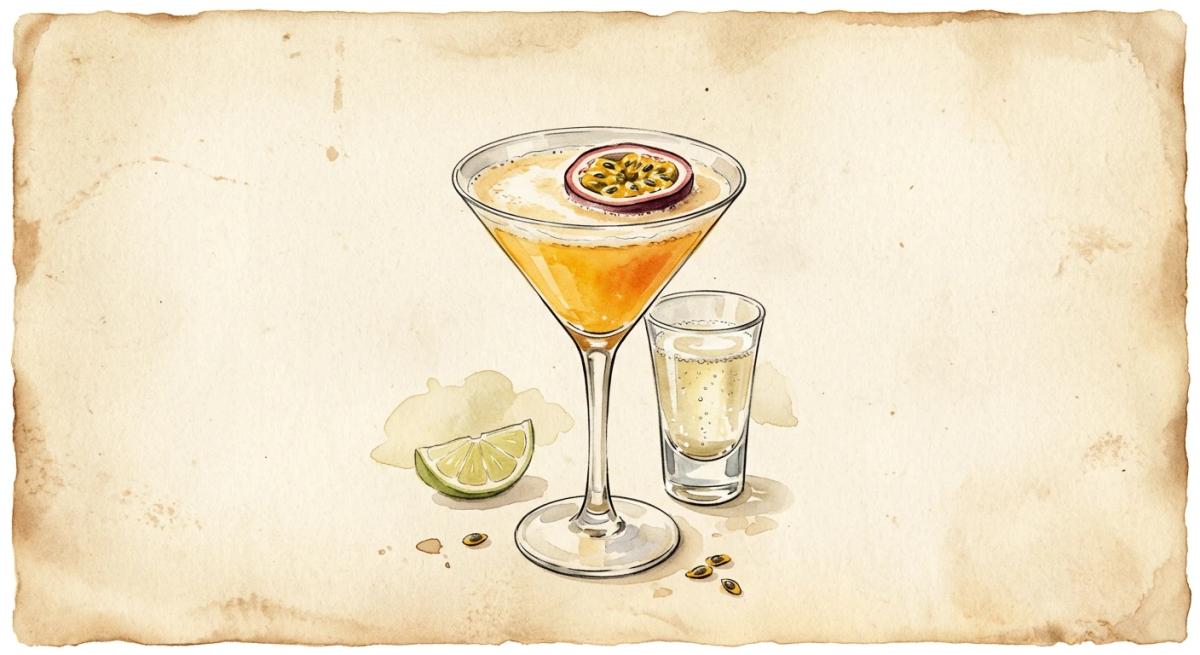
The Pornstar Martini was created by Douglas Ankrah at the Townhouse bar in Knightsbridge, London, in 2002, and became one of the most successful cocktail creations of the twenty-first century within a decade. Ankrah originally named it the Maverick Martini, after a bar he had visited in South Africa, and renamed it within months. It has ranked among the most ordered cocktails in the United Kingdom ever since. Vanilla vodka, passion fruit purée, passion fruit liqueur and fresh lime combine into a shaken sour with genuine complexity behind an accessible appearance. The signature serve pairs it with a shot of chilled Champagne alongside, and that two-part experience is as much a part of the drink’s identity as any single ingredient. Passion fruit defines it. Fresh fruit provides an aromatic complexity that neither purée nor liqueur replicates alone, and the canonical build uses both, plus half a fresh fruit floated on the surface.
Sherry Martini
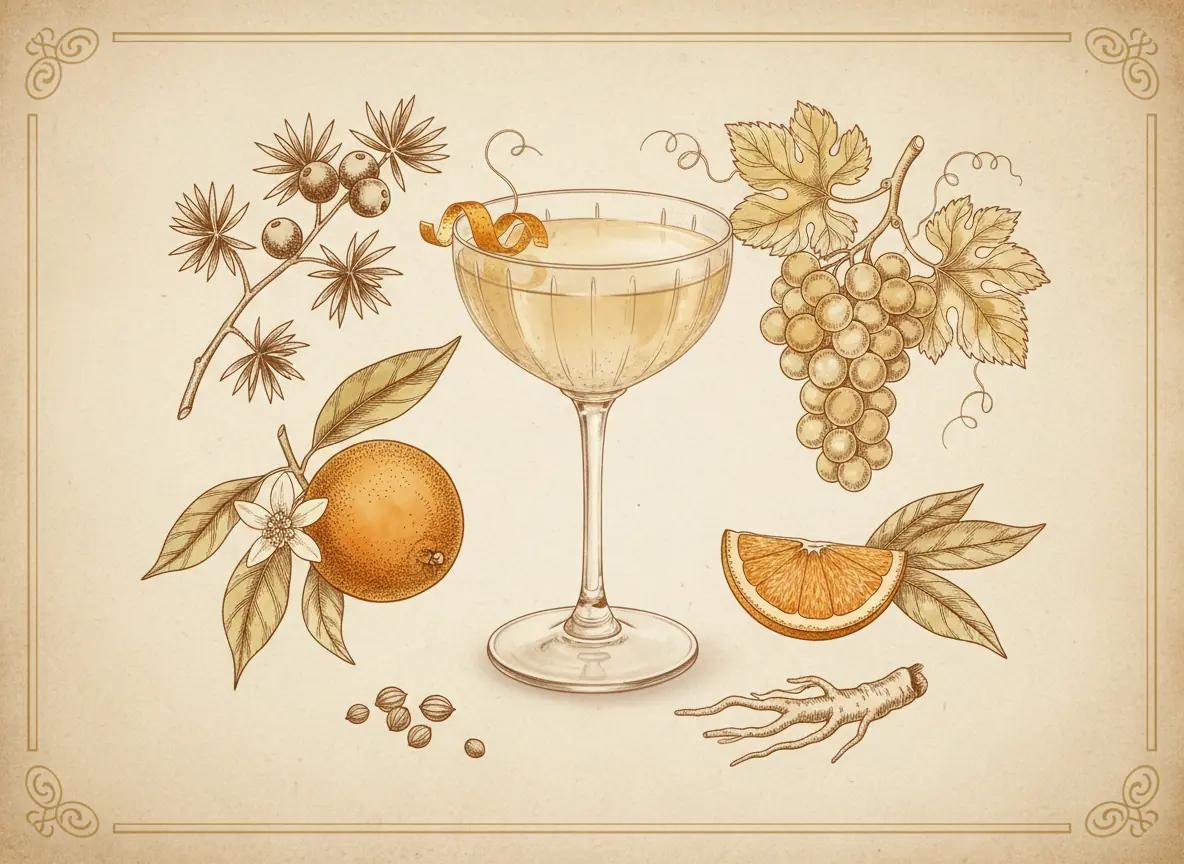
The Sherry Martini is a Martini variation in which fino sherry replaces dry vermouth as the modifier, producing a drink that is lighter, more saline and more delicate than the original while keeping the clean, spirit-forward structure that defines the format. It has no single documented origin and no named creator. It emerged from the same bartending culture that produced the Bamboo and the Sherry Cobbler. The relationship between gin and fino is one of the more intuitive combinations in the stirred canon. The saline, nutty, mineral quality of fino sits against the juniper and botanicals of a London Dry in a way that is immediately coherent. Where dry vermouth brings a wine character that can occasionally compete with the gin, fino provides a lower, quieter backdrop that lets the gin lead clearly while adding genuine complexity of its own. The ratio is the variable that most repays adjustment. Two to one, gin forward, is the version here; move toward equal parts for more sherry, or reduce it further to let the gin lead more clearly.
Tomatini
The Tomatini is the savoury martini rebuilt from the fruit bowl. Jimmy Barrat created it at La Petite Maison in Dubai in 2011 and carried it to the World Class bartending final in 2012 as his signature, muddling cherry tomatoes where a Bloody Mary reaches for the carton. The restaurant’s Niçoise kitchen is audible in every element of it. The build treats tomato as the fruit it botanically is: three cherry tomatoes muddled to liquid, vodka’s clean frame behind them, lemon and a short syrup balancing, with white balsamic and a saline dash seasoning it like a kitchen rather than a bar. Fine-strained to silk and dusted with black pepper, it drinks as a sweet-sour sipper carrying lunch’s depth: delicate, assertive and nothing whatever like its red cousin. It gives the savoury category its elegance, and it is the clearest proof available that umami belongs in a coupe rather than only in a highball.
Turf Club
The Turf Club is one of the oldest named drinks in the martini family, appearing in the bar books of the 1880s when gin and vermouth together was still a new enough idea to need names. The turf clubs were horse-racing institutions, and the drink took their gloss. The spec is a martini wearing everything: Old Tom gin and dry vermouth in equal measure, then a barspoon of maraschino, half a teaspoon of absinthe and two dashes of orange bitters on top. That was the standard aromatic wardrobe of the decade, and the twentieth century spent seventy years taking it off one piece at a time until only the twist survived. It is usually studied alongside the Tuxedo, which uses the same five ingredients at slightly quieter measures. Tasted in sequence they are a lesson in how far a barspoon moves a drink. Anyone who knows only the dry martini meets the Turf Club the way a reader meets an unabridged edition.
Tuxedo
The Tuxedo takes its name from Tuxedo Park, the Hudson Valley enclave whose club gave the dinner jacket its American name, and the drink is dressed accordingly: Old Tom gin and dry vermouth in the equal 1880s manner, with maraschino, absinthe and orange bitters worn as studs and cufflinks. Against its twin the Turf Club it is the quieter dresser. The same five elements, with the maraschino and the absinthe pulled back to whispers, so the martini’s wine-and-juniper conversation carries more of the evening. The absinthe is sometimes taken as a glass rinse rather than a measure, which is the drink’s one black-tie flourish. It survives as the martini family’s formalwear: the drink to pour when the occasion asks for history with its shoes shined, and the natural second chapter to read after the Turf Club’s unabridged edition. Harry Johnson printed an early reading, and the Savoy fixed the version most bars now follow.
Vancouver
The Vancouver is gin and sweet vermouth with a barspoon of Bénédictine and two dashes of orange bitters. It is the house drink of the Sylvia Hotel on English Bay, poured there since the middle of the twentieth century, and the city has claimed it with the quiet confidence of a place that knows it has a good one. Structurally it is the Hanky Panky with a different bottle in the seasoning slot. Ada Coleman's drink uses fernet, which is menthol and bitterness and arrives like a slap. Bénédictine is honeyed and herbal and arrives like a handshake. Same skeleton, entirely different manners. That makes it the most approachable of the gin and sweet vermouth family, which is not always a compliment and is here. It is gentler than the Hanky Panky and richer than a dry martini, and it is built for a second glass and a view rather than for making a point.
Vesper
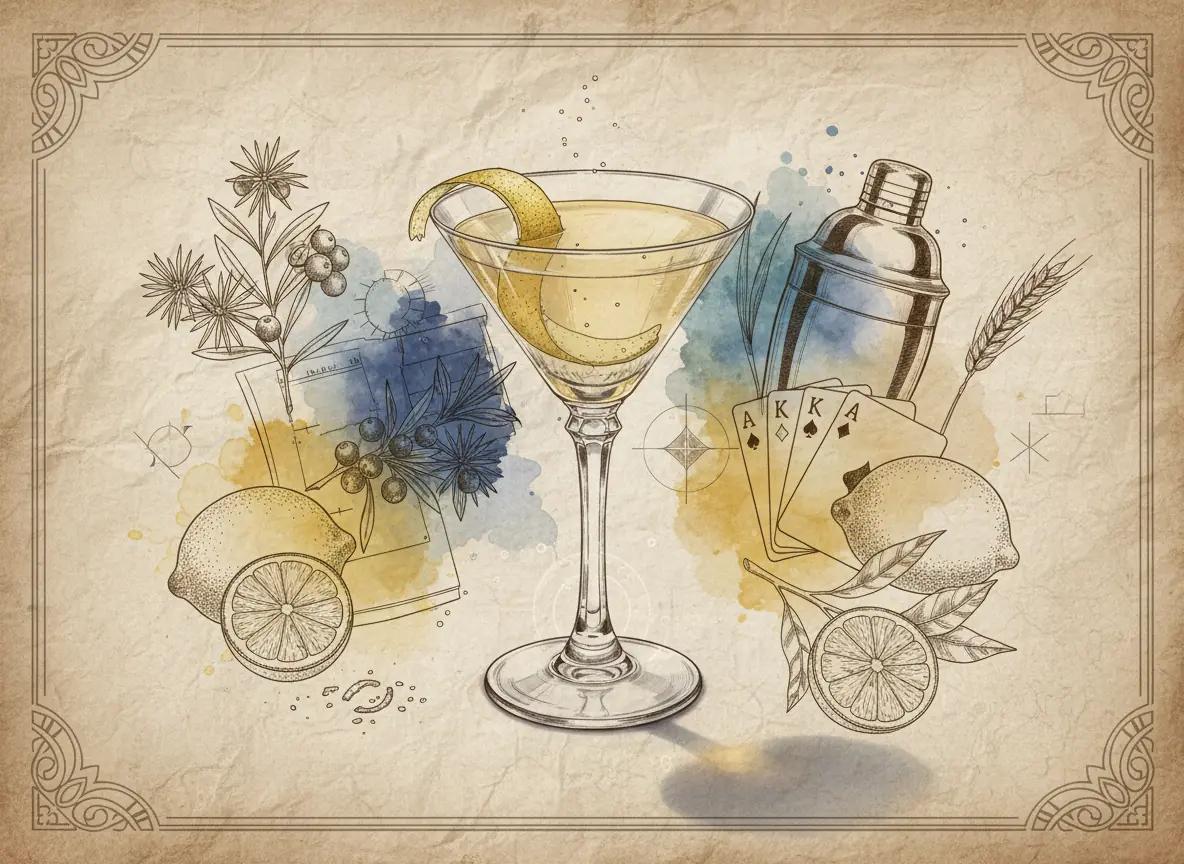
The Vesper was created by Ian Fleming for his first James Bond novel, Casino Royale, published in 1953. Bond orders it in chapter seven, dictates the recipe to a bartender unprompted, and names it after Vesper Lynd, the double agent at the heart of the novel. It is one of very few cocktails invented in fiction that crossed into genuine bar culture. Three ingredients: gin, vodka and an aromatised wine, shaken not stirred, served in a deep champagne goblet with a large thin slice of lemon peel. The instruction to shake rather than stir is the most debated piece of direction in cocktail writing, and it is preference rather than technique. Fleming wrote Kina Lillet, which was reformulated in 1986 into the lighter and less bitter Lillet Blanc. The official specification names Lillet Blanc and that is the recipe above; the Cocchi Americano build below carries the quinine bitterness the original had, and is the closer reading of the 1953 text.
Vodka Martini
The Vodka Martini is vodka and a very small measure of dry vermouth, stirred and served extremely cold. It started life in the 1950s bar books under the name Kangaroo, which was not a compliment, and ended as the most ordered martini in the world. Take the juniper out of a martini and the vermouth becomes the only aromatic in the glass. That is why the modern spec runs drier than a gin martini rather than wetter: with nothing to converse with, the vermouth seasons instead. It is also why the garnish is promoted from decoration to ingredient, and why the choice of vodka matters here more than almost anywhere else. James Bond is the reason it is famous, though the association is looser than most people assume. Fleming's Bond drinks vodka martinis through the novels, but the drink he orders in Casino Royale is the Vesper, which is a different recipe. Shaken, not stirred belongs to the films.
Watermelon Martini
The Watermelon Martini is the fresh-fruit martini school’s summer graduation: the London style of the 1990s and 2000s that muddled real produce into vodka and called the result a martini by glassware alone, here applied to a fruit that is mostly juice already. The build is produce arithmetic. Ripe watermelon crushed wet, vodka framing it, lime truing the fruit’s watery sweetness, and a short syrup as insurance against an unripe slice. Season decides everything: an August melon needs almost nothing added, and a January one needs a different drink entirely. That is the school’s honest limitation and its best quality at once. Beside the Tomatini’s seasoned complexity, this is the fresh-fruit school stripped right back to its thesis: produce, spirit, acid, done. One fruit, one spirit, one shake, and the summer holiday the martini glass never knew it wanted. A liqueur-based version circulates under the same name and is an entirely different proposition, which is worth holding onto when ordering, because the two share nothing beyond a name and a colour.