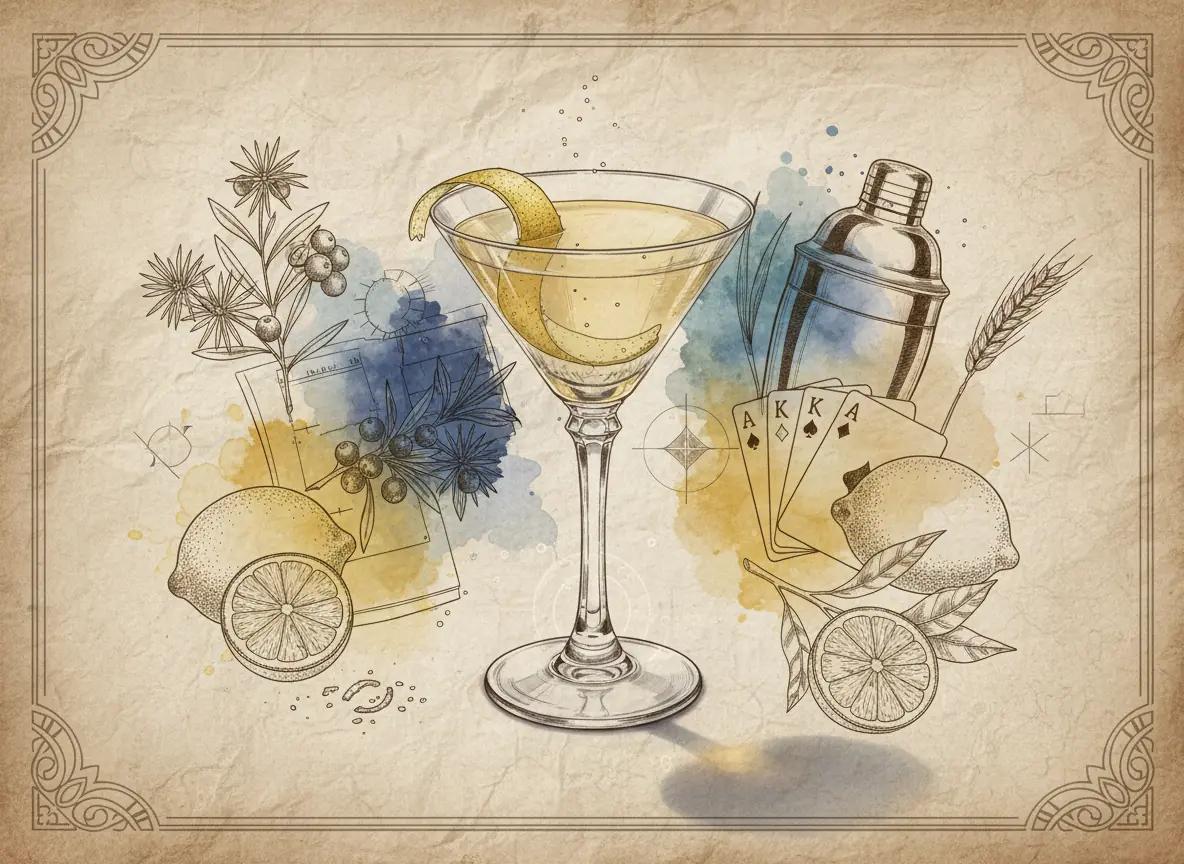
Vesper
A Vesper is 45ml gin, 15ml vodka and 7.5ml Lillet Blanc, shaken hard and strained into a chilled glass, with a large thin slice of lemon peel. That is the IBA specification, and it keeps the proportions Ian Fleming gave in Casino Royale in 1953: three measures of gin, one of vodka, half a measure of Kina Lillet. About 2.5 UK units. Kina Lillet is now sold as Lillet Blanc, and Difford’s Guide says the brand dropped Kina from the name in 1986. Accounts differ on the quinine: Difford’s Guide says it was dramatically reduced that year, DrinkBoy says it never changed, and the Oxford Companion to Spirits and Cocktails, citing Olivier Londeix’s history of Lillet, says the bitterness fell in 1917. In our view Lillet Blanc makes a softer, cleaner drink. Cocchi Americano, which lists cinchona bark among its ingredients on Cocchi’s own page, makes a more bitter Vesper in our experience, and it follows as a variation at the same measure. Bond named the drink after Vesper Lynd, the double agent at the centre of the novel. The Oxford Companion to Spirits and Cocktails says Fleming inscribed a copy of the book to his friend Ivar Bryce, “For Ivar, who mixed the first Vesper”, and that Bryce recalled making the drink with Fleming’s help. It has lasted in real bars under her name.
Variations
Glassware: Nick & Nora Glass
Garnish: Lemon twist
Ingredients
45ml
A London Dry at 40% ABV or more, with clear juniper. At 45ml it is two-thirds of the drink. Fleming named Gordon’s.
15ml
Clean and neutral. It adds strength and a softer texture rather than flavour, and leaves the gin to lead.
7.5ml
The IBA measure, and the bottle that replaced Kina Lillet in 1986: light and sweet, with a gentle quinine edge, at 17% ABV, the figure on Pernod Ricard’s product page. It is a wine, so we keep it in the fridge and use it within the first month.
Instructions
Chill a Nick & Nora or coupe in the freezer.
Add the gin, vodka and Lillet Blanc to a shaker.
Fill the shaker with cubed ice and shake hard for 10 to 12 seconds.
Double strain into the chilled glass.
Express a large, thin slice of lemon peel over the surface, rest it on the rim and serve.
Source: the IBA (Official IBA specification; method ours). Last checked 9 October 2026.
Expert Tip
Measure the Lillet. At 7.5ml it is half a 15ml measure, and free-poured it doubles without anyone noticing. Lillet Blanc is 17% ABV (Pernod Ricard’s product page) and sweet, and too much of it softens the drink and hides the gin. Use a gin with some weight. Fleming named Gordon’s, which LWC lists at 37.5% ABV in Britain. A London Dry at 40% ABV or more holds its own against the vodka better, and the gin is two-thirds of the drink. Shake hard for 10 to 12 seconds and strain into a glass from the freezer. There is no ice in the glass, so the drink has to leave the shaker as cold as it will ever be.
Behind the Vesper
Flavour Profile
The Origin
Casino Royale, Ian Fleming’s first James Bond novel, was published in 1953. In chapter seven Bond orders a dry Martini in a deep champagne goblet, then stops the barman and dictates a recipe.
“Three measures of Gordon’s, one of vodka, half a measure of Kina Lillet. Shake it very well until it’s ice-cold, then add a large thin slice of lemon-peel.” Bond names it later, after Vesper Lynd. The IBA’s 45ml, 15ml and 7.5ml keep exactly that ratio.
The Shaken Instruction
A drink of spirit and wine with no citrus is usually stirred, which gives a clear, silky result. Shaking makes it colder and slightly cloudy and adds a little more water. Fleming’s Bond shakes it and the IBA follows him. Both make a Vesper; shaken is the one in the book.
Kina Lillet and the Reformulation
Kina Lillet was the former name of Lillet Blanc, and Difford’s Guide says “Kina”, a French word for quinine, was dropped from the name. It describes the older bottle as reported to be more bitter, from added quinine. At half a measure, that bitterness would have seasoned the gin.
Difford’s Guide’s history of Lillet says the Lillé brothers’ company, formed in 1865, first produced Kina Lillet in 1887, and it gives the producer’s address as Podensac, France. In 1986 the brand dropped Kina from the name and became Lillet Blanc, as Difford’s Guide tells it, and accounts differ on the quinine. Difford’s Guide says the amount was dramatically reduced that year, DrinkBoy says the level never changed, and the Oxford Companion to Spirits and Cocktails, citing Olivier Londeix’s 1998 history of the brand, says the reduction in bitterness came in 1917, decades before Bryce and Fleming were experimenting with it. Lillet Blanc is light, sweet and round. It is the bottle the IBA names, and it makes a soft, clean Vesper.
Cocchi’s own page puts Cocchi Americano in Asti and lists cinchona bark among its botanicals, and Difford’s Guide says other kina aromatised wines can take the place of Kina Lillet. Cocchi Americano is one in our view, and at the same 7.5ml it gives the drink more edge in our experience. It is no reproduction.
Vesper versions compared: Fleming’s order as Casino Royale gives it, the IBA’s measures and ours; UK units ours
Fleming, 1953
- Spec
- Three measures of Gordon’s, one of vodka, half a measure of Kina Lillet
- Character
- Gin-led, with a quinine edge
- Strength
- Not given in ml
IBA
- Spec
- 45ml gin, 15ml vodka, 7.5ml Lillet Blanc
- Character
- Clean, gin-led, softly sweet
- Strength
- About 2.5 UK units
Cocchi Americano
- Spec
- 45ml gin, 15ml vodka, 7.5ml Cocchi Americano
- Character
- Drier, with a quinine edge
- Strength
- About 2.5 UK units
| Version | Spec | Character | Strength |
|---|---|---|---|
| Fleming, 1953 | Three measures of Gordon’s, one of vodka, half a measure of Kina Lillet | Gin-led, with a quinine edge | Not given in ml |
| IBA | 45ml gin, 15ml vodka, 7.5ml Lillet Blanc | Clean, gin-led, softly sweet | About 2.5 UK units |
| Cocchi Americano | 45ml gin, 15ml vodka, 7.5ml Cocchi Americano | Drier, with a quinine edge | About 2.5 UK units |
The Gordon’s Question
Bond names Gordon’s by brand in Casino Royale. LWC lists Gordon’s at 37.5% ABV in Britain, under the 40% most gin cocktails assume.
At two-thirds of the drink, the gin’s strength shows. A London Dry at 40% ABV or more holds up better against the vodka and keeps the juniper in front.
How to Serve It
Shaken hard and strained into a Nick & Nora or coupe from the freezer, with a large thin slice of lemon peel expressed over the top and rested on the rim. No ice in the glass.
Fleming’s deep champagne goblet is worth knowing about and rarely worth copying. A smaller glass suits a 90ml drink and keeps it cold to the last sip.
Make it at home
The Spirit
GinGin is a spirit flavoured with juniper berries. Under the retained Regulation (EC) 110/2008, juniper must lead the taste, the floor is 37.5% ABV, and the route the flavour takes sets the grade: plain gin, distilled gin or London gin. Our recipes count it at 40%, and it carries the Martini, the Negroni and the Gin and Tonic.
More to explore
Frequently Asked Questions
What is in a Vesper?
What did Ian Fleming’s recipe say?
Why is it called a Vesper?
What can I use instead of Kina Lillet?
Should a Vesper be shaken or stirred?
How strong is a Vesper?
Is a Vesper a Martini?
Which gin should I use in a Vesper?
Sources.
Checked between 18 October and 19 October 2026.
- Oxford Companion to Spirits and Cocktails (spiritsanddistilling.com), “The Vesper” (secondary source: Casino Royale 1953; the order quoted; Vesper Lynd; Fleming’s inscription to Ivar Bryce, “who mixed the first Vesper”; Kina dropped from the name in 1986; Londeix’s history puts the reduction in bitterness in 1917).
- Ian Fleming (1953), Faded Page, “Casino Royale” (primary source: chapter seven, “Three measures of Gordon’s, one of vodka, half a measure of Kina Lillet. Shake it very well until it’s ice-cold, then add a large thin slice of lemon-peel”; named for Vesper Lynd in chapter eight).
- IBA, “Vesper” (official specification: 45ml gin, 15ml vodka, 7.5ml Lillet Blanc; garnish lemon zest).
- Pernod Ricard, “Lillet” (owner’s brand page: Lillet Blanc, 17% ABV).
- Difford’s Guide, “Kina Lillet” (secondary source: 1986 reformulation, the quinine “dramatically reduced”).
- DrinkBoy (Robert Hess), “Lillet blanc” (secondary source: says the quinine level never changed).
- Cocchi, “Cocchi Americano” (maker’s page: Asti; 16.5% vol.; cinchona bark among the botanicals).
- LWC, “Gordon’s Special Dry London Gin 70cl” (UK wholesaler listing: 37.5% ABV).
- Difford’s Guide, “Vesper Dry Martini” (secondary source: Fleming’s order in chapter seven; the Kina Lillet substitutes are other kina aromatised wines; listed as the Vesper Dry Martini).
- Difford’s Guide, “Lillet: history” (secondary source: Lillet Frères formed in 1865 by Paul and Raymond Lillé; Kina Lillet first produced in 1887 after an idea by Father Kermann; producer address Podensac, France; relaunched in 1986 with the name and recipe changed).
You Might Also Like
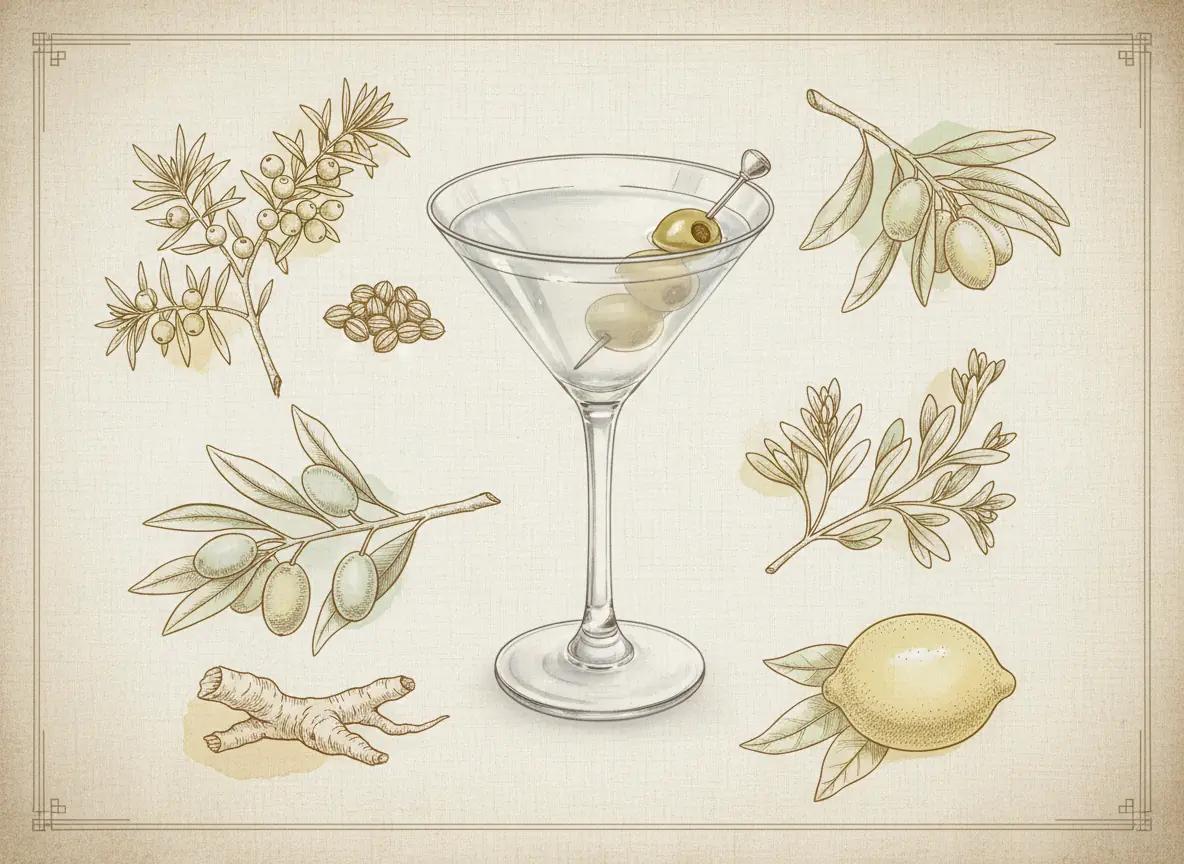
Martini
A Martini is 60ml of gin and 10ml of dry vermouth, stirred over ice for 20 to 30 seconds and strained into a chilled Martini glass, with oil from a strip of lemon peel expressed over the top, or green olives if you prefer them. That is the IBA’s Dry Martini, a six-to-one build, and about 2.6 UK units. At six to one the vermouth stops being a partner and becomes a seasoning: a dry wine note and a rounder finish under the juniper. Older recipes were far wetter, and the drink has been poured at every ratio from equal parts to a bare rinse. Nothing in a Martini is sweet or sour: it is gin, vermouth, cold and water. The stir supplies the last two, so it shapes the result as surely as the gin.
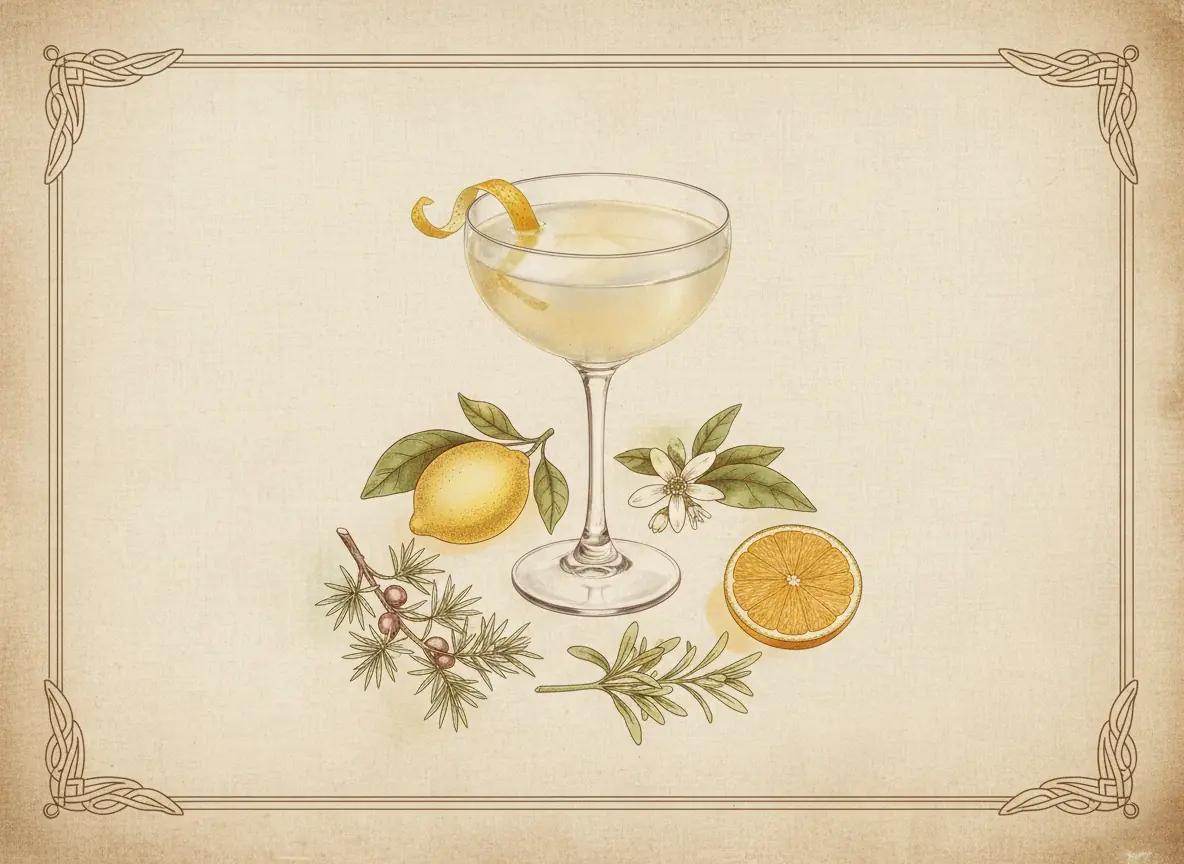
Corpse Reviver No. 2
A Corpse Reviver No. 2 is 30ml each of London Dry gin, Cointreau, Lillet Blanc and fresh lemon juice, shaken hard for 10 to 12 seconds and double strained into a chilled coupe rinsed with absinthe, with lemon peel expressed over the top. About 2.9 UK units. The four measures are the IBA’s. The IBA puts a dash of absinthe in the shaker; we rinse the glass with it, which leaves the scent with less of the anise. Lillet Blanc stands in for the Kina Lillet of older recipes; accounts differ on whether that was a more bitter wine. Harry Craddock printed it in the Savoy Cocktail Book in 1930, beside a No. 1. Under the No. 2 he added a warning: four taken in swift succession would unrevive the corpse again.
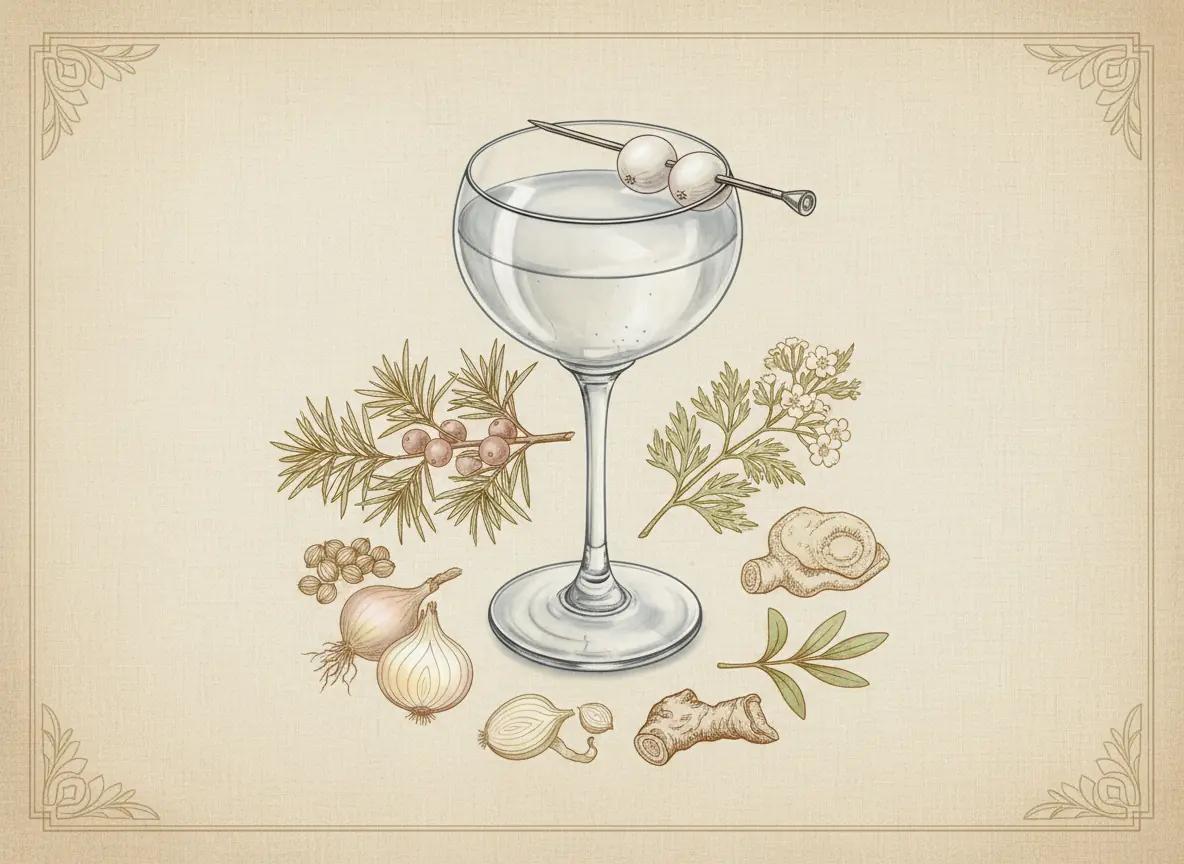
Gibson
A Gibson is 60ml London Dry gin and 10ml dry vermouth, stirred over ice for 20 to 30 seconds and strained into a chilled Nick & Nora glass, with two pickled cocktail onions on a pick. About 2.6 UK units. It is the IBA’s Dry Martini with onions where the Martini takes an olive or a lemon twist. Difford’s Guide says the full recipe for a Gibson first appears in William Boothby’s 1908 book, and that none of the early recipes mentions an onion. The name is less settled. Difford’s says the drink is said to have been created at San Francisco’s Bohemian Club in 1898, either by the businessman Walter D. K. Gibson or for the illustrator Charles Dana Gibson, and credits Charles Gibson with inspiring the onion a decade later at New York’s Players Club. The onion keeps working after it goes in. Its brine seeps into the cold gin as you drink, so the last sip is saltier and softer than the first.
Where this one sits
Recipe by Jerry Can Spirits · Updated 19 October 2026