Greyhound
A Greyhound is 50ml of vodka and 120ml of fresh grapefruit juice in a highball full of ice, stirred once and garnished with a grapefruit wheel. About 2.0 UK units. Salt half the rim and the same drink becomes a Salty Dog. Without the salt, nothing softens the grapefruit’s bitterness, and that bitterness is the point: this is a sharp, bracing drink, nearer an aperitif than a Screwdriver. Difford’s Guide’s earliest Greyhound recipe, from Stanley M. Jones’s 1977 Complete Barguide, is a Salty Dog without the salt, made with vodka. The Oxford Companion says some Salty Dog recipes call for gin, and the Savoy Cocktail Book of 1930 prints a Colonial Cocktail of dry gin, grape fruit juice and maraschino. Gin at the same 50ml gives a drier glass with more perfume.
Glassware: Highball Glass
Garnish: Grapefruit wheel
Ingredients
50ml
Neutral vodka at 40% ABV, so the grapefruit does the talking. For a gin Greyhound, swap in London dry gin at the same pour.
120ml
White grapefruit for a drier, more bitter drink; pink for a softer, sweeter one. Grapefruit interacts with a number of prescription drugs, statins among them, so anyone on medication should check the patient leaflet.
Instructions
Squeeze the grapefruit juice the same day.
Fill a highball glass with cubed ice and add the vodka.
Top with the grapefruit juice and stir once.
Garnish with a grapefruit wheel.
Expert Tip
Juice the fruit on the day you serve it. Carton juice is pasteurised and often sweetened, and both take away the bitter edge a Greyhound depends on. Allow one large grapefruit or two small ones for each glass. Taste the juice first. Grapefruit changes through the season: a very sharp one may want a bar spoon of sugar syrup, and a ripe pink one will not. Stir once, gently, after the juice goes in. Vodka and juice mix easily, and every extra turn only melts ice.
Behind the Greyhound
Flavour Profile
The Origin
Difford’s Guide gives its earliest Greyhound recipe as Stanley M. Jones’s in the 1977 Complete Barguide: a Salty Dog without the salt, vodka in a highball filled up with grapefruit juice.
A gin and grapefruit cocktail, under another name, appears earlier: the Savoy Cocktail Book of 1930 prints a Colonial Cocktail of dry gin, grape fruit juice and three dashes of maraschino. The Oxford Companion calls the Greyhound essentially a Salty Dog prepared without salt, and says some recipes for that drink call for gin.
The Grapefruit
Grapefruit carries bitterness alongside its sugar and acid, so a drink built on it balances itself. Orange has the sugar and acid without the bitterness, and a Screwdriver tastes sweeter as a result.
That is why a Greyhound works before dinner. Squeeze the fruit fresh and taste it: grapefruit varies through the season, and one month’s Greyhound can be drier than the next.
Vodka or Gin
Vodka adds strength and little else, which suits a juice with this much character. Gin adds juniper and peel, and they sit well against the grapefruit’s pith.
Neither is wrong. Vodka is what most people mean when they order one; gin makes a drier and more aromatic drink.
The Grapefruit Highballs
Three grapefruit highballs compared
Greyhound
- Spirit
- 50ml vodka or gin
- Grapefruit
- 120ml fresh juice
- Salt
- None
- UK units
- About 2.0
Salty Dog
- Spirit
- 50ml vodka
- Grapefruit
- 120ml fresh juice
- Salt
- Half rim
- UK units
- About 2.0
Paloma
- Spirit
- 50ml blanco tequila, 5ml lime
- Grapefruit
- 100ml pink grapefruit soda
- Salt
- A pinch in the drink
- UK units
- About 2.0
| Drink | Spirit | Grapefruit | Salt | UK units |
|---|---|---|---|---|
| Greyhound | 50ml vodka or gin | 120ml fresh juice | None | About 2.0 |
| Salty Dog | 50ml vodka | 120ml fresh juice | Half rim | About 2.0 |
| Paloma | 50ml blanco tequila, 5ml lime | 100ml pink grapefruit soda | A pinch in the drink | About 2.0 |
Add salt to half the rim and you have the Salty Dog, where the salt dulls the bitterness sip by sip. The Paloma takes grapefruit in another direction, as a soda over tequila.
How to Serve It
Very cold, in a highball full of ice, before dinner, with a grapefruit wheel.
For a round, squeeze the grapefruit before anyone arrives, keep the juice cold, and build each glass to order.
Make it at home
The Spirit
VodkaVodka is spirit made from a farmed crop, usually grain or potatoes, distilled and refined so that the taste of that crop is deliberately reduced. Under the retained Regulation (EC) 110/2008 its minimum is 37.5% ABV and it may not be given a predominant flavour, which separates it from flavoured vodka and from gin; our recipes count it at 40%. In a mixed drink it adds strength and body while the other ingredients carry the taste.
More to explore
Frequently Asked Questions
What is the difference between a Greyhound and a Salty Dog?
Vodka or gin in a Greyhound?
Why is it called a Greyhound?
White or pink grapefruit?
How strong is a Greyhound?
What does grapefruit juice taste like in a cocktail?
Can I use bottled grapefruit juice?
Sources.
Correct as of 19 October 2026.
- Difford’s Guide, “Greyhound Cocktail Recipe” (secondary source: the earliest recipe found is Stanley M. Jones, 1977 Jones’ Complete Barguide: “a Salty Dog without the salt”, 1½ ounces of vodka in a highball, filled with grapefruit juice).
- Harry Craddock (1930), Internet Archive, “The Savoy Cocktail Book (1930), Internet Archive text” (primary source, read as text: Colonial Cocktail, dry gin, grape fruit juice, 3 dashes maraschino, shaken).
- The Oxford Companion to Spirits and Cocktails (Paul Clarke and David Wondrich), “A Salty Dog” (secondary source: a highball of grapefruit juice, salt and vodka, some recipes with gin; the Greyhound is essentially the same drink prepared without salt; roots to 1916).
You Might Also Like
Salty Dog
A Salty Dog is 50ml of vodka and 120ml of fresh grapefruit juice in an iced highball with salt on half the rim, stirred once and garnished with a grapefruit wheel. About 2.0 UK units. It is a Greyhound with salt, and the salt changes the drink. Salt dulls the taste of bitterness, so every sip over the rim tastes rounder and sweeter than one from the bare side. A half rim gives you both. Difford’s Guide dates it to the late 1950s or early 1960s, with its first appearance in a recipe book in Ted Saucier’s Bottoms Up of 1962, though nobody is recorded as its creator and the origin of the name is unknown. That recipe uses vodka, as most do, and the Oxford Companion says some call for gin. Gin still works, and makes a drier, more aromatic glass.
Screwdriver
A Screwdriver is 50ml of vodka and 120ml of fresh orange juice, built over cubed ice in a highball, stirred once and finished with an orange slice. About 2.0 UK units. It is not on the IBA’s current list. Older IBA lists gave 50ml of vodka to 100ml of orange juice; our extra 20ml of juice makes a longer, softer drink. The Oxford Companion, in an entry by Robert Simonson, calls the drink a product of the Second World War, when American troops and technicians in places such as China and Turkey cut neutral spirit with orange juice, and says the name first turns up in Ankara in 1943, apparently coined by interned American airmen. The usual explanation, that someone stirred the drink with a screwdriver for want of a spoon, has no source attached. With two ingredients, the juice decides the drink. Squeeze it the same day. Carton juice is heat-treated and loses much of the fresh fruit’s scent, and there is nothing else in the glass to make up for it.
Paloma
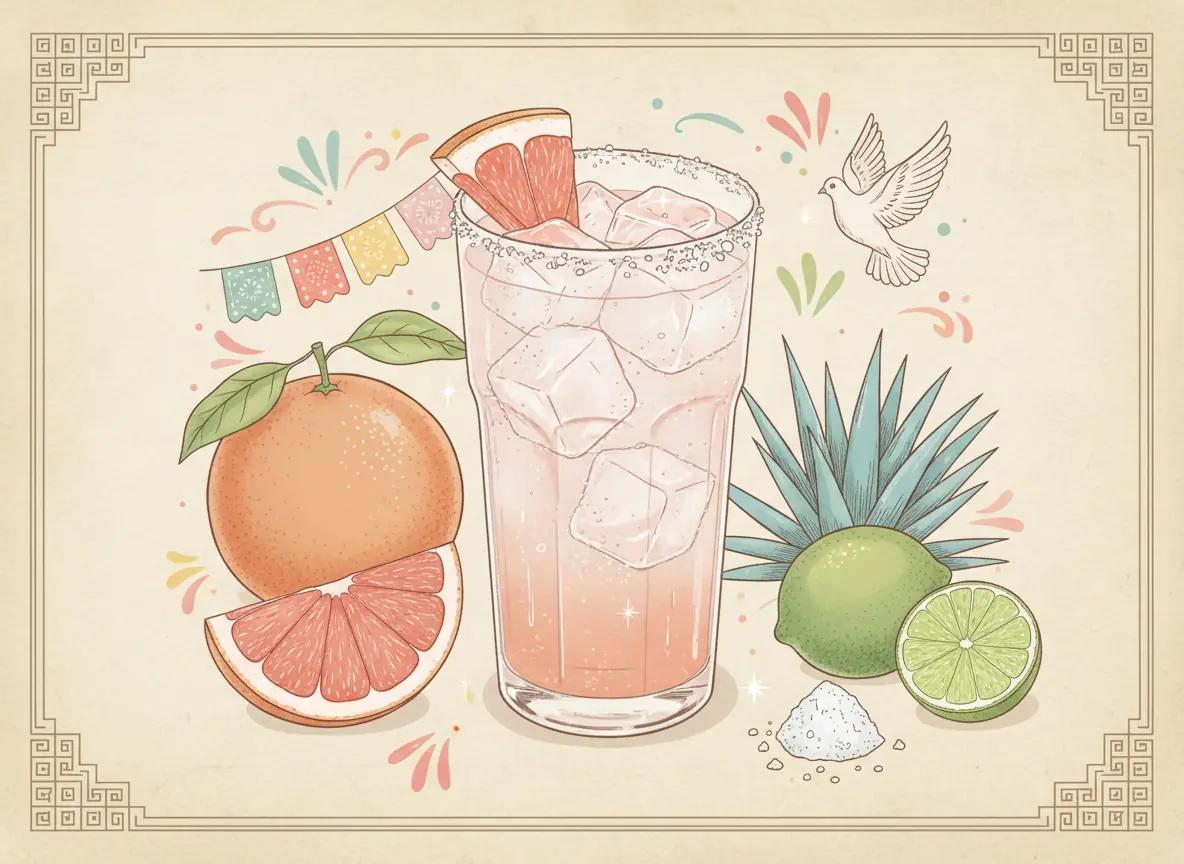
A Paloma is 50ml of blanco tequila, 5ml of fresh lime juice and a pinch of salt over ice in a highball, topped with 100ml of pink grapefruit soda and stirred gently once. Those are the IBA’s measures. We salt half the rim and add a grapefruit slice and a lime wheel. About 2.0 UK units. Paloma is Spanish for dove. The Oxford Companion traces the tequila and grapefruit soda combination to 1950, when a brochure for Squirt suggested mixing it with tequila, with Squirt launched in Mexico in 1955, and says it is unknown who adapted the combination to Mexican tastes. The soda does most of the work. It brings the grapefruit, the sugar and the fizz in one pour, so the recipe needs no syrup and only a little lime. The pinch of salt in the drink softens the grapefruit’s bitter edge and lets the agave through.
Where this one sits
Recipe by Jerry Can Spirits · Updated 19 October 2026