Dawa
A Dawa is 50ml of vodka poured over one lime, quartered and muddled with 20ml of honey syrup and 5ml of sugar syrup, in a rocks glass filled with crushed ice, with a stick coated in honey left standing in it. About 2.0 UK units. The Oxford Companion says it was introduced at the Carnivore restaurant in Nairobi in 1980, and VinePair describes it as a Kenyan take on the Caipirinha with vodka in place of cachaça. Dawa is Swahili for medicine, the Oxford Companion notes. The stick is what makes it a Dawa. Each stir dissolves a little more honey, so the build is deliberately short on sweetness and the person drinking finishes the job. Without the stick it is a plain muddled lime drink; with it, the sweetness is set at the table rather than behind the bar.
Glassware: Rocks Glass
Garnish: Honey-coated dawa stick, standing in the glass
Ingredients
50ml
A clean vodka, at our working 37.5 to 40% ABV. The honey and lime oil carry the flavour, so a neutral bottle is the right choice and an expensive one is wasted.
1, quartered
One whole lime, quartered and muddled with the skin on, because the peel oil is most of the aroma. Cut out the white core if your limes taste bitter.
20ml
Two parts honey to one of warm water, by weight, cooled before use. A floral honey shows through; a plain blended one adds sweetness and little else.
Instructions
Cut the lime into quarters and put them in a heavy rocks glass with the honey syrup and sugar syrup.
Muddle firmly, skin side down, until the juice runs and the peel smells of lime.
Fill the glass with crushed ice and pour in the vodka.
Churn briefly with a bar spoon to bring the lime up through the ice.
Stand a stick coated in honey in the glass and serve.
Expert Tip
Muddle the lime skin side down and press firmly. Most of the aroma is in the oil of the peel, and a light press gives juice without it. Loosen the honey before you start, two parts to one of warm water by weight, then let it cool. Neat honey sets in a cold glass and stays at the bottom however hard you churn. Hold back on sweetness in the glass. The stick adds more with every stir, so a Dawa that tastes balanced before the stick goes in ends up too sweet by the end.
Behind the Dawa
Flavour Profile
Where It Comes From
The Oxford Companion says the Dawa was introduced at the Carnivore restaurant in Nairobi in 1980, when the owner had just been to Brazil. VinePair describes it as a Kenyan take on the Brazilian Caipirinha, with vodka substituted for cachaça.
VinePair says a “medicine man” called Dr Dawa wears a tray to deliver the drinks around the restaurant, and that the Dawa is now sipped at sunset across East Africa.
Why Honey Rather Than Sugar
Honey adds a floral, sometimes waxy flavour as well as sweetness. Against a neutral spirit, that flavour and the lime oil carry the whole drink.
It also explains the vodka. Gin’s botanicals or a grassy cachaça would argue with the honey; vodka gives the glass to the two loud ingredients.
The Stick
The Oxford Companion describes the Dawa stick as a plastic or wooden dowel, about 15 mm by 90 mm, dipped in honey and stood in the drink. It stirs, it sweetens, and it decides how much sweetening happens.
Stir once and the drink stays sharp; stir several times and it turns rounder. The Ti’ Punch goes further and leaves the whole build to the drinker. Both give the last word to whoever is holding the glass.
The Dawa and the Caipirinha
The Dawa against the drink it grew from; both rows are our recipes and the units are our calculation
Dawa
- Spirit
- 50ml vodka
- Lime
- One lime, quartered
- Sweetener
- 20ml honey syrup, 5ml sugar syrup, a honey stick
- UK units
- About 2.0
Caipirinha
- Spirit
- 60ml cachaça
- Lime
- One lime, in eight pieces
- Sweetener
- Four teaspoons caster sugar
- UK units
- About 2.4
| Drink | Spirit | Lime | Sweetener | UK units |
|---|---|---|---|---|
| Dawa | 50ml vodka | One lime, quartered | 20ml honey syrup, 5ml sugar syrup, a honey stick | About 2.0 |
| Caipirinha | 60ml cachaça | One lime, in eight pieces | Four teaspoons caster sugar | About 2.4 |
The Brazilian original is the Caipirinha, which muddles the lime with sugar and pours cachaça over it.
How to Serve It
In a heavy rocks glass full of crushed ice, with the muddled lime left in and the honey stick standing. It should look a little rough; the lime pieces belong in the glass.
VinePair calls the Carnivore famous for grilled meats, which the drink suits.
Make it at home
The Spirit
VodkaVodka is spirit made from a farmed crop, usually grain or potatoes, distilled and refined so that the taste of that crop is deliberately reduced. Under the retained Regulation (EC) 110/2008 its minimum is 37.5% ABV and it may not be given a predominant flavour, which separates it from flavoured vodka and from gin; our recipes count it at 40%. In a mixed drink it adds strength and body while the other ingredients carry the taste.
Master the Techniques
More to explore
Frequently Asked Questions
What is a Dawa cocktail?
What does Dawa mean?
What is a dawa stick?
Can I make it without the stick?
Why vodka rather than cachaça?
How strong is a Dawa?
Sources.
Correct as of 19 October 2026.
- The Oxford Companion to Spirits & Cocktails, “Dawa” (secondary source: from the Swahili word for medicine; a Kenyan take on the Caipirinha, or rather the Caipiroska, introduced at the Carnivore restaurant in Nairobi in 1980 (the owner had just been to Brazil); now essentially the national drink; vodka or local cane spirit, muddled lime, sugar, ice; a Dawa stick of plastic or wood dipped in honey).
- VinePair, “East African cocktail culture: the Dawa” (secondary source: first invented at Nairobi’s Carnivore restaurant, famous for grilled meats; a Kenyan take on the Caipirinha with vodka for cachaça; the legend that “caipiroska” was hard to pronounce; Dr Dawa wears a tray to deliver the drinks; the honey-coated Dawa stick; sipped at sunset across East Africa).
You Might Also Like
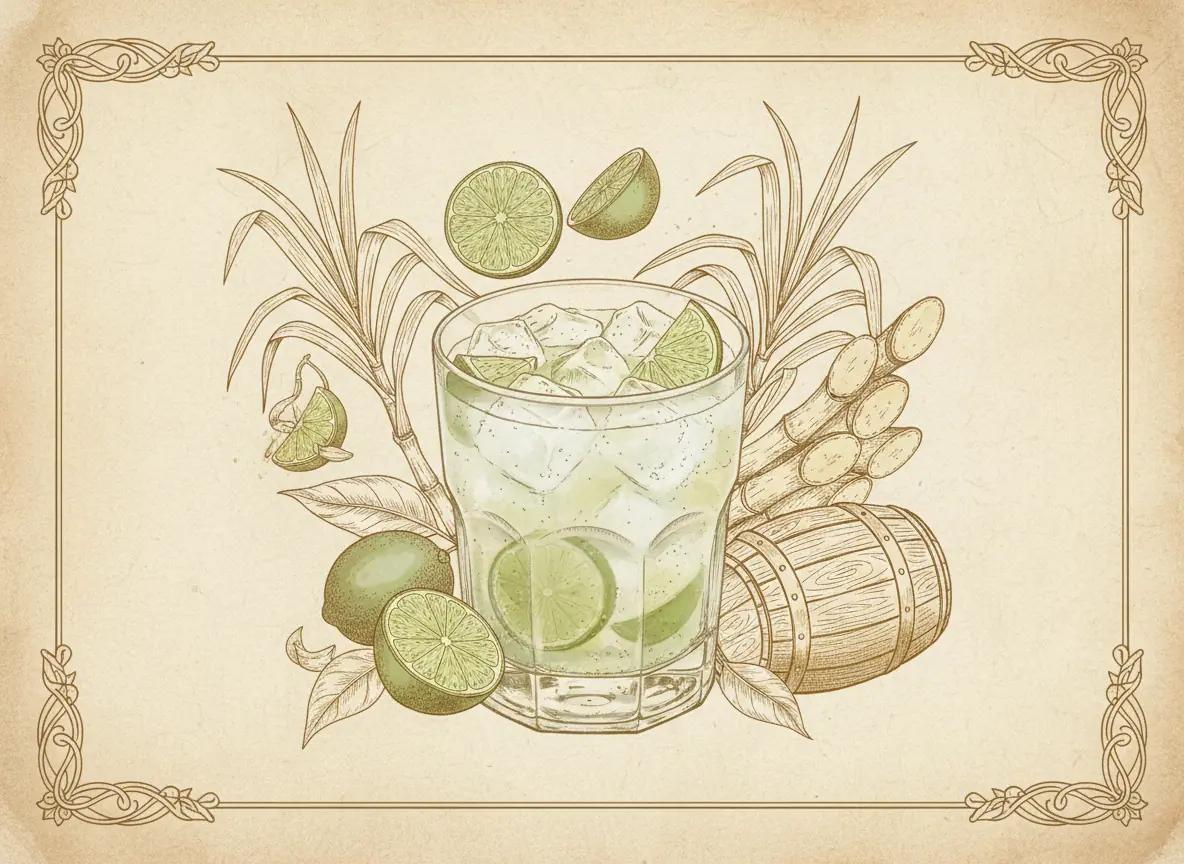
Caipirinha
A Caipirinha is 60ml of cachaça poured over one lime cut into eight pieces and muddled firmly with four teaspoons of caster sugar for 20 to 30 seconds, in a rocks glass filled with crushed ice and stirred briefly. About 2.4 UK units. The measures match the IBA’s. The Oxford Companion says non-Brazilians consider it the national drink of Brazil, though in Brazil it is the most famous of a large class of mixed drinks, the batidas. The Companion adds that the drink seems to have been called simply pinga com limão, cachaça with lime, before the 1950s, and that the name caipirinha, from caipira, a southern Brazilian word for a person from the rural hinterlands, was in occasional use by the 1950s and widespread by the end of the 1960s. Cachaça is what makes it. It is made from fresh sugarcane juice, where much rum starts from molasses, and it brings a grassy, green edge that the lime and sugar frame rather than cover.
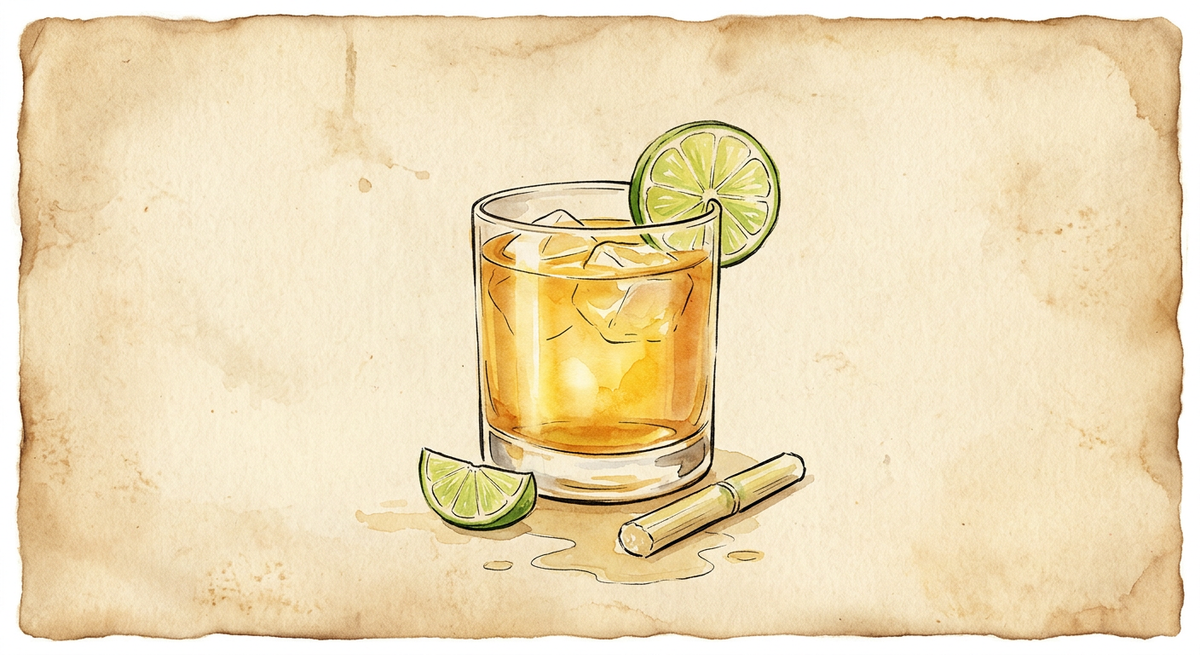
Canchánchara
A Canchánchara is 60ml Cuban aguardiente, 15ml raw honey, 15ml fresh lime juice and 50ml water. Mix the honey, lime and water in the glass until the honey dissolves and coat the base and sides with it, add cracked ice, pour in the aguardiente and stir hard from the bottom up. About 2.4 UK units, taking the spirit at 40% ABV. Those are the IBA’s measures and method. Punch places its creation in the Valle de los Ingenios near Trinidad, in central Cuba, and attributes it to the mambises, guerrilla fighters in the Ten Years’ War (1868 to 1878) and the War of Independence (1895 to 1898). Punch quotes the bartender Julio Cabrera saying they drank it before battle and as a morning toddy against cold, hunger and fatigue. The formula is the Daiquiri’s in its roughest form: cane spirit, sweetness and lime. Honey and water make it softer and longer, and the young spirit keeps a green, grassy edge that a white rum lacks.
Gold Rush
A Gold Rush is 60ml bourbon, 22.5ml fresh lemon juice and 22.5ml honey syrup, made with twice as much honey as warm water. Shake it hard for 10 to 12 seconds, strain it onto a single big cube in a rocks glass and finish with a lemon twist. About 2.4 UK units. Punch credits T.J. Siegal, at Milk & Honey in New York, with the idea sometime in 2000, and VinePair dates the drink to 2001. T.J. Siegal, a friend of the owner, Sasha Petraske, ordered his usual Whiskey Sour and asked for it without the egg white and with honey syrup in place of sugar. The change stuck, and the drink became a modern standard. Honey does more than sweeten. It tastes faintly of flowers and wax, gives the drink weight that sugar syrup cannot, and sits comfortably with the vanilla and caramel in bourbon. With no egg and no bitters, the Gold Rush is plainer and heavier than a Whiskey Sour, and quicker to make.
Where this one sits
Recipe by Jerry Can Spirits · Updated 19 October 2026