Suffering Bastard
A Suffering Bastard is 30ml of gin, 30ml of brandy, 15ml of fresh lime juice and two dashes of Angostura bitters, shaken with ice for 10 to 12 seconds, poured unstrained into a highball and topped with 120ml of cold ginger beer, with a mint sprig and an orange slice. About 2.5 UK units. The Oxford Companion, in an entry by Jeff Berry, says Joe Scialom made it at Shepheard’s Hotel in Cairo in October 1942, as a hangover cure for Eighth Army regulars cabling from the front at El Alamein. The tale that troops there telegraphed for gallons of it is told often, and the Companion itself calls it highly unlikely that it turned the tide of the battle. The two spirits split the work. Gin gives juniper and lift, brandy gives grape and a rounder middle, and lime and bitters keep the ginger beer from turning the glass sweet. The Companion gives Scialom’s recipe with gin and brandy.
Glassware: Highball Glass
Garnish: Mint sprig and Orange slice
Ingredients
30ml
A London Dry at 40% ABV. The juniper keeps a drink of brandy and ginger beer from settling heavy.
30ml
A VS cognac or a sound grape brandy at 40% ABV. Scialom’s recipe, as Jeff Berry reports it, named brandy; bourbon in its place makes a sweeter drink with vanilla in it.
15ml
Squeezed the same day. The only acid in the glass, against 120ml of sweet ginger beer.
2 dashes
Two dashes, at 44.7% ABV. They dry the finish and put clove behind the ginger.
120ml
A fiery, properly gingery soft drink, chilled. It is the largest part of the glass, so a mild, sugary one makes the whole drink sweet.
Instructions
Add the gin, brandy, lime juice and Angostura bitters to a shaker.
Fill with cubed ice and shake hard for 10 to 12 seconds.
Pour everything, ice included, into a highball glass.
Top with 120ml of cold ginger beer and stir once.
Garnish with a slapped mint sprig and an orange slice.
Source: the IBA (IBA specification; ginger beer measured at 120ml). Last checked 10 October 2026.
Expert Tip
Shake the spirits, lime and bitters before the ginger beer goes anywhere near them. A 10 to 12 second shake with ice chills the base hard; pour it all, ice included, into the glass, then top up. Shaking the ginger beer would only flatten it. Keep the two spirits level. More gin and it drinks like a gin buck; more brandy and it turns heavy. At 30ml apiece the ginger sits between them. Slap the mint sprig once against your hand before it goes in. The scent at the top of the glass is most of what the garnish is for.
Behind the Suffering Bastard
Flavour Profile
Shepheard’s Hotel, 1942
The Oxford Companion says Shepheard’s storied Long Bar in Cairo became both an officers’ club for Britain’s Eighth Army and a press club for journalists covering the campaign against the Afrika Korps, from about 1941.
Joe Scialom tended that bar. The Companion says that one morning in October 1942, after a marathon night at the Long Bar, his Eighth Army regulars were mobilised to El Alamein and cabled him from the front lines pleading for his signature hangover cure, and that he sent four gallons in Thermoses by taxi. It calls it highly unlikely that this turned the tide of the battle. The riots of the Cairo Fire are dated to 26 January 1952 by the Association for Diplomatic Studies and Training, whose oral history from a US embassy security officer records that Shepheard’s hotel went down in them.
Gin and Brandy Under Ginger
In shape the drink is a buck: spirit, lime and ginger beer over ice. Scialom split the spirit in two. Gin brings juniper, which lifts the top of the glass; brandy brings grape and weight in the middle.
Berry reports that bourbon was often swapped in for the brandy where it could be had. That makes a sweeter, heavier drink with vanilla in it. Either way, 15ml of lime and two dashes of Angostura keep the finish dry against the ginger beer.
Shaken, Then Topped
The IBA shakes the base with ice and pours it, unstrained, into a Collins glass or the drink’s own mug, then tops it with ginger beer. Shaking chills the spirits and lime harder than a stir in the glass, and mixes them before the bubbles go in.
Pour the ginger beer last and stir once, gently. Every extra turn of the spoon costs fizz.
The IBA’s Recipe and Ours
The Suffering Bastard as the IBA gives it, and ours
Gin
- IBA
- 30ml
- Ours
- 30ml
Brandy
- IBA
- 30ml cognac or brandy
- Ours
- 30ml
Fresh lime juice
- IBA
- 15ml
- Ours
- 15ml
Angostura bitters
- IBA
- Two dashes
- Ours
- Two dashes
Ginger beer
- IBA
- To top
- Ours
- 120ml
Method
- IBA
- Shaken, poured unstrained, topped
- Ours
- Shaken 10 to 12 seconds, poured unstrained, topped
Glass
- IBA
- Collins glass or the Suffering Bastard mug
- Ours
- Highball
Garnish
- IBA
- Mint sprig, orange slice optional
- Ours
- Mint sprig and orange slice
UK units
- IBA
- Not stated
- Ours
- About 2.5
| Element | IBA | Ours |
|---|---|---|
| Gin | 30ml | 30ml |
| Brandy | 30ml cognac or brandy | 30ml |
| Fresh lime juice | 15ml | 15ml |
| Angostura bitters | Two dashes | Two dashes |
| Ginger beer | To top | 120ml |
| Method | Shaken, poured unstrained, topped | Shaken 10 to 12 seconds, poured unstrained, topped |
| Glass | Collins glass or the Suffering Bastard mug | Highball |
| Garnish | Mint sprig, orange slice optional | Mint sprig and orange slice |
| UK units | Not stated | About 2.5 |
The Name and Its Relatives
For a time the drink was also served as the Suffering Bar Steward, for customers who objected to the word. Scialom’s stronger versions took the joke further: the Dying Bastard with bourbon added, the Dead Bastard with bourbon and rum.
Trader Vic later put the name on a different drink built on rum, and the squat mug sold as the Suffering Bastard mug comes from the tiki bars, not from Cairo.
How to Serve It
Tall, over the ice it was shaken with, with a slapped mint sprig and an orange slice. At about 2.5 units it is stronger than it tastes.
For vodka, lime and ginger beer, make a Moscow Mule; for black rum floated on ginger beer, a Dark ’n’ Stormy.
Make it at home
The Spirit
GinGin is a spirit flavoured with juniper berries. Under the retained Regulation (EC) 110/2008, juniper must lead the taste, the floor is 37.5% ABV, and the route the flavour takes sets the grade: plain gin, distilled gin or London gin. Our recipes count it at 40%, and it carries the Martini, the Negroni and the Gin and Tonic.
Master the Techniques
More to explore
Frequently Asked Questions
What is in a Suffering Bastard?
Who created the Suffering Bastard?
Does it cure a hangover?
Is it the same as Trader Vic’s Suffering Bastard?
What are the Dying Bastard and the Dead Bastard?
Should it be shaken or built?
How strong is a Suffering Bastard?
Sources.
Correct as of 19 October 2026.
- The Oxford Companion to Spirits and Cocktails (Jeff Berry), “Scialom, Joseph” (secondary source: 1910 to 2004; bartender at Shepheard’s Hotel, Cairo; the Suffering Bastard as a hangover cure for the Eighth Army, October 1942; four gallons in Thermoses; gin and brandy, lime cordial, Angostura, ginger beer).
- Association for Diplomatic Studies and Training (ADST), “The Cairo Fire of 1952” (diplomatic archive: the Cairo Fire, or Black Saturday, riots of 26 January 1952; a US embassy security officer’s oral history records that Shepheard’s hotel went down in them).
You Might Also Like
Moscow Mule
A Moscow Mule is 45ml of vodka and 10ml of fresh lime juice over ice in a copper mug, topped with 120ml of cold ginger beer and stirred once, with a lime wedge. Those are the IBA’s measures. About 1.8 UK units, all from the vodka. It is usually dated to 1941 and credited to John G. Martin of Heublein, which had bought Smirnoff and was left with a surplus of vodka, and Jack Morgan of the Cock ’n’ Bull in Los Angeles, who was pushing his own ginger beer, VinePair reports. The Oxford Companion gives other accounts: that Morgan and Martin devised it in New York, or that the Cock ’n’ Bull’s head bartender, Wes Price, did. The ginger beer decides the drink. At 120ml it is two thirds of the glass, so a soft, sugary one gives a soft, sugary Mule. Use the fieriest you can find, and keep the lime short: good ginger beer brings its own bite.
Fog Cutter
A Fog Cutter is 45ml of white rum, 22.5ml each of gin and cognac, 60ml of fresh orange juice, 30ml of lemon and 15ml of orgeat, shaken hard and strained over crushed ice in a tiki mug, then floated with 15ml of amontillado sherry and finished with mint. About 3.9 UK units. Orgeat is made from almonds, so keep the drink away from anyone with a nut allergy. The Oxford Companion says Victor Bergeron, Trader Vic, invented it by 1940, and Difford’s Guide says it first appears in his 1946 Trader Vic’s Book of Food and Drink, where he writes that it is “a triple threat”. Difford’s adds that the 1972 revision of his guide carries the warning: “Fog Cutter, hell. After two of these, you won’t even see the stuff.” Under the three spirits sits an ordinary sour. The rum leads, the gin and cognac season it, and the citrus and orgeat hold the balance. The sherry stays on top and scents the first sips.
Daiquiri
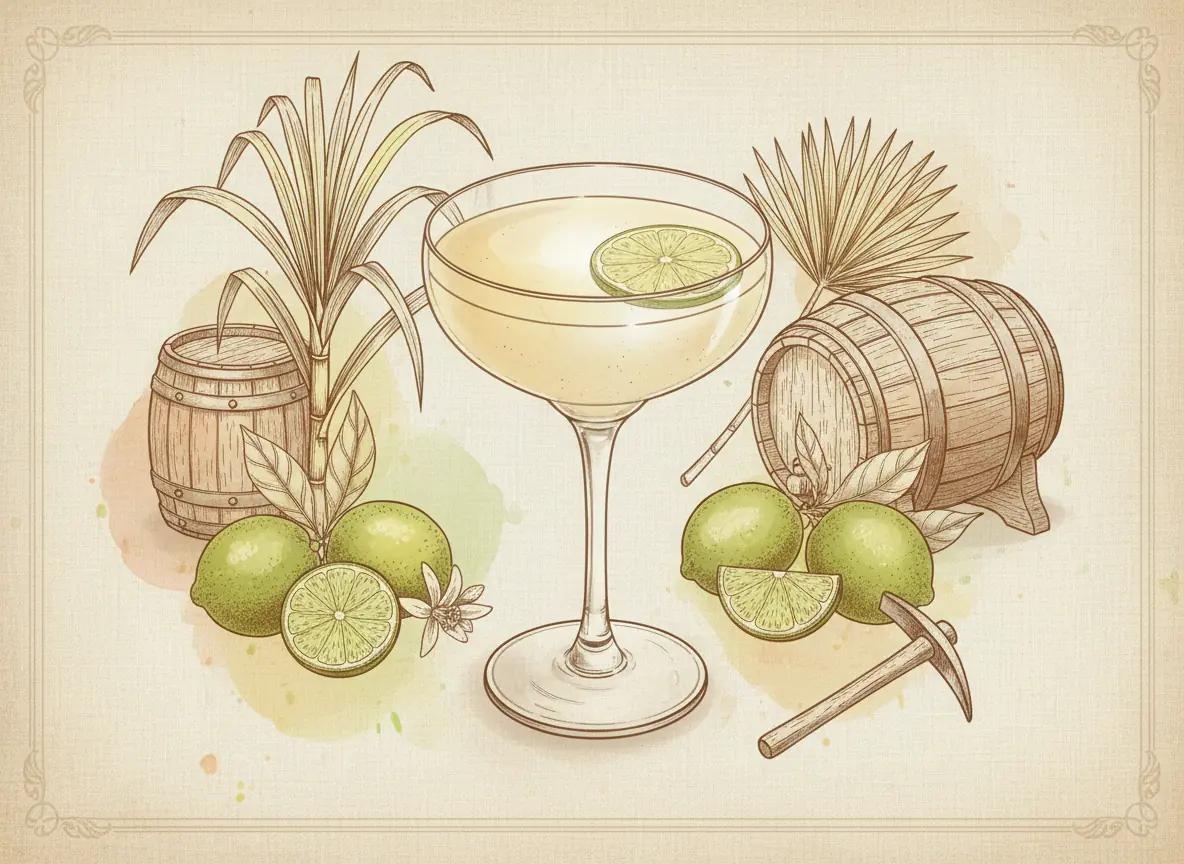
A Daiquiri is 60ml white rum, 20ml fresh lime juice and two bar spoons of caster sugar. Stir the sugar into the rum and lime in the shaker until it dissolves, then add ice, shake hard for 10 to 12 seconds and double strain into a chilled coupe. About 2.4 UK units. Those are the IBA’s measures, and its method dissolves the sugar first too. The name belongs to Daiquirí, an iron-mining district and beach near Santiago de Cuba. Difford’s Guide credits Jennings Stockton Cox, an American engineer who led one of the first mining parties into Cuba’s iron-ore country after the Spanish-American War of 1898; the Oxford Companion has him making or supervising the first Daiquiri in 1896, and a Santiago bartender naming it in 1908. Difford’s says Constantino Ribalaigua Vert of Havana’s El Floridita made the frozen version famous. With three ingredients and no liqueur or bitters, the Daiquiri hides nothing. A flat rum, tired lime or undissolved sugar shows in the first sip.
Where this one sits
Recipe by Jerry Can Spirits · Updated 19 October 2026