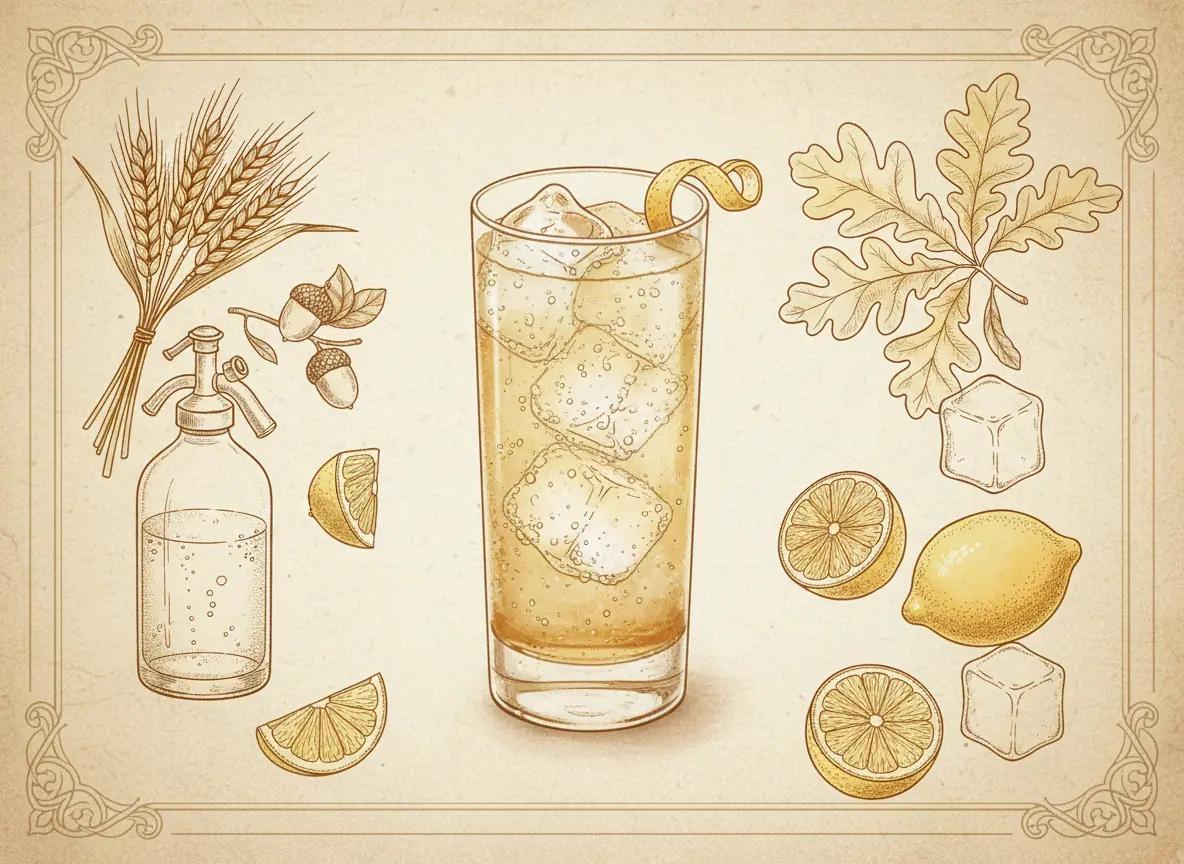
Whiskey Highball
A Whiskey Highball is 50ml Scotch whisky and 100 to 125ml cold soda water in a highball glass packed with ice, stirred once, with a strip of lemon peel twisted over it. About 2.0 UK units. With two ingredients, everything rests on the whisky, the soda and how cold both are. The Oxford Companion says whisky and soda crossed to America, where by 1895 it was rapidly edging into the mainstream under the name Scotch Highball. Where the word comes from is disputed: a tall glass, or one of the senses it had in baseball, poker and railroads. In Japan, where the highball means whisky and soda water, Suntory’s master blender Shinji Fukuyo told The Spirits Business that the highball campaign succeeded in the late 2000s, maybe 2008. The method exists to keep the bubbles: cold glass, cold soda, a gentle pour and one stir.
Glassware: Highball Glass
Garnish: Lemon peel
Ingredients
50ml
A blended Scotch or a light Speyside or Highland malt at 40% ABV. Japanese whisky, the classic choice in Japan, works the same way; a heavily peated Islay splits opinion.
100 to 125ml
Cold from the fridge and freshly opened, so it is as lively as it gets. Two to two and a half times the whisky; much more and the whisky thins out.
Instructions
Fill a highball glass with cubed ice and stir for a few seconds to chill it.
Pour off any meltwater and top up the ice.
Pour in the whisky and stir briefly to chill it.
Pour the cold soda water slowly down the inside of the glass.
Lift the bar spoon once, slowly, from the bottom of the glass.
Express the lemon peel over the top and rest it on the rim.
Expert Tip
Chill the glass before the whisky goes in. Fill it with ice, stir for a few seconds, pour off the meltwater and top up the ice. Put whisky and soda into a warm glass and the ice melts quickly, so the drink goes both flat and watery. Keep the soda in the fridge and open it just before you pour. Pour it down the inside of the glass, not onto the ice; hitting the ice knocks the gas out. Stir once, by lifting the spoon slowly from the bottom. That brings the whisky up through the soda, and a second stir only flattens it.
Behind the Whiskey Highball
Flavour Profile
The Origin
Whisky and soda was a British drink before it was an American one. Wine-and-soda spritzers were fashionable in nineteenth-century Britain, brandy came to replace the wine, and whisky later replaced the brandy. The Oxford Companion has it reaching fashionable New York bars in the late 1880s and rapidly edging into the mainstream by 1895, pushed in large part by the craze for golf.
The Oxford Companion says the drink gained the American name Scotch Highball by 1895. Its origin is disputed: the Companion notes that the word was used in baseball, poker and railroads, each for a different thing, and that a ball was a short glass of whisky in Ireland, but says the evidence points to the tall glass, as a Pennsylvania newspaper put it in 1892: a high ball is above four fingers.
The Japanese Standard
In Japan the highball means whisky and soda water in particular, and Nippon.com says that after several years of promoting it Suntory breathed new life into the whisky market. Suntory’s master blender Shinji Fukuyo told The Spirits Business that the highball campaign succeeded in the late 2000s, maybe 2008.
The Japanese method is a set of small habits that all protect the bubbles: a glass chilled with ice before the whisky goes in, hard ice filled to the top, soda straight from the fridge poured down the inside of the glass, and a single slow lift with the spoon.
Highball, Mizuwari and Whisky Ginger
Whisky long drinks compared
Whiskey Highball
- Spec
- 50ml Scotch, 100 to 125ml soda water
- Strength
- About 2.0 UK units
Mizuwari
- Spec
- 45ml Japanese whisky, 90ml still water
- Strength
- About 1.8 UK units
Whisky and Ginger Ale
- Spec
- 50ml whisky, 150ml ginger ale
- Strength
- About 2.0 UK units
| Drink | Spec | Strength |
|---|---|---|
| Whiskey Highball | 50ml Scotch, 100 to 125ml soda water | About 2.0 UK units |
| Mizuwari | 45ml Japanese whisky, 90ml still water | About 1.8 UK units |
| Whisky and Ginger Ale | 50ml whisky, 150ml ginger ale | About 2.0 UK units |
For the still-water version, the Mizuwari takes Japanese whisky and ice with water in place of soda.
Choosing the Whisky
With only soda alongside, the whisky’s character comes straight through. A blended Scotch or a light Speyside or Highland malt gives a clean, malty drink, and Japanese whisky behaves much the same. Irish whiskey is softer. Islay malt with heavy peat makes a smoky highball that splits opinion.
Keeping the Fizz
Bubbles carry the whisky’s aroma up to your nose, so a flat highball tastes of diluted whisky and little else. Gas escapes fastest when soda hits ice or is stirred, and slowest when it is cold. Every step of the method follows from that.
How to Serve It
Built in a cold highball packed with ice, stirred once and served straight away with lemon peel twisted over the top. About 2.0 UK units in a long glass makes it a light drink alongside food.
Make it at home
The Spirit
Whisky (Scotch)Scotch is whisky distilled and matured in Scotland, kept in oak for three years at the least, and bottled no weaker than 40% ABV. The Scotch Whisky Regulations 2009 allow only three ingredients, water, malted barley and whole grains of other cereals, and only water and plain caramel colouring may be added later. Fifteen recipes in our library call for it, from the Penicillin and Hot Toddy to the Rob Roy.
More to explore
Frequently Asked Questions
What is a Whiskey Highball?
What makes the Japanese highball different?
Which whisky suits it best?
How strong is a Whiskey Highball?
Why is it called a highball?
Can I use ginger ale instead of soda?
How much soda goes in a highball?
Sources.
Correct as of 19 October 2026.
- The Oxford Companion to Spirits and Cocktails (David Wondrich), “The Highball” (secondary source: the Scotch Highball in fashionable New York bars in the late 1880s and in the mainstream by 1895; the etymology debated, baseball, poker and railroads, the Irish ball, the tall-glass theory favoured; the Suntory highball machine).
- Nippon.com, “Whisky, a Spirit Imbued with Culture” (Japanese public-diplomacy publication: after several years of promoting the highball (whisky and soda water), Suntory has breathed new life into the whisky market; recipe, alcohol content and temperature taught to establishments).
- The Spirits Business, “SB Meets… Shinji Fukuyo, House of Suntory” (trade press interview: “In the late 2000s, maybe 2008, the Highball campaign got success in the Japanese market”).
You Might Also Like
Americano
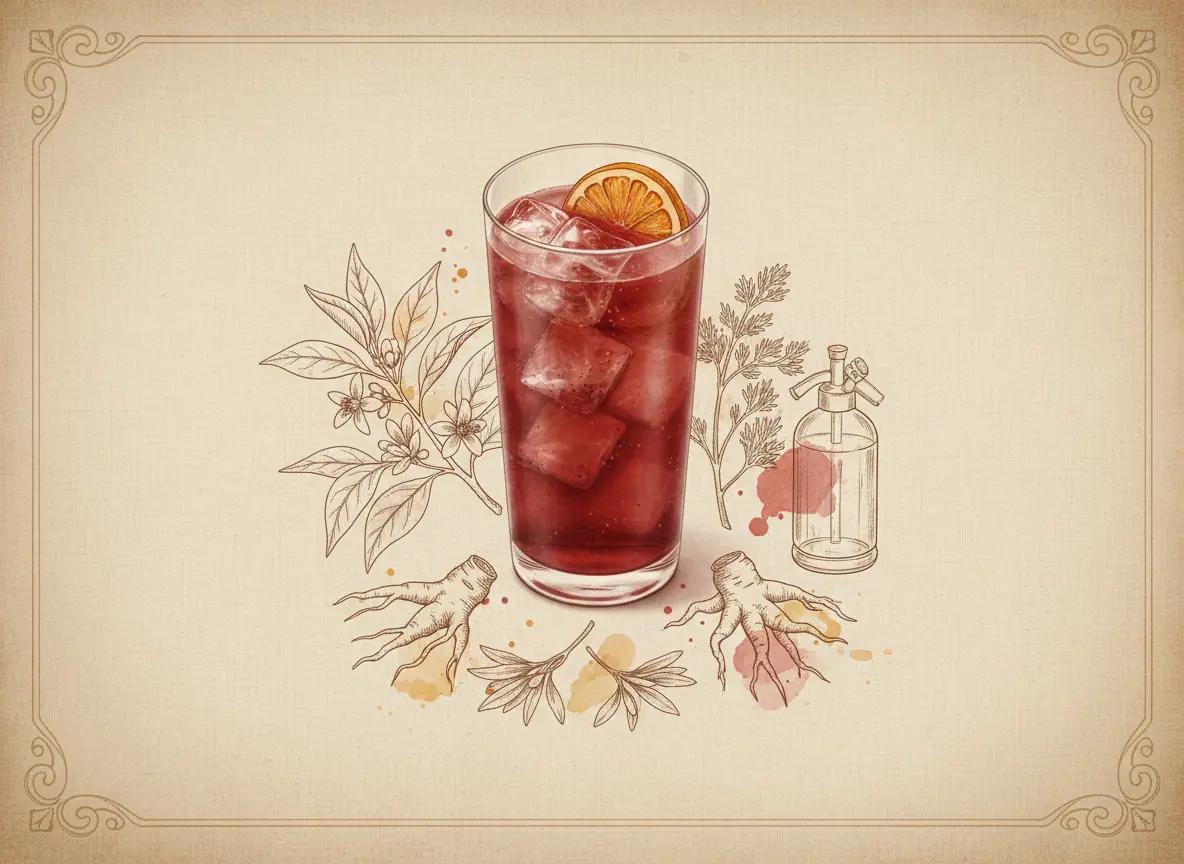
An Americano is 30ml Campari and 30ml sweet vermouth built over ice in a highball, topped with 75ml of cold soda and stirred once, with an orange slice. Bitter and sweet in equal measure, lengthened with soda: a Negroni with soda in place of the gin, at about half the alcohol. It grew out of the Milano-Torino, Campari from Milan with vermouth from Turin, which Difford’s Guide says Gaspare Campari created in the 1860s at his Caffè Campari in Milan. Difford’s adds that soda was said to have been added later, to make the Americano. The vermouth decides the result. At equal volume with the Campari it has nowhere to hide, and in our experience an opened bottle that has stood at room temperature for months will flatten the drink. Keep it in the fridge.
Campari & Soda
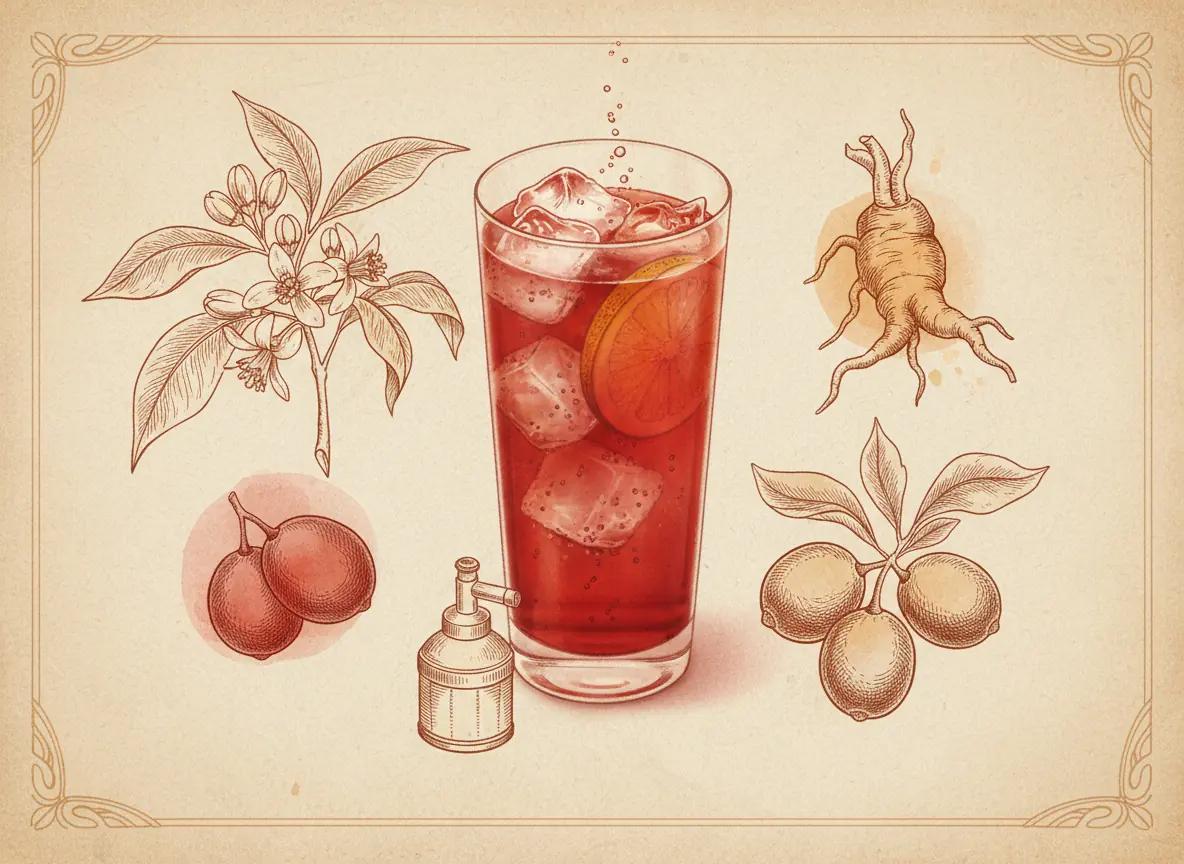
A Campari and soda is 45ml of Campari and 90ml of cold soda water, built over a highball full of ice, stirred once and finished with an orange slice. One part Campari to two of soda: bitter, orange-edged and long, and at about 1.1 UK units a light drink to have before a meal. Gaspare Campari created his bitter in 1860, by Campari’s own account. In 1932, by Campari’s own account, the company put it and soda together in a single-serve bottle designed by the Futurist artist Fortunato Depero, and Difford’s Guide, a secondary source, lists Campari Soda, as that bottle is called, at 10% ABV. The ratio is the only real decision. More soda and the bitterness thins out; less and the drink turns heavy. Start at one to two and adjust by 15ml either way.
Pack Mule
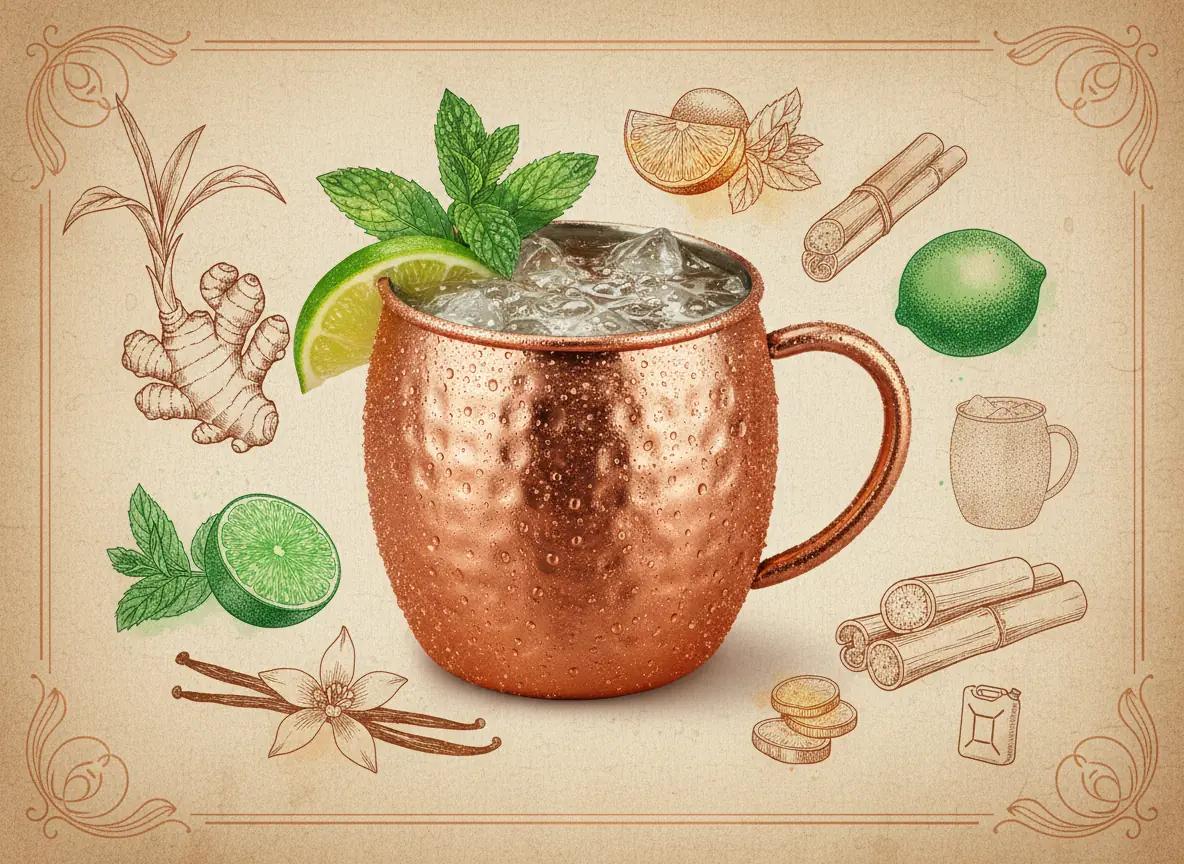
A Pack Mule is 50ml of Expedition Spiced Rum, 20ml of fresh lime juice and 10ml of sugar syrup over ice in a copper mug, lengthened with 100 to 120ml of ginger beer and given one stir, then finished with a lime wheel and a mint sprig. About 2.0 UK units from the rum at 40% ABV. It is our mule. The published spiced rum mule, the Jamaican Mule, is a short drink: 75ml of ginger beer, a quarter-measure of lime and a rich syrup. The Pack Mule takes the same four parts and opens them out, with the lime doubled to 20ml and the ginger beer run long, because Expedition Spiced Rum brings its own sweetness and the vanilla, cinnamon and clove in it want room and acid rather than more sugar. The ginger beer decides most of it. A dry one with real heat suits the rum, and the syrup is set by how sweet the bottle is: the full 10ml for a dry ginger beer, none for a sweet one.
Where this one sits
Recipe by Jerry Can Spirits · Updated 19 October 2026