Ginger Snap
A Ginger Snap is 50ml of bourbon, 25ml of fresh lemon juice and 15ml of cinnamon syrup built over ice in a highball, topped slowly with 90ml of fiery ginger beer, stirred once and finished with a cinnamon stick. About 2.0 UK units, from the bourbon alone. A house recipe, made for Bonfire Night as the cold drink beside the hot pots. The name is the biscuit’s: ginger and cinnamon, the pairing in the glass. It is served cold. The heat is in the ginger, the cinnamon sits under it, and the bourbon’s vanilla and oak keep it from tasting like a spiced soft drink. The lemon stops the syrup and a sweet mixer running away with it. The ginger beer is most of what you taste, so the bottle decides the drink.
Glassware: Highball Glass
Garnish: Cinnamon stick
Ingredients
50ml
Any mainstream bourbon at our working 40% ABV. Its vanilla and caramel give the cinnamon and ginger something to sit on; rye makes a drier, sharper drink.
25ml
Squeezed the same day. It is the acid against the syrup and the sugar in the ginger beer.
15ml
Home-made from cinnamon sticks, sugar and water, one part sugar to one of water. A rich demerara cinnamon syrup also works and makes a darker, sweeter drink.
90ml
A fiery, brewed-style ginger beer. Difford’s Guide files ginger beers as non-alcoholic, but the Oxford Companion says the earliest were fermented to two to three percent; an alcoholic one at about 4% adds about 0.4 units.
Instructions
Fill a highball glass with cubed ice.
Add the bourbon, lemon juice and cinnamon syrup.
Top slowly with the ginger beer, poured down the inside of the glass.
Stir once and garnish with a cinnamon stick.
Our version
Written by us for Bonfire Night, with no earlier version to follow: 50ml of bourbon, 25ml of lemon and 15ml of home-made cinnamon syrup under 90ml of ginger beer.
Source: our own specification. Last checked 10 October 2026.
Expert Tip
Buy the ginger beer for heat. At 90ml it is the largest thing in the glass, and a mild, sweet bottle leaves the drink tasting of lemonade with whiskey in it. Look for one that burns a little on its own. Pour it slowly down the inside of the glass and stir once. The bourbon, lemon and syrup are heavier and sit at the bottom; one turn of the spoon mixes them in without knocking the fizz out. Make the cinnamon syrup the day before. It needs an hour off the heat to take on the cinnamon, and we keep it a week in the fridge.
Behind the Ginger Snap
Flavour Profile
A Cold Drink for Bonfire Night
Most Bonfire Night drinks come from a pot. The Ginger Snap, a house recipe, is for the guest who wants ice in the glass. A highball keeps in cold air, where a mug of something hot starts cooling as soon as it is poured.
Ginger, Cinnamon and Bourbon
The ginger beer brings the heat and most of the volume. Cinnamon syrup adds a sweeter, woodier spice under it, in the spirit of the biscuit the drink is named after, which Dictionary.com defines as a small, brittle cookie flavoured with ginger and molasses. Bourbon carries vanilla and caramel for both spices to sit on, while the lemon holds back the sugar in the syrup and the mixer.
The Ginger Beer Decides It
At 90ml the ginger beer is the largest part of the drink. A fiery one gives the snap; a soft, sweet one gives lemonade with whiskey in it. Pour it slowly down the side of the glass and stir once, so the fizz survives.
Making the Cinnamon Syrup
Simmer 200ml of water with four cinnamon sticks, take the pan off the heat, stir in 200g of white sugar, cover and leave for an hour. Strain and refrigerate; we keep it a week, and a spoonful turns a whisky sour wintry.
Bourbon and Ginger Highballs
The Ginger Snap beside our Harvest Mule and Horse’s Neck; all three are our recipes and the units are our calculation
Ginger Snap
- Spirit
- 50ml bourbon
- Sweet and sour
- 15ml cinnamon syrup, 25ml lemon
- Mixer
- 90ml ginger beer
- UK units
- About 2.0
Harvest Mule
- Spirit
- 50ml bourbon
- Sweet and sour
- 15ml apple cider syrup, 20ml lime
- Mixer
- 90ml ginger beer
- UK units
- About 2.0
Horse’s Neck
- Spirit
- 40ml cognac
- Sweet and sour
- Optional dash of Angostura
- Mixer
- 120ml ginger ale
- UK units
- About 1.6
| Drink | Spirit | Sweet and sour | Mixer | UK units |
|---|---|---|---|---|
| Ginger Snap | 50ml bourbon | 15ml cinnamon syrup, 25ml lemon | 90ml ginger beer | About 2.0 |
| Harvest Mule | 50ml bourbon | 15ml apple cider syrup, 20ml lime | 90ml ginger beer | About 2.0 |
| Horse’s Neck | 40ml cognac | Optional dash of Angostura | 120ml ginger ale | About 1.6 |
How to Serve It
In a highball full of cubed ice, with a cinnamon stick standing in it. Outdoors in the dark, a tumbler or a sturdy plastic glass is safer than thin glass.
For bourbon, apple cider syrup and lime under ginger beer, the Harvest Mule; for a hot bourbon drink from one pot, Fireside Punch.
Make it at home
The Spirit
Whiskey (Bourbon)Under the US standard 27 CFR 5.143, bourbon is an American whiskey whose mash is at least 51% corn, matured in fresh charred oak barrels and bottled at 40% ABV or higher, the figure our recipes use. The fresh charred wood gives it its vanilla, caramel and colour, and the corn gives a rounder, sweeter spirit than rye. It is the base of 26 of our recipes, more than any other whiskey.
More to explore
Frequently Asked Questions
What is in a Ginger Snap?
Is the Ginger Snap a hot drink?
How do I make the cinnamon syrup?
Which ginger beer should I use?
How is it different from a Harvest Mule?
Can I use rye instead of bourbon?
How strong is a Ginger Snap?
Sources.
Correct as of 19 October 2026.
- Dictionary.com, “gingersnap” (dictionary entry: a small, brittle cookie flavored with ginger and molasses; first recorded 1795 to 1805).
- The Oxford Companion to Spirits and Cocktails (Darcy O’Neil), “ginger ale and ginger beer” (secondary source: the earliest ginger beers were fermented to a light alcohol content of two to three percent; ginger beer became associated with the fermented drink and ginger ale with the nonalcoholic one).
- Difford’s Guide, “Fever-Tree Ginger Beer” (secondary source: filed under ginger beers (non-alcoholic); undergoes a process of fermentation, though presumably any alcohol contained is negligible).
You Might Also Like
Penicillin
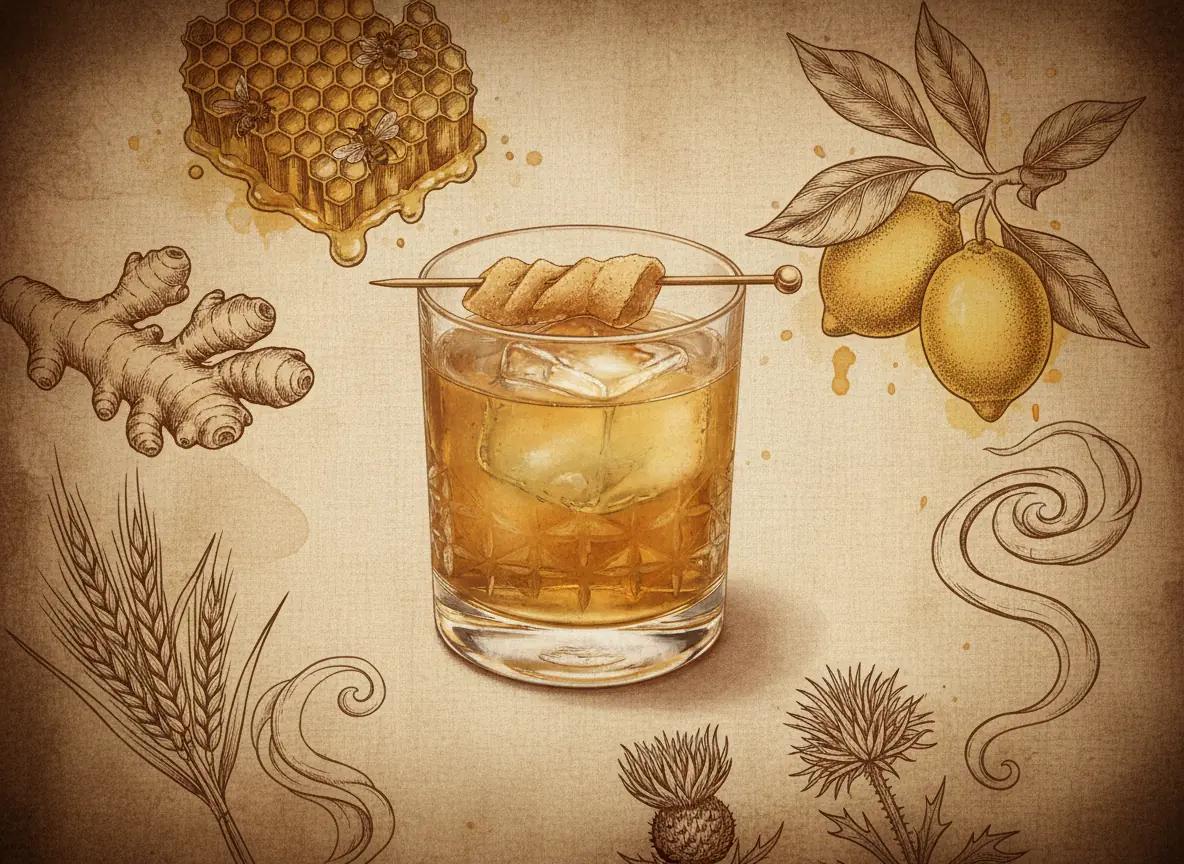
A Penicillin is 60ml blended Scotch, 22.5ml honey syrup, 22.5ml fresh lemon juice and two or three thin slices of fresh ginger, shaken hard and double strained over one large cube, with 7.5ml of Lagavulin 16 floated on top and candied ginger on the rim. That is the IBA specification, at about 2.7 UK units. Difford’s Guide, a secondary source, dates it to 2005 and credits Sam Ross with creating it at Milk & Honey in Manhattan; Chilled Magazine calls Ross an Australian bartender. Chilled says Ross described the name as a tongue-in-cheek reference to the drink’s cure-all properties, and that a nod to the antibiotic discovered by the Scottish scientist Alexander Fleming may have been a factor. It is a whisky sour in structure. The ginger gives it heat, and the smoky malt on top reaches the nose before the first sip.
Whiskey Highball
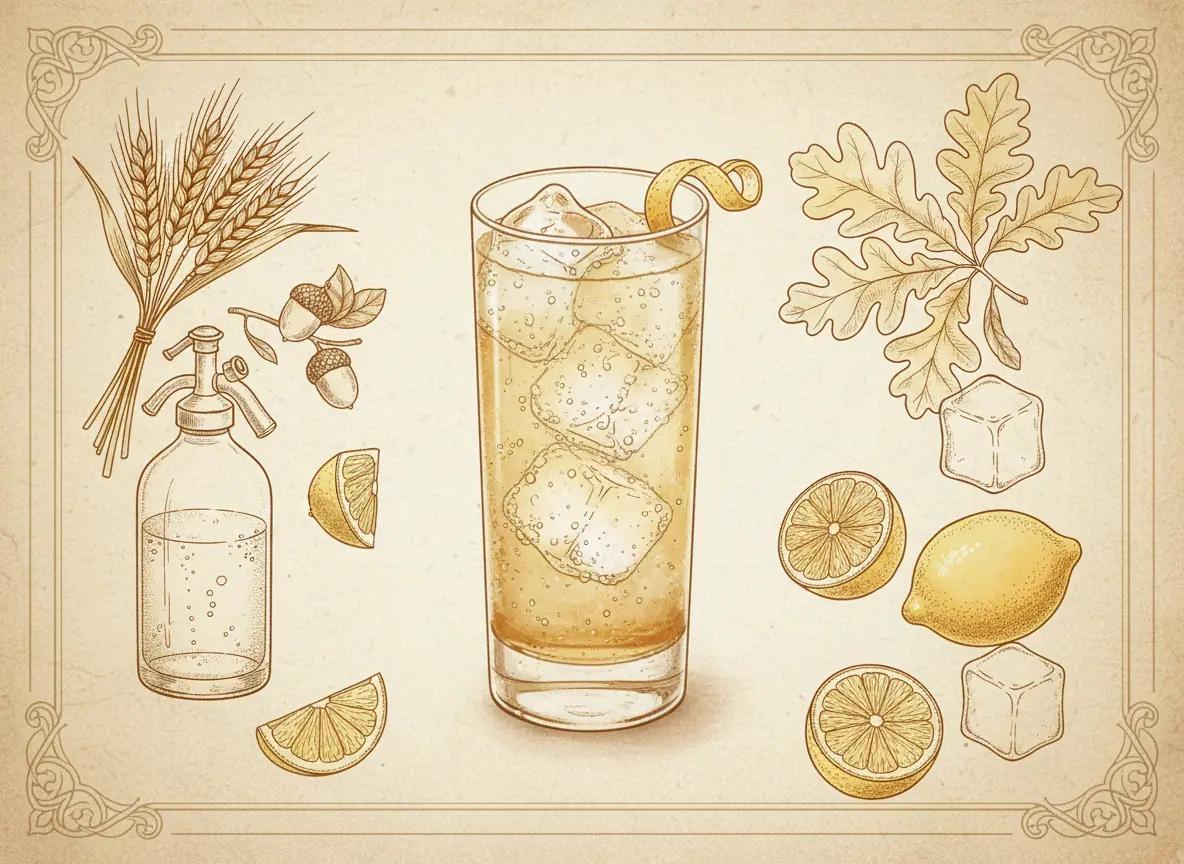
A Whiskey Highball is 50ml Scotch whisky and 100 to 125ml cold soda water in a highball glass packed with ice, stirred once, with a strip of lemon peel twisted over it. About 2.0 UK units. With two ingredients, everything rests on the whisky, the soda and how cold both are. The Oxford Companion says whisky and soda crossed to America, where by 1895 it was rapidly edging into the mainstream under the name Scotch Highball. Where the word comes from is disputed: a tall glass, or one of the senses it had in baseball, poker and railroads. In Japan, where the highball means whisky and soda water, Suntory’s master blender Shinji Fukuyo told The Spirits Business that the highball campaign succeeded in the late 2000s, maybe 2008. The method exists to keep the bubbles: cold glass, cold soda, a gentle pour and one stir.
Where this one sits
Recipe by Jerry Can Spirits · Updated 19 October 2026