Rum Cocktails, page 2
58 recipes, page 2 of 3
Base Spirit
Difficulty Level
IBA Tiki
The IBA Tiki is the newest and most elaborate drink on the official list: nine ingredients, two rums, three sweetened modifiers and a slice of fresh ginger muddled in the base. It is a competition cocktail in origin and it reads like one, which is not a criticism — every one of those ingredients is doing something, and the drink is considerably more balanced than the list suggests. Two Havana Club expressions split the base thirty and thirty, one deep and one smoky. Amaretto and Frangelico supply nut and roundness in fifteen and five millilitres respectively, five drops of maraschino sit underneath them, and passion fruit, pineapple and lime handle the fruit and the acid. It is a long drink built to be sipped over pebble ice, and the ginger is what keeps nine ingredients from collapsing into fruit punch.
Jerry Can Julep
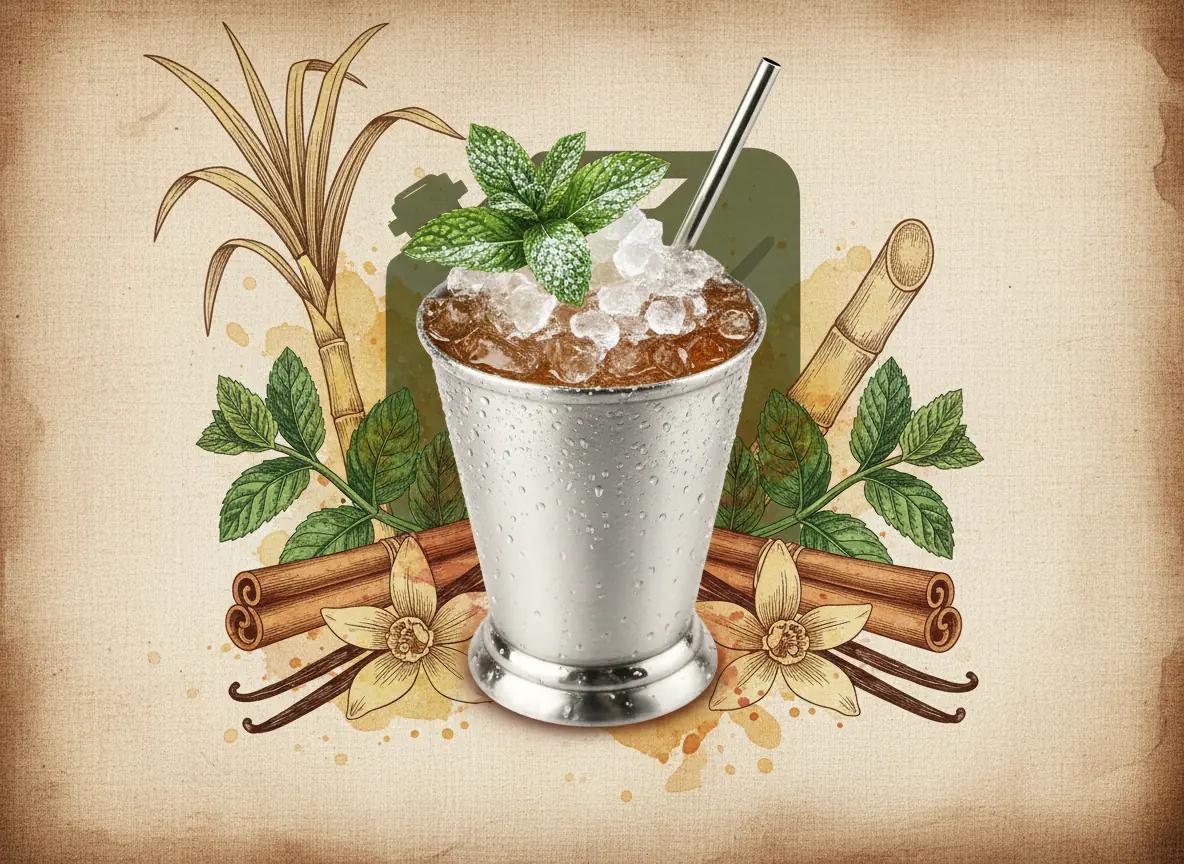
The julep is one of the oldest drink formats in the American canon, documented since the eighteenth century and for most of its history associated with bourbon, crushed ice, and the leisure of a long Southern afternoon. The Jerry Can Julep rebuilds the format around Expedition Spiced Rum, a Caribbean rum base carrying vanilla, cinnamon, allspice, clove, orange peel, cassia, ginger, agave and bourbon oak. The result tastes less like a substitution and more like the format finding the spirit it was always suited to. The relationship between the rum and fresh mint is immediate. The rum's warmth and the mint's sharp aromatic freshness occupy opposite ends of the same register, and the space between them is where the drink lives. A single dash of Angostura reinforces the clove and cinnamon already present, and the sugar syrup brings mint and rum together without softening either. This is a drink built for stillness and attention. The crushed ice keeps it cold as it is drunk slowly, and the mint bouquet places its aromatics at the nose before every sip.
Jungle Bird
The Jungle Bird was created in 1978 at the Aviary Bar of the Kuala Lumpur Hilton, reportedly as a welcome drink for arriving guests, which makes it one of the last true classics the tiki canon ever produced. It then vanished for the better part of three decades, until cocktail historians dug the recipe out of a 1989 collection and New York bartenders rebuilt it around blackstrap rum. That version spread through the craft revival, and the drink now sits on more serious bar menus than almost anything else wearing a paper umbrella. What makes it work is the Campari. Bitterness has no natural home in tiki, and dropping an Italian aperitivo into pineapple juice should not work. It does, because pineapple is one of the few juices with the body and sweetness to carry Campari's bite without flinching. The result drinks closer to a Negroni on holiday than to a beach cooler: tropical on the nose, grown-up on the finish, and the only drink in the genre you could reasonably serve before dinner.
Knickerbocker
The Knickerbocker is the daiquiri’s New York grandfather: rum, raspberry syrup, citrus and a curaçao thread, printed by Jerry Thomas in 1862 among the first rum sours in any book, and named for the old-Dutch aristocracy of its city. It is what a fancy rum drink meant when the cocktail was young. The build reads as proto-tiki a full century early. Golden rum sweetened by berry syrup rather than by sugar, orange liqueur used as seasoning, and the whole thing poured over ice with fruit dressing the glass in the old manner. Cold-process raspberry syrup is the drink’s heart and its only sweetener. The revival restored it as a bridge exhibit: the drink connecting Thomas’s bar to the Clover Club’s berry and to the tiki century’s fruit, one glass explaining roughly fifty years of drinking on either side of it. It is also considerably drier than a list of its ingredients suggests.
Mai Tai
Victor "Trader Vic" Bergeron mixed the first Mai Tai in Oakland in 1944, and the story goes that his Tahitian guests took one sip and declared it maita'i roa ae: roughly, out of this world. The name stuck, the drink conquered the world, and the recipe has been argued about ever since, not least because Don the Beachcomber claimed he had invented it a decade earlier. History has largely sided with Vic. The original was built on a seventeen-year-old Jamaican rum from J. Wray and Nephew that no longer exists, and every serious Mai Tai since has been an attempt to reconstruct that flavour. What the recipe never contained was pineapple or orange juice. The fluorescent hotel-pool version of the 1970s buried one of the great cocktails under a fruit salad, and the modern revival has been a decades-long rescue operation. Properly made it is nearly a rum sour: dry, almond-rich and rum-forward, with the spent lime shell adding a bitter aromatic edge and the slapped mint doing the perfume. Crushed ice and real orgeat are not negotiable.
Mary Pickford
The Mary Pickford is Prohibition Havana's love letter to the movies: white rum, fresh pineapple, a blush of grenadine and a whisper of maraschino, mixed in the early 1920s for the actress it is named after. Pickford was the first great star of the silent era and a co-founder of United Artists, and she was in Havana with Douglas Fairbanks while their own country was dry. The attribution usually lands on Fred Kaufman at the Sevilla-Biltmore, though record-keeping in that city in that decade was not what it might have been. The build is fruit-first with two precision seasonings. Real grenadine tints the pineapple rose-gold without candying it, and maraschino's dry cherry-and-almond funk supplies the structure that keeps prettiness honest. Both pour at 7.5ml and both matter more than that measure suggests. It reads sweet on sight and finishes considerably drier than its colour promises, which is the whole trick.
Missionary’s Downfall
Don the Beachcomber’s menu was built on rum and thunder, and then there is this: fresh mint, pineapple and peach blended into something so green and gentle it barely seems related. The name is the joke, and it is a good one, the drink so innocent-looking that even a missionary would fall. It matters because it is the counter-argument to everything tiki gets accused of. No heavy syrups, no rum floats, no fire: just fresh produce doing the work, with the blender performing real extraction on the mint in a way no muddler can match. It is closer to a frozen garden than a beach bar. Two things keep it honest. Honey syrup rather than raw honey, which seizes on contact with cold; and a short blend, because the drink is at its best the moment it turns smooth and starts losing character within the minute. Make it last in the round, drink it first.
Mojito
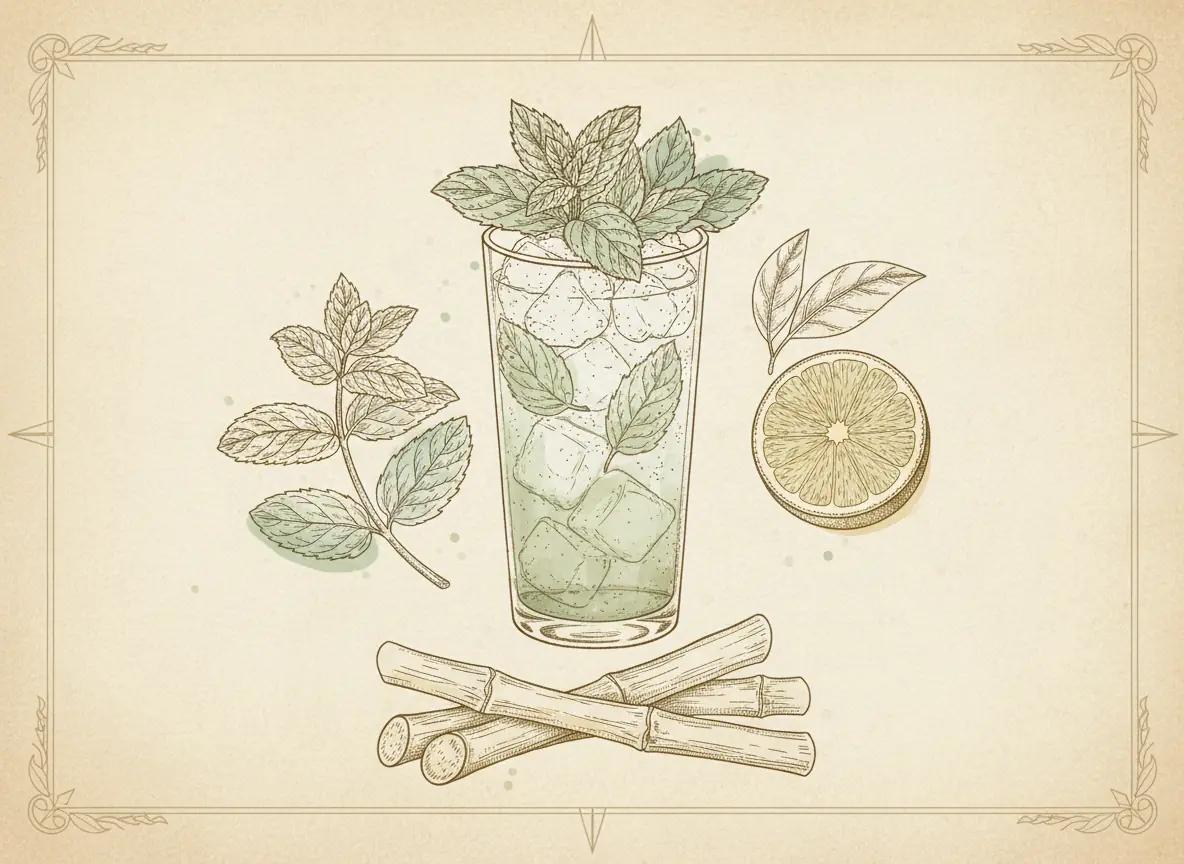
The Mojito is one of the oldest Cuban cocktails on record, its roots traced to a sixteenth-century proto-version called El Draque, named after Sir Francis Drake, whose fleet anchored off Havana in 1586. Drake’s sailors mixed local aguardiente, the rough precursor to Cuban rum, with mint, lime and sugar as a remedy for dysentery and scurvy. The combination has proved more enduring than the illness. The modern Mojito is built on white rum, with soda water extending it into a long, refreshing serve suited to the Cuban climate. Hemingway is associated with it through La Bodeguita del Medio, and whether that association is accurate or partly mythologised is debated. The drink does not need it. Technique matters here more than most high-volume bars are willing to invest in: mint pressed rather than muddled, lime squeezed fresh, sugar dissolved before the rum, and soda poured gently enough to survive into the first sip.
Nuclear Daiquiri
The Nuclear Daiquiri is a daiquiri with the base split between overproof Jamaican rum and green Chartreuse, and there is no sugar syrup in it at all. Ten millilitres of falernum is the entire sweet register, which is not much against forty-five millilitres of two of the loudest liquids on any back bar. Gregor de Gruyther built it at LAB in London around 2005. The name was accurate rather than clever: Wray & Nephew at 63 per cent and Chartreuse at 55 make a drink that is genuinely strong, and the colour that comes out of the shaker is a green-gold that looks like a warning. What makes it a modern classic rather than a dare is that it is properly balanced. The rum's ester funk and the Chartreuse's herbs are so loud that they cancel rather than compete, the falernum's clove translates between them, and a full measure of lime holds the whole thing inside a sour's structure. The result is improbably harmonious. It is also one per evening.
Old Cuban
The Old Cuban is a Mojito promoted rank by rank. Aged rum where white stood, champagne where the soda was, mint shaken rather than muddled, a coupe instead of a highball, and two dashes of Angostura that were never in the original at all. Audrey Saunders built it in 2001 and installed it at Pegu Club, where it became the house's gentler flagship alongside the gin drinks. It reached modern-classic status almost immediately and has not left the international lists since. What makes it work is that the promotion is systematic rather than decorative. Every substitution moves in the same direction, and the lime, mint and sugar core is untouched. The bitters are the one addition rather than an upgrade, and they are the masterstroke: two dark dashes grounding all that sparkle in something older and giving the drink a floor to stand on. It is the detail that makes the whole thing hold together.
Orange Daiquiri
The Orange Daiquiri is the fruit family's subtlest member: fresh orange folded into the Cuban frame, with lime kept on at half strength to do the structural work orange cannot. The rum houses promoted daiquiris in every citrus the island grew through the mid-century, and this is the gentlest of that set. The craft is in managing the succession. Orange has roughly a third of lime's acidity and considerably more sugar, so it cannot simply take lime's seat: left alone it dissolves the daiquiri into juice. The spec gives orange the volume and the perfume, keeps ten millilitres of lime as the constitutional acid, and trims the syrup because the orange arrives sweet already. What comes out is rounder and softer than the parent, a daiquiri in afternoon light. It is the least ordered of the fruit daiquiris and among the most quietly pleasant, and it is the right pour for anyone who finds the classic austere.
Painkiller
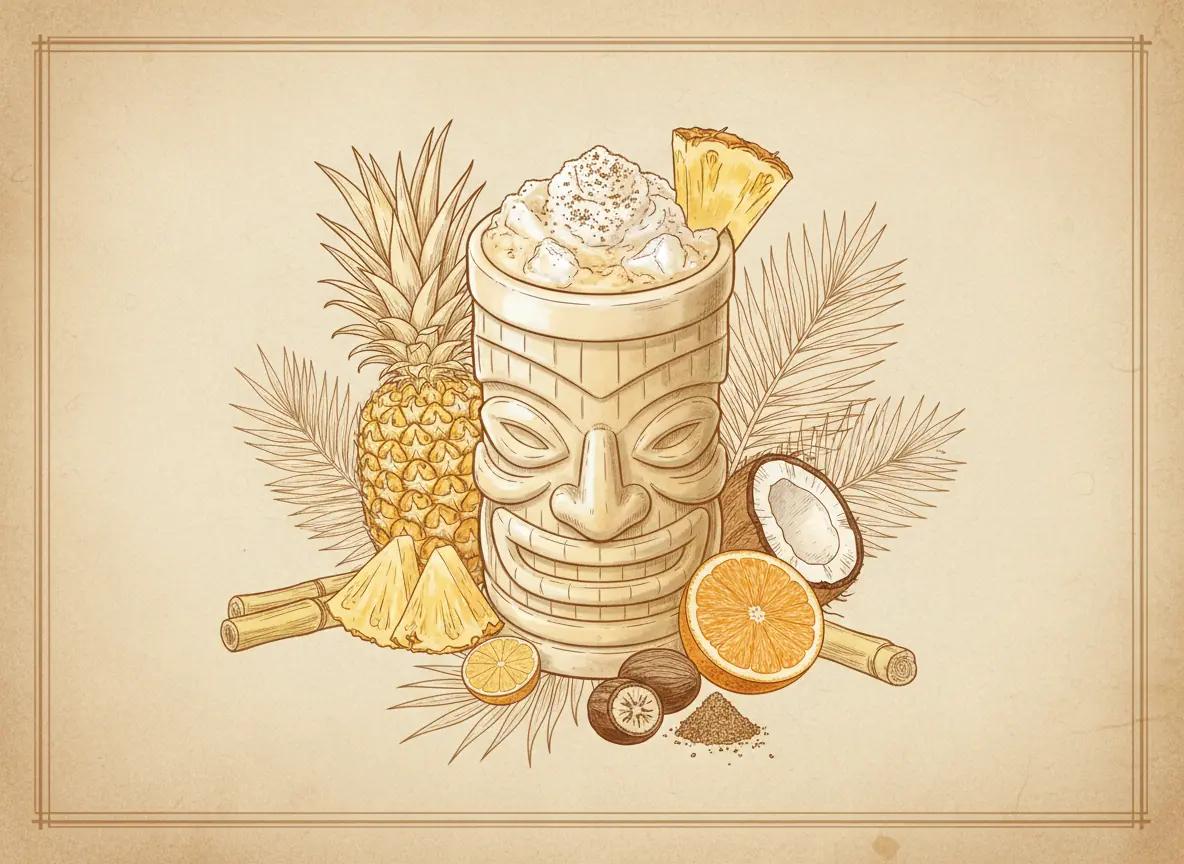
The Painkiller was created at the Soggy Dollar Bar on Jost Van Dyke in the British Virgin Islands in the 1970s, a bar named for the fact that arriving boats had no dock and customers swam ashore with their cash in hand. Daphne Henderson built the drink for those wet-pocketed arrivals, and it became one of the most enduring tiki-adjacent cocktails of the modern era. Pusser's trademarked the name in the 1980s, insisting an authentic Painkiller must use their rum: a commercially motivated claim, though their navy rum does perform exceptionally well in the format. It sits in the same family as the Piña Colada and is considerably more interesting. Where the Colada blends rum, pineapple and coconut into a single smooth result, the Painkiller is served over ice and adds fresh orange juice, which introduces an acid note the Colada lacks entirely. Freshly grated nutmeg is not optional. Pre-ground has lost the volatile oils that make it worth adding at all.
Passion Fruit Daiquiri
The Passion Fruit Daiquiri is the shaken branch of the fruit daiquiri family and the connoisseur’s pick of it. Passion fruit’s perfumed sharpness is the rare tropical flavour that needs no blender softening, its natural acidity slotting into the daiquiri frame as though the fruit had studied the recipe in advance. The spec doubles the fruit. Fresh pulp, seeds and all, supplies perfume and texture, while a measure of passion fruit syrup carries the sweet side, which is the pairing the Pornstar Martini already proved works. The lime stays but shortens, because the fruit brings a good deal of sharpness of its own. Shaken hard and double strained, or coarse strained for the seeds its partisans defend, it is the tropical daiquiri that drinks like a classic sour rather than like a dessert, and it remains the fastest and best possible use of a ripe, wrinkled passion fruit. Ripeness is the one thing it will not forgive: a smooth, glossy fruit is underripe and will be thin and sour inside.
Piña Colada
The Piña Colada is Puerto Rico’s gift to the pleasure principle, created, by the strongest of the competing claims, by Ramón “Monchito” Marrero at the Caribe Hilton in San Juan in 1954, after months of testing rum against the newly invented cream of coconut. A rival claim belongs to Barrachina in Old San Juan, the island argues the point enthusiastically, and in 1978 Puerto Rico settled the only question that matters by declaring it the national drink. It is also the most abused recipe in the tropical canon: decades of pre-mixes, syrups and slush machines buried a genuinely balanced drink under a reputation for sugar. The real thing is three ingredients in proportion, rum, fresh pineapple and true cream of coconut, blended briefly with good ice, and it drinks like a holiday with structure: creamy, yes, but bright, cold and finished with real rum presence. The cream of coconut is the make-or-break: the proper sweetened coconut cream the drink was invented around, not coconut milk and not dessert syrup. Give it that, fresh juice and a light hand on the blender, and the most mocked drink of the twentieth century quietly reveals itself as one of the best-engineered.
Planters Punch
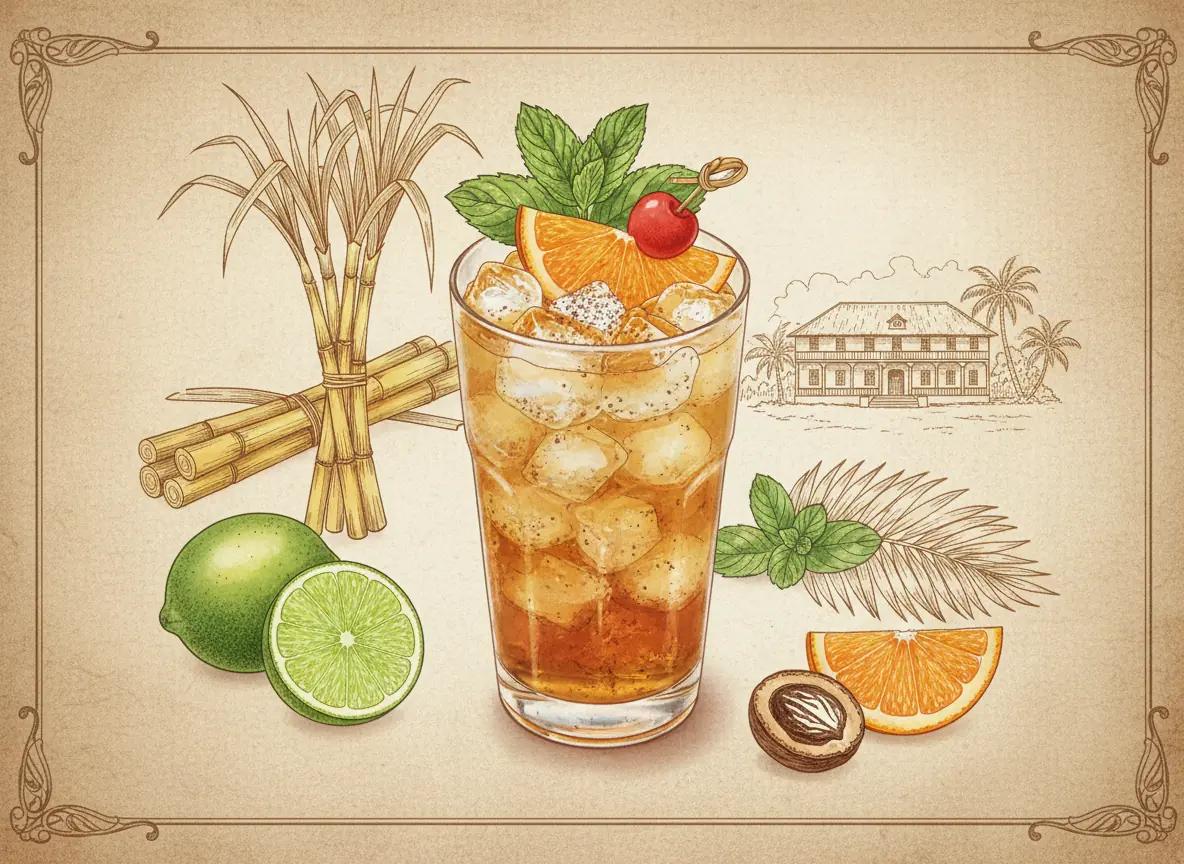
Planter’s Punch is one of the oldest rum drinks in the English-speaking Caribbean tradition, with documented references stretching back to the late nineteenth century and a formula that predates most of the tiki canon it gets grouped with. The most commonly cited origin places it at the Myers’s Rum distillery in Jamaica, through a 1908 advertisement in the New York Times, though the drink is older than that and the association is commercial rather than definitive. The formula that has circulated most reliably is a rhyme from Caribbean bartending culture: one of sour, two of sweet, three of strong, four of weak. Lime, sugar syrup, rum and water in those proportions are the foundational structure, and every version since is a variation on that ratio. The build here adds grenadine for colour and a finishing dash of Angostura, with dark Jamaican rum as the base: funky, full-bodied and molasses-rich. That rum is the decision the drink turns on, because the rhyme will balance almost any spirit and only a Jamaican one makes it taste like this.
Queen’s Park Swizzle
The Queen’s Park Swizzle was born at the Queen’s Park Hotel in Port of Spain, Trinidad, in the 1920s, and it collected the highest praise tiki ever handed out: Trader Vic called it “the most delightful form of anaesthesia given out today”. He knew the good stuff when he borrowed it. It is the definitive swizzle, the drink the technique is named for. The stick, originally a pronged twig from a Caribbean tree, spins between the palms until the drink is churned to a frost, chilling and diluting crushed ice faster than any spoon manages. The architecture is vertical. Mint at the bottom, rum and lime through the middle, and a heavy crown of Angostura bled into the top layer of ice, so the drink changes as you descend: bitter and aromatic at the first pull of the straw, brighter and sweeter at the bottom. Build it in layers and let the straw do the mixing.
Rabo de Galo
Rabo de Galo means rooster's tail, which is a direct Portuguese translation of cocktail and a joke that has outlasted several explanations of itself. It is Brazil's stirred drink: cachaça with sweet vermouth and Cynar, built over ice in a rocks glass, and it is what Brazilians drink when they are not drinking a Caipirinha. The original was simpler — cachaça and vermouth in roughly equal parts, sold in bars and at street kiosks through the mid-twentieth century. The Cynar arrived later and the official specification includes it, which is the right call: the artichoke amaro is what turns a two-ingredient mixture into something with a spine. Sixty millilitres of cachaça to twenty of vermouth and fifteen of Cynar is spirit-forward and deliberately so. This is an evening drink rather than an afternoon one.
Reggae Rum Punch
The Reggae Rum Punch is Jamaica’s actual daily pour: the island’s most popular punch, sold under a dozen names from beach shacks to hotel bars, always on the same chassis of overproof white rum, pineapple, orange and something red. Strawberry syrup carries the red flag here. The build is the island’s answer to the planter’s rhyme: juices for the length, strawberry for the sweet, lime for the sour, and unaged Jamaican overproof for the strong, its funky fire being the ingredient every version agrees on. The rum is the passport and everything else is negotiable by parish. It drinks brighter and louder than the old-school punches, a beach drink with genuine horsepower behind it and none of the ceremony the older ones carry. One bottle, one island’s afternoons, and a great deal more strength than the fruit ever lets on until afterwards. Overproof rum does that quietly, which is the oldest trick in punch and the reason the format has never needed improving.
Right Hand
The Right Hand is the rum half of a matched pair. Michael McIlroy built it on the frame Sam Ross had used for the Left Hand, bourbon with Campari, sweet vermouth and chocolate bitters, and swapped the base for aged rum while leaving every other measure exactly where it stood. That single substitution is the whole drink, and it is the cleanest lesson in base spirits the modern canon has to offer. Bourbon brings corn sweetness and vanilla. Aged rum brings molasses, dried fruit and a darker kind of oak. Everything else is held constant, so whatever changes in the glass is attributable to the bottle and to nothing else. Rum against Campari is not an obvious pairing until you have had a Jungle Bird. Dark sugar can stand up to bitter orange where lighter spirits are simply overrun, and here that standoff happens stirred and formal, with the vermouth refereeing and the chocolate bitters sealing the seam between them.
Rum Runner
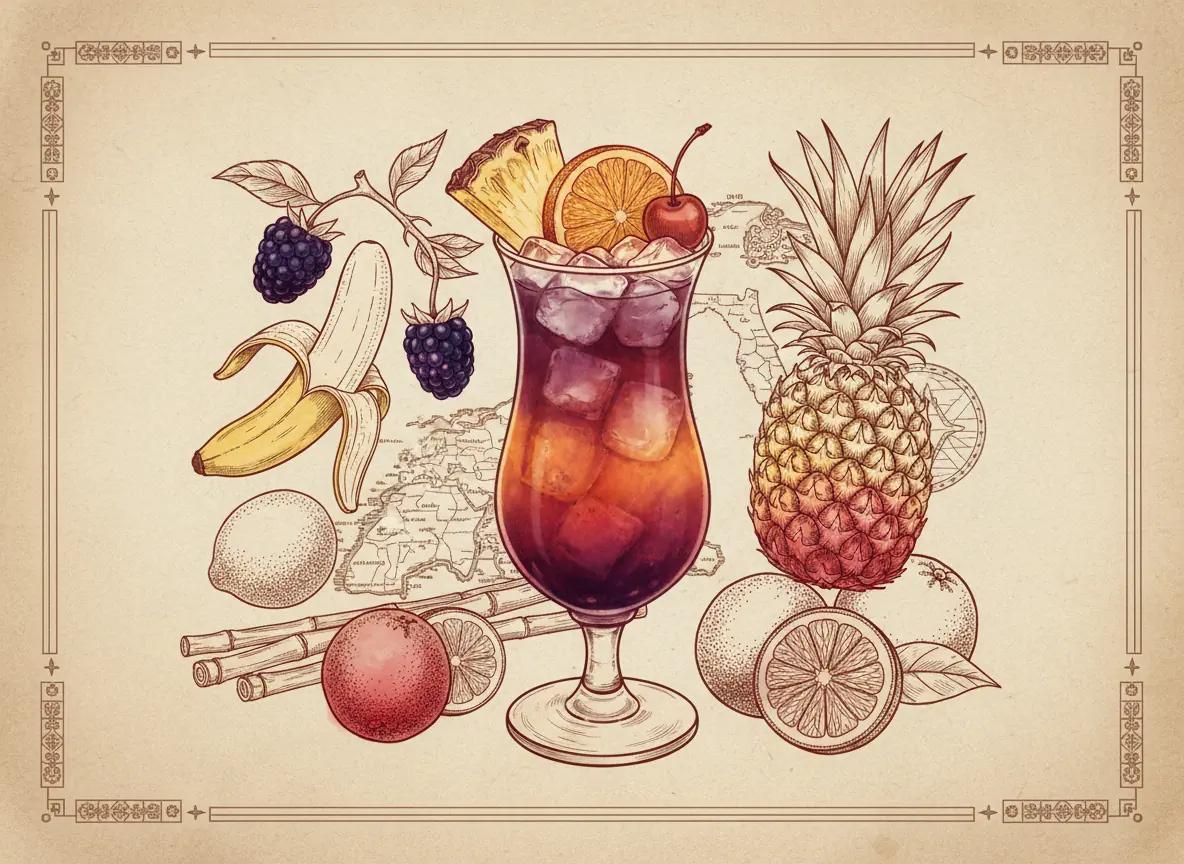
The Rum Runner was born from necessity and named for outlaws. In the early 1970s, John "Tiki John" Elber, manager of the Tiki Bar at the Holiday Isle in Islamorada, Florida Keys, faced a bartender's dilemma: too much stock and a new shipment on the way. Rather than let good booze go to waste, he threw together what he had, rum, blackberry brandy, banana liqueur, grenadine, and lime juice, and created what would become the signature drink of the Keys. He named it after the region's real rum runners: the smugglers who used the maze of Florida waterways to transport Caribbean rum to thirsty speakeasies during Prohibition. The original recipe contained no fruit juices, just spirits, liqueurs, and lime. Over the decades, pineapple and orange juice crept in, transforming it into the tropical fruit bomb most bars serve today. Served over crushed ice or blended frozen, the Rum Runner is unapologetically sweet, fruity, and dangerously easy to drink. It tastes like vacation: messy, fun, and best enjoyed with sand between your toes.
Rum Smash
The smash is the julep’s scruffier sibling: spirit, sugar, fresh mint and citrus muddled coarsely and served over crushed ice, a formula Jerry Thomas was printing in 1862 as “a julep on a small plan”. Whiskey took the format’s fame; rum, which grew up beside sugar cane and lime, arguably deserved it more, and the Rum Smash makes the case in about four minutes. The format’s genius is its roughness. Where the daiquiri strains and polishes, the smash muddles lemon wedges skin and all, bruises mint into the sugar and pours the lot unstrained: pith oils, pulp and leaf fragments included. It is citrus with its jacket off, and spiced rum, with its vanilla and baking-spice warmth, is the best partner the format has ever had. This is the drink to make when someone says they want something fresh but not fussy: no shaker technique, no strainer, no stemware, and a result that tastes twice as considered as it is. It rewards a heavy hand with the mint and a light one with everything else.
Rum Sour
The Rum Sour is the sour template with one of its oldest partners in it: aged rum, lemon and sugar in the proportions the whiskey branch of the family made famous. The template was never proprietary to any one spirit. Jerry Thomas’s 1862 guide already prints sours across several of them, and rum has been taking its turn for as long as anyone has been writing the recipes down. The lemon is the point of difference. A daiquiri runs lime, which is bright and maritime and belongs to white rum. Lemon reads rounder and more orchard, and it flatters oak and dried fruit the way it flatters bourbon’s vanilla. Same architecture, warmer key, one citrus apart. The egg white is optional and traditional both, borrowed from the Boston Sour for the reason it is borrowed there: it lays a texture over the acid without moving the balance underneath it. Served plain over rocks the drink is brighter and more direct. Both readings are correct.
Rum Swizzle
The Rum Swizzle is Bermuda’s other national drink, sharing the title with the Dark ’n’ Stormy and predating it comfortably: the Swizzle Inn at Bailey’s Bay has been pouring its version since 1932 under the motto “swizzle inn, swagger out”, and island tradition takes the drink back further still. Black rum, falernum, citrus and bitters, churned over crushed ice until the glass frosts. It is the swizzle family’s crowd-pleaser: where Trinidad’s Queen’s Park Swizzle is vertical and austere, mint and bitters over rum, Bermuda’s is a fruit-forward jug drink, pineapple and orange folded through dark rum with falernum spicing the seams. The technique is identical, the swizzle stick spun between the palms until the churn does what no spoon can. Made by the glass it is a five-minute holiday; made by the pitcher, which is how Bermuda actually drinks it, it is one of the great group serves, the whole build scaled up and swizzled in the jug before pouring over fresh crushed ice.
Rum and Coke
Two ingredients, no technique, and one of the most ordered drinks on earth. Rum and Coke has no documented inventor and no published specification — it appeared wherever American cola met Caribbean rum, most plausibly in Cuba after 1900, and it has been poured by eye ever since. It is also not a Cuba Libre, whatever a menu tells you. The Cuba Libre is this drink plus lime, and that squeeze is not a garnish: it cuts the cola's sweetness and changes the whole balance. Order one in Havana and you get lime; order the other and you do not. What a two-ingredient drink exposes is quality. There is nothing to hide a harsh rum behind and nothing to disguise a flat, oversweet cola, which is why the difference between a careless one and a considered one is larger here than in almost anything with five ingredients in it.