Hurricane
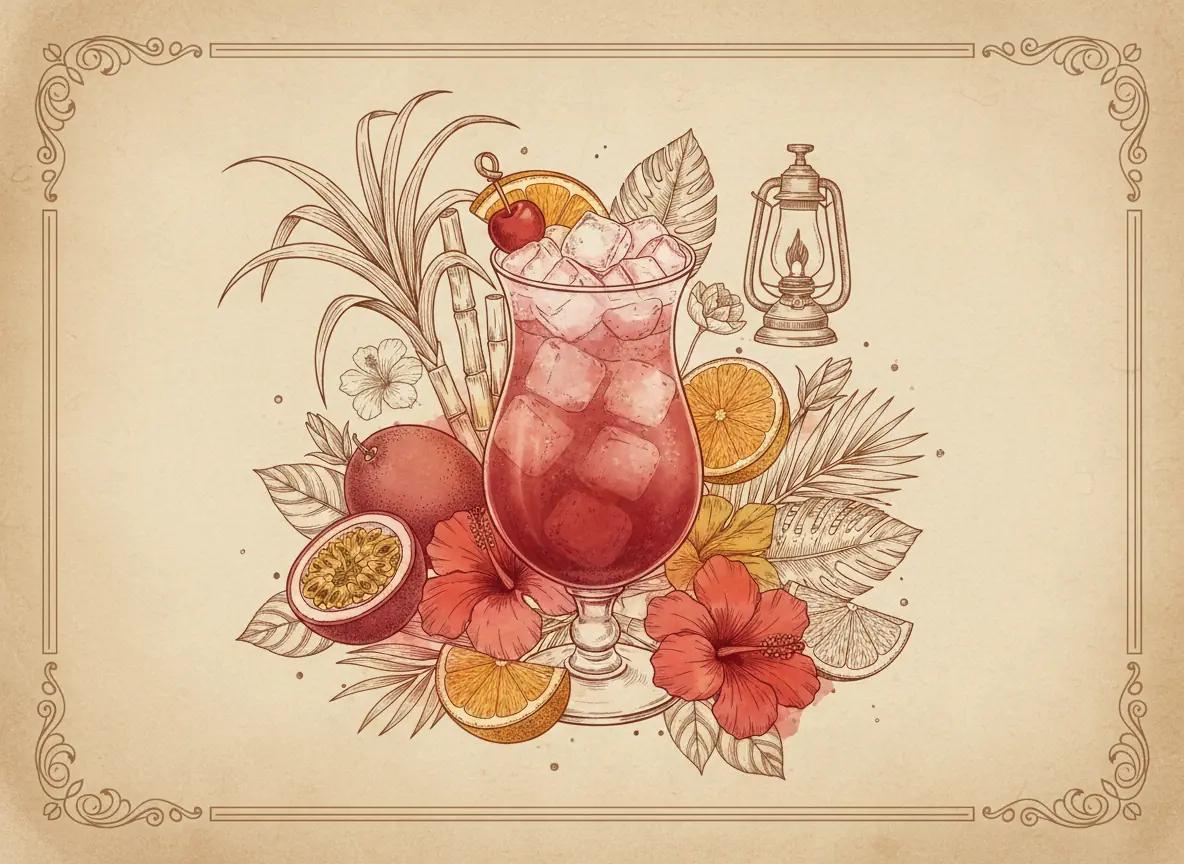
A Hurricane is 60ml of dark rum, 60ml of white rum, 45ml of passion fruit syrup, 30ml each of fresh lime and orange juice, and 15ml each of grenadine and simple syrup, shaken hard and strained over crushed ice in a hurricane glass. Garnish with orange and a cherry. At about 4.8 UK units it is a strong drink, a third of a week’s guideline in a single glass. The Hurricane most people know is Pat O’Brien’s, the New Orleans bar, where the Oxford Companion says it was introduced and head bartender Louis Culligan is credited with creating it. Difford’s Guide thinks it originated in 1939 at The Hurricane Bar in New York. The usual account is O’Brien’s own: during the Second World War whisky was only available to a bar that bought large amounts of rum, and the drink was a way to use it, served in a glass shaped like a hurricane lantern. Premixed versions later became the standard serve in the city. Made with fresh juice and a passion fruit syrup with real fruit in it, the Hurricane is a tart, balanced rum punch.
Glassware: Hurricane Glass
Garnish: Orange slice and Maraschino cherry
Ingredients
60ml
A full-bodied dark rum at 40% ABV, giving body and a dark caramel note under the fruit. Use a plain dark rum, not a spiced one, whose vanilla and clove pull against the passion fruit.
60ml
A clean, lightly aged white rum at 40% ABV. It lifts the dark rum and keeps two large measures of spirit from turning heavy.
45ml
Made from real passion fruit. It brings tartness as well as sugar, and at 45ml nothing else in the glass is louder.
30ml
Juice it fresh. The main acid, and the first thing to adjust: if the drink tastes cloying, add 5ml more.
30ml
Juice it fresh too. It adds body and a softer citrus note than the lime; carton juice tastes cooked at this volume.
15ml
Made with real pomegranate, for its red and a tart berry note. Cheap versions are sugar syrup dyed red.
15ml
Sugar and water, 1:1 by weight, and the measure that moves: more with a purée, less or none with a very sweet passion fruit syrup.
Instructions
Squeeze the lime and orange juice the same day.
Fill a hurricane glass of 50cl or more with crushed ice and set it aside.
Add both rums, the passion fruit syrup, lime juice, orange juice, grenadine and simple syrup to a shaker with cubed ice.
Shake hard for 10 to 12 seconds.
Strain over the crushed ice.
Garnish with an orange slice and a cherry, and serve with a straw.
Our version
Pat O’Brien’s serves its own premix and no measured original is published, so the measures are ours: 60ml each of dark and white rum, passion fruit syrup, fresh lime and orange, grenadine and simple syrup.
Source: our own specification. Last checked 9 October 2026.
Expert Tip
Taste before you pour. Passion fruit syrups vary widely in sugar, and the drink tips from tart to sticky on a few millilitres. If it tastes dull, add 5ml more lime before touching anything else. Use a syrup made from real passion fruit. At 45ml it leads the drink, and artificial passion fruit shows in every sip. A purée carries less sugar than a syrup, so raise the simple syrup to suit. Squeeze the lime and orange the same day. There is 60ml of juice in the glass, and carton orange tastes cooked beside fresh.
Behind the Hurricane
Flavour Profile
Where It Comes From
The Oxford Companion credits Pat O’Brien’s bar in New Orleans with introducing the Hurricane, and its head bartender Louis Culligan with creating it, and its own site calls it a French Quarter establishment.
The usual account, O’Brien’s own as the Oxford Companion tells it, is a supply story: during the Second World War whisky was only available to a bar that bought large amounts of rum, so he needed a drink that would use the rum.
The answer was strong, fruity and served in a tall, curved glass. Difford’s Guide says the drink is named after the shape of a hurricane lamp and served in the tall glass of the same name, and the Oxford Companion describes that glass as shaped like the chimney of an old hurricane lantern.
The Premix Problem
As the drink became a New Orleans fixture, premixed concentrates took over, coloured and heavily sweetened, because they pour fast in volume.
Many people have only met that version, which explains the drink’s reputation for sweetness.
The Passion Fruit
Passion fruit is sharp as well as sweet, so the recipe counts on the syrup to sharpen as well as sweeten.
That is why the balance shifts so much between brands. A syrup made from real fruit keeps the drink tart; an artificially flavoured one adds sugar and a chemical note that 45ml cannot hide.
Home-made passion fruit syrup, from purée and sugar, is one we keep for two to three weeks in the fridge.
Two Rums
Equal parts dark and white rum. The dark one gives the drink its body; the white one lightens it, so two big measures of spirit never turn heavy.
What goes into a Hurricane
Dark rum
- Measure
- 60ml
- Its job
- Weight and depth
White rum
- Measure
- 60ml
- Its job
- Lift and a cleaner rum note
Passion fruit syrup
- Measure
- 45ml
- Its job
- The main flavour, sweet and tart
Fresh lime juice
- Measure
- 30ml
- Its job
- The main acid
Fresh orange juice
- Measure
- 30ml
- Its job
- Body and a softer citrus note
Grenadine
- Measure
- 15ml
- Its job
- Colour and fruit depth
Simple syrup
- Measure
- 15ml
- Its job
- Adjusts for the passion fruit syrup
| Ingredient | Measure | Its job |
|---|---|---|
| Dark rum | 60ml | Weight and depth |
| White rum | 60ml | Lift and a cleaner rum note |
| Passion fruit syrup | 45ml | The main flavour, sweet and tart |
| Fresh lime juice | 30ml | The main acid |
| Fresh orange juice | 30ml | Body and a softer citrus note |
| Grenadine | 15ml | Colour and fruit depth |
| Simple syrup | 15ml | Adjusts for the passion fruit syrup |
That is 120ml of rum, more than most cocktails carry. At about 4.8 UK units, one glass uses up about a third of the weekly 14.
How to Serve It
Shaken and strained over crushed ice in a hurricane glass, garnished with orange and a cherry, and served with a long straw.
Serve it at once and cold. It is a long, strong drink, and one is usually enough.
Make it at home
The Spirit
Dark RumDark rum is a heavy, deep-coloured rum, counted at 40% ABV in our recipes, whose colour may come from years in oak, from blending or from added caramel, which Regulation (EC) 110/2008 allows. It brings weight and a burnt-sugar note to punches, hot drinks and tiki builds: the Rum Runner, the Hurricane and the Planter’s Punch.
Master the Techniques
More to explore
Frequently Asked Questions
What is a Hurricane?
Why is it called a Hurricane?
Which passion fruit syrup should I use?
How strong is a Hurricane?
Is the Hurricane a tiki drink?
Crushed ice or cubes?
Can I make Hurricanes for a group?
Sources.
Checked between 18 October and 19 October 2026.
- The Oxford Companion to Spirits and Cocktails (Chuck Taggart), “The Hurricane” (secondary source: introduced at Pat O’Brien’s bar, St Peter Street; Louis Culligan credited; O’Brien’s account of the wartime whisky allocation; Culligan’s 1956 recipe; a 1941 Ronrico booklet’s Hurricane Punch; glass shaped like the chimney of an old hurricane lantern).
- Pat O’Brien’s, “New Orleans” (producer’s page: the bar as a French Quarter establishment).
- Difford’s Guide, “Hurricane Cocktail Recipe” (secondary source: named after the shape of a hurricane lamp and served in the tall glass of the same name; thought to have originated in 1939 at The Hurricane Bar in New York City, made famous at Pat O’Brien’s).
You Might Also Like
Rum Runner
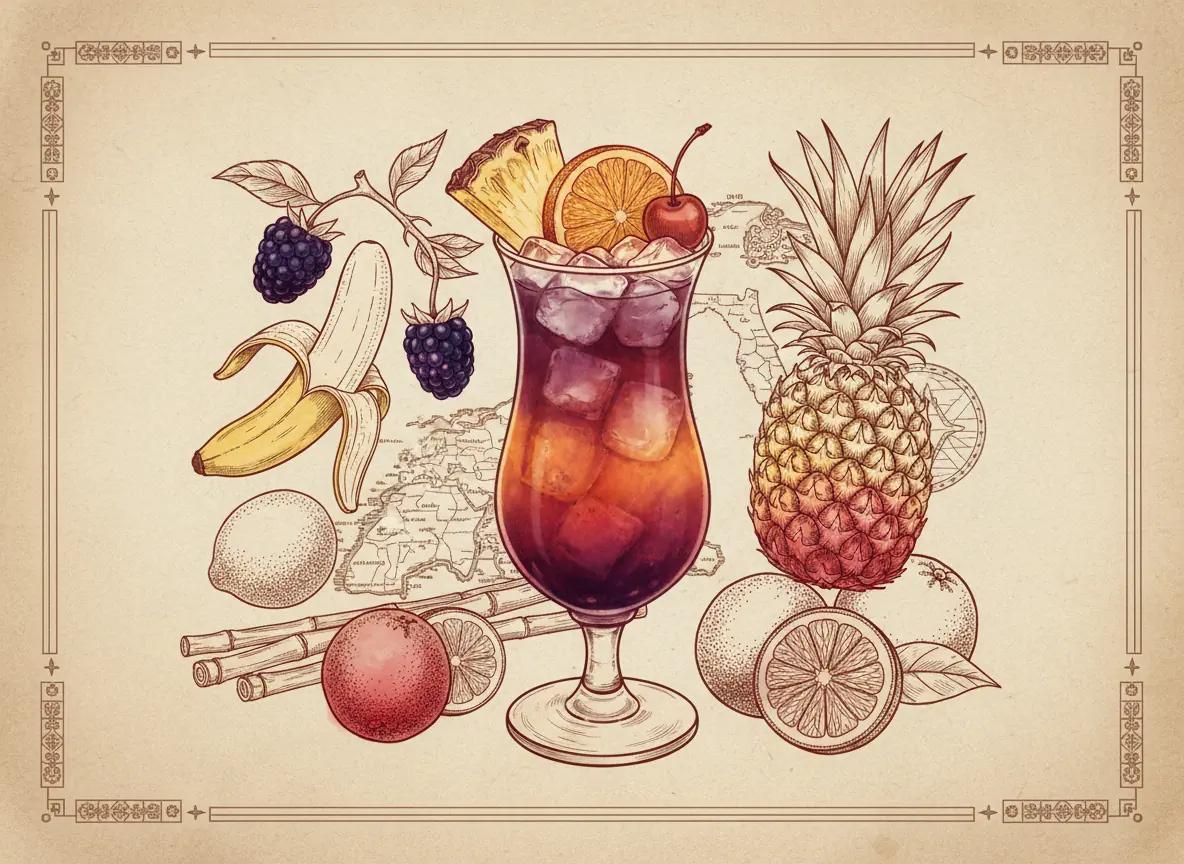
A Rum Runner is a Florida Keys tiki drink: 30ml each of dark and white rum, 15ml each of blackberry and banana liqueur, 10ml grenadine, 15ml fresh lime juice, 45ml pineapple juice and 30ml orange juice, shaken hard and strained over crushed ice in a hurricane glass. A 15ml float of overproof rum is optional. Blended with the ice instead, it becomes the frozen Rum Runner the Keys are known for. The usual account, which Difford’s Guide quotes from the Holiday Isle Tiki Bar’s own site and calls legend, credits the bar’s manager John “Tiki John” Elber with mixing it to clear surplus rum and liqueur before a delivery; the bar took its name in 1971, so the early 1970s is the likely date. That first version had no fruit juice. Pineapple and orange came later and made it the long, fruity drink most bars pour now. It is stronger than it tastes: about 3.0 UK units a glass, 3.9 with the float. Fresh lime and a pomegranate grenadine are what keep it from tasting of boiled sweets.
Scorpion
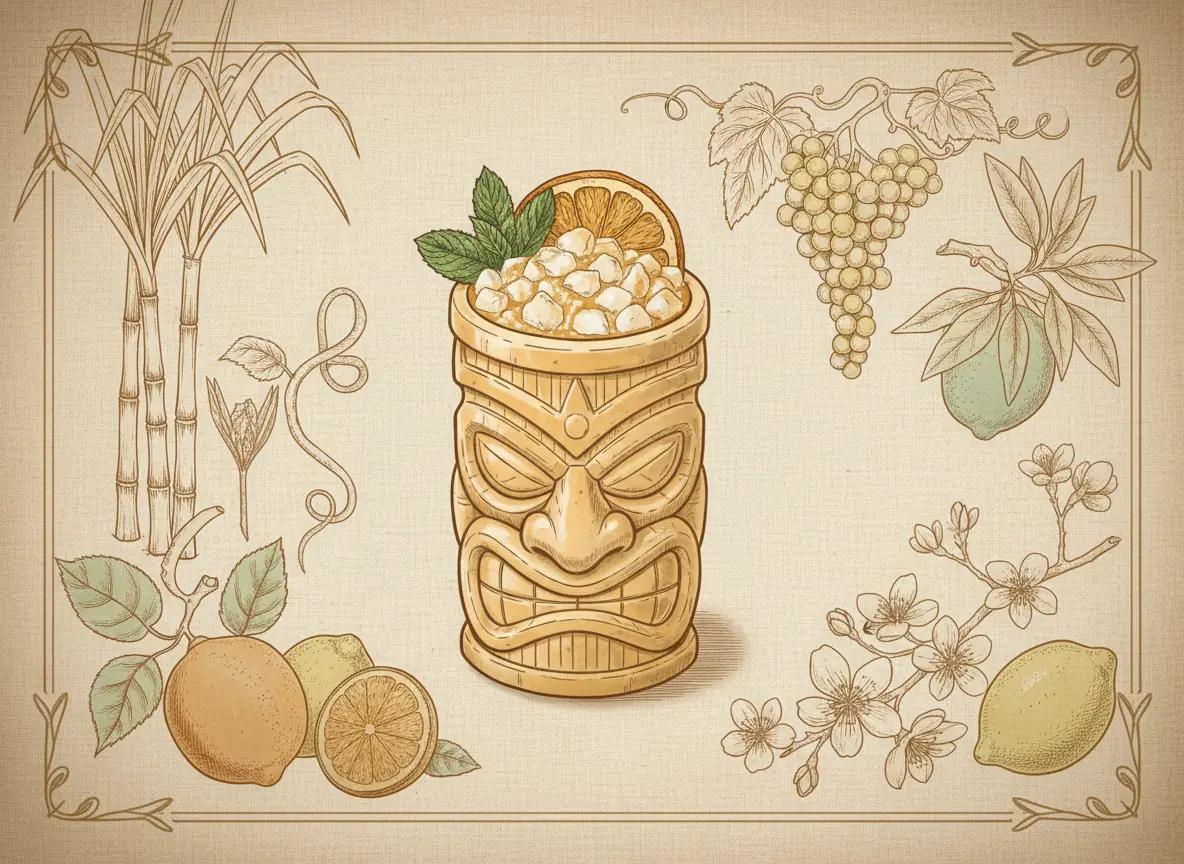
The Scorpion is Trader Vic’s rum and brandy sour: 45ml white rum, 22.5ml cognac, 50ml fresh orange juice, 30ml fresh lemon juice and 15ml orgeat, shaken hard and strained over crushed ice in a tiki mug or large rocks glass. The measures are adapted from Trader Vic’s Bartender’s Guide in its 1972 revised edition. Victor Bergeron, the Trader Vic of the restaurant chain, is credited with it; Punch dates his recipe to 1946, and Tasting Table traces the drink to a Honolulu punch in print by 1938. Difford’s Guide, citing Life magazine, has Vic serving the Scorpion in four-pint bowls made to serve four, and prints his 1972 recipes for a single glass and for a bowl for three or four. The single glass is the same drink at one person’s size. It comes out pale orange, almond-scented and drier than it looks, at about 2.7 UK units. Fresh orange and lemon and an orgeat made from almonds decide it. Orgeat contains nuts, which matters for anyone with an allergy.
Painkiller
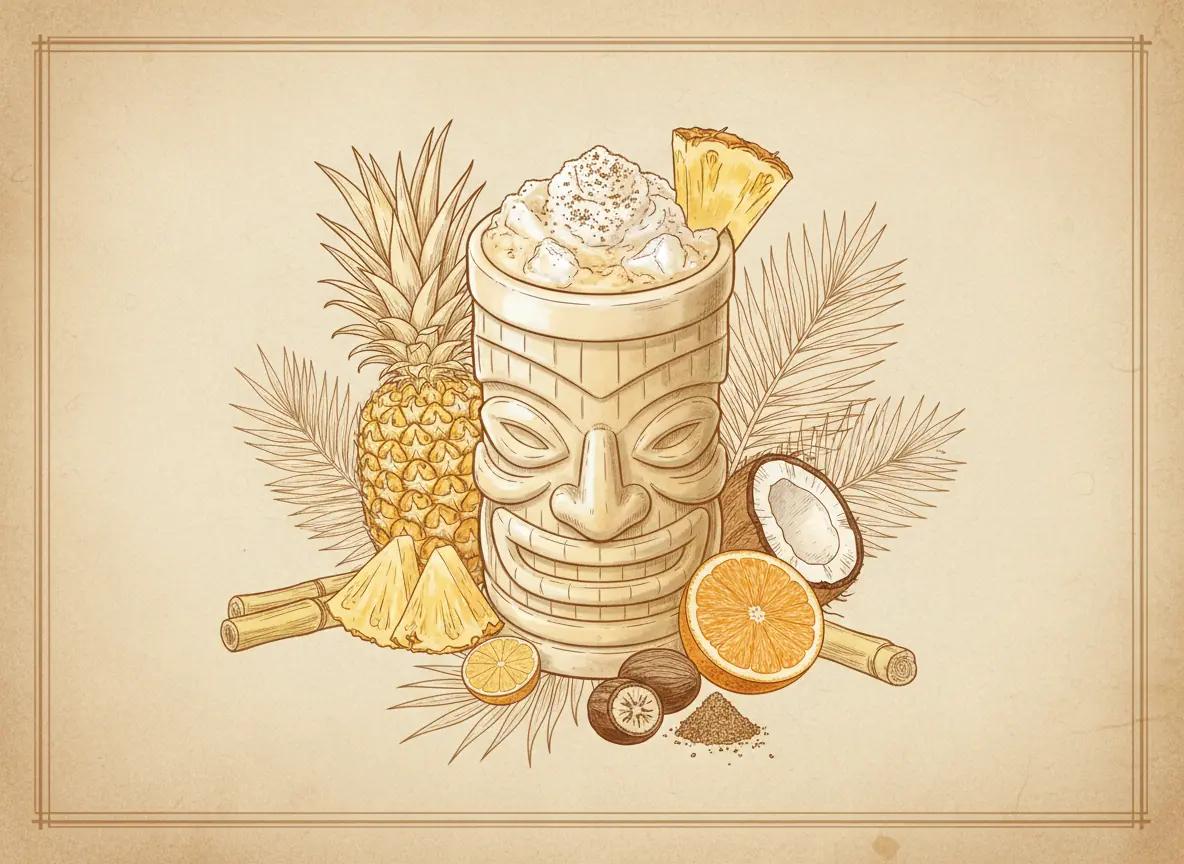
A Painkiller is 60ml of Pusser’s Rum, 120ml of pineapple juice, 30ml of fresh orange juice and 30ml of cream of coconut, given a hard 10 to 12 second shake and strained onto cubed ice in a tiki mug or a big glass, with fresh nutmeg grated on top. About 2.4 UK units. Cream of coconut is coconut and sugar, usually with no dairy, but check the label. The name belongs to Pusser’s. Pusser’s prints the name with the registered symbol on its own Painkiller page, and the Oxford Companion says the company owns the trademark for the Pusser’s Painkiller cocktail. The recipe here is its own: four parts pineapple, one of cream of coconut and one of orange, with Pusser’s to suit. Difford’s Guide says it trademarked the name in the United States and the UK in 2003 and in 2010 forced a New York bar called Painkiller to rename itself PKNY. Pusser’s traces the drink to Daphne Henderson’s Soggy Dollar Bar on Jost Van Dyke, in the British Virgin Islands.
Where this one sits
Recipe by Jerry Can Spirits · Updated 19 October 2026