Brandy Snifter
A brandy snifter is a balloon of glass on a short stem, wide in the bowl and narrower at the mouth, and our guidance is 18 to 30cl, though balloon versions run far larger. It is for aged spirits sipped neat in pours of 25 to 50ml: the broad base gives it room to open and the tighter mouth keeps its smell in. Cognac, armagnac, calvados and aged rum all suit it.
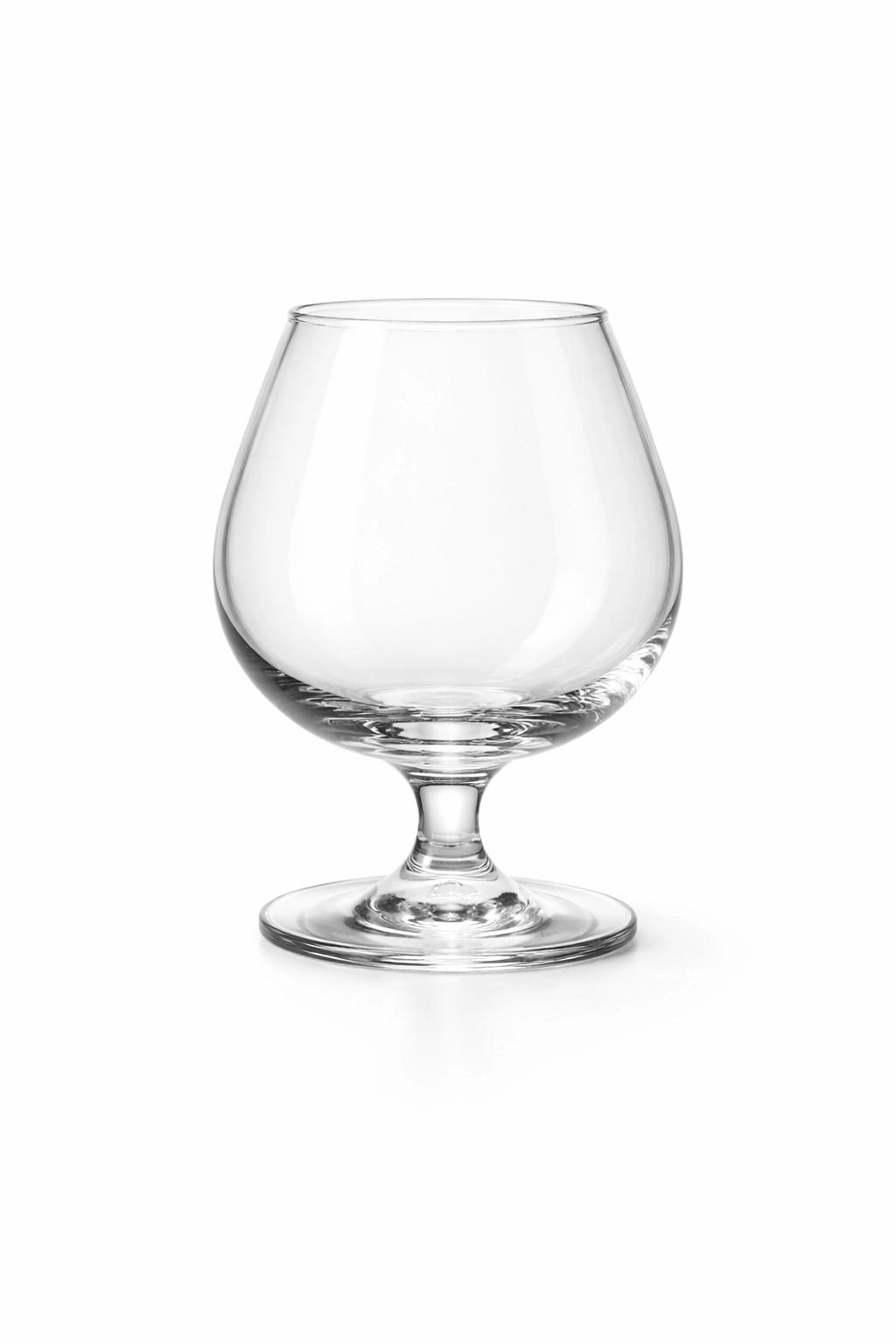
About the Brandy Snifter
A Wide Bowl Under a Narrow Rim
A snifter swells out from a short stem and draws in again at the rim. A small pour spreads across the wide base, where it gives up its smell, and the narrower opening holds that smell over the spirit.
Size changes how well it works. In a bowl of 18 to 30cl, our guidance, the space over a 30ml pour stays small enough to fill with aroma; in a 70cl balloon, the same pour is lost.
Warming Is Optional, Flames Are Not
The short stem lets the bowl rest in the palm, and the old habit was to warm the spirit that way. Much modern tasting advice prefers room temperature and the stem, because warmth sharpens the alcohol on the nose.
Never warm the glass over a candle or a flame. Uneven heat can crack thin glass, and the alcohol vapour it drives off can catch light.
The snifter beside other glasses for neat spirits (Glencairn’s figures from its own site; rocks glass from our shop; the snifter our guidance)
Brandy snifter
- Usual size
- 18-30cl (our guidance)
- Shape
- Wide bowl, short stem
- Suits
- Cognac and aged spirits after dinner
Glencairn
- Usual size
- 200ml (Glencairn)
- Shape
- Tulip on a solid base
- Suits
- Nosing whisky and rum
Sherry copita
- Usual size
- 170ml (Glencairn’s copita)
- Shape
- Small tulip on a stem
- Suits
- Sherry, port and nosing spirits
Rocks glass
- Usual size
- 26cl (our shop)
- Shape
- Short, heavy tumbler
- Suits
- Spirits over ice
| Glass | Usual size | Shape | Suits |
|---|---|---|---|
| Brandy snifter | 18-30cl (our guidance) | Wide bowl, short stem | Cognac and aged spirits after dinner |
| Glencairn | 200ml (Glencairn) | Tulip on a solid base | Nosing whisky and rum |
| Sherry copita | 170ml (Glencairn’s copita) | Small tulip on a stem | Sherry, port and nosing spirits |
| Rocks glass | 26cl (our shop) | Short, heavy tumbler | Spirits over ice |
Pour Small and Swirl Slowly
Between 25 and 50ml is right, though it looks thin in the bowl. Swirl slowly, since a wide bowl throws a brisk swirl over the rim, and give the spirit a minute before the first sip.
Wash it by hand with very little detergent and rinse it well, so nothing on the glass competes with the spirit.
Using the Brandy Snifter
Usage
Cognac, armagnac, calvados, aged rum and other aged spirits served neat, in pours of 25 to 50ml, and strong, aromatic beers such as barley wine in small measures. The stem is short enough for the bowl to rest in the palm.
Pro Tip
It is often said that a well-made snifter, laid on its side on a table, holds a full pour without spilling. Try it with water before the cognac goes in: it is a quick way to find the right measure for your glass.
Professional Tips
- Pour 25 to 50ml; the glass should look nearly empty.
- Swirl gently, since the wide bowl spills easily.
- Hold the stem to keep the spirit as it is; cup the bowl to warm it slightly.
- Never warm a snifter over a flame.
Alternatives
Budget Alternative
A little wine glass that closes in at the top serves an aged spirit well, and a sherry copita gathers the smell even more tightly.
Premium Option
A thin crystal snifter, or a tulip-shaped spirits glass with a longer stem. Both feel lighter in the hand; neither changes the spirit.
Specifications
Material
Glass or crystal
Capacity
18 to 30cl by our guidance; balloon versions reach 50cl or more
Details
A wide, round bowl that narrows to the rim, on a short stem and a round foot
More to explore
Common Questions
What is a brandy snifter for?
Should you warm a brandy snifter?
How much do you pour in a snifter?
What else can you serve in a snifter?
Snifter or tulip glass for cognac?
What size is a brandy snifter?
Can a brandy snifter go in the dishwasher?
Is a snifter good for whisky?
Sources.
Correct as of 18 October 2026.
- Glencairn Crystal, “The Glencairn Glass” (200ml).
- Glencairn Crystal, “Glencairn Copita” (170ml).
- Jerry Can Spirits shop, “Club ICE Tumbler, 26cl”.
Made with the Brandy Snifter
Related Equipment
Updated 18 October 2026