Sherry Glass
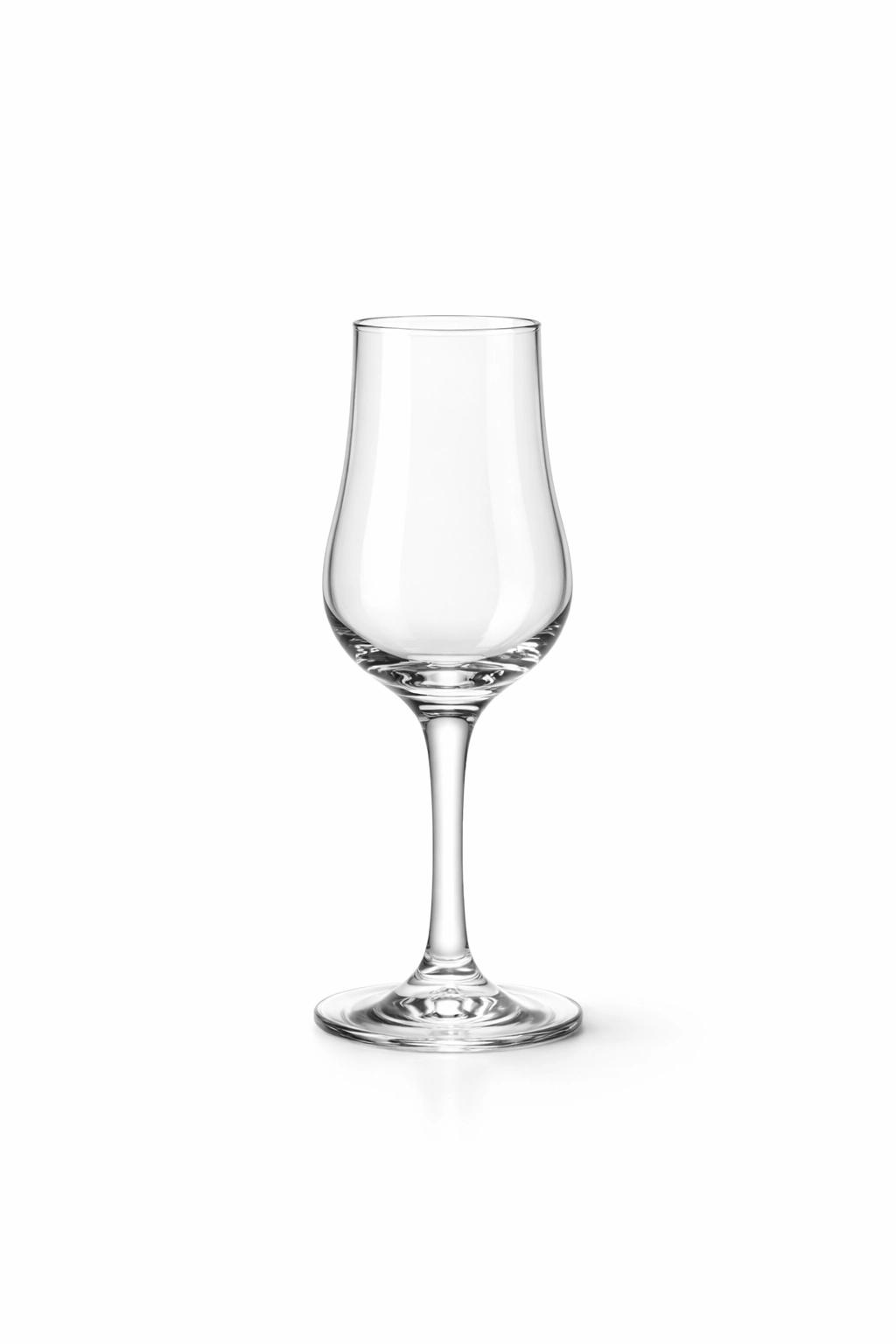
A small stemmed glass with a tapering bowl, properly called a copita. It is the glass the sherry trade uses to assess its own wines, and it does more for a fino than any tumbler or schooner will.
About the Sherry Glass
The Copita
The correct name, and the shape is specific: a tulip bowl narrowing toward the rim on a slim stem, holding around 150ml and intended to be filled to a third of that.
It comes from the sherry bodegas of Jerez, where the venenciador draws wine from a barrel with a long-handled cup and pours it into a copita from a height. The glass exists to be nosed, because judging sherry from the cask is done by smell before anything else.
The taper is what makes it work. Sherry is aromatically complex and often subtle, and a shape that gathers those aromatics rather than dispersing them is doing most of the assessment for you.
Against the Schooner
The small conical thimble that most people picture as a sherry glass, the schooner, is a British invention and an actively bad one.
It holds perhaps 50ml, has straight sides that gather nothing, and its wide open top lets aroma escape entirely. It was designed for a period when sherry was drunk warm, sweet and in small quantities as an afternoon formality, and it flatters none of the wine.
Most of the reputational damage done to sherry in Britain traces to how it was served rather than what was in the bottle. A dry fino from a copita, properly chilled, is a different drink from the same wine at room temperature in a schooner.
Pouring and Temperature
Around 75ml, which fills a copita to a third and leaves the bowl to gather aroma. Overfilling a small glass is the same mistake as overfilling a large one, and more obvious.
Temperature matters more for sherry than for almost any wine, because the range is so wide. Fino and manzanilla want 6 to 8°C, properly cold from the fridge. Amontillado sits around 12°C, oloroso and palo cortado around 14, and a sweet PX is fine at room temperature.
Fino is a living wine under flor and it oxidises quickly once opened. Treat an open bottle like white wine and finish it within a few days.
Port and Other Uses
A copita works for port and is arguably better than the traditional port glass, which is often too small to swirl. Tawny and vintage port both benefit from a shape that gathers aroma, and 75ml is the right measure for either.
It is also an excellent nosing glass for spirits. The shape is essentially what the Glencairn was developed from, and the sherry trade was using it for two centuries before the whisky trade caught up.
Vermouth served neat over ice belongs in a rocks glass, but vermouth as an aperitif, chilled and unadorned, sits very happily in a copita.
Using the Sherry Glass
Usage
Fino, manzanilla, amontillado, oloroso and palo cortado, poured at around 75ml. Also useful for nosing spirits, for vermouth served neat as an aperitif, and for any fortified wine you want to smell before drinking.
Pro Tip
For fino or manzanilla sherry, chill the glass lightly and pour no more than 60ml. The copita’s shape delivers saline and floral notes directly to the nose, making even simple fortified wines feel precise and expressive.
What to Look For
- Tulip shape with inward taper: essential for aroma control
- Thin, smooth rim: enhances delicate sipping
- Balanced stem: stable yet elegant
- Clear, distortion-free glass: colour matters in fortified wines
- Lead-free crystal: clarity without fragility
Common Mistakes to Avoid
- Using wine glasses: too much oxygen and heat
- Overfilling: flattens aroma and increases alcohol burn
- Serving too warm: especially for fino-style sherries
- Thick rims: mute texture and precision
- Treating as interchangeable with Nick & Nora: intent is different
Professional Tips
- Fill a third. The empty bowl is the working part.
- Serve fino and manzanilla properly cold, around 7°C.
- Hold the stem. These are served chilled and warm quickly.
- A white wine glass is a fine substitute. A schooner is not.
Alternatives
Budget Alternative
Small cordial or port glasses (£2–4): usable for casual service, though often lack proper taper.
Premium Option
Riedel Vinum Sherry or Zalto Sherry Glass (£30–45 per pair): exceptional aroma focus and professional balance.
Specifications
Material
Glass
Capacity
90–120ml
Details
Small tulip-shaped bowl, narrow opening, thin rim, short to medium stem; designed for focused nosing and small pours
Care & Maintenance
Care Instructions
- Hand wash or gentle glassware cycle
- Dry immediately with a lint-free cloth
- Polish before service to maintain clarity
- Store stem-up with adequate spacing
- Inspect rims regularly for micro-chips
Expected Lifespan
- •Premium crystal: 5–8 years with careful handling
- •Standard glass: 3–5 years in professional service
- •Budget glass: 12–24 months before rim wear
History & Context
The copita originated in the sherry bodegas of southern Spain, where workers needed a small, durable glass that could capture aroma without encouraging excessive drinking. Its narrow opening and modest size made it ideal for assessing wine quality throughout the ageing process. As sherry and vermouth returned to prominence in modern cocktail culture, the copita found renewed relevance. Today it is prized not only for fortified wines, but also for low-ABV cocktails and spirits tastings where nuance and restraint are paramount.