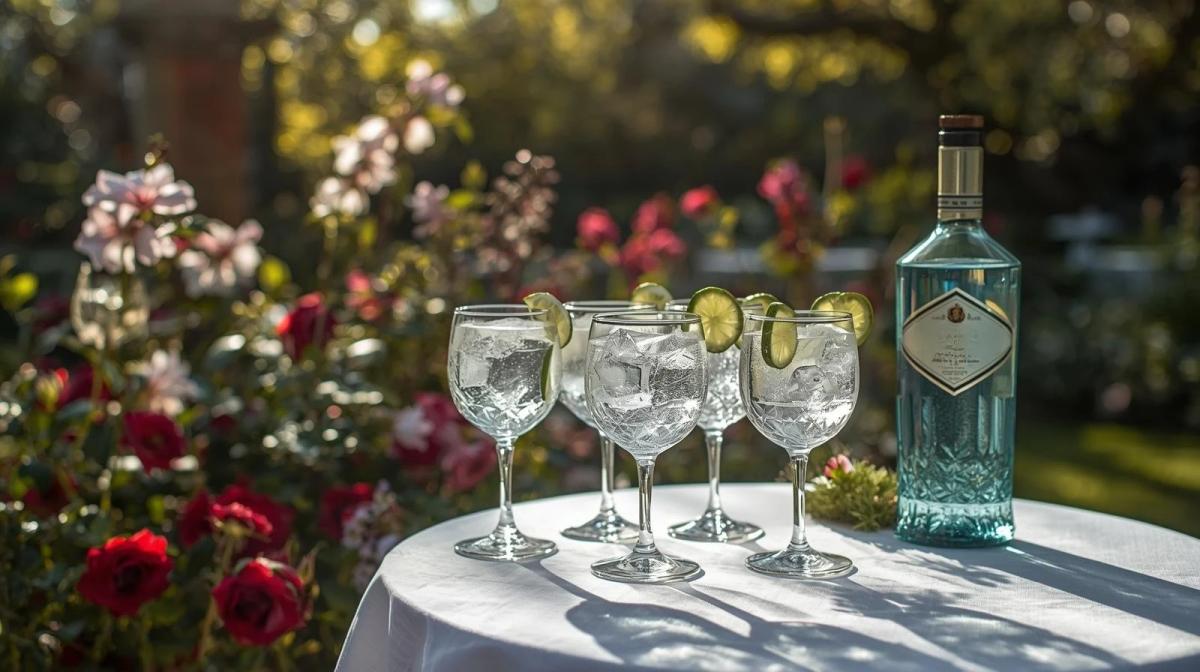
Start here.
23 April is England’s day, and it has no bank holiday
23 April is the feast of Saint George, by tradition the date of his death in AD 303. Edward III placed his new Order of the Garter under the saint’s patronage around 1348, and by the end of the Middle Ages George was England’s patron saint. The day is not a bank holiday in England.
The date belongs to Shakespeare too. He died on 23 April 1616, and his birthday is traditionally marked on the same day, three days before his recorded baptism in 1564.
No drink is laid down for the day, so pour the ones English bars made their own: London dry gin, the gin and tonic, the Pimm’s Cup and the Bramble.
St George’s Day drinks compared
Gin & Tonic
- Spirit
- 50ml gin
- Style
- Long, over ice
- When it suits
- All day
Cucumber & Elderflower G&T
- Spirit
- 50ml gin, 15ml elderflower liqueur
- Style
- Long, with tonic
- When it suits
- A garden
Pimm’s Cup
- Spirit
- 50ml Pimm’s No. 1
- Style
- Long, with lemonade and fruit
- When it suits
- A jug for a crowd
English Garden
- Spirit
- 50ml gin
- Style
- Long, shaken with apple and mint
- When it suits
- A garden party
Bramble
- Spirit
- 50ml London dry gin
- Style
- Short, over crushed ice
- When it suits
- Before dinner
Martini
- Spirit
- 60ml gin, 10ml dry vermouth
- Style
- Stirred
- When it suits
- Before dinner
Earl Grey MarTEAni
- Spirit
- 50ml Earl Grey gin
- Style
- Shaken sour with a foam
- When it suits
- Afternoon tea
Elderflower Collins
- Spirit
- 45ml gin
- Style
- Long, with soda
- When it suits
- Afternoon tea
Sparkling Elderflower Lemonade
- Spirit
- None
- Style
- Long, with sparkling water
- When it suits
- Drivers and children
| Drink | Spirit | Style | When it suits |
|---|---|---|---|
| Gin & Tonic | 50ml gin | Long, over ice | All day |
| Cucumber & Elderflower G&T | 50ml gin, 15ml elderflower liqueur | Long, with tonic | A garden |
| Pimm’s Cup | 50ml Pimm’s No. 1 | Long, with lemonade and fruit | A jug for a crowd |
| English Garden | 50ml gin | Long, shaken with apple and mint | A garden party |
| Bramble | 50ml London dry gin | Short, over crushed ice | Before dinner |
| Martini | 60ml gin, 10ml dry vermouth | Stirred | Before dinner |
| Earl Grey MarTEAni | 50ml Earl Grey gin | Shaken sour with a foam | Afternoon tea |
| Elderflower Collins | 45ml gin | Long, with soda | Afternoon tea |
| Sparkling Elderflower Lemonade | None | Long, with sparkling water | Drivers and children |
London dry is a method, not a place
Gin came to England as genever, the Dutch juniper spirit English soldiers met in the Low Countries. The Oxford Companion, a secondary source, dates the Gin Craze from 1690 to 1760: gin was born of a 1690 Act of Parliament passed at King William’s instigation, and cheap gin flooded London’s slums until a long run of excise laws brought it under control. The column still of the nineteenth century made a cleaner spirit possible, and London dry is the style that followed.
London dry gin is a production standard, so it can be made anywhere. Every botanical goes into the still, juniper has to lead, and after distillation nothing may be added except water and a trace of sugar, at most 0.1 grams a litre. No colouring is allowed.
Old Tom is the sweeter style that came before it, and Plymouth gin is the other English name on the shelf. Any good London dry does the drinks below; spend the difference on the tonic and the ice.
A good gin and tonic is mostly ice and ratio
The Gin & Tonic is 50ml gin to 100ml tonic water. Fill a copa or highball to the top with ice, more than seems polite. Pour in the gin, add the chilled tonic slowly down the wall of the glass to keep the fizz, then squeeze a lime wedge over the top, drop it in and stir once.
A full glass melts more slowly than a few cubes, so the drink stays cold without going thin. Match the tonic to the gin: a light tonic suits a delicate, floral gin, and a fuller one stands up to a juniper-heavy one.
Quinine came into British use against malaria, and officers in India sweetened it and lengthened it before gin joined it. Modern tonic carries a small fraction of the old medicinal dose, so a G&T does nothing against malaria.
The Cucumber & Elderflower G&T brings in the garden. Press a long cucumber ribbon against the inside of a copa or highball and fill it with ice. Add 50ml gin and 15ml elderflower liqueur, top gently with 150ml of Indian tonic water, add a mint sprig and stir once.
Pimm’s, the Bramble and the Martini carry the rest of the day
The Oxford Companion says James Pimm opened his first oyster bar in London in 1823, though only the bottled cup’s trade mark and release of 1912 are confirmed, and LWC lists Pimm’s No. 1 at 22% ABV in Britain: made to be lengthened. For a Pimm’s Cup, fill a highball or a jug with ice, layering in cucumber, strawberry and orange as you go. Pour in 50ml of Pimm’s No. 1, top with 150ml of sparkling lemonade, stir just enough to lift the fruit and slap a mint sprig into the top. A jug for six is 300ml of Pimm’s and 900ml of lemonade.
Dick Bradsell created the Bramble at Fred’s Club in Soho, in 1984 by Punch’s account, a secondary source, and in the mid-eighties by his own, as Difford’s Guide tells it. Shake 50ml London dry gin, 25ml fresh lemon juice and 12.5ml simple syrup hard with ice for 12 seconds and strain into a rocks glass filled with crushed ice. Top it with a lemon slice and a Luxardo cherry, then drizzle 15ml of crème de mûre over the surface so it bleeds down through the ice. Serve it with a short straw.
The Martini is 60ml gin and 10ml dry vermouth, stirred with large ice for 25 to 30 seconds and strained into a chilled Martini glass or coupe, with lemon peel expressed over the top. Chill the glass in the freezer first; a Martini warms quickly.
Tea cocktails suit an afternoon St George’s Day
The Earl Grey MarTEAni starts with the gin. Infuse it first: a tablespoon of loose Earl Grey to every 250ml of gin, steeped at room temperature for one to two hours, then strained through a fine sieve.
Dry shake 50ml of the infused gin, 20ml fresh lemon juice, 20ml simple syrup and 15ml egg white without ice, then shake hard with ice and double strain into a chilled coupe. Express a lemon twist over the foam and rest it on the rim. If the egg white is raw, use British Lion eggs, which the NHS advises can be eaten raw or partially cooked.
For something longer and lighter beside the scones, the Elderflower Collins: 45ml gin, 20ml elderflower liqueur and 25ml fresh lemon juice shaken with ice for 10 seconds, strained into a collins glass of fresh ice, topped with 90ml of soda water and stirred once. Garnish it with a lemon wheel and a slapped mint sprig.
Late April means a garden table with the kitchen as a fallback
Late April can be warm or wet. Set the drinks up so they work in both: a jug of Pimm’s, and a gin and tonic station with ice, lemons and limes, cucumber and mint, on a tray that can come indoors.
The English Garden is the shaken long drink for a garden party. Press a cucumber ribbon inside a highball and fill it with ice. Shake 50ml gin, 20ml elderflower liqueur, 20ml fresh lemon juice, 10ml simple syrup, 50ml pressed apple juice and six mint leaves hard with ice, double strain into the glass and stand a slapped mint sprig in the top.
A Sunday roast suits English bitter or a robust red. Sloe gin, a liqueur at around 26%, served small, goes with the beef and better still with Stilton at the end. Fish and chips with a cold G&T is a straightforward match, the juniper and citrus cutting through the batter. English sparkling wine works through afternoon tea.
The Sparkling Elderflower Lemonade is the alcohol-free glass: 25ml elderflower cordial and 25ml fresh lemon juice over ice in a highball, topped with 150ml of sparkling water and stirred gently, with a lemon wheel.
A 700ml bottle of gin gives fourteen G&Ts at 50ml. Measure with a jigger: 25ml of a 40% ABV spirit is one UK unit, so each G&T carries two. St Patrick’s Day drinks covers 17 March, five weeks earlier.