Purple Rain
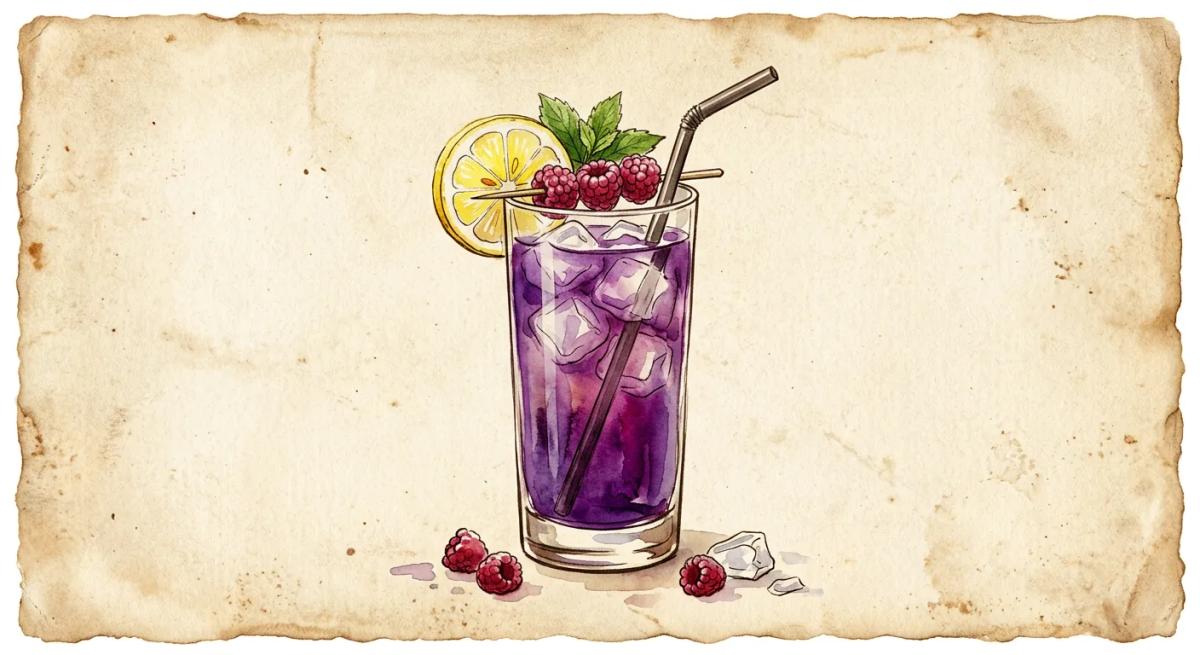
A Purple Rain is five 15ml pours, vodka, gin, white rum, blanco tequila and triple sec, with 30ml Chambord, built over ice in a highball and topped with 90ml of lemon-lime soda. It is the Long Island Iced Tea with the lemon, syrup and cola replaced by Chambord and soda, which turns it purple. That makes it the sweetest drink in the family, and a strong one: about 3.5 UK units, taking the spirits at our working figure of 40% ABV, the triple sec at the 40% on Cointreau’s page and Chambord at 16.5% on its own page. The name and the colour point to Prince and his album and film, Purple Rain, released on 25 June and 27 July 1984, the Minnesota Historical Society says. Some accounts have Prince mixing this version himself; we have found no primary record. Measure the five spirits. With no fresh citrus, the soda and raspberry hide the strength.
Glassware: Highball Glass
Garnish: Lemon wheel and Raspberries
Ingredients
15ml
Neutral, and there for strength: one of the five 15ml pours under the Chambord, at our working figure of 40% ABV.
15ml
Blanco tequila, ideally 100% agave, for a peppery note that keeps the raspberry from tasting only sweet.
15ml
Cointreau or another triple sec. Cointreau’s own page gives 40% Alc./Vol., and in our view that keeps the orange clean under the raspberry; a sweeter, weaker one softens the drink further.
30ml
Black raspberry liqueur at 16.5% ABV on Chambord’s own page, and the source of the colour and most of the flavour. Another raspberry liqueur works, though the colour and depth vary.
90ml
Well chilled. It replaces the lemon, syrup and cola of the Long Island, so the drink is sweeter and softer. Pour it last and gently.
3 raspberries
On the rim or in the glass. They echo the Chambord and give the drink a fresh note on the nose.
Instructions
Fill a highball glass to the top with cubed ice.
Add the vodka, gin, white rum, blanco tequila and triple sec over the ice.
Pour in the Chambord and stir briefly to combine.
Pour 90ml of chilled lemon-lime soda gently down the inside of the glass.
Stir once with a single upward lift of the bar spoon.
Garnish with a lemon wheel and three fresh raspberries, and serve with a straw.
Expert Tip
Add the Chambord before the soda. Poured into the spirits first, it mixes in evenly, and the soda then lifts the colour through the glass. Added last, it sinks and leaves the colour patchy. Measure the five spirits. There is no fresh citrus to show you have over-poured, and the soda and raspberry make the drink taste lighter than it is. Fill the glass to the top with ice and pour the soda gently down the inside. A half-filled glass warms quickly, and warm soda goes flat and sweet.
Behind the Purple Rain
Flavour Profile
The Origin
The name points to Prince. The Minnesota Historical Society says the album Purple Rain was released on 25 June 1984 and the film on 27 July 1984, and that the album was not a soundtrack, since it held only songs by Prince and the Revolution. Some accounts say Prince mixed this version himself at his Minneapolis venue; we have found no primary record.
The Colour
The purple is the Chambord, 30ml of deep red-black raspberry liqueur, lightened by the clear soda. Poured into the spirits first and then lifted by the soda, it spreads evenly through the glass.
The Structural Distinction
The Purple Rain changes two things in the Long Island at once. Chambord replaces the cola, and lemon-lime soda replaces the fresh lemon and the syrup. Fresh lemon and syrup make the Long Island a sharp, long sour; the soda is softer and sweeter, so the raspberry leads and the five spirits sit underneath.
Purple Rain, Long Island and Grateful Dead compared; the units are our calculation at our working figure of 40% for the spirits, Cointreau’s 40% for the triple sec and Chambord at 16.5% on its own page
Long Island Iced Tea
- Liqueur
- 15ml Cointreau
- Citrus and sugar
- 25ml lemon, 30ml syrup
- Topper
- 30ml cola float
- Colour
- Amber
- UK units
- 3.0
Grateful Dead
- Liqueur
- 15ml triple sec, 22.5ml Chambord
- Citrus and sugar
- 22.5ml lime, 10ml syrup
- Topper
- None
- Colour
- Red-purple
- UK units
- 3.4
Purple Rain
- Liqueur
- 15ml triple sec, 30ml Chambord
- Citrus and sugar
- None
- Topper
- 90ml lemon-lime soda
- Colour
- Purple
- UK units
- 3.5
| Drink | Liqueur | Citrus and sugar | Topper | Colour | UK units |
|---|---|---|---|---|---|
| Long Island Iced Tea | 15ml Cointreau | 25ml lemon, 30ml syrup | 30ml cola float | Amber | 3.0 |
| Grateful Dead | 15ml triple sec, 22.5ml Chambord | 22.5ml lime, 10ml syrup | None | Red-purple | 3.4 |
| Purple Rain | 15ml triple sec, 30ml Chambord | None | 90ml lemon-lime soda | Purple | 3.5 |
Set against the rest of the family, with the units for each, the Purple Rain sits in the table under the Long Island Iced Tea.
The Chambord
Chambord’s own page gives its black raspberry liqueur at 16.5% Alc. by Vol., and Difford’s Guide says it is an infusion of raspberries and blackberries in neutral spirit with Madagascar vanilla, Moroccan citrus peel, honey and cognac. At 30ml it is the main flavour, so the bottle matters. In our view another raspberry liqueur makes a different drink, often sweeter and paler.
How to Serve It
Built over a full glass of cubed ice in a highball, with a lemon wheel and fresh raspberries on the rim and a straw. Strong for something so sweet: at about 3.5 UK units, pace it like three and a half drinks.
Make it at home
The Spirit
VodkaVodka is spirit made from a farmed crop, usually grain or potatoes, distilled and refined so that the taste of that crop is deliberately reduced. Under the retained Regulation (EC) 110/2008 its minimum is 37.5% ABV and it may not be given a predominant flavour, which separates it from flavoured vodka and from gin; our recipes count it at 40%. In a mixed drink it adds strength and body while the other ingredients carry the taste.
Master the Techniques
More to explore
Frequently Asked Questions
What is in a Purple Rain cocktail?
Did Prince create the Purple Rain cocktail?
How strong is a Purple Rain, and what is its ABV?
How does it differ from a Grateful Dead?
How is it different from a Long Island Iced Tea?
Can I use a different raspberry liqueur?
Why is there no fresh citrus?
Sources.
Correct as of 19 October 2026.
- Minnesota Historical Society (MNopedia), “Purple Rain (film and album)” (regional historical society reference: the album released 25 June and the film 27 July 1984; the album not a soundtrack, only songs by Prince and the Revolution).
- Chambord, “Chambord Black Raspberry Liqueur” (maker’s own page: “Chambord Black Raspberry Liqueur, 16.5% Alc. by Vol.”).
- Difford’s Guide, “Chambord black raspberry liqueur” (secondary source: 16.5%; an infusion of raspberries and blackberries in neutral spirit with Madagascar vanilla, Moroccan citrus peel, honey and cognac).
- Cointreau, “Cointreau” (maker’s own page: “Cointreau Liqueur, 40% Alc./Vol.”).
You Might Also Like
Grateful Dead
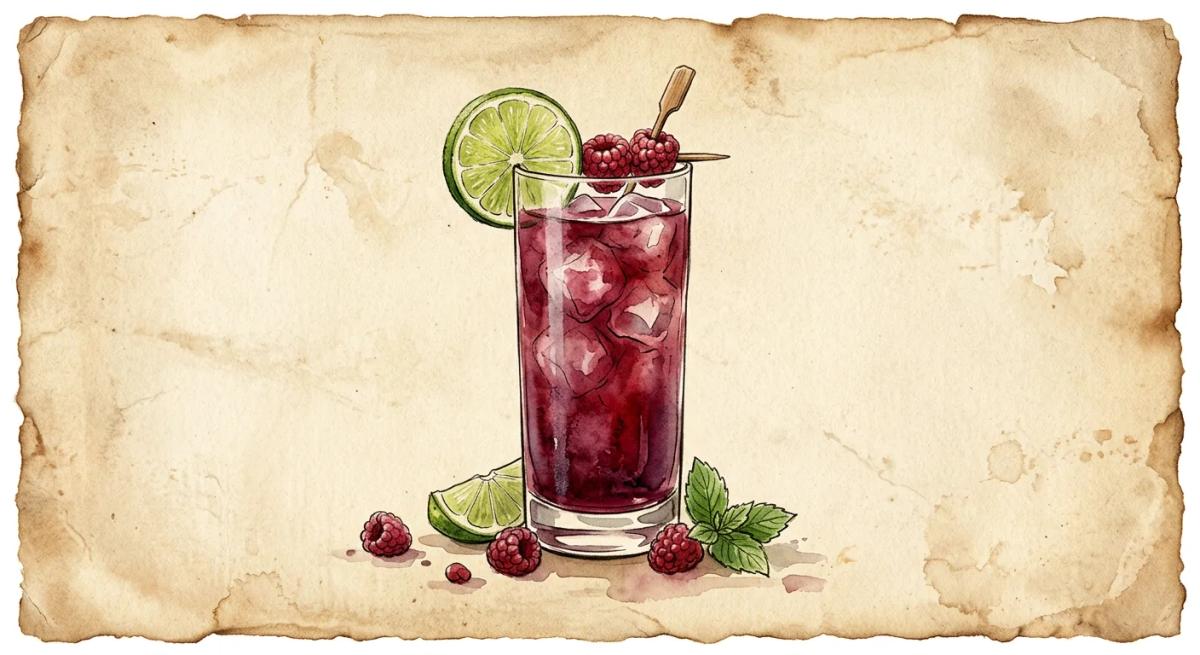
The Grateful Dead is a Long Island Iced Tea with raspberry in place of cola. It takes 15ml each of vodka, gin, white rum, blanco tequila and triple sec, 22.5ml Chambord, 22.5ml fresh lime juice and 10ml sugar syrup, built over ice in a highball with no topper. Lime replaces the Long Island’s lemon, and the Chambord turns the drink a deep red-purple. With nothing long in the glass, it is denser than its parent: about 3.4 UK units, more than three 25ml pub singles, in a drink that tastes of berries and lime. Measure every pour, squeeze the lime the same day, and use Chambord or another raspberry liqueur made from fruit. The Chambord is the only flavour beyond the spirits and the lime, so whatever goes in is what the drink tastes of.
Long Island Iced Tea
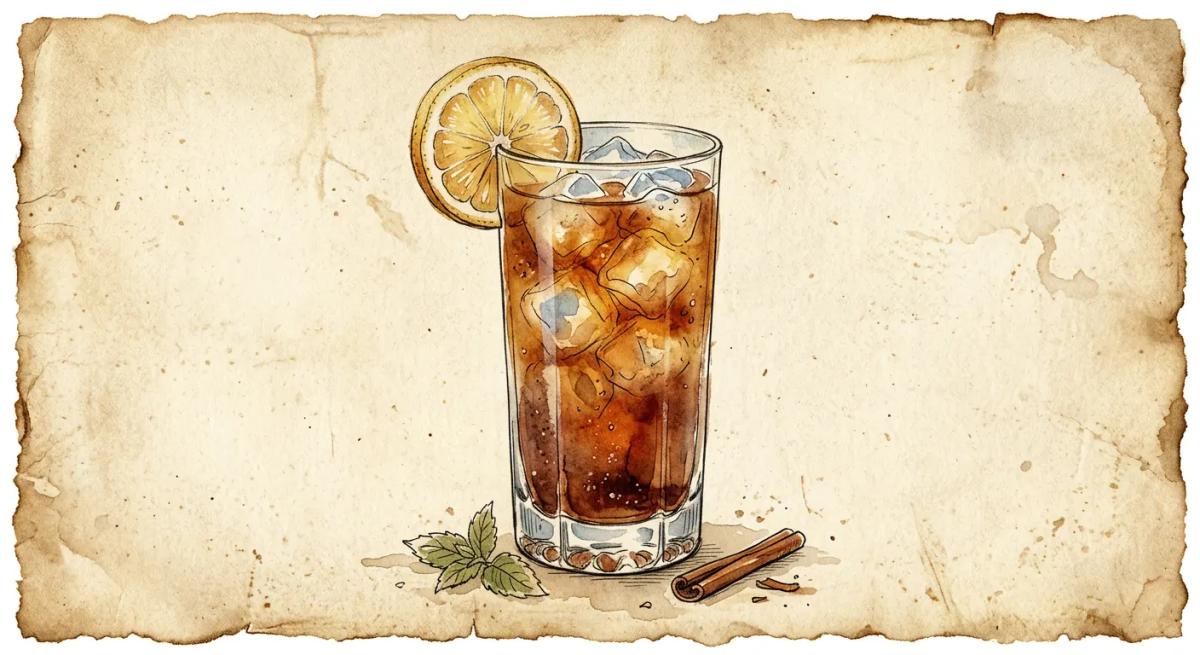
A Long Island Iced Tea is five 15ml pours, vodka, blanco tequila, white rum, gin and Cointreau, with 25ml fresh lemon juice and 30ml sugar syrup, built over ice in a highball and finished with a short cola float. That is the International Bartenders Association specification. The IBA says to top with cola; we measure it at 30ml. The cola gives it the colour of iced tea. There is no tea in it. It is strong: about 3.0 UK units, three 25ml pub singles in one glass, behind a drink that tastes of lemon and cola. It goes wrong in three ways, usually together: free-poured spirits, sour mix instead of fresh lemon, and cola poured in by the can rather than floated. The AMF, the Grateful Dead, the Texas Tea and the Tokyo Iced Tea are all built on it.
Adios Motherfucker
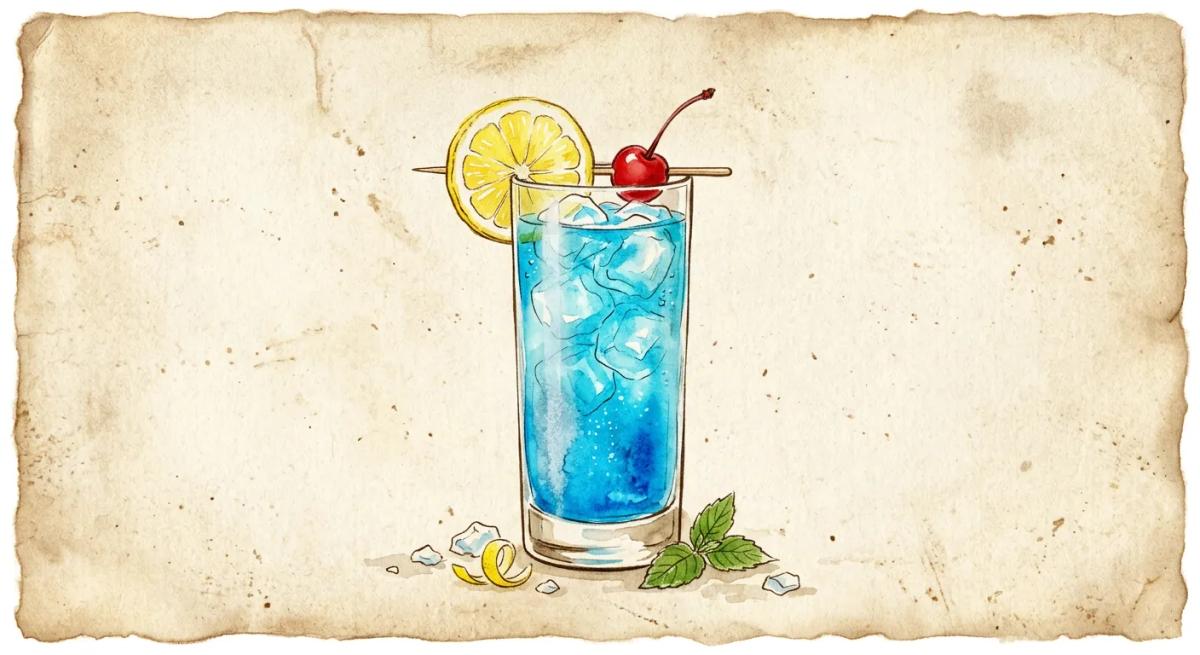
An AMF, short for Adios Motherfucker, is a Long Island Iced Tea turned blue. It takes 15ml each of vodka, gin, white rum, blanco tequila and blue curaçao, 25ml fresh lemon juice and 10ml sugar syrup, built over ice in a highball and topped with 60ml lemonade. Blue curaçao stands in for the Long Island’s Cointreau and lemonade for its cola, so the drink comes out bright blue instead of amber. It is strong. One glass carries about 2.7 UK units, close to three 25ml pub singles, and the lemon and lemonade hide most of it. Two things decide how it turns out. Measure every pour, because a heavy hand on any one bottle makes an AMF taste of that bottle. And use fresh lemon with clear lemonade: sour mix makes it sweet and flat, and cloudy lemonade turns it green.
Where this one sits
Recipe by Jerry Can Spirits · Updated 19 October 2026