Rum Runner
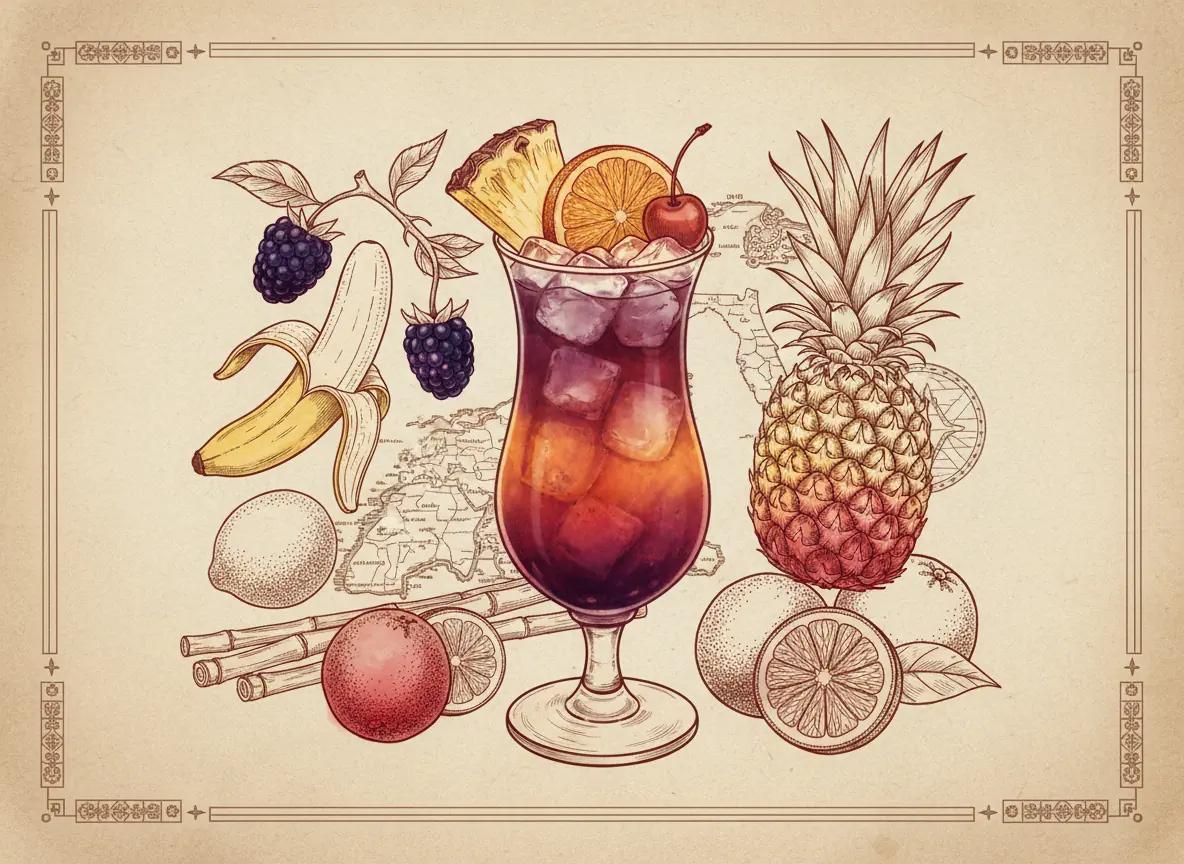
A Rum Runner is a Florida Keys tiki drink: 30ml each of dark and white rum, 15ml each of blackberry and banana liqueur, 10ml grenadine, 15ml fresh lime juice, 45ml pineapple juice and 30ml orange juice, shaken hard and strained over crushed ice in a hurricane glass. A 15ml float of overproof rum is optional. Blended with the ice instead, it becomes the frozen Rum Runner the Keys are known for. The usual account, which Difford’s Guide quotes from the Holiday Isle Tiki Bar’s own site and calls legend, credits the bar’s manager John “Tiki John” Elber with mixing it to clear surplus rum and liqueur before a delivery; the bar took its name in 1971, so the early 1970s is the likely date. That first version had no fruit juice. Pineapple and orange came later and made it the long, fruity drink most bars pour now. It is stronger than it tastes: about 3.0 UK units a glass, 3.9 with the float. Fresh lime and a pomegranate grenadine are what keep it from tasting of boiled sweets.
Variations
Glassware: Hurricane Glass
Garnish: Pineapple wedge, Orange slice and Maraschino cherry or fresh blackberries
Ingredients
30ml
A Jamaican-style dark rum. Myers’s is the bottle the usual story names. It gives the drink its depth under all the fruit.
15ml
A crème de mûre or other blackberry liqueur made from fruit, usually 18 to 20% ABV. The early story names blackberry brandy; either gives the dark berry note and much of the colour.
15ml
Usually 20 to 25% ABV. Choose one that tastes of ripe banana rather than banana sweets. At 15ml it is the flavour most people remember.
10ml
Made from pomegranate, not red sugar syrup. At 10ml it is mostly colour, and a synthetic one makes the whole drink taste artificial.
15ml
Squeezed the same day. The only sharp acid in the glass, and what stops two liqueurs and two juices tasting of sugar.
45ml
Fresh-pressed if you can, otherwise a not-from-concentrate carton. It gives body and the light froth on a shaken drink.
30ml
Squeezed the same day. It softens the lime and bridges the berry and the banana.
15ml
Optional, floated on top. A Jamaican overproof at about 63% ABV adds almost a unit and a strong rum aroma to the first sips.
Instructions
Squeeze the lime and orange juice the same day.
Fill a hurricane glass with crushed ice.
Add the dark rum, white rum, blackberry liqueur, banana liqueur, grenadine, lime juice, pineapple juice and orange juice to a shaker with cubed ice.
Shake hard for 10 to 12 seconds.
Strain over the crushed ice.
If using the overproof rum, pour it slowly over the back of a bar spoon so it floats on top.
Garnish with a pineapple wedge, an orange slice and a cherry, or with fresh blackberries, and serve with a straw.
Our version
No measured recipe survives from the first Rum Runner, so the measures are ours: the modern juice version, with two rums at 30ml and both liqueurs at 15ml.
Source: our own specification. Last checked 9 October 2026.
Expert Tip
Taste before you float anything. Two liqueurs, grenadine and two juices bring a lot of sugar, and 15ml of lime is all that holds them. If it tastes flat, add 5ml more lime before you reach for more rum. The overproof float is for the nose. Poured slowly over the back of a bar spoon, it sits on top, so the first sips smell of rum and the fruit takes over underneath. It also adds almost a unit, so leave it off a second glass. For the frozen version, put the same measures in a blender with two large scoops of crushed ice and blend for 20 to 30 seconds. More ice than that makes a slush that tastes of cold and little else.
Behind the Rum Runner
Flavour Profile
Where It Comes From
The story the Holiday Isle Tiki Bar tells, which Difford’s Guide quotes and calls legend, is that John “Tiki John” Elber, managing the bar in Islamorada, had more rum and liqueur than room before a new delivery; the bar took its name in 1971, so the early 1970s is the likely date. He mixed what he had, Myers’s rum, banana liqueur, brandy and grenadine, by that account, and the drink stuck. It is a legend rather than a record: no menu or measured recipe from that night survives, and the details shift between tellings.
The name points to the Keys’ Prohibition history. Rum runners brought liquor from Cuba and the Bahamas through the islands and shallow channels of south Florida, and a drink built from surplus rum took their name.
From Liqueur Drink to Fruit Punch
The early telling has no juice. Over the following decades pineapple and orange came in, and the drink got longer and sweeter. That is the version most bars serve now, and the one in the recipe. The two are close relatives: take out the 45ml of pineapple and 30ml of orange and you have the Keys Original variation, the same rums and liqueurs with lime.
Why It Works
Two rums split the job. The dark rum brings weight and a burnt-sugar edge; the white rum adds strength without more heaviness. Blackberry and banana are the drink’s two flavours, and at 15ml each neither leads. Grenadine adds colour and a little tartness, pineapple adds body and froth, and orange softens the lime.
The lime is the smallest pour and the one that decides the balance. Without it the drink is sugar on sugar.
Shaken, Frozen or Without Juice
Three ways to make a Rum Runner
Rum Runner, shaken
- Juice
- 45ml pineapple, 30ml orange
- How it is made
- Shaken, strained over crushed ice
- UK units
- 3.0 (3.9 with the overproof float)
The Frozen Runner
- Juice
- 45ml pineapple, 30ml orange
- How it is made
- Blended with crushed ice
- UK units
- 3.0
The Keys Original
- Juice
- None
- How it is made
- Shaken, strained over crushed ice
- UK units
- 3.0
| Version | Juice | How it is made | UK units |
|---|---|---|---|
| Rum Runner, shaken | 45ml pineapple, 30ml orange | Shaken, strained over crushed ice | 3.0 (3.9 with the overproof float) |
| The Frozen Runner | 45ml pineapple, 30ml orange | Blended with crushed ice | 3.0 |
| The Keys Original | None | Shaken, strained over crushed ice | 3.0 |
The alcohol is the same in all three. What changes is how much liquid carries it: the Keys Original puts 3.0 units in 115ml rather than 190ml, so it drinks much stronger.
The Ice
Crushed ice matters in the shaken version. It chills fast and melts as you drink, and that steady dilution keeps a drink with this much sugar from tiring halfway down. Cubed ice keeps it colder for longer but leaves it sweeter. With no crushed ice to hand, wrap cubes in a clean tea towel and break them with a rolling pin.
How Strong It Is
Taking both rums at 40% ABV and the two liqueurs at 20%, a Rum Runner carries about 3.0 UK units, three 25ml pub singles in one glass. The overproof float adds almost another. Pineapple and orange hide most of it, so pace yourself by the units rather than the taste.
Make it at home
The Spirit
Dark RumDark rum is a heavy, deep-coloured rum, counted at 40% ABV in our recipes, whose colour may come from years in oak, from blending or from added caramel, which Regulation (EC) 110/2008 allows. It brings weight and a burnt-sugar note to punches, hot drinks and tiki builds: the Rum Runner, the Hurricane and the Planter’s Punch.
More to explore
Frequently Asked Questions
What is in a Rum Runner?
What is the original Rum Runner recipe?
How strong is a Rum Runner?
How do you make a frozen Rum Runner?
What is the difference between a Bahama Mama and a Rum Runner?
Why is it called a Rum Runner?
Does a Rum Runner need banana liqueur?
Is a Rum Runner a daiquiri?
Sources.
Correct as of 18 October 2026.
- Difford’s Guide, “Rum Runner” (secondary source quoting the Holiday Isle Tiki Bar: opened 1969 as the Hapi Hula Hut, renamed 1971; “Legend has it … Tiki John … banana liquor, Meyers rum, brandy and grenadine”).
You Might Also Like
Scorpion
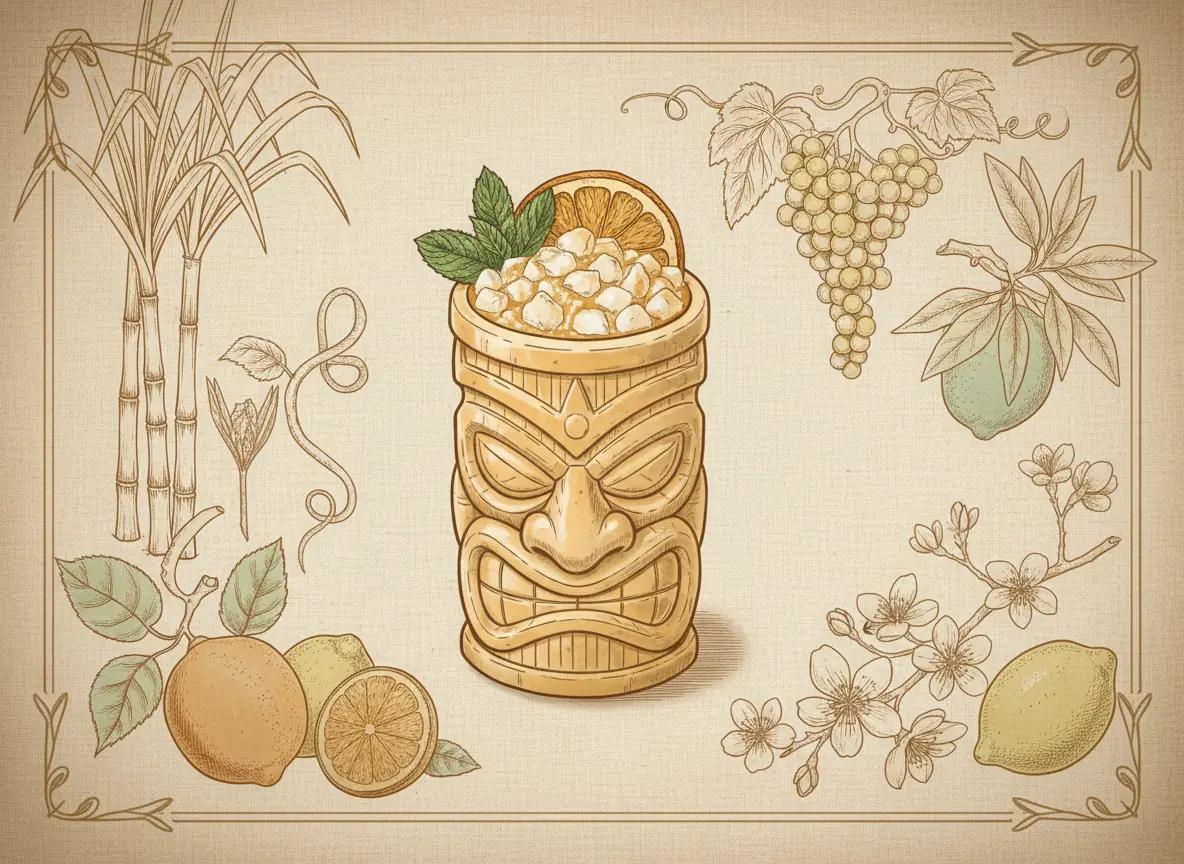
The Scorpion is Trader Vic’s rum and brandy sour: 45ml white rum, 22.5ml cognac, 50ml fresh orange juice, 30ml fresh lemon juice and 15ml orgeat, shaken hard and strained over crushed ice in a tiki mug or large rocks glass. The measures are adapted from Trader Vic’s Bartender’s Guide in its 1972 revised edition. Victor Bergeron, the Trader Vic of the restaurant chain, is credited with it; Punch dates his recipe to 1946, and Tasting Table traces the drink to a Honolulu punch in print by 1938. Difford’s Guide, citing Life magazine, has Vic serving the Scorpion in four-pint bowls made to serve four, and prints his 1972 recipes for a single glass and for a bowl for three or four. The single glass is the same drink at one person’s size. It comes out pale orange, almond-scented and drier than it looks, at about 2.7 UK units. Fresh orange and lemon and an orgeat made from almonds decide it. Orgeat contains nuts, which matters for anyone with an allergy.
Painkiller
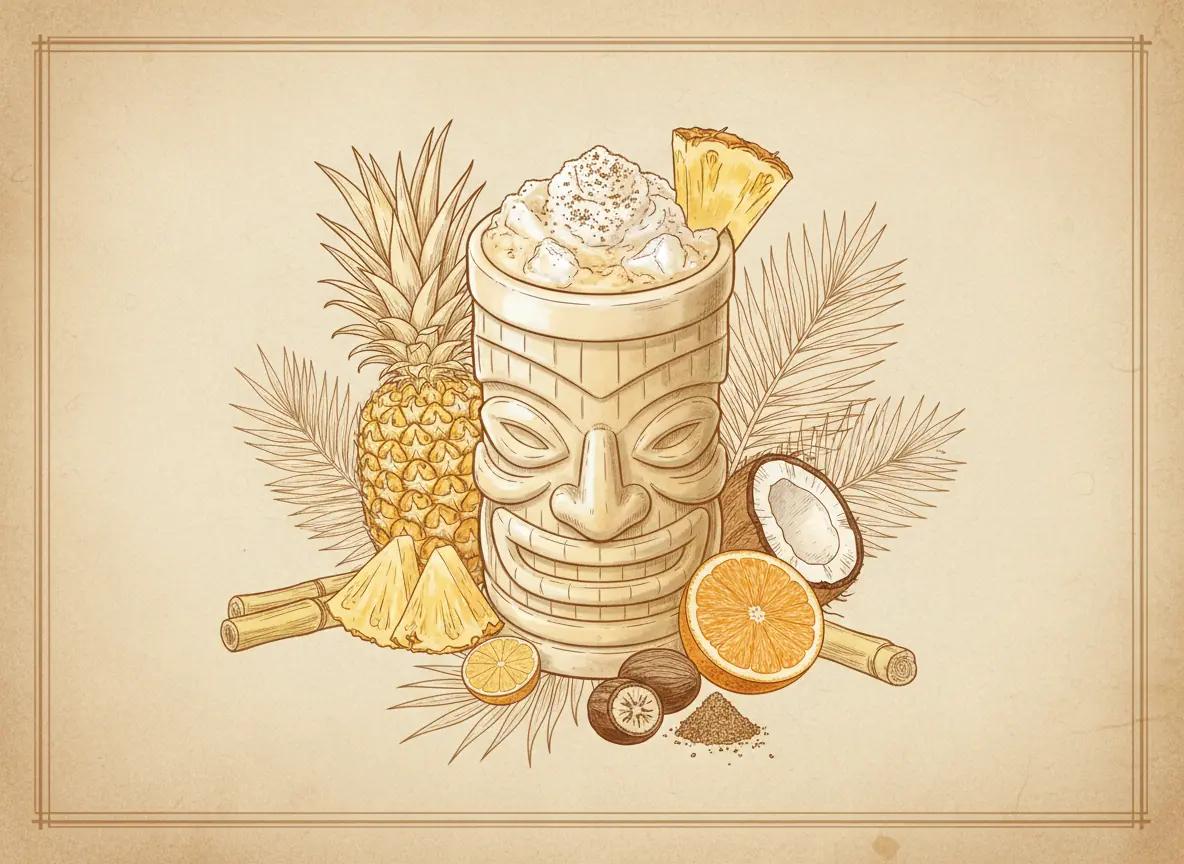
A Painkiller is 60ml of Pusser’s Rum, 120ml of pineapple juice, 30ml of fresh orange juice and 30ml of cream of coconut, given a hard 10 to 12 second shake and strained onto cubed ice in a tiki mug or a big glass, with fresh nutmeg grated on top. About 2.4 UK units. Cream of coconut is coconut and sugar, usually with no dairy, but check the label. The name belongs to Pusser’s. Pusser’s prints the name with the registered symbol on its own Painkiller page, and the Oxford Companion says the company owns the trademark for the Pusser’s Painkiller cocktail. The recipe here is its own: four parts pineapple, one of cream of coconut and one of orange, with Pusser’s to suit. Difford’s Guide says it trademarked the name in the United States and the UK in 2003 and in 2010 forced a New York bar called Painkiller to rename itself PKNY. Pusser’s traces the drink to Daphne Henderson’s Soggy Dollar Bar on Jost Van Dyke, in the British Virgin Islands.
Bahama Mama
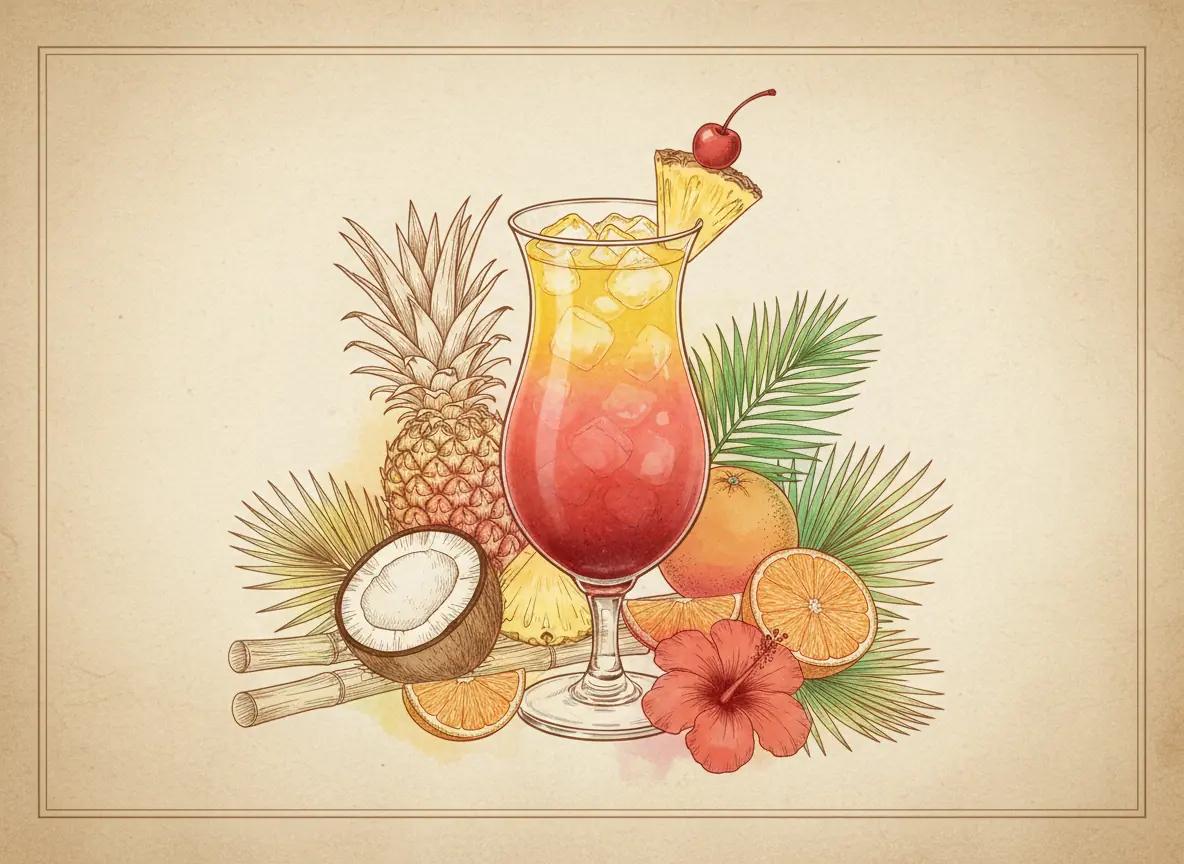
A Bahama Mama is a long rum punch: 30ml dark rum, 30ml coconut rum and 15ml overproof rum, with 60ml each of pineapple and orange juice, 15ml fresh lime juice and 15ml grenadine, shaken and strained over crushed ice in a hurricane glass. It tastes of coconut, pineapple and orange, and it is stronger than any of that suggests. Its history is loose. The Oxford Companion to Spirits and Cocktails places a Bahama Mama at Nassau’s British Colonial Hotel in 1960 and at Trader Vic’s in Beverly Hills in 1961, with neither formula recorded. The Nassau bartender Oswald Greenslade claims to have invented it, Travel Distilled reports, though he started work at the Nassau Beach Hotel in 1961. The fruit-and-coconut punch most bars now pour has no documented creator. A glass holds about 2.8 UK units. Squeeze the citrus the same day and use a grenadine made from pomegranate: in a drink that is mostly juice, the juice decides the result.
Where this one sits
Recipe by Jerry Can Spirits · Updated 18 October 2026