Tropical Punch
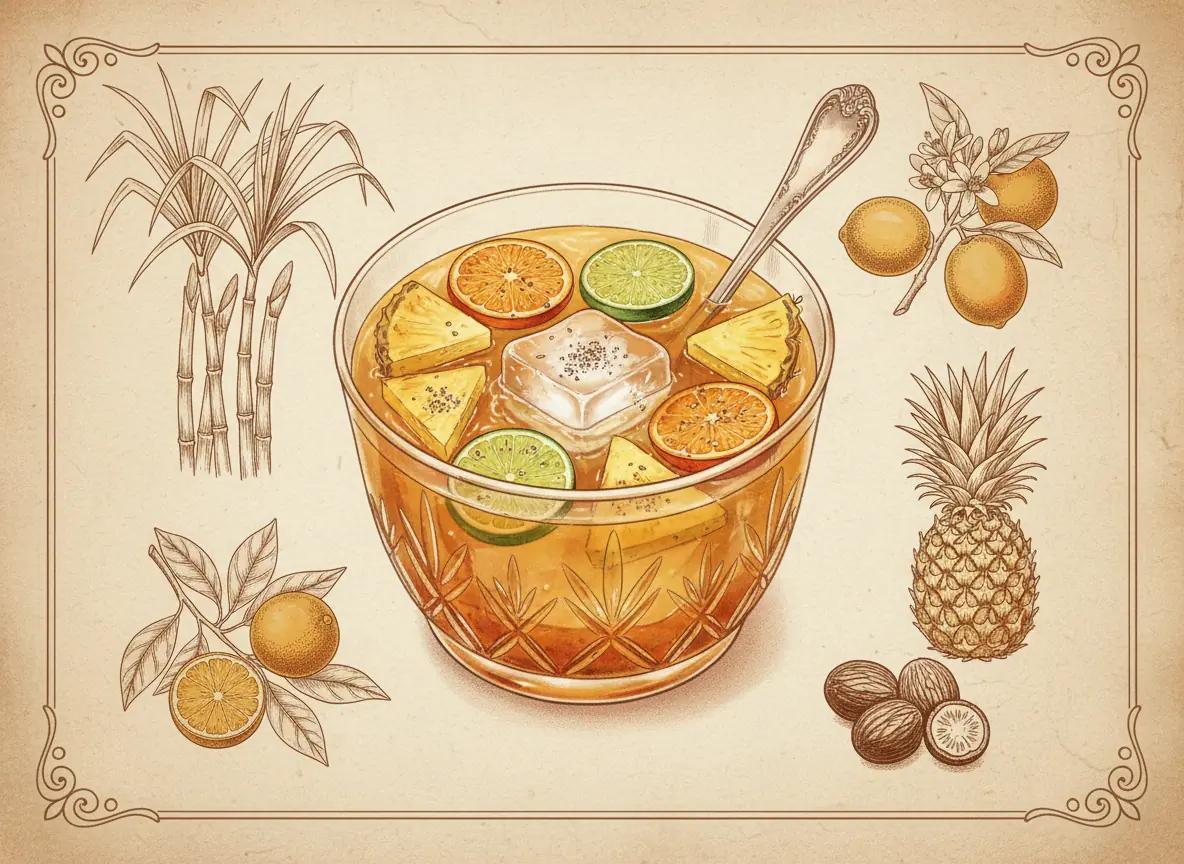
This Tropical Punch fills a bowl for eight to ten: 300ml aged rum, 150ml white rum, 300ml pineapple juice, 200ml fresh orange juice, 100ml fresh lime juice, 100ml simple syrup and six to eight dashes of Angostura, stirred over a large block of ice, with nutmeg grated over the top. About 18 UK units in the bowl, or roughly 1.8 a glass across ten. Punch began as a drink the English made in India. The word first appears in an East India Company letter of 1632, and John Fryer wrote in 1676 that it was “Indostan for Five”, for five ingredients, by the Oxford Companion’s account. This bowl keeps that shape, with the juices and the melting ice in place of the water. Two rums do different jobs: aged for body and barrel, white for lift. Build it a little tart, because the ice softens it over the evening.
Variations
Glassware: Punch Bowl
Garnish: Orange wheels, Pineapple slices, Mint and Freshly grated nutmeg over the surface of the bowl
Ingredients
300ml
An aged rum of middle weight, at 40% ABV, with vanilla and some oak. It gives the bowl its body, so the punch stays a rum drink rather than a fruit drink.
150ml
A clean white rum at 40% ABV, for lift. Two parts aged to one white is the split; reverse it and the bowl loses its depth.
300ml
Pressed pineapple juice, not from concentrate. It brings body and sweetness of its own, which keeps the syrup measure down.
200ml
Squeezed the same day. It rounds out the lime; orange juice left overnight loses its aroma before its acid.
100ml
Squeezed the same day. It is the main acid in the bowl, and bottled lime makes a punch taste flat and institutional.
100ml
Sugar and water in equal measure, by weight. Start at 100ml and adjust to the fruit: riper pineapple needs less.
6 to 8 dashes
Angostura, 44.7% ABV on DrinkSupermarket’s listing. Six to eight dashes across the bowl add clove and spice that tie the rum to the fruit.
Instructions
Freeze a large block of ice the day before, in a tub or loaf tin.
Squeeze the lime and orange juice the same day.
Combine both rums, the pineapple juice, orange juice, lime juice and simple syrup in a punch bowl and stir.
Taste. It should be a little too tart; adjust the syrup or lime if it is not.
Add the block of ice and six to eight dashes of Angostura, and stir again.
Grate fresh nutmeg over the surface and float orange wheels, pineapple slices and mint on top.
Ladle into small cups of about 120ml and serve.
Expert Tip
Taste before the ice goes in, and again after ten minutes. The bowl should taste slightly too tart at first; the ice dilutes it and the balance moves. Use one large block of ice, frozen the day before in a tub or loaf tin. It melts slowly, keeping the bowl cold for hours; bagged cubes melt fast and thin the punch within the first half hour. Squeeze the citrus the same day. Lime and orange carry the bowl, and carton juice makes it taste of the carton.
Behind the Tropical Punch
Flavour Profile
Where Punch Comes From
Punch began as a drink the English made in India. The word first appears in a 1632 letter in the papers of the East India Company, and John Fryer wrote in 1676 that the name was “Indostan for Five”, from five ingredients. A rival idea points to the bowl, since punch is also an English word for something squat and round.
The Ratio
The rum-punch rhyme runs one of sour, two of sweet, three of strong, four of weak, and it survives in several printed versions. Treat it as a shape rather than a recipe.
Tropical Punch: what goes in the bowl
Aged rum
- Measure
- 300ml
- Its job
- Body, vanilla and oak
White rum
- Measure
- 150ml
- Its job
- Lift
Pineapple juice
- Measure
- 300ml
- Its job
- Body and natural sweetness
Fresh orange juice
- Measure
- 200ml
- Its job
- Roundness under the lime
Fresh lime juice
- Measure
- 100ml
- Its job
- The main acid
Simple syrup
- Measure
- 100ml
- Its job
- Balance, adjusted to the fruit
Angostura
- Measure
- Six to eight dashes
- Its job
- Spice to tie rum and fruit
Ice block and nutmeg
- Measure
- To serve
- Its job
- Slow dilution and aroma
| Ingredient | Measure | Its job |
|---|---|---|
| Aged rum | 300ml | Body, vanilla and oak |
| White rum | 150ml | Lift |
| Pineapple juice | 300ml | Body and natural sweetness |
| Fresh orange juice | 200ml | Roundness under the lime |
| Fresh lime juice | 100ml | The main acid |
| Simple syrup | 100ml | Balance, adjusted to the fruit |
| Angostura | Six to eight dashes | Spice to tie rum and fruit |
| Ice block and nutmeg | To serve | Slow dilution and aroma |
This bowl leans on the fruit. Lime is the sharp acid, orange rounds it, and pineapple brings body and enough sweetness to hold the syrup at 100ml. There is no water: the juices and the melting ice fill that role.
Two Rums
Aged rum keeps the punch tasting of rum, with barrel character and body. White rum keeps it from turning heavy. Use aged rum alone and it becomes too rich for a long evening; reverse the split and the depth goes.
The Ice
The ice is part of the recipe. A single large block melts from the outside, keeps the bowl cold for hours and dilutes it at a pace you can taste and correct. If a block is impossible, use the largest ice you have and taste more often.
The Nutmeg
Grate whole nutmeg over the surface just before serving. Its oils sit on top of the bowl and reach the nose before each sip; pre-ground nutmeg has already lost them.
How to Serve It
From the bowl, with a ladle, into small cups of about 120ml. Float orange wheels, pineapple slices and mint on the surface.
At about 1.8 UK units a cup it goes down easily, and a bowl invites refills. Keep a jug of water beside it.
Make it at home
The Spirit
Aged RumAged rum is rum that has spent years in oak casks, usually ex-bourbon barrels, and taken on vanilla, caramel and dried fruit; our recipes count it at 40% ABV. In our recipes it is the rum for drinks where you should taste the spirit: the Old Cuban, the Mai Tai, the Rum Sour and the punch bowl.
Master the Techniques
More to explore
Frequently Asked Questions
What is Tropical Punch?
Does it follow the punch rhyme?
Why two rums instead of one?
How strong is Tropical Punch?
Can I make it ahead?
Where does the word punch come from?
How large should the ice block be?
Sources.
Checked between 18 October and 19 October 2026.
- The Oxford Companion to Spirits and Cocktails (David Wondrich), “punch” (secondary source: first mention in a 1632 East India Company letter; Mandelslo 1638; Mundy’s chaar bakhra (four shares); Fryer 1676, “Indostan for Five”; punch also an English word for something squat and round; the great age of punch 1670s to 1840s).
- DrinkSupermarket, “Angostura Aromatic Bitters 20cl” (retailer listing: strength 44.7%).
You Might Also Like
Planter’s Punch
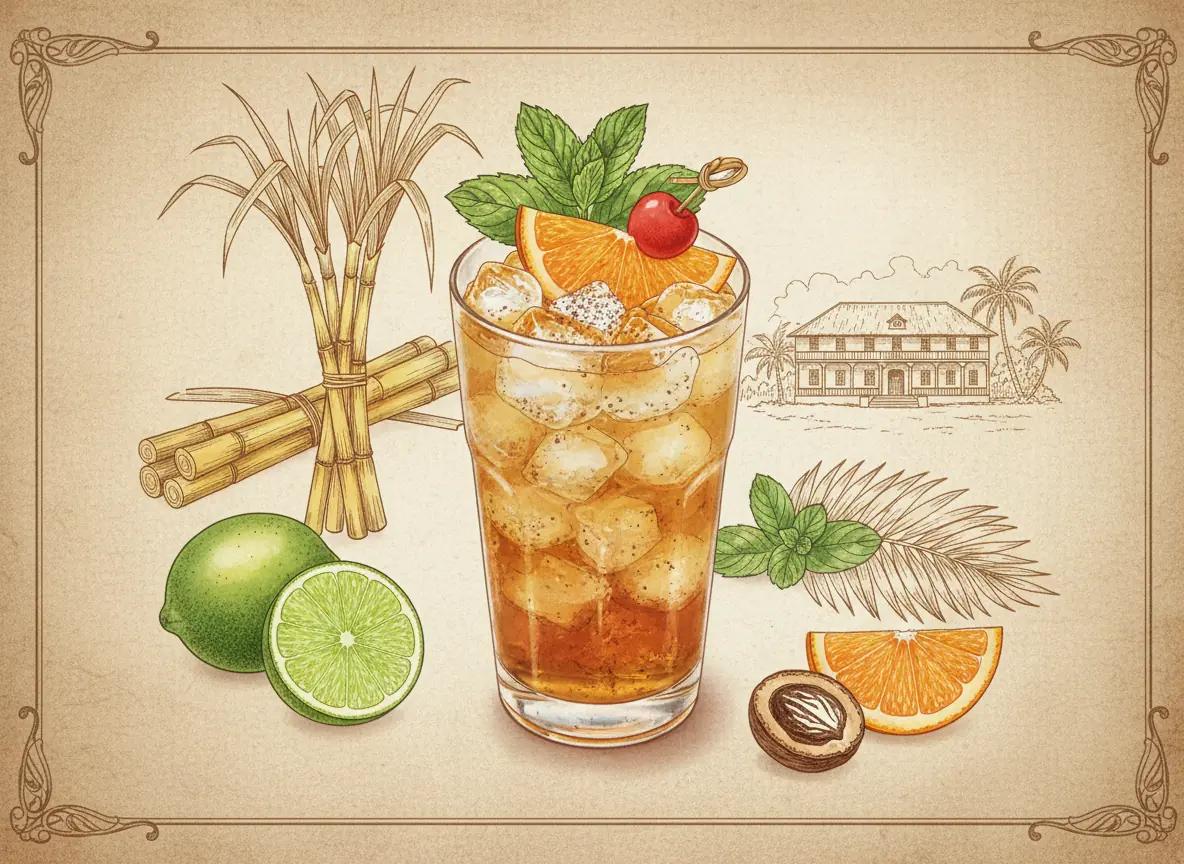
Planter’s Punch is 45ml of Jamaican rum, 15ml of fresh lime juice and 30ml of sugar cane juice, poured into a small tumbler, diluted to taste with water, ice or fresh juice, and finished with orange zest. The measures follow the IBA. About 1.8 UK units. It belongs to the punch family of the old rhyme, one of sour, two of sweet, three of strong, four of weak, and it is the Jamaican member: a dark, full-flavoured island rum, lime and sugar. The IBA writes it short and leaves the weak part to you; a longer build that follows the rhyme to the letter is our variation. The Oxford Companion calls it the unofficial drink of Jamaica since the late nineteenth century, and the Charleston City Paper prints a verse from the London magazine Fun of September 1878 that gives the same proportions. Cane juice is the IBA’s sweetener: sweeter than water, far less sweet than syrup, with a green, grassy taste.
Bahama Mama
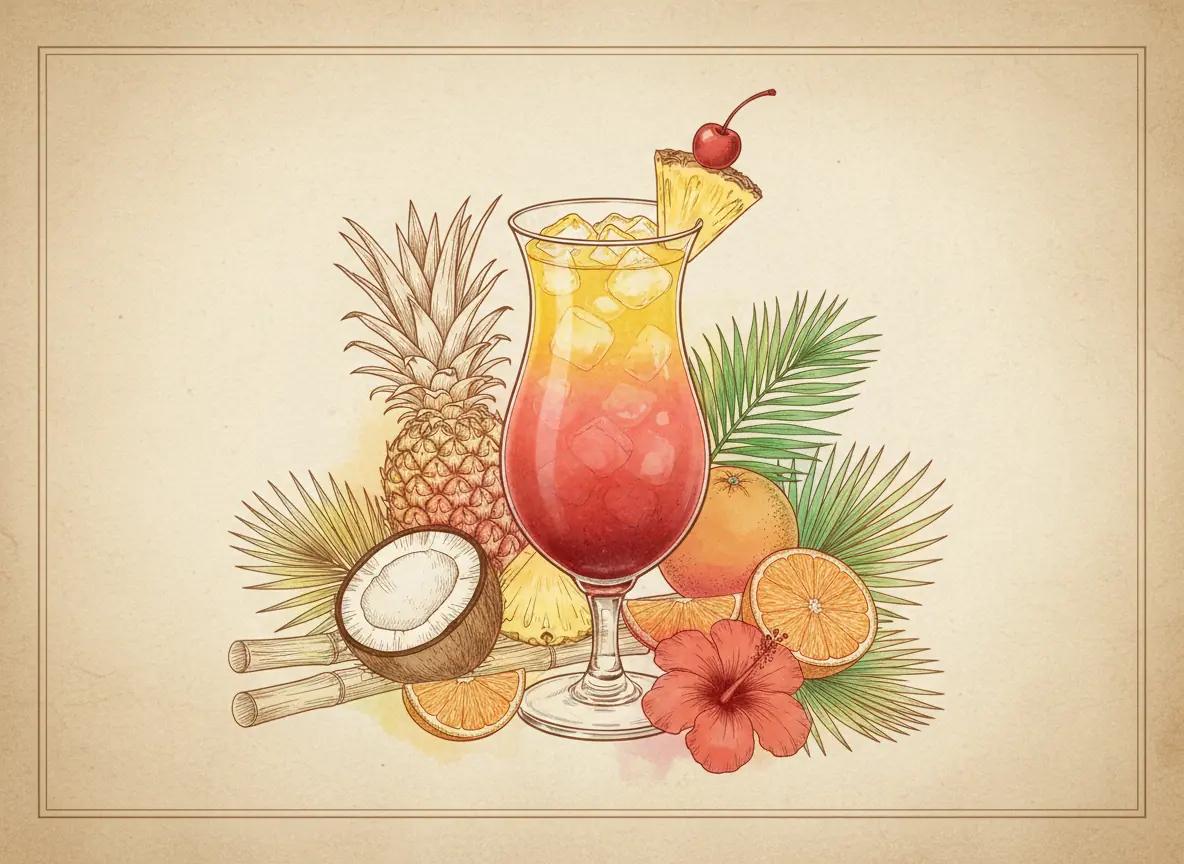
A Bahama Mama is a long rum punch: 30ml dark rum, 30ml coconut rum and 15ml overproof rum, with 60ml each of pineapple and orange juice, 15ml fresh lime juice and 15ml grenadine, shaken and strained over crushed ice in a hurricane glass. It tastes of coconut, pineapple and orange, and it is stronger than any of that suggests. Its history is loose. The Oxford Companion to Spirits and Cocktails places a Bahama Mama at Nassau’s British Colonial Hotel in 1960 and at Trader Vic’s in Beverly Hills in 1961, with neither formula recorded. The Nassau bartender Oswald Greenslade claims to have invented it, Travel Distilled reports, though he started work at the Nassau Beach Hotel in 1961. The fruit-and-coconut punch most bars now pour has no documented creator. A glass holds about 2.8 UK units. Squeeze the citrus the same day and use a grenadine made from pomegranate: in a drink that is mostly juice, the juice decides the result.
Rum Runner
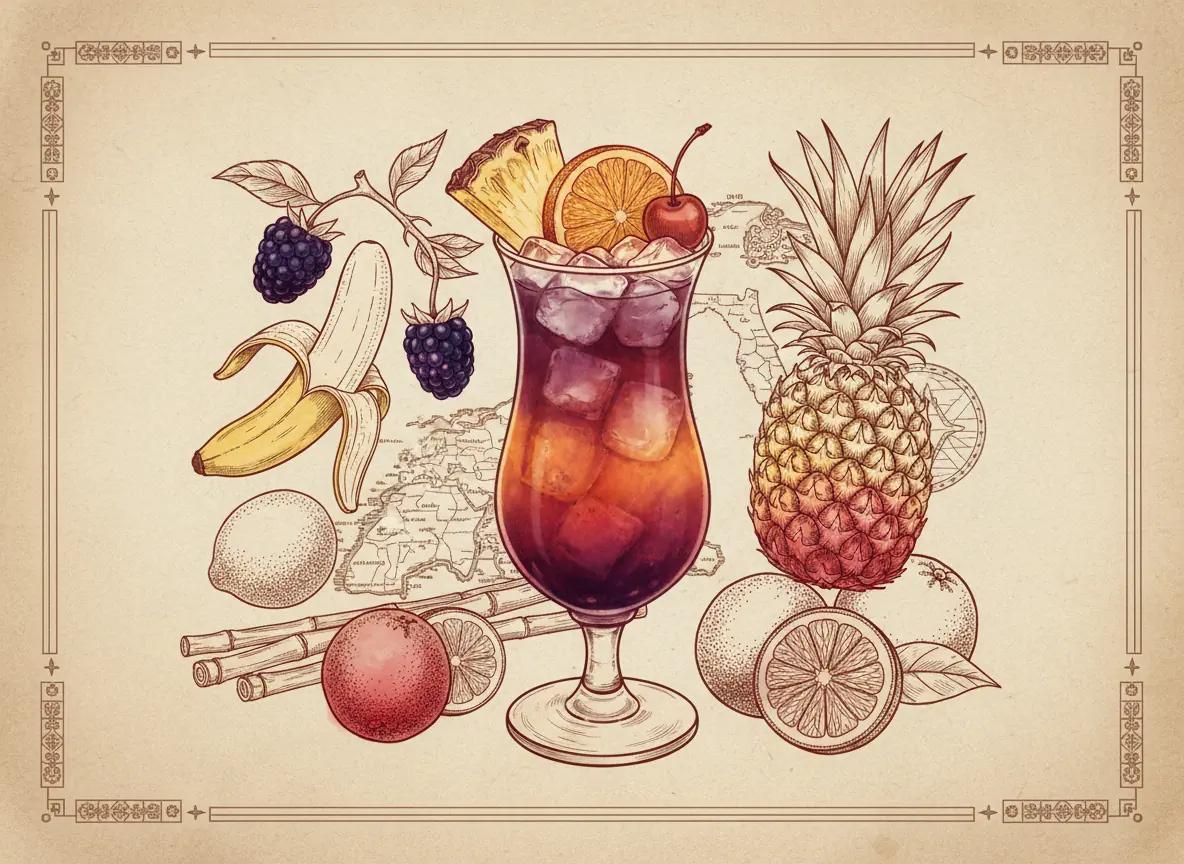
A Rum Runner is a Florida Keys tiki drink: 30ml each of dark and white rum, 15ml each of blackberry and banana liqueur, 10ml grenadine, 15ml fresh lime juice, 45ml pineapple juice and 30ml orange juice, shaken hard and strained over crushed ice in a hurricane glass. A 15ml float of overproof rum is optional. Blended with the ice instead, it becomes the frozen Rum Runner the Keys are known for. The usual account, which Difford’s Guide quotes from the Holiday Isle Tiki Bar’s own site and calls legend, credits the bar’s manager John “Tiki John” Elber with mixing it to clear surplus rum and liqueur before a delivery; the bar took its name in 1971, so the early 1970s is the likely date. That first version had no fruit juice. Pineapple and orange came later and made it the long, fruity drink most bars pour now. It is stronger than it tastes: about 3.0 UK units a glass, 3.9 with the float. Fresh lime and a pomegranate grenadine are what keep it from tasting of boiled sweets.
Where this one sits
Recipe by Jerry Can Spirits · Updated 19 October 2026