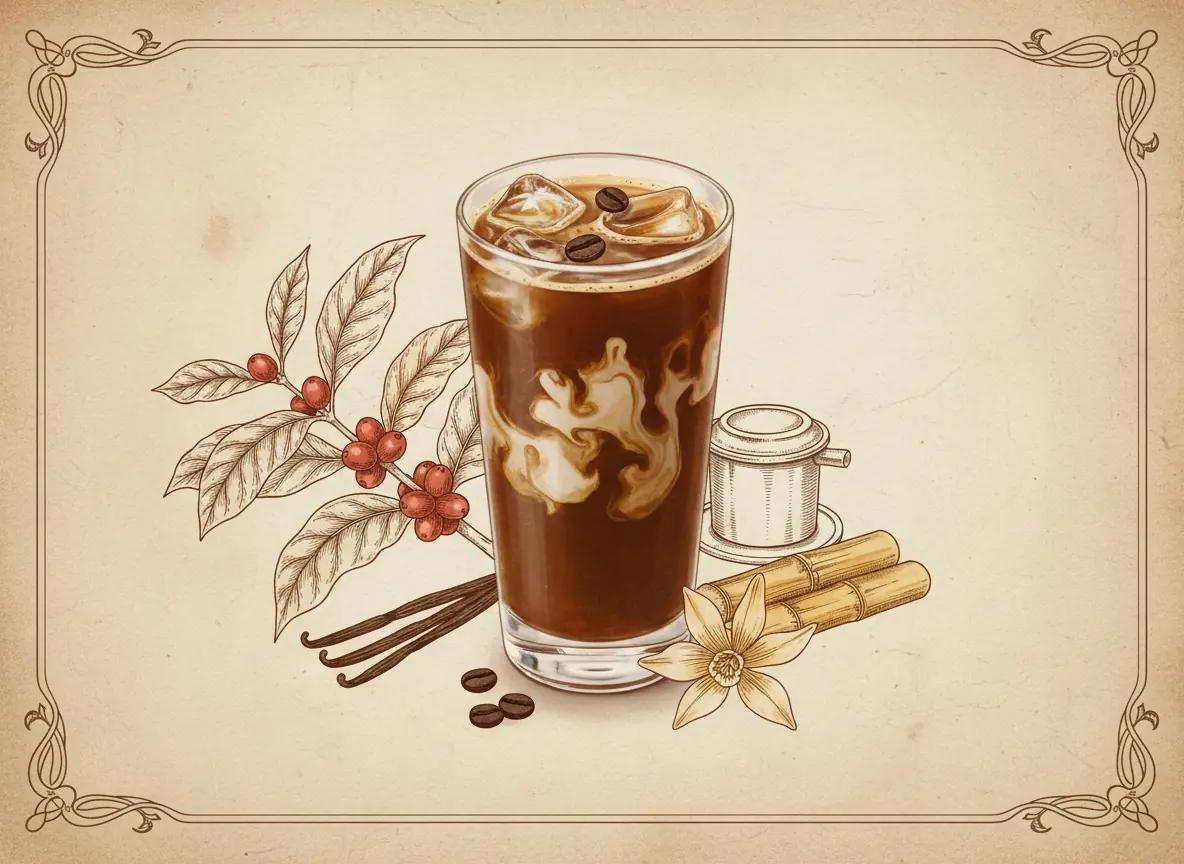
Vietnamese Iced Coffee (Cocktail)
The Vietnamese Iced Coffee cocktail is 90ml of phin-brewed robusta stirred into 30ml of condensed milk, then shaken hard with 25ml of vodka and 15ml of coffee liqueur and strained over a highball packed with ice, with three coffee beans on top. About 1.3 UK units. It contains milk and plenty of caffeine. The base is our cà phê sữa đá, at the same measures. The vodka adds strength without taste, and the coffee liqueur puts back the coffee that the alcohol would otherwise thin out. Robusta is the point. Local Beans Roastery says Vietnam’s native robusta is bold, bitter and high in caffeine, and that the fat of the milk tames the bitterness.
Glassware: Highball Glass
Garnish: Three coffee beans laid on the surface
Ingredients
90ml
A dark roast, all robusta or mostly so, dripped through a phin as in the alcohol-free version. A double espresso will do, with a lighter, sharper result.
30ml
The only sweetener and the only milk, and the drink’s body. Use 40ml for a sweeter glass. Contains milk.
25ml
At 40% ABV, clean and neutral. It adds strength and leaves the coffee and milk to carry the flavour.
15ml
Kahlúa, which Pernod Ricard’s brand page lists at 16% ABV, or a drier, stronger coffee liqueur. It puts back coffee and a little sweetness that the vodka would otherwise thin.
Instructions
Spoon the condensed milk into a small heatproof jug or cup.
Set the phin on top, add the ground coffee and drip 90ml of coffee through it; it takes 4 to 6 minutes.
Stir the coffee and condensed milk together while hot.
Pour into a shaker with the vodka and coffee liqueur, fill with cubed ice and shake hard for 10 to 12 seconds.
Strain into a highball glass packed with fresh ice.
Lay three coffee beans on the surface.
Our version
Our cocktail keeps the coffee and milk of our alcohol-free cà phê sữa đá, 90ml of phin robusta to 30ml of condensed milk, and adds 25ml of vodka and 15ml of coffee liqueur, shaken over ice.
Source: our own specification. Last checked 10 October 2026.
Expert Tip
Mix coffee and milk while the coffee is still hot. Condensed milk melts into hot liquid in seconds; in cold it clings to the jug, and whatever is left undissolved settles at the bottom of the glass. Shake at once, hard, for 10 to 12 seconds. Hot coffee melts more ice than a cold mix would, so the drink comes out longer and colder, and a strong phin brew is made with that in mind. The shake also raises a thin foam for the beans to rest on. Keep the condensed milk. Fresh milk with sugar is thinner and lacks the toasted, caramel taste the tin brings. For a sweeter glass use 40ml, as in the alcohol-free version.
Behind the Vietnamese Iced Coffee (Cocktail)
Flavour Profile
Where It Comes From
Little Coffee Place says the French introduced coffee cultivation in Vietnam and kept brewing their café au lait there, but fresh milk went sour quickly in the tropical environment. Condensed milk was first imported and then produced locally, and Local Beans Roastery says the bold, bitter robusta grown there stands up to its sweetness.
Ours keeps the coffee and milk at the measures of our alcohol-free version and adds as little as it can: 25ml of vodka and 15ml of coffee liqueur.
The Phin Filter
A phin is a little metal filter for one cup, set on top of the glass. Water seeps through the grounds over four to six minutes, and what drips out is thick and strong, with less acid than espresso.
That strength counts for more here than in the alcohol-free glass. The coffee has to survive condensed milk, vodka, liqueur and a hard shake over ice. A weak brew comes out as sweet milk with a faint coffee note.
What the Spirits Add
Vodka alone would only thin the drink. The coffee liqueur answers that, adding coffee and some sugar, so the glass tastes of coffee first and alcohol second.
The spirit stays neutral on purpose. The character is the robusta and the condensed milk; a flavoured spirit would add a third voice. At about 1.3 units in a long glass, it is lighter than an Espresso Martini, which carries about 2.6.
Coffee, Milk and Vodka Four Ways
The Vietnamese Iced Coffee cocktail beside three related drinks; the Espresso Martini row is the IBA’s specification and the White Russian row is ours
Vietnamese Iced Coffee cocktail
- Coffee
- 90ml phin robusta
- Milk
- 30ml condensed milk
- Alcohol
- 25ml vodka, 15ml coffee liqueur
- UK units
- About 1.3
Vietnamese Iced Coffee (alcohol-free)
- Coffee
- 90ml phin robusta
- Milk
- 30ml condensed milk
- Alcohol
- None
- UK units
- Alcohol-free
Espresso Martini
- Coffee
- About 30ml espresso
- Milk
- None
- Alcohol
- 50ml vodka, 30ml Kahlúa
- UK units
- About 2.6
White Russian
- Coffee
- None
- Milk
- 30ml cream
- Alcohol
- 50ml vodka, 25ml coffee liqueur
- UK units
- About 2.5
| Drink | Coffee | Milk | Alcohol | UK units |
|---|---|---|---|---|
| Vietnamese Iced Coffee cocktail | 90ml phin robusta | 30ml condensed milk | 25ml vodka, 15ml coffee liqueur | About 1.3 |
| Vietnamese Iced Coffee (alcohol-free) | 90ml phin robusta | 30ml condensed milk | None | Alcohol-free |
| Espresso Martini | About 30ml espresso | None | 50ml vodka, 30ml Kahlúa | About 2.6 |
| White Russian | None | 30ml cream | 50ml vodka, 25ml coffee liqueur | About 2.5 |
How to Serve It
Strained over a highball packed with fresh ice, with three beans resting on the thin foam. Serve it straight away; as the ice melts it gets weaker, not better.
For the same coffee with no alcohol, see the alcohol-free Vietnamese Iced Coffee; for vodka and coffee shaken up, an Espresso Martini.
Make it at home
The Spirit
VodkaVodka is spirit made from a farmed crop, usually grain or potatoes, distilled and refined so that the taste of that crop is deliberately reduced. Under the retained Regulation (EC) 110/2008 its minimum is 37.5% ABV and it may not be given a predominant flavour, which separates it from flavoured vodka and from gin; our recipes count it at 40%. In a mixed drink it adds strength and body while the other ingredients carry the taste.
More to explore
Frequently Asked Questions
What is the Vietnamese Iced Coffee cocktail?
What does cà phê sữa đá mean?
Why vodka?
Does it contain caffeine?
Is it dairy-free?
Can I use espresso instead of a phin?
How strong is the Vietnamese Iced Coffee cocktail?
Sources.
Correct as of 19 October 2026.
- Little Coffee Place (Rodrigo Grana), “A Guide On Vietnamese Coffee – Origin and Recipe” (named-author coffee site: the French introduced coffee cultivation and café au lait; fresh milk went sour in the tropics; condensed milk imported, then made locally).
- Local Beans Roastery (Oliver Phung), “Vietnamese Iced Coffee (Ca Phe Sua Da)” (named-author roaster’s guide: native robusta bold, bitter and high in caffeine; the fat of the milk tames the bitterness).
- Pernod Ricard, “Kahlúa” (owner’s brand page: Kahlúa Original, 16% ABV).
- IBA, “Espresso Martini” (official specification: 50ml vodka, 30ml Kahlúa, 10ml sugar syrup, one strong espresso).
- Sort of Legal (Larissa Bodniowycz), “Three Types of Vietnamese Coffee to Try or Make at Home” (named-author travel blog: cà phê sữa đá, milk coffee with ice, cà phê nâu đá in the north).
You Might Also Like
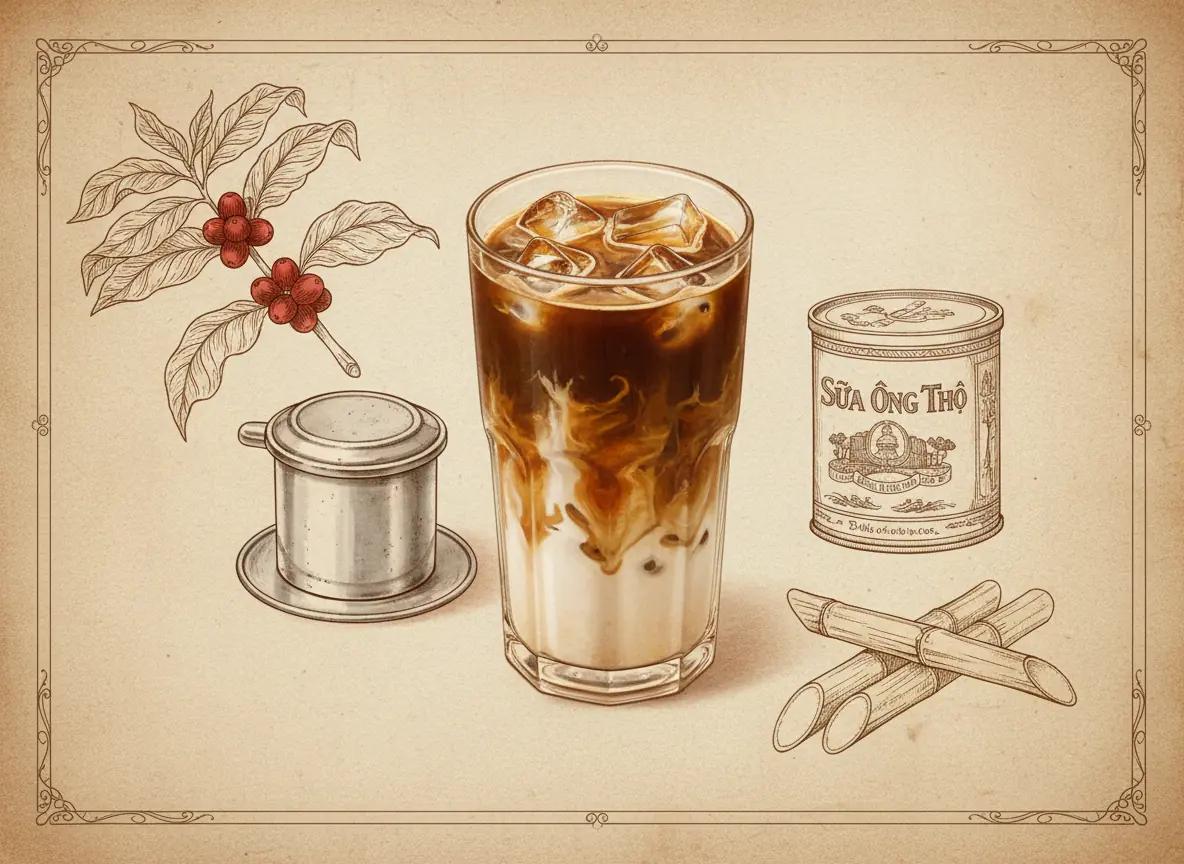
Vietnamese Iced Coffee (Non-Alcoholic)
Vietnamese iced coffee, cà phê sữa đá, is 90ml of strong robusta coffee dripped through a phin filter onto 30ml of sweetened condensed milk, stirred together while hot and poured over a tall glass packed with ice. It is alcohol-free. The condensed milk is dairy, and robusta carries plenty of caffeine. The name means milk coffee with ice; in the north it is cà phê nâu đá, brown coffee with ice, Sort of Legal says. Little Coffee Place says the French introduced coffee cultivation and kept brewing café au lait in Vietnam, but fresh milk went sour quickly in the tropical climate, so condensed milk, first imported and later made locally, took its place. Local Beans Roastery says the bold, bitter robusta grown there stands up to the sweetness. The phin is a small metal filter that sits on the cup and drips for four to six minutes. The coffee it makes is dense and strong, and it needs to be, because the ice cools and dilutes it the moment it is poured.
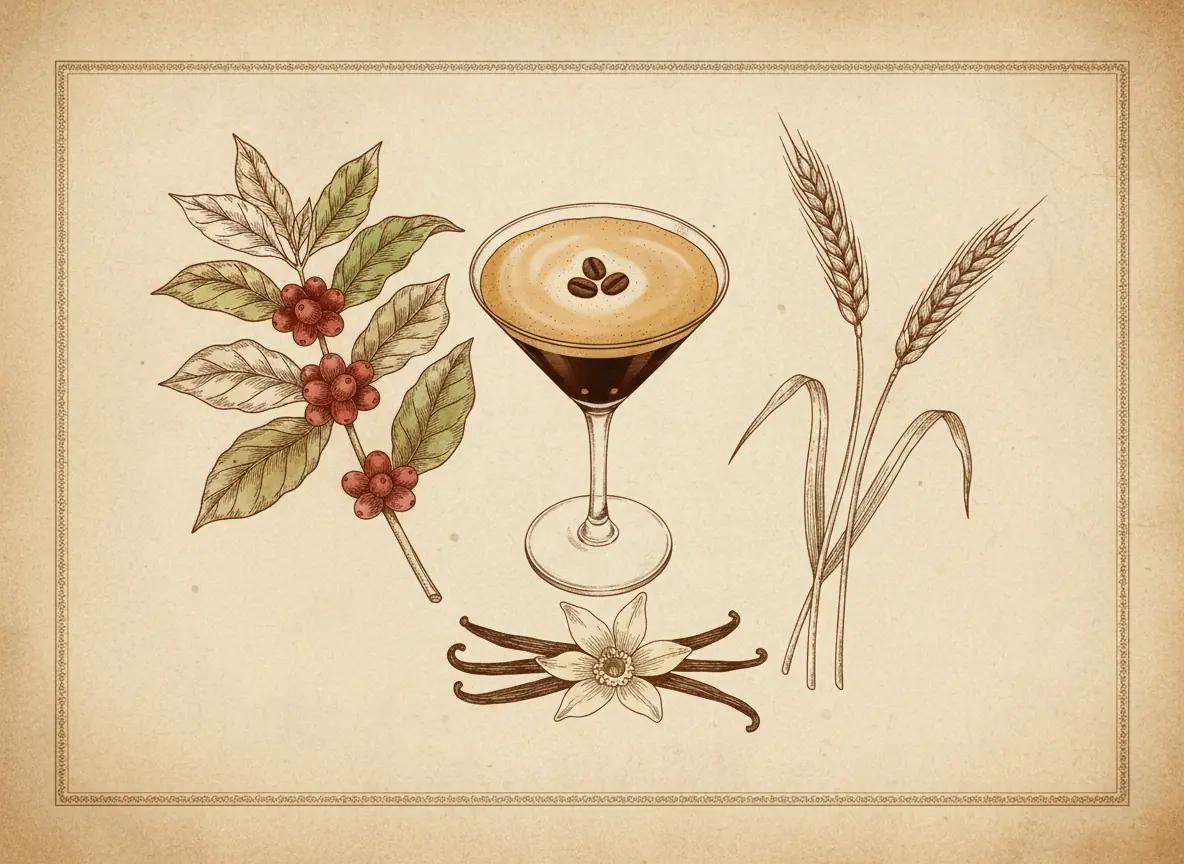
Espresso Martini
An Espresso Martini is 50ml of vodka, 30ml of Kahlúa, 10ml of sugar syrup and one freshly pulled espresso of about 30ml, shaken hard for 10 to 12 seconds and double strained into a chilled martini glass, with three coffee beans laid on the foam. About 2.5 UK units, and the caffeine of a single shot. The Oxford Companion says Dick Bradsell created it at the Soho Brasserie in London in 1983, for a famous model who asked for a drink to wake her up and then mess her up; he never said who she was. The measures are the IBA’s. Vodka gives strength and cold without flavour, so the coffee leads. The foam comes from the crema of a shot pulled moments before the shake, which is why the espresso goes in last.
Where this one sits
Recipe by Jerry Can Spirits · Updated 19 October 2026