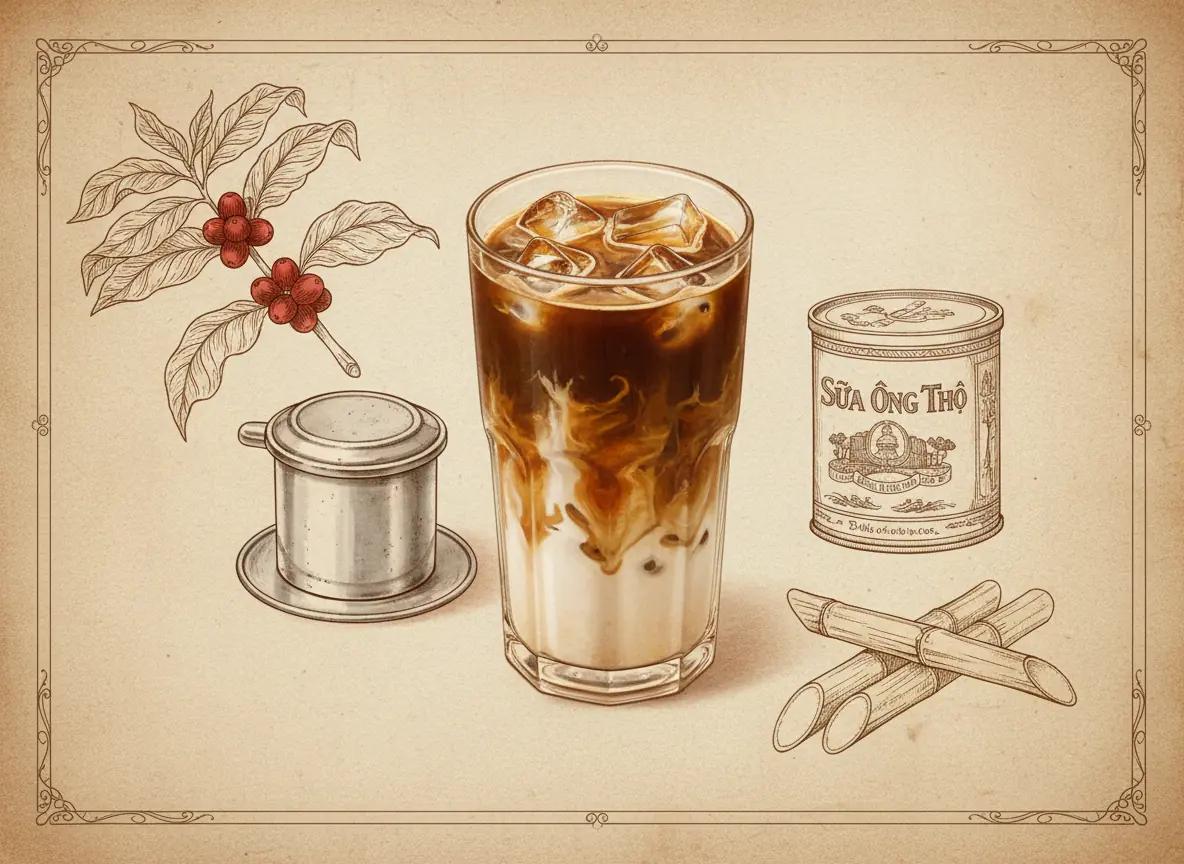
Vietnamese Iced Coffee (Non-Alcoholic)
Vietnamese iced coffee, cà phê sữa đá, is 90ml of strong robusta coffee dripped through a phin filter onto 30ml of sweetened condensed milk, stirred together while hot and poured over a tall glass packed with ice. It is alcohol-free. The condensed milk is dairy, and robusta carries plenty of caffeine. The name means milk coffee with ice; in the north it is cà phê nâu đá, brown coffee with ice, Sort of Legal says. Little Coffee Place says the French introduced coffee cultivation and kept brewing café au lait in Vietnam, but fresh milk went sour quickly in the tropical climate, so condensed milk, first imported and later made locally, took its place. Local Beans Roastery says the bold, bitter robusta grown there stands up to the sweetness. The phin is a small metal filter that sits on the cup and drips for four to six minutes. The coffee it makes is dense and strong, and it needs to be, because the ice cools and dilutes it the moment it is poured.
Glassware: Highball Glass
Garnish: None
Ingredients
90ml
Dark-roast robusta or a robusta-heavy blend, ground for a phin and dripped slowly. A strong espresso will do, with a lighter and sharper result.
30ml
The only sweetener and the only milk. Milk and sugar give neither its body nor its cooked caramel note. Use 40ml for a sweeter cup. Contains milk.
Instructions
Spoon the condensed milk into a small heatproof glass or cup.
Set the phin on top, add the ground coffee and level it with the filter press.
Pour about 20ml of hot water over the grounds and let them bloom for 30 seconds.
Fill the phin with hot water, put on the lid and let it drip; it takes 4 to 6 minutes.
Stir the coffee and condensed milk together while hot.
Pour over a tall glass packed with ice, stir again and serve.
Our version
We have found no fixed measure for cà phê sữa đá. Ours is 90ml of phin coffee to 30ml of condensed milk, which keeps the coffee in front; 40ml of milk makes a sweeter cup.
Source: our own specification. Last checked 10 October 2026.
Expert Tip
Let the phin drip at its own pace. Pressing down on the filter or grinding finer to hurry it over-extracts the coffee and makes it harsh. Four to six minutes is right. Use a dark-roast robusta or a robusta-heavy blend. A light arabica is too soft against condensed milk and ice, and the drink comes out sweet and thin. Stir the coffee into the condensed milk while it is still hot. The milk dissolves easily in hot coffee and stubbornly in cold, so stir before it meets the ice, then again in the glass.
Behind the Vietnamese Iced Coffee (Non-Alcoholic)
Flavour Profile
Where It Comes From
Little Coffee Place says the French introduced coffee cultivation in Vietnam and the drinking of it, and kept brewing their café au lait there, but fresh milk went sour quickly in the tropical environment. Condensed milk was first imported and then produced locally. Local Beans Roastery dates the arrival of French-planted coffee trees to 1857 and says the answer to the milk problem came in tins and needed no refrigeration.
Local Beans Roastery says the native robusta is bold, bitter and high in caffeine, and that against the sweet, thick milk the fat tames the bitterness while the strength of the bean cuts through the sugar. Local Beans Roastery says it was first served hot, as cà phê sữa nóng, and that locals soon added ice against the heat.
The Phin Filter
The phin is a small, single-cup metal drip filter that sits on top of the glass. It has four parts: the chamber that holds the grounds, a perforated plate that sits inside it, a press that settles the coffee, and a lid that keeps the heat in.
The drip takes four to six minutes. The coffee comes out dense and concentrated, strong enough to hold its own against the condensed milk and the meltwater.
The Condensed Milk
Thirty millilitres gives a cup where the coffee leads. Forty makes it sweeter and richer. The milk goes in first and sits under the coffee until you stir, so stir it through properly; the last sip should not be pure milk.
Four Vietnamese Coffees
Cà phê sữa đá beside three other Vietnamese coffees; the first row is our recipe and the others follow Local Beans Roastery, Chef Tu David Phu and Sort of Legal
Cà phê sữa đá (ours)
- What it is
- Phin robusta over condensed milk, poured over ice
- Contains
- Milk, caffeine
Cà phê đen đá
- What it is
- Phin robusta over ice, no milk
- Contains
- Caffeine
Bạc xỉu
- What it is
- Condensed milk and fresh milk with a little coffee
- Contains
- Milk, some caffeine
Cà phê trứng
- What it is
- Coffee topped with egg yolk whipped with condensed milk
- Contains
- Egg, milk, caffeine
| Drink | What it is | Contains |
|---|---|---|
| Cà phê sữa đá (ours) | Phin robusta over condensed milk, poured over ice | Milk, caffeine |
| Cà phê đen đá | Phin robusta over ice, no milk | Caffeine |
| Bạc xỉu | Condensed milk and fresh milk with a little coffee | Milk, some caffeine |
| Cà phê trứng | Coffee topped with egg yolk whipped with condensed milk | Egg, milk, caffeine |
The Ice
Pack the glass to the top. The coffee goes onto the ice hot, which chills it at once and waters it a little, and the dense coffee a phin brews can take that.
For the same coffee with vodka and coffee liqueur, make the Vietnamese Iced Coffee cocktail; for coffee shaken with vodka, an Espresso Martini.
Make it at home
The Spirit
CoffeeCoffee goes into drinks as a fresh espresso, valued for its crema, or as a longer brew: filter, phin-dripped robusta or cold brew. The brew decides what it brings: hot espresso gives foam and bitterness, filter gives length and heat, and cold brew gives flavour with no crema. It carries caffeine: by the NHS figure a cup of instant coffee holds 100mg, and filter coffee can hold more.
Master the Techniques
More to explore
Frequently Asked Questions
What is cà phê sữa đá?
Is Vietnamese iced coffee alcohol-free?
Why condensed milk instead of fresh?
Why robusta coffee?
What if I do not have a phin filter?
Is it dairy-free?
Sources.
Correct as of 19 October 2026.
- Little Coffee Place (Rodrigo Grana), “A Guide On Vietnamese Coffee – Origin and Recipe” (named-author coffee site: the French introduced coffee cultivation and café au lait; fresh milk went sour in the tropics; condensed milk imported, then made locally).
- Local Beans Roastery (Oliver Phung), “Vietnamese Iced Coffee (Ca Phe Sua Da)” (named-author roaster’s guide: French colonists brought coffee trees in 1857; condensed milk in tins; robusta bold, bitter and high in caffeine; first served hot, ice added later; black iced coffee has no milk).
- Chef Tu David Phu, “Bạc Xỉu [Saigon Style Coffee]” (named chef’s recipe page: bạc xỉu has the same ingredients as cà phê sữa with condensed milk and fresh milk and a splash of phin coffee, less caffeine and sweeter).
- Sort of Legal (Larissa Bodniowycz), “Three Types of Vietnamese Coffee to Try or Make at Home” (named-author travel blog: cà phê sữa đá, milk coffee with ice, cà phê nâu đá in the north; egg coffee, a yolk whipped with sweetened condensed milk then combined with coffee).
You Might Also Like
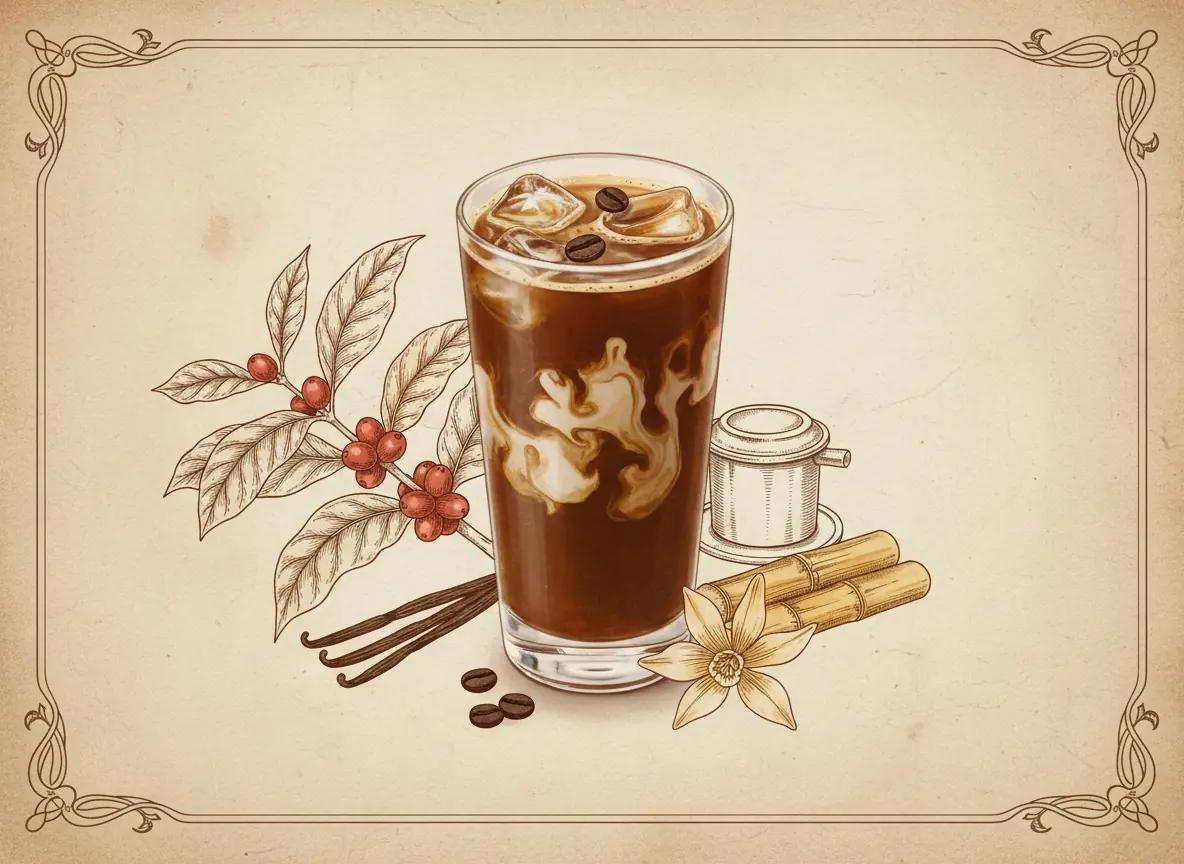
Vietnamese Iced Coffee (Cocktail)
The Vietnamese Iced Coffee cocktail is 90ml of phin-brewed robusta stirred into 30ml of condensed milk, then shaken hard with 25ml of vodka and 15ml of coffee liqueur and strained over a highball packed with ice, with three coffee beans on top. About 1.3 UK units. It contains milk and plenty of caffeine. The base is our cà phê sữa đá, at the same measures. The vodka adds strength without taste, and the coffee liqueur puts back the coffee that the alcohol would otherwise thin out. Robusta is the point. Local Beans Roastery says Vietnam’s native robusta is bold, bitter and high in caffeine, and that the fat of the milk tames the bitterness.
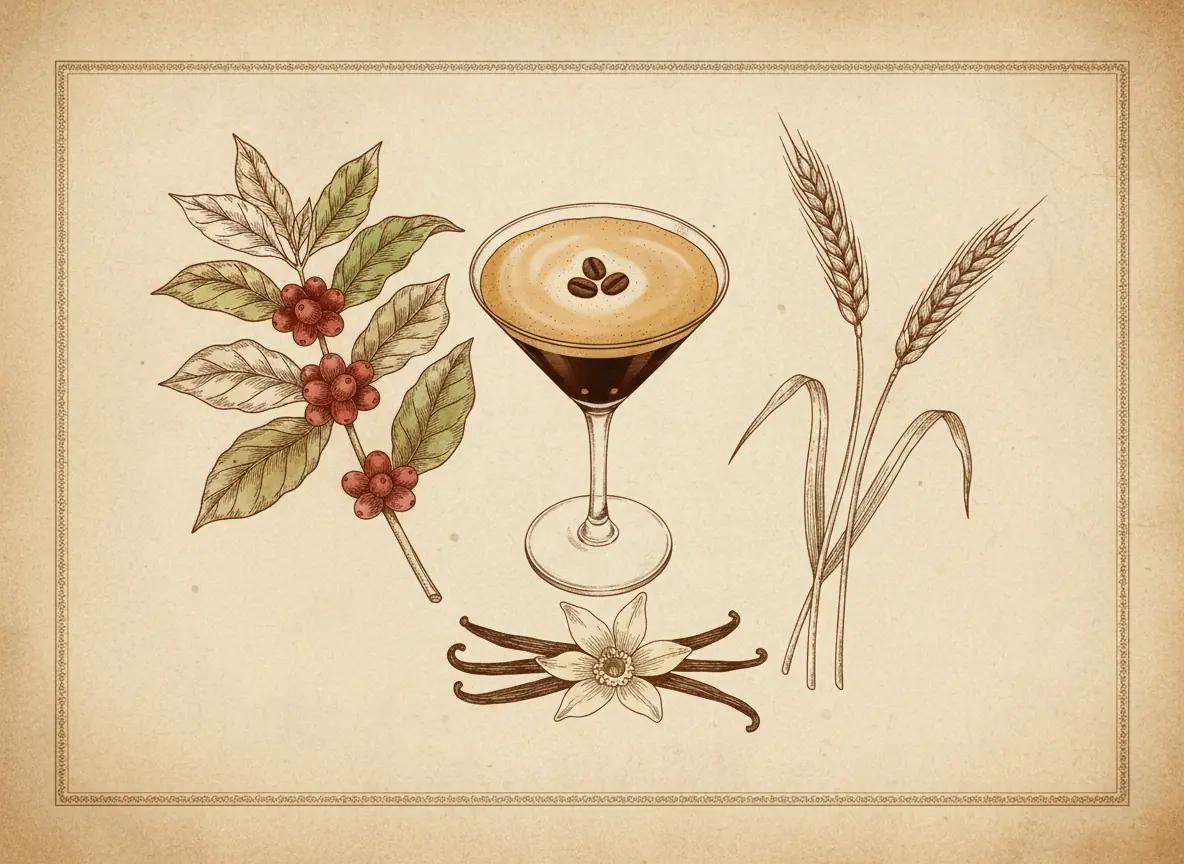
Espresso Martini
An Espresso Martini is 50ml of vodka, 30ml of Kahlúa, 10ml of sugar syrup and one freshly pulled espresso of about 30ml, shaken hard for 10 to 12 seconds and double strained into a chilled martini glass, with three coffee beans laid on the foam. About 2.5 UK units, and the caffeine of a single shot. The Oxford Companion says Dick Bradsell created it at the Soho Brasserie in London in 1983, for a famous model who asked for a drink to wake her up and then mess her up; he never said who she was. The measures are the IBA’s. Vodka gives strength and cold without flavour, so the coffee leads. The foam comes from the crema of a shot pulled moments before the shake, which is why the espresso goes in last.
Where this one sits
Recipe by Jerry Can Spirits · Updated 19 October 2026