Ward Eight
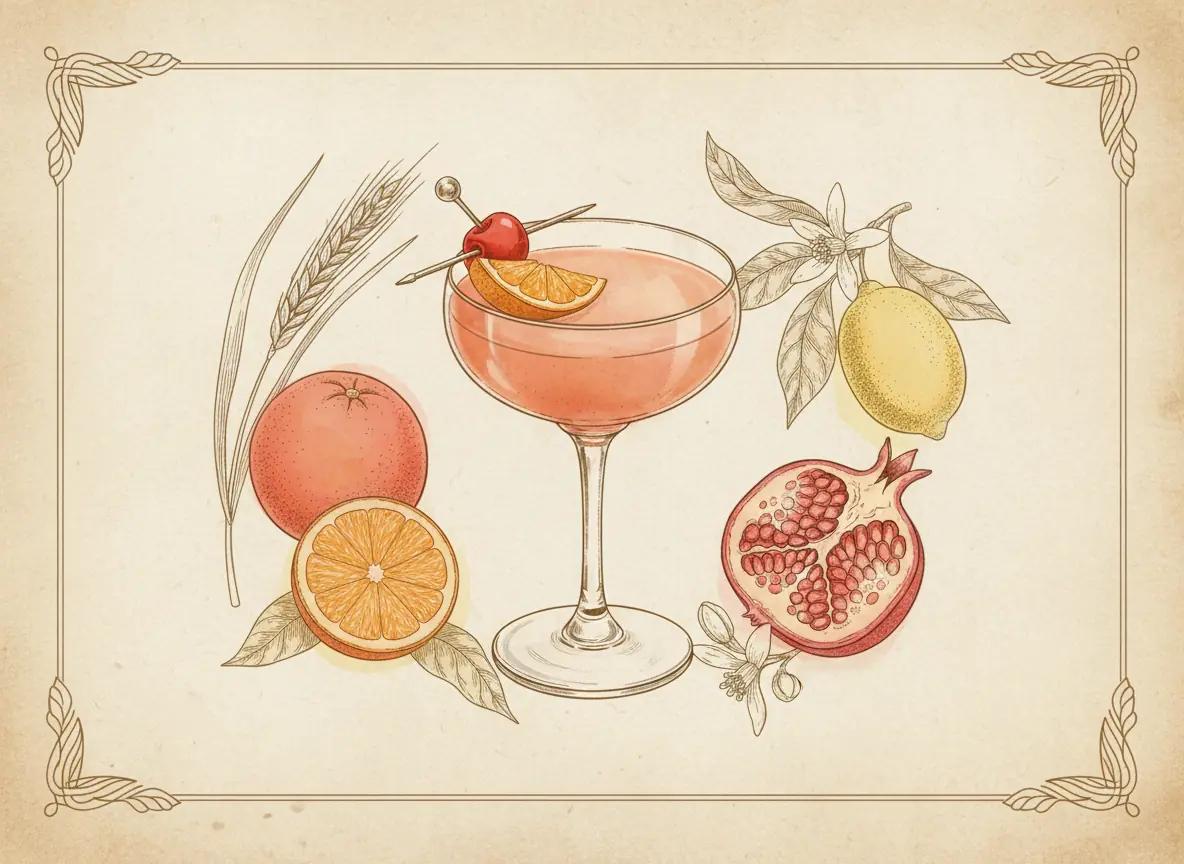
A Ward Eight is 60ml of rye whiskey, 20ml each of fresh lemon and orange juice and 10ml of grenadine, shaken hard for 10 to 12 seconds and double strained into a chilled coupe, with an orange slice and a cherry. About 2.4 UK units. It is a rye sour with split citrus. The orange softens the lemon and does some of the sweetening, so the grenadine can stay small and bring colour and a tart fruit edge. The Oxford Companion says the most widely cited account puts its creation on election eve 1898 at Boston’s historic Locke-Ober restaurant, where the bartender Tom Hussion made it at the request of the Hendricks Club, formed by Martin “the Mahatma” Lomasney, boss of Boston’s Eighth Ward, to mark his expected election to the state legislature. The Companion says Lomasney, who abstained from alcohol, probably was not there, and that Hussion only started at the restaurant in 1900.
Glassware: Coupe Glass
Garnish: Orange slice and Luxardo maraschino cherry
Ingredients
60ml
Any rye from 40% ABV up. Its spice and dryness stay audible through the fruit; the recipe usually given for Locke-Ober also uses rye.
20ml
Squeezed the same day. Rounder and sweeter than lemon, it softens the acid and does part of the grenadine’s job.
10ml
Made from pomegranate juice and sugar. At 10ml it colours the drink and adds a tart fruit edge.
Instructions
Squeeze the lemon and orange juice the same day, ideally just before you build.
Chill a coupe.
Add the rye, lemon juice, orange juice and grenadine to a shaker.
Fill with cubed ice and shake hard for 10 to 12 seconds.
Double strain into the chilled coupe.
Garnish with an orange slice on the rim and a cherry.
Our version
The recipe usually given for Locke-Ober after Prohibition is two ounces of rye, half an ounce each of lemon and orange juice and a teaspoon of grenadine. Ours keeps the rye at 60ml and takes the citrus to 20ml each and the grenadine to 10ml.
Source: our own specification. Last checked 10 October 2026.
Expert Tip
Keep the orange. It softens the lemon and supplies sugar, which is why 10ml of grenadine is enough. Take it out and you have a sharper, redder rye sour that needs more syrup. Adjust the citrus, not the grenadine. For a sharper drink take the lemon to 25ml and the orange to 15ml; the total stays the same and the balance tips towards sour. Choose a pomegranate grenadine. At 10ml it is a flavour as well as a colour, and a bright red syrup adds only sugar.
Behind the Ward Eight
Flavour Profile
The Origin
The Oxford Companion calls the Ward Eight Boston’s best-known cocktail, a variation on a variation on the Whisky Sour, and gives the most widely cited account: election eve 1898 at Boston’s historic Locke-Ober restaurant, where the bartender Tom Hussion mixed it at the request of the Hendricks Club, formed by Martin “the Mahatma” Lomasney, boss of Boston’s Eighth Ward, to mark what they correctly assumed was his imminent election to the state legislature.
That is the story as it is usually told. The Companion says Lomasney, who abstained from alcohol, probably was not at the celebration, that Hussion only started at the restaurant in 1900, and that other accounts credit Billy Kane of Locke-Ober or Charlie Carter of the Puritan Club in 1903.
The Split Citrus
Most sours use one citrus. The Ward Eight uses two in equal measure: lemon for sharp, direct acid, orange for a rounder, sweeter one. Together they are softer than lemon alone and still sharp enough to hold the grenadine in check.
The orange also sweetens, which is why 10ml of grenadine is enough. Measure all three; a few millilitres either way tips the drink sour or sweet.
Rye Versus Bourbon
Two juices and grenadine bring a lot of fruit, and the spirit has to answer it. Rye’s spice and dryness keep the whiskey present. Bourbon’s vanilla and caramel add to the fruit instead, and the glass turns rounder and sweeter.
Our Measures and Locke-Ober’s
The Ward Eight as usually given for Locke-Ober and as we make it
Rye
- Locke-Ober recipe
- Two ounces
- Ours
- 60ml
Lemon juice
- Locke-Ober recipe
- Half an ounce
- Ours
- 20ml
Orange juice
- Locke-Ober recipe
- Half an ounce
- Ours
- 20ml
Grenadine
- Locke-Ober recipe
- One teaspoon
- Ours
- 10ml
Glass
- Locke-Ober recipe
- Chilled cocktail glass
- Ours
- Chilled coupe
Garnish
- Locke-Ober recipe
- Maraschino cherry, optional
- Ours
- Orange slice and cherry
UK units
- Locke-Ober recipe
- About 2.4
- Ours
- About 2.4
| Element | Locke-Ober recipe | Ours |
|---|---|---|
| Rye | Two ounces | 60ml |
| Lemon juice | Half an ounce | 20ml |
| Orange juice | Half an ounce | 20ml |
| Grenadine | One teaspoon | 10ml |
| Glass | Chilled cocktail glass | Chilled coupe |
| Garnish | Maraschino cherry, optional | Orange slice and cherry |
| UK units | About 2.4 | About 2.4 |
How to Serve It
Shaken hard, double strained into a chilled coupe, with an orange slice on the rim and a Luxardo cherry. A rocks glass over fresh ice works too, and softens the drink as it melts.
For apple brandy, lemon and grenadine, make a Jack Rose; for whisky with orange juice, a Blood and Sand.
Make it at home
The Spirit
Whiskey (Rye)Rye whiskey, under the US standard 27 CFR 5.143, takes at least 51% of its grain from rye and its colour from new charred oak, and goes into bottle at a 40% ABV minimum; our recipes take 40% as the figure. Rye makes a drier, spicier, more peppery spirit than corn, which is why stirred classics such as the Manhattan, Vieux Carré and Brooklyn are written for it. It appears in 23 of our recipes.
Master the Techniques
More to explore
Frequently Asked Questions
What is a Ward Eight?
Why is it called the Ward Eight?
Is the Locke-Ober story true?
Rye or bourbon?
Is ours the Locke-Ober recipe?
Coupe or rocks glass?
How strong is a Ward Eight?
Sources.
Correct as of 19 October 2026.
- The Oxford Companion to Spirits and Cocktails (Lauren Clark), “Ward Eight” (secondary source: Boston’s best-known cocktail; election eve 1898 at Locke-Ober, Tom Hussion, the Hendricks Club and Martin Lomasney; Hussion started at the restaurant in 1900; Billy Kane and Charlie Carter (1903) other accounts; a 1907 Boston Herald column; Esquire 1934).
You Might Also Like
Jack Rose
A Jack Rose is 60ml applejack, 22.5ml fresh lemon juice and 22.5ml grenadine, shaken hard and double strained into a chilled coupe, with lemon peel expressed over the top. About 2.4 UK units with a 40% applejack, or 3.0 with a bonded apple brandy at 50%. The lemon and grenadine are poured in equal measure, and the grenadine is why the drink looks and tastes as it does. Made from real pomegranate, it brings tart red fruit as well as sugar, and turns the glass pink. The Oxford Companion finds it in print in 1899, in the New York Press, as the pet of many connoisseurs at a downtown New York bar, and says the name was apparently taken from the Général Jacqueminot, or Jack, rose, a hybrid the drink resembles in colour. Difford’s Guide lists other claims for the name, among them a 1905 Police Gazette item crediting the Jersey City bartender Frank J. May. Hemingway put one in Jake Barnes’s hand at the Crillon in The Sun Also Rises.
Manhattan
The IBA specifies 50ml of rye whiskey, 20ml of sweet vermouth and a dash of Angostura bitters, strained into a chilled glass with a cocktail cherry; we stir it over ice for 20 to 30 seconds and serve it in a coupe. That is five parts whiskey to two of vermouth. About 2.3 UK units. The Oxford Companion says the most commonly told story puts it at New York’s Manhattan Club on 29 December 1874, at a testimonial dinner for Samuel J. Tilden, later retold with Jennie Jerome, Lady Randolph Churchill, as host or inspiration, and calls that story simply not true: she had given birth to Winston Churchill in Oxfordshire less than a month earlier. The Companion names O. H. Byron’s Modern Bartenders’ Guide among the bar books that printed the drink in 1884, and we read Byron’s and Charlie Paul’s books of that year in the Internet Archive scans. With so little in the glass, the vermouth decides it. Twenty millilitres is over a quarter of the drink, and a bottle opened months ago tastes flat and sour against the rye. We keep it in the fridge and replace it within about four weeks.
Blood & Sand
A Blood & Sand is equal parts Scotch whisky, sweet vermouth, Cherry Heering and fresh orange juice, 25ml of each, shaken hard and double strained into a chilled coupe. An expressed orange peel goes on top. No syrup goes in: the cherry liqueur and the vermouth do all the sweetening, and the glass holds about 2.0 UK units. It shares its name with Blood and Sand, the film that cast Rudolph Valentino as a bullfighter, first screened in 1922, and the Oxford Companion to Spirits and Cocktails says it first appears in Harry Craddock’s Savoy Cocktail Book of 1930. Nobody can be shown to have mixed it first. Scotch and orange juice sound like an odd pair. The vermouth and cherry join them, bridging malt and citrus with wine and dark fruit, so that no single ingredient leads.
Where this one sits
Recipe by Jerry Can Spirits · Updated 19 October 2026