Start here.
Spend where a cheap tool shows in the glass
A tool is worth more money when it measures, seals or holds back ice, because a fault there reaches every drink. Where a tool only stirs, presses or peels, the cheap one does the same work.
Spend or save: tool by tool
Jigger
- Spend or save
- Spend
- What the extra money buys
- Marks stamped or etched inside the cups; a seam that resists dents
- Check before you buy
- 25ml and 50ml ends, with lines inside for smaller pours
Shaker
- Spend or save
- Spend
- What the extra money buys
- A seal that holds every time, and parts that come apart when cold
- Check before you buy
- Boston tins sold as a matched pair, 28oz and 18oz
Hawthorne strainer
- Spend or save
- Spend
- What the extra money buys
- A tight spring and a firm finger tab
- Check before you buy
- The spring holds back ice chips when pushed forward
Citrus press
- Spend or save
- Spend a little
- What the extra money buys
- Solid stainless steel, which outlasts enamel
- Check before you buy
- Sized for the fruit you squeeze most
Mixing glass
- Spend or save
- Save
- What the extra money buys
- A heavier base and a cleaner spout
- Check before you buy
- A sturdy pint glass stirs the same drink
Bar spoon
- Spend or save
- Save
- What the extra money buys
- Weight and finish
- Check before you buy
- Long enough to reach the bottom of your mixing glass
Fine strainer
- Spend or save
- Save
- What the extra money buys
- A sturdier rim
- Check before you buy
- A tight mesh; a tea strainer does the job
Muddler
- Spend or save
- Save
- What the extra money buys
- Nothing that changes the drink
- Check before you buy
- No varnish or paint, and a flat end
Y-peeler
- Spend or save
- Save
- What the extra money buys
- Nothing; the cheap classic is the one to buy
- Check before you buy
- A sharp blade
Ice trays
- Spend or save
- Save
- What the extra money buys
- Easier release
- Check before you buy
- Large cubes for short drinks; a clear ice mould is a separate purchase
| Tool | Spend or save | What the extra money buys | Check before you buy |
|---|---|---|---|
| Jigger | Spend | Marks stamped or etched inside the cups; a seam that resists dents | 25ml and 50ml ends, with lines inside for smaller pours |
| Shaker | Spend | A seal that holds every time, and parts that come apart when cold | Boston tins sold as a matched pair, 28oz and 18oz |
| Hawthorne strainer | Spend | A tight spring and a firm finger tab | The spring holds back ice chips when pushed forward |
| Citrus press | Spend a little | Solid stainless steel, which outlasts enamel | Sized for the fruit you squeeze most |
| Mixing glass | Save | A heavier base and a cleaner spout | A sturdy pint glass stirs the same drink |
| Bar spoon | Save | Weight and finish | Long enough to reach the bottom of your mixing glass |
| Fine strainer | Save | A sturdier rim | A tight mesh; a tea strainer does the job |
| Muddler | Save | Nothing that changes the drink | No varnish or paint, and a flat end |
| Y-peeler | Save | Nothing; the cheap classic is the one to buy | A sharp blade |
| Ice trays | Save | Easier release | Large cubes for short drinks; a clear ice mould is a separate purchase |
The jigger is the first tool to upgrade
Every measure in a cocktail goes through the jigger, so an inaccurate one pushes every drink the same way. A few millilitres of lime or syrup either side is enough to make a sour taste sweet or sharp.
Pay for marks stamped or etched inside the cups, which do not wear off, and a solid seam where the two cups meet. A dented jigger no longer holds what it says.
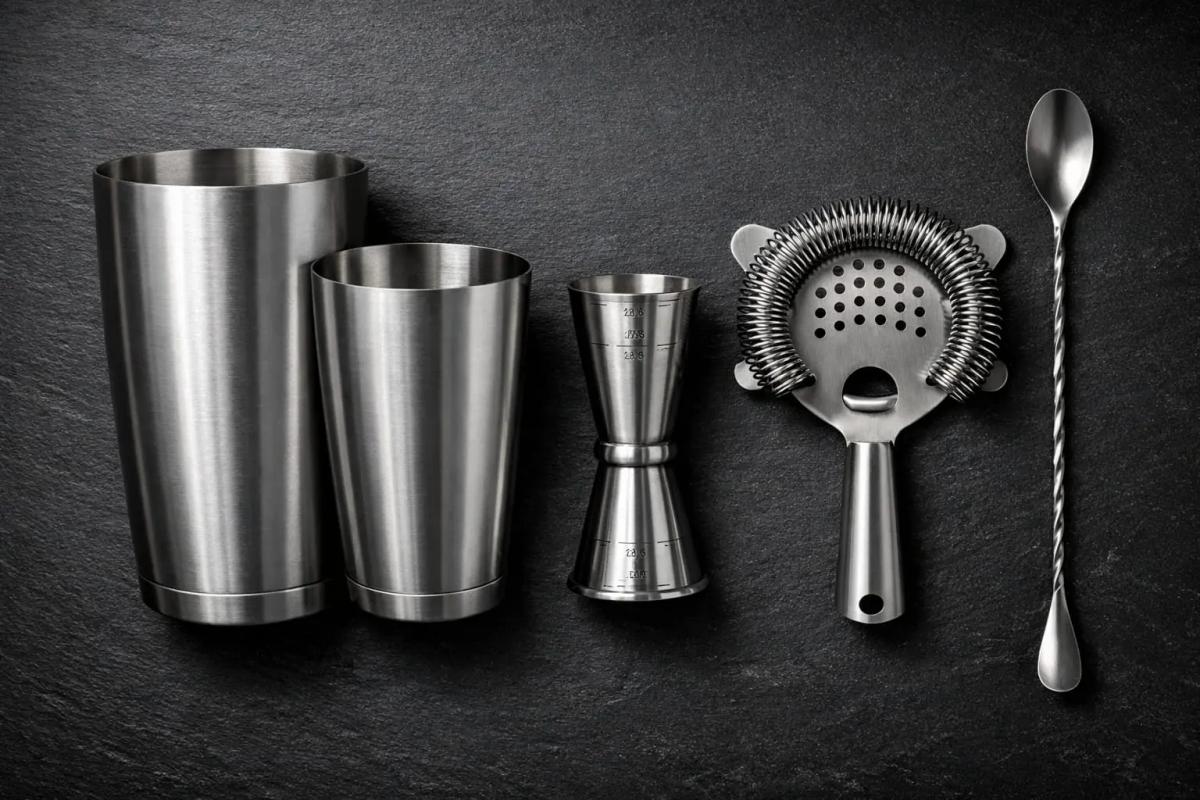
Buy it in the measures you pour. A jigger with 25ml and 50ml ends matches UK measures, and lines inside the cups take care of 15ml and 30ml. A Japanese jigger is usually 30ml and 45ml or 30ml and 60ml. One marked only in ounces turns every recipe into arithmetic. Our jigger is 25ml at one end and 50ml at the other.
A shaker is worth more only if it seals
A shaker that leaks sprays the drink across the kitchen, and one that will not open when cold is a fight every time. Those are what the extra money avoids. Heavier steel feels better in the hand but does not change the drink.
A Boston shaker is two tins. Buy them as a matched pair, 28oz and 18oz, because tins from different sets are the usual reason one leaks. It is quicker for a round of drinks and needs a separate strainer.
A cobbler shaker has three pieces: a body, a lid with the strainer built in, and a cap. It suits a home bar making one or two drinks at a time. The cap can stick once the steel is cold; warm it in your palm for twenty seconds rather than forcing it.
Both make the same drink. Shake hard for 10 to 12 seconds, until the tin is painfully cold. Our cocktail shaker is a 550ml stainless steel cobbler.
The Hawthorne strainer is the last tool worth paying more for
The spring on a Hawthorne strainer is what holds back the ice. A tight coil, pushed forward with a finger on the tab, gives a slow, clean strain. A loose one lets ice chips through and wobbles on the tin.
A fine strainer held under the pour catches the pulp and chips the Hawthorne lets past. Its mesh does the same job at any price, so buy it cheap. A cobbler lid strains as it pours, so with one you need the fine strainer only for drinks with citrus pulp or muddled herbs.
A julep strainer sits inside a mixing glass for stirred drinks. A Hawthorne does the same job, so it can wait.
Spoons, muddlers and peelers do the same job at any price
A bar spoon stirs as well at any price. Buy one long enough to reach the bottom of your mixing glass with shaft to spare; a twisted shaft is easier to turn between the fingers. More money buys weight and finish.
A muddler only presses. Choose unvarnished wood or stainless steel, 20 to 25cm long, with a flat end. Varnish and paint can chip into a drink, and sharp teeth shred mint into bitter fragments.
The cheap classic Y-peeler cuts a clean strip of peel, and a dearer one adds nothing. A plain bar blade opens a capped bottle as well as a weighted one.
A mixing glass of 500 to 700ml with a thick base covers every stirred drink, and cut crystal is bought for the look. A sturdy pint glass does the job until then. We sell neither a mixing glass nor a bar spoon.
Ice and glassware repay money in different places
Silicone ice trays make the same ice at any price; a dearer one releases more easily. A clear ice mould is a different tool. It freezes in one direction and pushes the cloudy part into a base you throw away. Buy one if you want clear cubes for short drinks.
In glassware, spend on weight in a rocks glass and a sound stem on a coupe. A supermarket highball holds a long drink as well as crystal, provided it holds 34 to 42cl. The glassware guide has the sizes.
Upgrade in order: jigger, shaker, strainer
Upgrade the jigger first, the shaker second and the Hawthorne strainer third. After those three, the next money does more as a bottle than as a tool. Home bar essentials sets out what to buy first when starting from nothing.
Dry steel tools straight after washing so they do not spot, and keep the jigger where it will not be dented.