Start here.
Spiced rum is rum with spices, and usually sugar, added
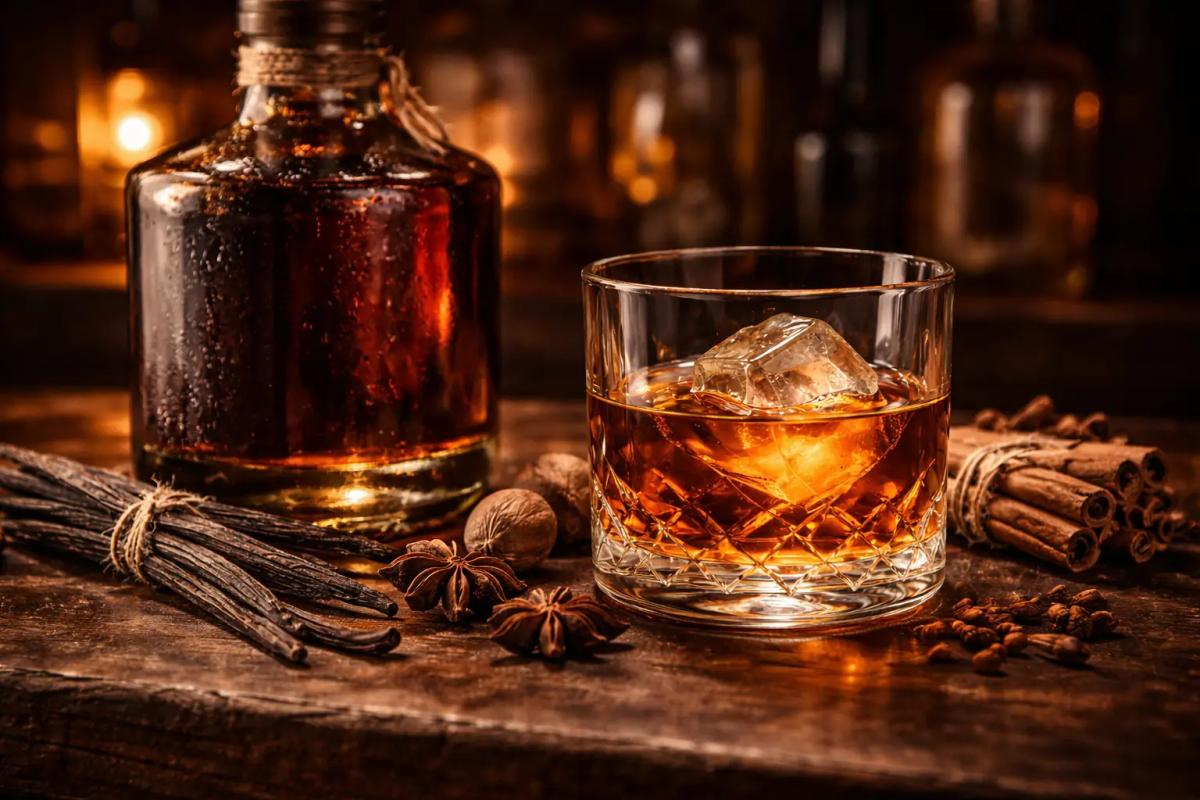
Spiced rum is rum with spices added after distillation, and usually a sweetener. The rum is distilled from sugarcane, most often from molasses, and is usually a golden rum from the Caribbean. The spices give most of the flavour within days or weeks, where oak takes years.
Spiced rum at a glance; the legal rows from Regulation (EC) No 110/2008 and Regulation (EU) No 1169/2011, as retained in UK law
Base
- Answer
- Rum distilled from sugarcane, most often a golden Caribbean rum
Spices
- Answer
- Vanilla, cinnamon or cassia, clove and allspice, often with nutmeg, ginger and orange peel
Sweetening
- Answer
- Usually added. GB law sets no limit and requires no declaration
Legal name in GB
- Answer
- Spirit drink, with spiced rum allowed alongside it when all the alcohol comes from rum
Strength
- Answer
- At least 15% ABV. Many mainstream bottles sit between 30% and 35% ABV, and some at 40% ABV or more
Colour
- Answer
- From the base rum, caramel (E150a) and a little from the spices
Taste
- Answer
- Vanilla first, then warming spice and orange, with oak or sugar on the finish
How to drink it
- Answer
- Neat, over one large cube, or long with cola or ginger beer at one part rum to three of mixer
| Question | Answer |
|---|---|
| Base | Rum distilled from sugarcane, most often a golden Caribbean rum |
| Spices | Vanilla, cinnamon or cassia, clove and allspice, often with nutmeg, ginger and orange peel |
| Sweetening | Usually added. GB law sets no limit and requires no declaration |
| Legal name in GB | Spirit drink, with spiced rum allowed alongside it when all the alcohol comes from rum |
| Strength | At least 15% ABV. Many mainstream bottles sit between 30% and 35% ABV, and some at 40% ABV or more |
| Colour | From the base rum, caramel (E150a) and a little from the spices |
| Taste | Vanilla first, then warming spice and orange, with oak or sugar on the finish |
| How to drink it | Neat, over one large cube, or long with cola or ginger beer at one part rum to three of mixer |
The mixers are set out in what to mix with spiced rum, the difference from dark rum in dark rum vs spiced rum, where it comes from in where is spiced rum made, and what each spice adds in spiced rum botanicals.
UK law calls spiced rum a spirit drink
In Great Britain the definition of rum is retained Regulation (EC) No 110/2008. Rum must be distilled from sugarcane products, bottled at 37.5% ABV or more, and may not be flavoured. Caramel may be added only to adjust the colour.
Add spices and the drink leaves the rum category, whatever the front label says. Its legal name is spirit drink, which needs only 15% ABV. Spiced rum may appear alongside that name, provided all the alcohol comes from rum.
Sugar is where British and EU rules part. The EU caps sweetening in rum at 20 grams a litre. The British text names no limit. The legal name says nothing about quality: good and poor spiced rums carry the same one.
Spiced rum is made from rum, spices and a sweetener
Spiced rum is made in two steps. First a rum is distilled from sugarcane, usually from molasses. Then spices, and usually a sweetener, go into the rum before it is bottled. The two steps can happen on one site or an ocean apart. Sugarcane contains no gluten and Coeliac UK lists spirits as gluten free, but check a spiced rum’s label for anything added after distillation.
The rum base sets the weight
Most spiced rum is built on Caribbean rum, often a golden one. A heavy Jamaican or Demerara rum makes a heavier spiced rum, and a light Trinidadian or Spanish-style rum leaves the spices in front. Some British spiced rum is distilled here from imported molasses. Where is spiced rum made sets out each origin and the two British models.
Spices go in whole or as flavourings
There are four common ways to put spice into rum, and labels rarely say which was used.
The four ways spice goes into rum
Maceration
- How it works
- Whole or crushed spices steep in the rum for days or weeks, then are strained out
- What it tends to give
- Rounded, layered spice
Percolation
- How it works
- The rum runs repeatedly through a bed of spices
- What it tends to give
- Spice built up gradually
Redistillation
- How it works
- The rum is distilled again with the botanicals, as gin is
- What it tends to give
- Lighter, more aromatic spice
Flavouring
- How it works
- Natural or artificial flavourings are added to the rum
- What it tends to give
- Consistent and often simpler flavour
| Method | How it works | What it tends to give |
|---|---|---|
| Maceration | Whole or crushed spices steep in the rum for days or weeks, then are strained out | Rounded, layered spice |
| Percolation | The rum runs repeatedly through a bed of spices | Spice built up gradually |
| Redistillation | The rum is distilled again with the botanicals, as gin is | Lighter, more aromatic spice |
| Flavouring | Natural or artificial flavourings are added to the rum | Consistent and often simpler flavour |
Whatever the method, the sweetener usually goes in at the end. Sugar, glucose syrup, agave syrup and honey are all used.
Colour comes from the base rum and caramel
Most spiced rum is amber. The colour comes from the base rum, from caramel colouring (E150a), and a little from the spices. Caramel is legal and need not be declared, so colour says nothing about age.
Vanilla, cinnamon, clove and allspice are the core spices
Vanilla is nearly universal. Cinnamon or cassia, clove and allspice follow, with orange peel to lift them. Each producer has its own blend, but most draw on the same short list, and several of the spices share their main aroma compound.
The spices in spiced rum, and what each adds
Vanilla
- What it adds
- Creamy sweetness, usually the first thing on the nose
- Main aroma compound
- Vanillin
Cinnamon and cassia
- What it adds
- Warmth: soft and floral from Ceylon cinnamon, hotter and redder from cassia
- Main aroma compound
- Cinnamaldehyde
Clove
- What it adds
- Deep, slightly numbing warmth; a little goes a long way
- Main aroma compound
- Eugenol
Allspice
- What it adds
- Clove, cinnamon and nutmeg in one berry; native to the Caribbean
- Main aroma compound
- Eugenol
Ginger
- What it adds
- Bite and lift through the middle
- Main aroma compound
- Zingiberene for aroma, gingerols for heat
Orange peel
- What it adds
- Freshness that keeps the spice from sitting heavy
- Main aroma compound
- Limonene
Nutmeg
- What it adds
- Warm, woody sweetness
- Main aroma compound
- Sabinene and myristicin
Star anise
- What it adds
- Liquorice, in small amounts
- Main aroma compound
- Anethole
| Spice | What it adds | Main aroma compound |
|---|---|---|
| Vanilla | Creamy sweetness, usually the first thing on the nose | Vanillin |
| Cinnamon and cassia | Warmth: soft and floral from Ceylon cinnamon, hotter and redder from cassia | Cinnamaldehyde |
| Clove | Deep, slightly numbing warmth; a little goes a long way | Eugenol |
| Allspice | Clove, cinnamon and nutmeg in one berry; native to the Caribbean | Eugenol |
| Ginger | Bite and lift through the middle | Zingiberene for aroma, gingerols for heat |
| Orange peel | Freshness that keeps the spice from sitting heavy | Limonene |
| Nutmeg | Warm, woody sweetness | Sabinene and myristicin |
| Star anise | Liquorice, in small amounts | Anethole |
The chemistry, the origins and the less common botanicals, such as cardamom, black pepper and cacao, are in spiced rum botanicals.
Spiced rum comes dry or sweet, light or dark
Spiced rum is one name for several different drinks. Sweetness, the base rum and age split the category into types worth knowing before you buy.
Dry and sweet spiced rum
Sweet spiced rum carries a good deal of added sugar, which rounds off a thin base and pushes the vanilla forward. It mixes easily and sips heavily. Dry spiced rum keeps sugar low, so the spice and the base rum carry the flavour. It is the style that sips neat, and the one many small producers now make. No rule defines dry, so taste is the test.
White, golden and dark spiced rum
Most spiced rum starts from a golden or lightly aged Caribbean rum, which gives colour and body for the spices to sit on. Spiced white rum, built on unaged spirit, is lighter and sharper and rare on British shelves. Spiced dark rum, whether aged or coloured with caramel, is the heaviest of the three, and colour on its own says nothing about age.
Aged spiced rum
A small number of producers age the rum in oak after spicing, or spice a rum that was aged first. These sit closest to a dark rum, with the oak doing some of the work the spice usually does. They are the exception in the category, and the price usually says so.
Spiced rum and flavoured rum
Spiced rum uses baking and aromatic spices: vanilla, cinnamon, clove, allspice. Flavoured rum is built on one dominant flavour, such as coconut, fruit or coffee, and is usually sweeter and weaker. In law neither is rum, because any added flavouring takes a spirit out of the rum category.
Spiced rum tastes of vanilla first
Vanilla is the first thing most people taste in a spiced rum, and the reason the category has a reputation for sweetness. What comes after the vanilla is what separates a good bottle from a forgettable one.
The order the flavours arrive
In a well made spiced rum the vanilla opens, then the warming spices come through the middle: cinnamon or cassia, clove, allspice, ginger. Orange peel lifts it. Oak holds the finish and dries it out. In a sweet one, sugar flattens the middle and the finish is short and sticky.
What does rum taste like sets spiced rum beside every other style of rum.
Does spiced rum have cinnamon in it
Almost always, in one of two forms. Ceylon cinnamon is delicate and floral. Cassia bark is the bolder, redder heat most people picture when they think of cinnamon. Many bottles use both, and the balance between them shapes the whole spice profile. If a spiced rum tastes of red boiled sweets, that is cassia and sugar together.
How to taste for quality
Pour 25ml into a rocks glass, no ice, and wait a minute. A dry spiced rum stays interesting as it warms; a sweet one turns cloying. Then add one large cube and see what survives the dilution. How to taste rum walks through it step by step.
Most spiced rum is sweetened, and the label need not say how much
Most spiced rum is sweetened to some degree. Producers add sugar or syrup to round off the base rum and carry the vanilla. Some add a great deal, and a few add almost none.
The label rarely tells you. GB law sets no sugar limit for a spiced rum, and drinks above 1.2% ABV are exempt from both the ingredient list and the nutrition table. Sweden’s state retailer, Systembolaget, lists a sugar figure in grams per 100ml on its rum pages, one of the few public sources. Otherwise taste it neat: a spiced rum that tastes very sweet at room temperature has been sweetened.
Calories come mostly from the alcohol
A 25ml measure at 40% ABV holds about 7.9g of alcohol. Alcohol carries 7 kcal a gram, so that is about 55 kcal before any sugar. Sugar carries 4 kcal a gram, and every 20 grams a litre adds about 2 kcal a measure.
Calories in a 25ml measure of spiced rum
40% ABV, nothing added
- In 25ml
- 7.9g of alcohol
- Calories
- About 55 kcal
35% ABV, nothing added
- In 25ml
- 6.9g of alcohol
- Calories
- About 48 kcal
30% ABV, nothing added
- In 25ml
- 5.9g of alcohol
- Calories
- About 41 kcal
Each 20g of sugar a litre
- In 25ml
- 0.5g of sugar
- Calories
- About 2 kcal more
100g of sugar a litre
- In 25ml
- 2.5g of sugar
- Calories
- About 10 kcal more
| Strength and sugar | In 25ml | Calories |
|---|---|---|
| 40% ABV, nothing added | 7.9g of alcohol | About 55 kcal |
| 35% ABV, nothing added | 6.9g of alcohol | About 48 kcal |
| 30% ABV, nothing added | 5.9g of alcohol | About 41 kcal |
| Each 20g of sugar a litre | 0.5g of sugar | About 2 kcal more |
| 100g of sugar a litre | 2.5g of sugar | About 10 kcal more |
Strength matters more than sweetness. A spiced rum at 30% ABV with 100 grams of sugar a litre still comes to about 51 kcal a measure, fewer than one at 40% ABV with nothing added.
Judge a spiced rum by its label, its strength and its taste neat
Price and colour say little about a spiced rum. Seven things on the bottle and in the glass say more.
How to judge a spiced rum; the legal points from Regulation (EC) No 110/2008, Regulation (EU) No 1169/2011 and Regulation (EC) No 1334/2008
The legal name: spirit drink, with spiced rum alongside
- What it tells you
- That spices or flavourings went in
- What it does not
- Anything about quality; good and poor bottles carry the same name
The strength
- What it tells you
- At 40% ABV or more the spice holds up neat and in a long drink
- What it does not
- Quality on its own; strength carries flavour but does not create it
Named spices
- What it tells you
- Which spices the producer chose to tell you about
- What it does not
- How much of each went in, or how
Natural flavourings
- What it tells you
- That the flavouring comes from natural sources
- What it does not
- That whole spices were used; vanillin made by fermentation counts as natural
A named country or distillery for the rum
- What it tells you
- Where the base rum was distilled
- What it does not
- Where it was spiced or bottled
A statement on sugar
- What it tells you
- What the producer says it added
- What it does not
- A figure you can check; none has to be declared
The taste, neat, at room temperature
- What it tells you
- Whether the spice and the rum stay distinct as it warms
- What it does not
- How it will taste in your usual mixer
| What to look for | What it tells you | What it does not |
|---|---|---|
| The legal name: spirit drink, with spiced rum alongside | That spices or flavourings went in | Anything about quality; good and poor bottles carry the same name |
| The strength | At 40% ABV or more the spice holds up neat and in a long drink | Quality on its own; strength carries flavour but does not create it |
| Named spices | Which spices the producer chose to tell you about | How much of each went in, or how |
| Natural flavourings | That the flavouring comes from natural sources | That whole spices were used; vanillin made by fermentation counts as natural |
| A named country or distillery for the rum | Where the base rum was distilled | Where it was spiced or bottled |
| A statement on sugar | What the producer says it added | A figure you can check; none has to be declared |
| The taste, neat, at room temperature | Whether the spice and the rum stay distinct as it warms | How it will taste in your usual mixer |
How to read a rum label covers every term on the bottle, and premium rum what age, sugar and cask claims are worth.
Spiced rum sips neat or goes long with cola or ginger beer
Spiced rum at 40% ABV can be drunk straight: neat at room temperature, where the vanilla and spice open fully, or over a single large cube, which tightens them. Long, it takes cola, ginger beer or ginger ale at about one part rum to three of mixer, 50ml to 150ml over ice.
For a short drink, The Old Standard stirs spiced rum with demerara syrup and two bitters. Storm & Spice and the Pack Mule lengthen it with ginger beer, and the Spiced Rum Punch serves it warm with apple juice.
The ratio, garnish and glass for each mixer, the serves worth making and the hot drinks are in what to mix with spiced rum.
Spiced rum began with Caribbean spice and is now made far beyond it
Allspice is native to the Caribbean, and falernum, the spiced rum cordial associated with Barbados, is an early relative of the style. Bottled spiced rum is now made wherever there is rum to spice: across the Caribbean, and in Britain, the United States, Australia and continental Europe.
Britain spices imported rum, and a few distilleries now distil their own from imported molasses. Where is spiced rum made covers each country, and the British rum renaissance the British distilleries.
Expedition Spiced Rum is a British spiced rum
Expedition Spiced Rum is a British spiced rum on a Caribbean rum base, with seven real spices, two natural sweeteners and bourbon oak, macerated by our British partner distillery. It comes in small, numbered batches, at 40% ABV.
Spiced rum keeps for years sealed, and a year or two once open
Store spiced rum upright, away from sunlight, at room temperature. It does not age in the bottle, so a sealed bottle keeps indefinitely. Once it is open, air slowly takes the spice aromatics, which fade faster than the rum itself, so our guidance is to finish it within a year or two. A bottle below a third full fades faster still; decant it into a smaller one.
The facts here come from the regulations
The British definition of rum is Regulation (EC) No 110/2008, Annex II, category 1, as retained in UK law. The 15% ABV minimum for a spirit drink is in Article 2, and the rule that a compound term such as spiced rum needs all the alcohol to come from rum is in Article 10. The EU’s 20-gram sweetening limit is in Regulation (EU) 2019/787, Annex I, under rum, read in the text as adopted on legislation.gov.uk.
Drinks above 1.2% ABV are exempt from the ingredient list and the nutrition declaration under Regulation (EU) No 1169/2011, Article 16(4), as retained. The energy values, 7 kcal a gram for alcohol and 4 kcal for carbohydrate, are in Annex XIV of the same regulation. The aroma compounds are from Gernot Katzer’s Spice Pages, and the gluten position is Coeliac UK’s. Systembolaget’s sugar figures are on its product pages.