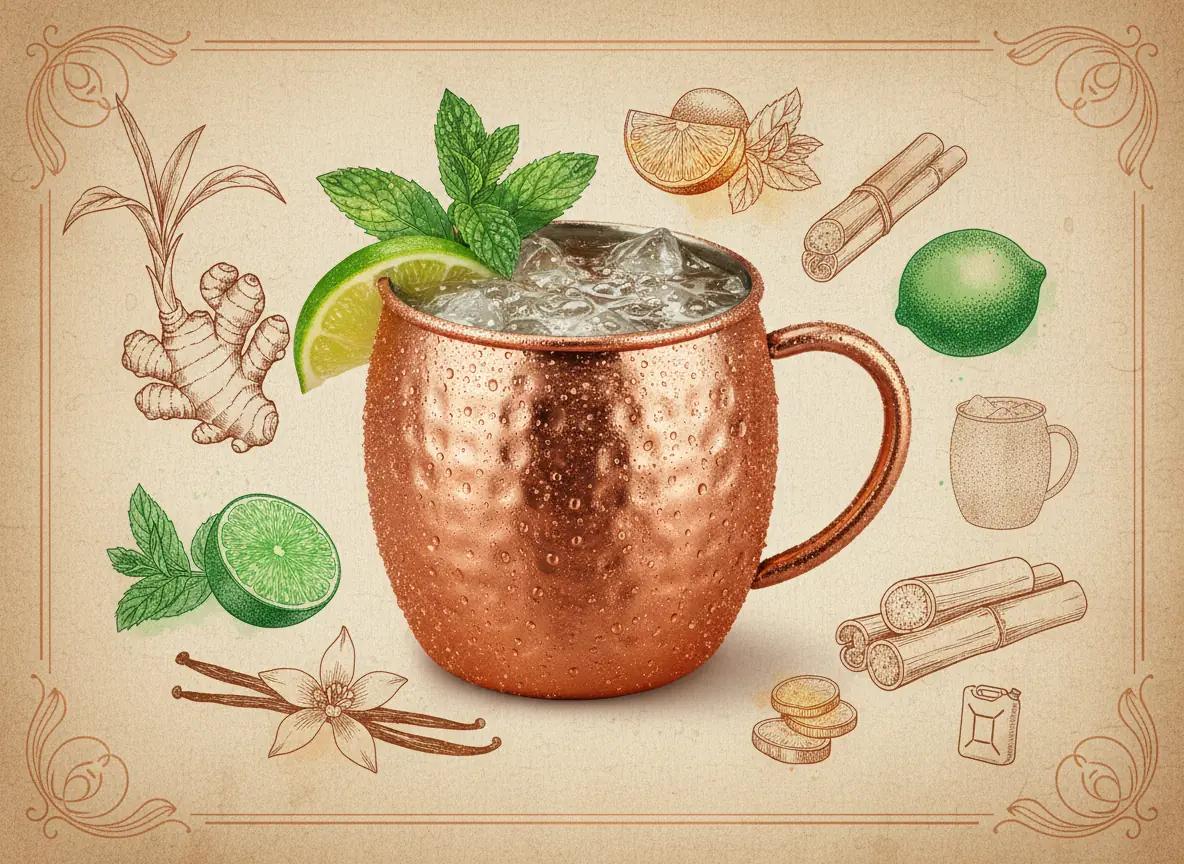
Pack Mule
A Pack Mule is 50ml of Expedition Spiced Rum, 20ml of fresh lime juice and 10ml of sugar syrup over ice in a copper mug, lengthened with 100 to 120ml of ginger beer and given one stir, then finished with a lime wheel and a mint sprig. About 2.0 UK units from the rum at 40% ABV. It is our mule. The published spiced rum mule, the Jamaican Mule, is a short drink: 75ml of ginger beer, a quarter-measure of lime and a rich syrup. The Pack Mule takes the same four parts and opens them out, with the lime doubled to 20ml and the ginger beer run long, because Expedition Spiced Rum brings its own sweetness and the vanilla, cinnamon and clove in it want room and acid rather than more sugar. The ginger beer decides most of it. A dry one with real heat suits the rum, and the syrup is set by how sweet the bottle is: the full 10ml for a dry ginger beer, none for a sweet one.
Glassware: Copper Mug
Garnish: Lime wheel and Mint sprig
Ingredients
50ml
At 40% ABV, with seven real spices, two natural sweeteners, and bourbon oak in it. Its ginger, clove and cinnamon are what the ginger beer picks up, and its own sweetness is why the syrup stays at 10ml.
20ml
Fresh that day. At 20ml, double the vodka original’s lime, it cuts the sugar in both the rum and the ginger beer.
100 to 120ml
Choose a dry, hot one. Pour 100ml of a sweet one, 120ml of a dry one. Add it last and pour it gently to keep the bubbles.
10ml
Plain syrup, 1:1 by weight. Set it by the ginger beer: the full 10ml with a dry one, none with a sweet one.
Instructions
Squeeze the lime juice the same day.
Fill a copper mug or highball glass to the top with cubed ice.
Add the Expedition Spiced Rum, lime juice and sugar syrup, and stir briefly.
Pour the ginger beer gently down the inside of the mug.
Stir once, slowly, from the bottom.
Garnish with a lime wheel and a slapped mint sprig, and serve.
Our version
Difford’s Guide gives the Jamaican Mule as 50ml of spiced rum, 12.5ml of lime, 7.5ml of rich syrup and 75ml of ginger beer. We build the same four parts on Expedition Spiced Rum, double the lime to 20ml, use 10ml of 1:1 syrup and run the ginger beer to 100 to 120ml, because the rum carries its own sweetness and its spice wants acid and length rather than sugar.
Source: our own specification. Last checked 12 October 2026.
Expert Tip
Sip the ginger beer before building. Some are dry and hot, some little more than sweet soda. Give a hot, dry bottle all 10ml of syrup and a sweet one none at all, or the mule ends up cloying. Stir the rum, lime and syrup over the ice before the ginger beer goes in, then let it run along the inside of the mug and give one slow turn. In our experience ginger beer stirred hard goes flat before the first sip. Chill the mug in the fridge first, then pack it with ice. Copper takes on the cold fast and gives it up to a warm hand just as fast.
Behind the Pack Mule
Flavour Profile
The Name
A pack mule carries an expedition’s load over ground nothing else can cross, and does it without fuss. The drink is named for the job. It carries Expedition Spiced Rum a long way on a hot day, with lime and ginger beer keeping it light. It is our mule, built on the frame of the Jamaican Mule and opened out.
The Format
The mule format comes from the Moscow Mule. The Oxford Companion says the Moscow Mule purportedly originated in 1941 at the Cock ’n Bull pub in Los Angeles, in a meeting between John Martin of Heublein, Smirnoff’s owner, and Jack Morgan, who owned the pub and hoped to improve sales of his ginger beer; a competing history has them devising it in New York. The Companion adds that the head bartender, Wes Price, may have done the actual creating, and that the drink first surfaces in chronicles before the end of 1942.
The format accepts nearly any spirit. Irish whiskey makes the Dublin Mule, spiced rum makes the Jamaican Mule, and Expedition Spiced Rum makes this one.
Why Expedition Spiced Rum
Vodka adds strength to a Moscow Mule and little else. Expedition Spiced Rum adds vanilla, cinnamon and clove, and carries a ginger note of its own, so the ginger beer and the rum pull in the same direction rather than one covering the other.
That calls for more acid than the vodka version, and more than the published spiced rum mule uses. The rum and the ginger beer both carry sugar, so the lime doubles to 20ml, the syrup is plain 1:1 rather than rich, and it only corrects for a dry ginger beer. The ginger beer runs to 100 to 120ml because the rum has the weight to be tasted through it.
The range is deliberate. Pour 100ml of a sweet ginger beer and 120ml of a dry one, and let the syrup follow the same reading: all 10ml against a dry, fiery bottle, none against a sweet one. Taste the bottle before you build, because the ginger beer is more than half the glass and nothing added afterwards corrects it.
The Mule Family
The Pack Mule beside four ginger beer drinks; the Moscow Mule is the IBA’s measure, the Jamaican Mule is Difford’s Guide’s, and the other rows are our own recipes
Pack Mule
- Spirit
- 50ml Expedition Spiced Rum
- Lime
- 20ml
- Syrup
- 10ml
- Ginger beer
- 100 to 120ml
- UK units
- About 2.0
Jamaican Mule
- Spirit
- 50ml spiced rum
- Lime
- 12.5ml
- Syrup
- 7.5ml rich (2:1)
- Ginger beer
- 75ml
- UK units
- About 2.0
Moscow Mule
- Spirit
- 45ml vodka
- Lime
- 10ml
- Syrup
- None
- Ginger beer
- 120ml
- UK units
- About 1.8
Dublin Mule
- Spirit
- 50ml Irish whiskey
- Lime
- 20ml
- Syrup
- 15ml
- Ginger beer
- 90ml
- UK units
- About 2.0
Storm & Spice
- Spirit
- 50ml Expedition Spiced Rum, floated
- Lime
- 15ml
- Syrup
- None
- Ginger beer
- 150ml
- UK units
- About 2.0
| Drink | Spirit | Lime | Syrup | Ginger beer | UK units |
|---|---|---|---|---|---|
| Pack Mule | 50ml Expedition Spiced Rum | 20ml | 10ml | 100 to 120ml | About 2.0 |
| Jamaican Mule | 50ml spiced rum | 12.5ml | 7.5ml rich (2:1) | 75ml | About 2.0 |
| Moscow Mule | 45ml vodka | 10ml | None | 120ml | About 1.8 |
| Dublin Mule | 50ml Irish whiskey | 20ml | 15ml | 90ml | About 2.0 |
| Storm & Spice | 50ml Expedition Spiced Rum, floated | 15ml | None | 150ml | About 2.0 |
The vodka original is the Moscow Mule. The published spiced rum mule is the Jamaican Mule: the same four parts, shorter and richer. For Expedition Spiced Rum floated on ginger beer instead of stirred into it, make Storm & Spice.
The Copper Mug
Copper conducts heat far better than glass, so a mug packed with ice chills almost at once and the rim feels cold on the lip. The same property works against you in a warm hand, so drink it cold and soon. A highball makes the same drink.
How to Serve It
Over a full mug of cubed ice, the ginger beer poured gently down the side and stirred once, lime wheel on the rim, mint clapped between the palms and standing upright beside it so the mint reaches your nose with each sip.
Make it at home
The Spirit
Jerry Can Spirits Expedition Spiced RumA spiced rum built for balance. Madagascan vanilla leads, with Ceylon cinnamon, ginger and cassia through the middle and bourbon oak on the finish. 40% ABV, designed to work neat, over ice, and across classic and modern cocktails.
Need the Rum?
Pick up a bottle of Expedition Spiced Rum to make this cocktail.
Master the Techniques
More to explore
Frequently Asked Questions
What is a Pack Mule?
How does it differ from a Moscow Mule?
How strong is a Pack Mule?
Which ginger beer should I use?
Does the copper mug matter?
Is it the same as a Dark ’n’ Stormy?
How does a Pack Mule differ from a Jamaican Mule?
Sources.
Correct as of 19 October 2026.
- The Oxford Companion to Spirits and Cocktails (Paul Clarke), “The Moscow Mule” (secondary source: purportedly 1941 at the Cock ’n Bull pub in Los Angeles, John Martin of Heublein and Jack Morgan; a competing history has New York; Wes Price may have done the actual creating; first in chronicles by the end of 1942).
- IBA, “Moscow Mule” (official specification: 45ml vodka, 120ml ginger beer, 10ml fresh lime juice).
- Difford’s Guide, “Jamaican Mule” (secondary source: 50ml spiced rum, 12.5ml lime juice, 7.5ml rich sugar syrup, 75ml ginger beer).
- Gosling’s, “Dark ‘n’ stormy” (owner’s own recipe page: Dark ‘N Stormy ®; Black Seal Rum floated on ginger beer, lime wedge).
You Might Also Like
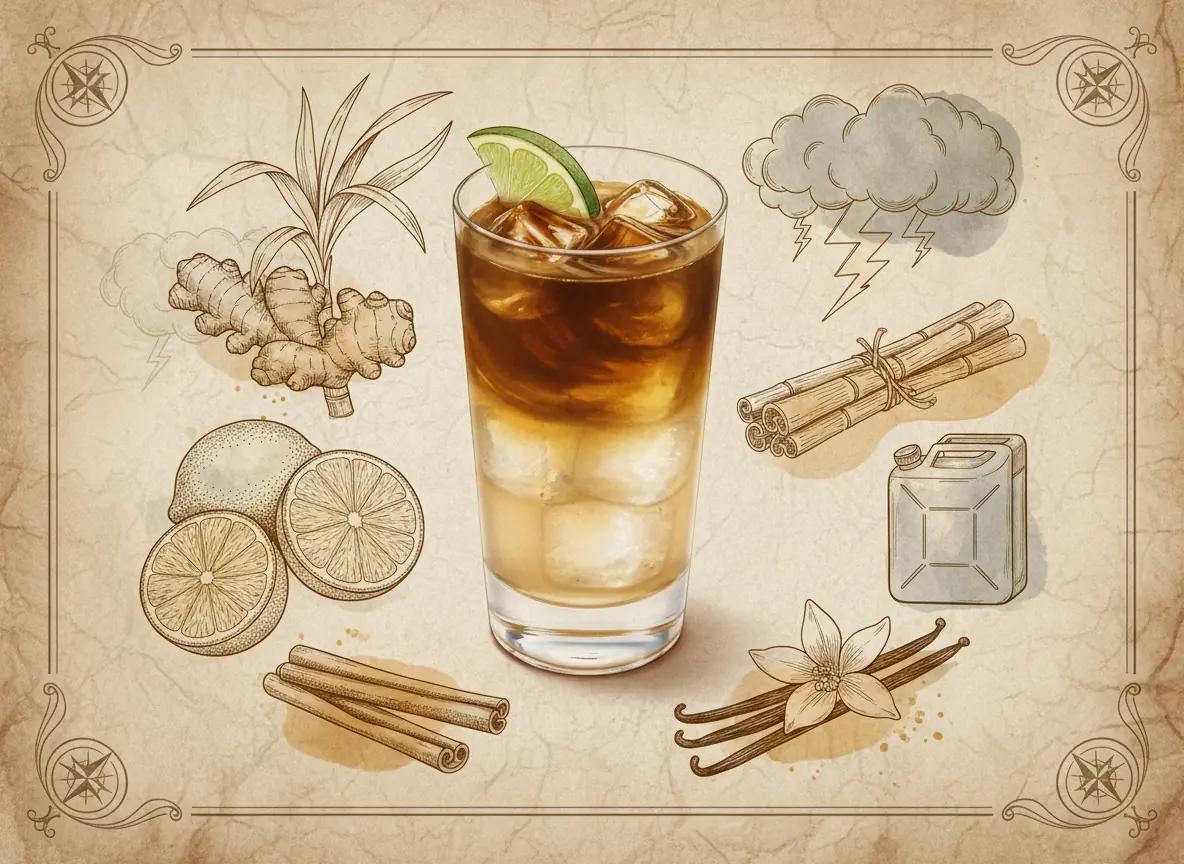
Storm & Spice
Storm & Spice is 50ml of Expedition Spiced Rum floated over 150ml of ginger beer and 15ml of fresh lime juice in a highball full of cubed ice, with two dashes of Angostura on top, a lime wedge and crystallised ginger. About 2.0 UK units from the rum at 40% ABV; the bitters add less than 0.1. It is our spiced-rum answer to the Dark ’n’ Stormy, the Bermudian highball of black rum and ginger beer. Gosling’s own site writes the name Dark ‘n Stormy® with the registered symbol and calls Black Seal Rum its essential ingredient, so this is a different drink on the same frame. A black rum brings weight and dark sugar. Expedition Spiced Rum brings vanilla, cinnamon and clove, which gives the ginger more to catch hold of. The build is the point. Ginger beer goes in first, then the rum is poured slowly over the back of a spoon so it sits dark over the pale ginger. Left layered, the first sips lead with rum. Stirred, the two run together.
Jamaican Mule
A Jamaican Mule is 50ml of spiced rum, 12.5ml of fresh lime juice and 7.5ml of rich sugar syrup stirred briefly in a copper mug, filled two thirds with cubed ice, topped with 75ml of ginger beer and capped with a crown of crushed ice, with a lime slice and a bouquet of mint. About 2.0 UK units from a rum at 40% ABV. The name says Jamaica. The recipe does not. Difford’s Guide’s recipe calls for spiced rum, not a Jamaican pot-still rum, and we have found no source that names who created or named it. In our view it is the drink most people mean when they ask for a spiced rum mule: a Moscow Mule with the vodka swapped for a rum that already carries vanilla, cinnamon and clove, so the ginger beer meets the spice instead of covering it. It is shorter than it looks. At 75ml the ginger beer is half the glass rather than two thirds, and the lime and rich syrup sit under it as a small sour. Taste the ginger beer first: a dry, hot one wants the full syrup, a sweet one wants none.
Where this one sits
Recipe by Dan Freeman · Updated 19 October 2026