Texas Iced Tea
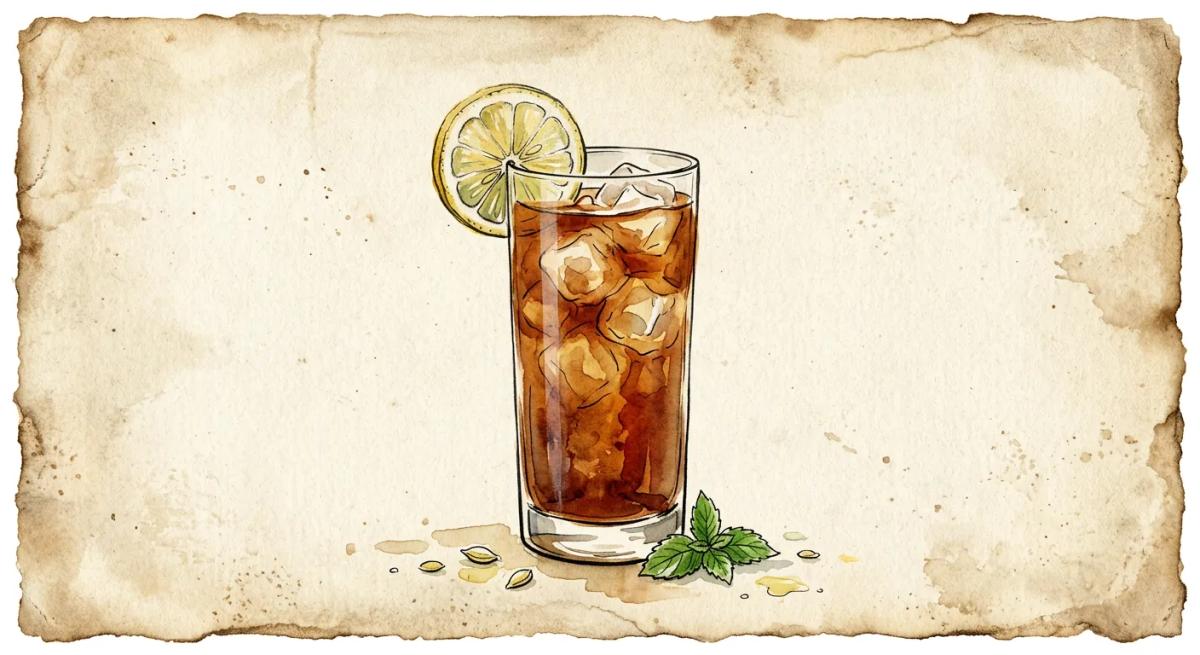
A Texas Iced Tea, or Texas Tea, is a Long Island Iced Tea with bourbon added as a sixth pour. It takes 15ml each of vodka, gin, white rum, blanco tequila, triple sec and bourbon, 25ml fresh lemon juice and 30ml sugar syrup, built over ice in a highball and finished with a 30ml cola float. The bourbon is the only change. It adds vanilla and oak under the five Long Island pours and gives the drink more weight. It is also stronger. Six full-strength pours make about 3.6 UK units, more than three and a half 25ml pub singles, and the cola and lemon hide most of it. Measure the bourbon at 15ml like everything else; the name invites a heavy hand.
Glassware: Highball Glass
Garnish: Lemon wheel
Ingredients
15ml
A 100% agave blanco. Its green, peppery note is the one clean spirit you can pick out.
15ml
The one addition. A standard straight bourbon at 40% ABV or more brings vanilla and oak from its new charred barrels. Keep it at 15ml.
30ml
The Long Island’s 30ml, unchanged: one part sugar to one part water, by weight. Take it to 20ml if you prefer the drink drier.
30ml
A 30ml float, poured gently over the surface. It gives the iced tea colour; pour more and the drink tastes of cola.
Instructions
Squeeze the lemon juice the same day.
Fill a highball glass to the top with cubed ice.
Measure the vodka, gin, white rum, blanco tequila, triple sec and bourbon over the ice.
Add the lemon juice and sugar syrup, and stir gently for a few seconds to mix.
Pour 30ml of cola slowly over the back of a bar spoon so it floats on the surface.
Garnish with a lemon wheel and serve at once with a straw.
Expert Tip
Pour the bourbon at 15ml, the same as the rest. A heavier bourbon pour makes a strong bourbon sour with cola in it and loses the Long Island balance underneath. Measure all six pours with a jigger. At 3.6 units a glass there is no margin for free-pouring, and the cola float makes the drink look lighter than it is. Use a standard straight bourbon at 40% ABV. At 15ml under lemon and cola, a cask-strength or long-aged bottle adds strength and cost rather than anything you will taste.
Behind the Texas Iced Tea
Flavour Profile
The Origin
Nobody has a documented claim to the Texas Tea. No bar, bartender or date is attached to it. “Texas tea” is long-standing American slang for crude oil, and the name probably plays on that and on the Long Island Iced Tea underneath. Treat it as what it plainly is: the Long Island with one more bottle.
What the Bourbon Adds
The Long Island’s five pours are mostly clean spirits, and at 15ml each only the tequila shows. Bourbon brings what none of them carries: vanilla and oak from the charred new oak barrels the US federal rules require, and more body. At 15ml it sits under the other five rather than in front of them.
The Same Build
Everything else is the Long Island’s, measured the same way: 25ml fresh lemon, 30ml syrup and a 30ml cola float. Keeping the parent’s measures makes the bourbon the only variable, and it means anyone who can make a good Long Island can make this.
The cola is floated, not stirred in. Poured gently over the back of a bar spoon, it gives the colour that names the family and stays a short note on top.
How Strong It Is
Six pours at 15ml and 40% ABV are 36ml of pure alcohol, about 3.6 UK units. That is more than three and a half pub singles of 25ml. The lemon, sugar and cola make it taste lighter than that, so pace it like three and a half drinks and keep water on the table.
The Long Island Iced Tea lays out the whole family, the Texas Tea included, in one table.
Make it at home
The Spirit
VodkaVodka is spirit made from a farmed crop, usually grain or potatoes, distilled and refined so that the taste of that crop is deliberately reduced. Under the retained Regulation (EC) 110/2008 its minimum is 37.5% ABV and it may not be given a predominant flavour, which separates it from flavoured vodka and from gin; our recipes count it at 40%. In a mixed drink it adds strength and body while the other ingredients carry the taste.
Master the Techniques
More to explore
Frequently Asked Questions
What is a Texas Tea cocktail?
How is it different from a Long Island Iced Tea?
How strong is a Texas Tea?
Why is it called Texas Tea?
Should the bourbon be a bigger pour?
Can I use another whiskey instead of bourbon?
Can I make Texas Teas in a batch?
Sources.
Correct as of 18 October 2026.
- Cointreau, “Cointreau Triple Sec” (producer’s product page: footer gives 40% Alc./Vol.).
- Cornell Law School, Legal Information Institute, “27 CFR § 5.143 Whisky (Cornell LII)” (bourbon whisky: stored in charred new oak barrels).
You Might Also Like
Long Island Iced Tea
A Long Island Iced Tea is five 15ml pours, vodka, blanco tequila, white rum, gin and Cointreau, with 25ml fresh lemon juice and 30ml sugar syrup, built over ice in a highball and finished with a short cola float. That is the International Bartenders Association specification. The IBA says to top with cola; we measure it at 30ml. The cola gives it the colour of iced tea. There is no tea in it. It is strong: about 3.0 UK units, three 25ml pub singles in one glass, behind a drink that tastes of lemon and cola. It goes wrong in three ways, usually together: free-poured spirits, sour mix instead of fresh lemon, and cola poured in by the can rather than floated. The AMF, the Grateful Dead, the Texas Tea and the Tokyo Iced Tea are all built on it.
Adios Motherfucker
An AMF, short for Adios Motherfucker, is a Long Island Iced Tea turned blue. It takes 15ml each of vodka, gin, white rum, blanco tequila and blue curaçao, 25ml fresh lemon juice and 10ml sugar syrup, built over ice in a highball and topped with 60ml lemonade. Blue curaçao stands in for the Long Island’s Cointreau and lemonade for its cola, so the drink comes out bright blue instead of amber. It is strong. One glass carries about 2.7 UK units, close to three 25ml pub singles, and the lemon and lemonade hide most of it. Two things decide how it turns out. Measure every pour, because a heavy hand on any one bottle makes an AMF taste of that bottle. And use fresh lemon with clear lemonade: sour mix makes it sweet and flat, and cloudy lemonade turns it green.
Old Fashioned
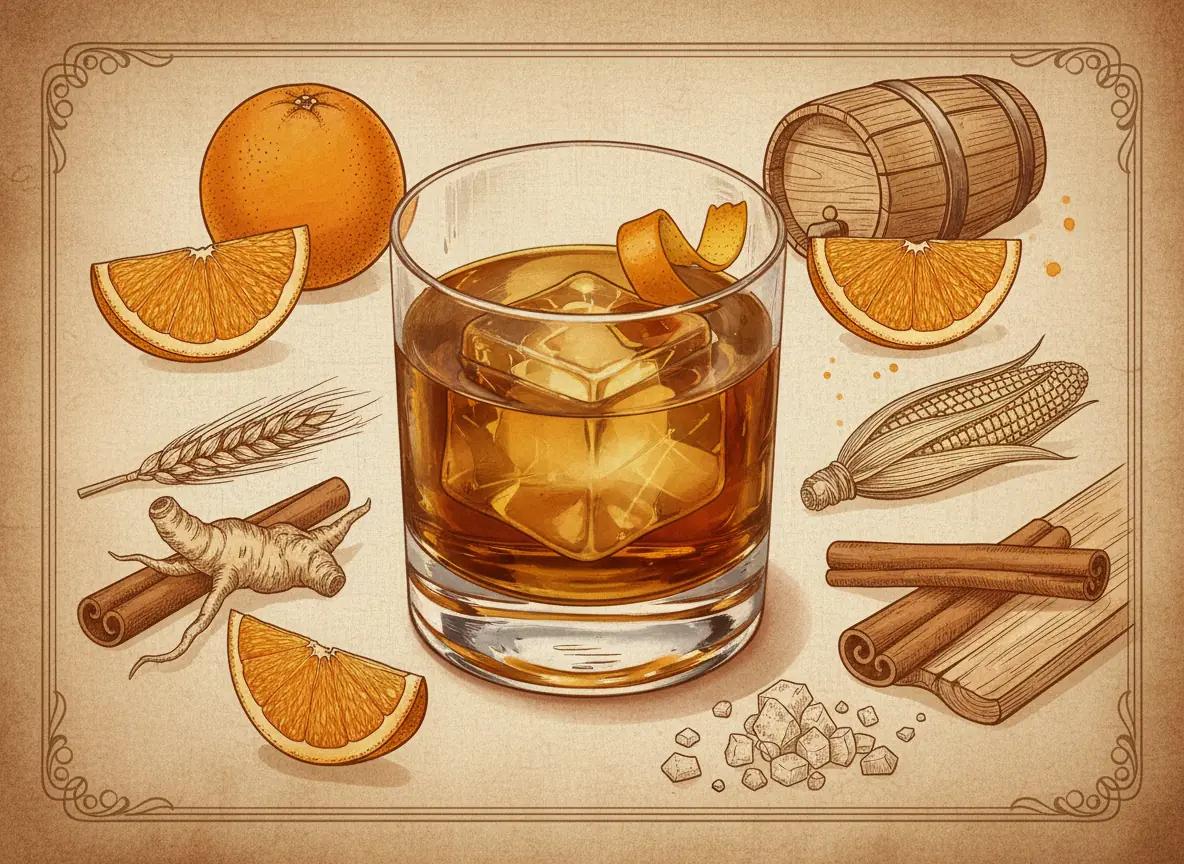
The IBA’s Old Fashioned is 45ml of bourbon or rye whiskey, one sugar cube, a few dashes of Angostura bitters and a few dashes of water; we use bourbon and two dashes. The sugar and bitters are muddled in a rocks glass until the cube dissolves, then ice goes in, the bourbon goes over it and the drink is stirred for 15 to 20 seconds. Orange peel is expressed over the top. About 1.9 UK units. Only the sugar and bitters are muddled: no orange flesh, no cherry. The recipe predates the name. The Oxford Companion says that when a newspaper in Hudson, New York, defined the cocktail in 1806, it described “spirits of any kind, sugar, water, and bitters”. The name came later in the century: the Companion has people ordering Old-Fashioneds in Chicago in 1880, as bartenders added liqueurs to the format and drinkers who wanted it plain asked for one made the old-fashioned way.
Where this one sits
Recipe by Jerry Can Spirits · Updated 18 October 2026