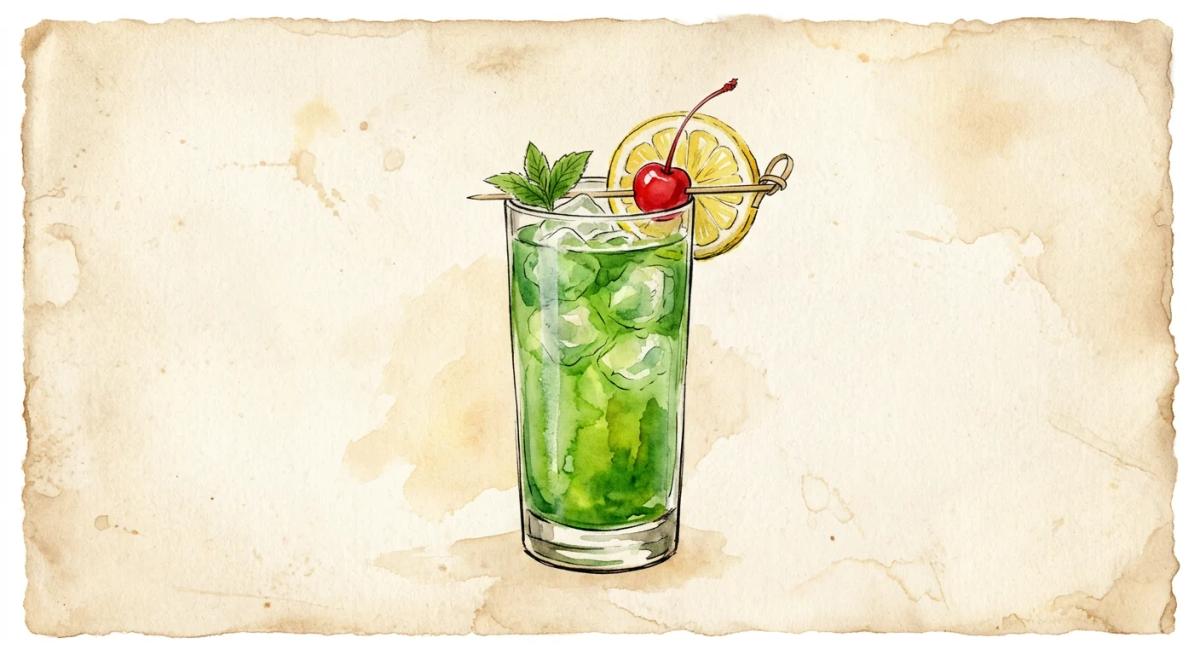
Tokyo Iced Tea
A Tokyo Iced Tea is five 15ml pours, vodka, gin, white rum, blanco tequila and triple sec, with 30ml Midori and 25ml fresh lemon juice, built over ice in a highball and topped with 60ml of lemonade. It is the Long Island Iced Tea with the syrup and cola replaced by Midori and lemonade, which turns it green. It is strong: about 3.6 UK units, taking the spirits and triple sec at 40% ABV and Midori at the 20% its maker’s site gives. That is more than the Long Island’s 3.0, and the Midori is the reason. The name comes from the liqueur, not the city. Midori is Japanese for green, its maker’s site says, and Suntory makes it. Who first mixed the drink is not recorded. Squeeze the lemon the same day and measure every pour. Midori is sweet, and the lemon is all that holds it.
Glassware: Highball Glass
Garnish: Lemon wheel and Luxardo maraschino cherry
Ingredients
15ml
A blanco made from 100% agave. Its green, peppery note keeps the melon from taking over.
15ml
Cointreau, 40% ABV on its maker’s site, or another triple sec. Many are nearer 30% ABV and sweeter, which makes a softer, sweeter drink.
30ml
Melon liqueur at about 20% ABV, and the drink’s colour and main flavour. At 30ml it is sweet enough that the lemon has real work to do.
25ml
Squeezed the same day. It is the only acid in the drink, and bottled juice or sour mix leaves it tasting of sweet melon.
60ml
Clear, British-style lemonade, well chilled. Pour it last and gently, down the inside of the glass.
Instructions
Squeeze the lemon juice the same day, ideally just before you build.
Fill a highball glass to the top with cubed ice.
Add the vodka, gin, white rum, blanco tequila, triple sec and Midori over the ice.
Add the lemon juice and stir briefly to combine.
Pour 60ml of chilled lemonade gently down the inside of the glass.
Stir once with a single upward lift of the bar spoon.
Garnish with a lemon wheel and a Luxardo maraschino cherry, and serve with a straw.
Expert Tip
Measure every pour. Five spirits at 15ml each is the discipline, and free-pouring five bottles is how this drink ends up far stronger than 3.6 units. Do not cut the lemon to make room for the Midori. Midori is sweet, and 25ml of fresh lemon is what keeps the drink from tasting of melon sweets. Squeeze it the same day. Pour the lemonade gently down the inside of the glass and lift once with the bar spoon. A hard pour or a long stir costs the fizz, and flat lemonade leaves the drink sweet and heavy.
Behind the Tokyo Iced Tea
Flavour Profile
The Origin
The Tokyo Iced Tea is one of several drinks built on the Long Island Iced Tea that change the liqueur and the topper. Who first made it is not recorded. The name follows the Midori: Midori’s own page says Hermes Melon Liqueur came to market in Japan in 1964 and Midori was launched in New York in 1978, and its name is Japanese for green, as its maker’s site says.
Like the Long Island, the drink carries a place in its name that says nothing about where it was first poured.
Midori in the Long Island Family
The Tokyo Iced Tea keeps the Long Island’s five 15ml pours and its 25ml of lemon. It drops the 30ml of sugar syrup and the cola, and adds 30ml of Midori and 60ml of lemonade. The Midori does the sweetening, and at twice the AMF’s 15ml of blue curaçao it is the flavour that leads.
Tokyo Iced Tea, Long Island and AMF compared; units take the spirits and Cointreau at 40% ABV (Cointreau’s site), Midori at 20% (its maker’s site) and blue curaçao at De Kuyper’s 20% (LWC’s listing)
Long Island Iced Tea
- Liqueur
- 15ml Cointreau
- Citrus and sugar
- 25ml lemon, 30ml syrup
- Topper
- 30ml cola float
- Colour
- Amber
- UK units
- 3.0
Tokyo Iced Tea
- Liqueur
- 15ml triple sec, 30ml Midori
- Citrus and sugar
- 25ml lemon
- Topper
- 60ml lemonade
- Colour
- Green
- UK units
- 3.6
AMF
- Liqueur
- 15ml blue curaçao
- Citrus and sugar
- 25ml lemon, 10ml syrup
- Topper
- 60ml lemonade
- Colour
- Blue
- UK units
- 2.7
| Drink | Liqueur | Citrus and sugar | Topper | Colour | UK units |
|---|---|---|---|---|---|
| Long Island Iced Tea | 15ml Cointreau | 25ml lemon, 30ml syrup | 30ml cola float | Amber | 3.0 |
| Tokyo Iced Tea | 15ml triple sec, 30ml Midori | 25ml lemon | 60ml lemonade | Green | 3.6 |
| AMF | 15ml blue curaçao | 25ml lemon, 10ml syrup | 60ml lemonade | Blue | 2.7 |
The Long Island Iced Tea compares the Tokyo Iced Tea with every other variation, unit for unit.
The Melon Character
Midori tastes of sweet honeydew, a little perfumed. Lemon sharpens it and the tequila’s green note gives it an edge, so the melon reads as fruit rather than sugar. Cut the lemon and it turns into a sweet melon drink with spirits behind it.
Keeping It Green and Lively
The colour comes from the Midori, and the lemon and lemonade lighten it. Pour the lemonade last, gently down the inside of the glass, and lift once with the bar spoon. Stirred hard, it loses its fizz and drinks heavier and sweeter.
How to Serve It
Built over a full glass of cubed ice in a highball, with a lemon wheel and a cherry on the rim and a straw. It is a party drink and a strong one: at about 3.6 UK units, treat it as nearer four drinks than three, with water between rounds.
Make it at home
The Spirit
VodkaVodka is spirit made from a farmed crop, usually grain or potatoes, distilled and refined so that the taste of that crop is deliberately reduced. Under the retained Regulation (EC) 110/2008 its minimum is 37.5% ABV and it may not be given a predominant flavour, which separates it from flavoured vodka and from gin; our recipes count it at 40%. In a mixed drink it adds strength and body while the other ingredients carry the taste.
Master the Techniques
More to explore
Frequently Asked Questions
What is in a Tokyo Iced Tea?
Is the Tokyo Iced Tea from Tokyo?
How strong is a Tokyo Iced Tea?
How is it different from a Long Island Iced Tea?
Why does it need fresh lemon?
How is it different from an AMF?
What is Midori?
Sources.
Correct as of 18 October 2026.
- Midori (Suntory Global Spirits), “Midori: the product” (20% alc./vol.; “MIDORI is Japanese for green”).
- Cointreau, “Cointreau Triple Sec” (40% Alc./Vol. in the page footer).
- LWC, “De Kuyper Blue Curacao 70cl” (UK trade listing: 20%).
You Might Also Like
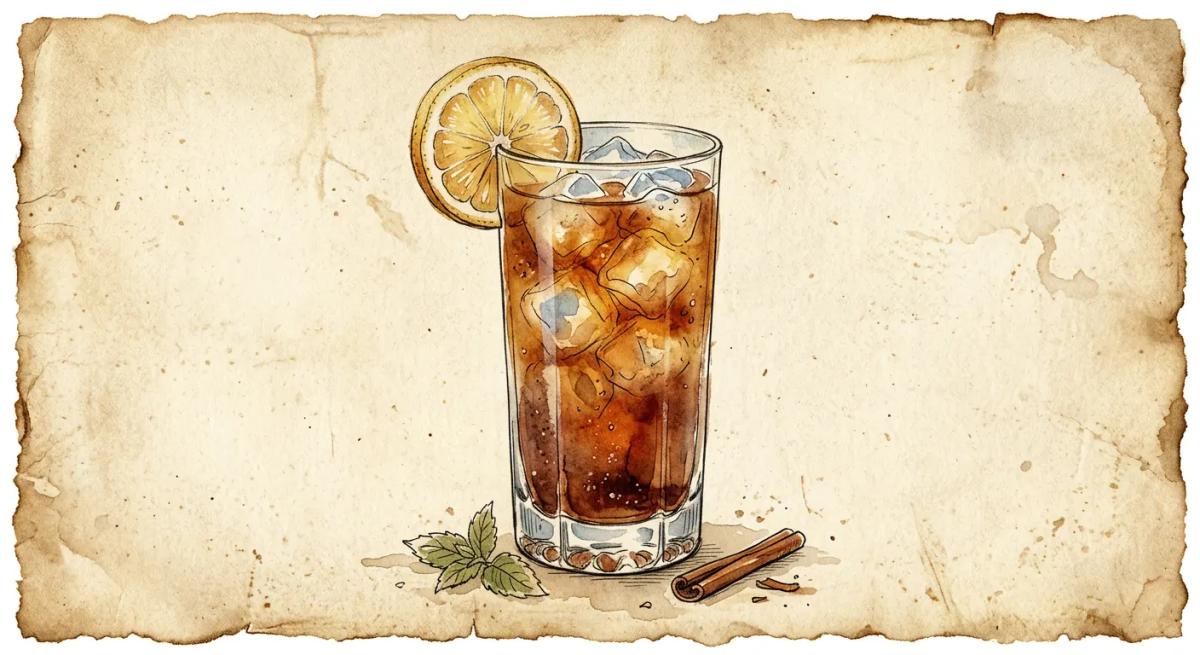
Long Island Iced Tea
A Long Island Iced Tea is five 15ml pours, vodka, blanco tequila, white rum, gin and Cointreau, with 25ml fresh lemon juice and 30ml sugar syrup, built over ice in a highball and finished with a short cola float. That is the International Bartenders Association specification. The IBA says to top with cola; we measure it at 30ml. The cola gives it the colour of iced tea. There is no tea in it. It is strong: about 3.0 UK units, three 25ml pub singles in one glass, behind a drink that tastes of lemon and cola. It goes wrong in three ways, usually together: free-poured spirits, sour mix instead of fresh lemon, and cola poured in by the can rather than floated. The AMF, the Grateful Dead, the Texas Tea and the Tokyo Iced Tea are all built on it.
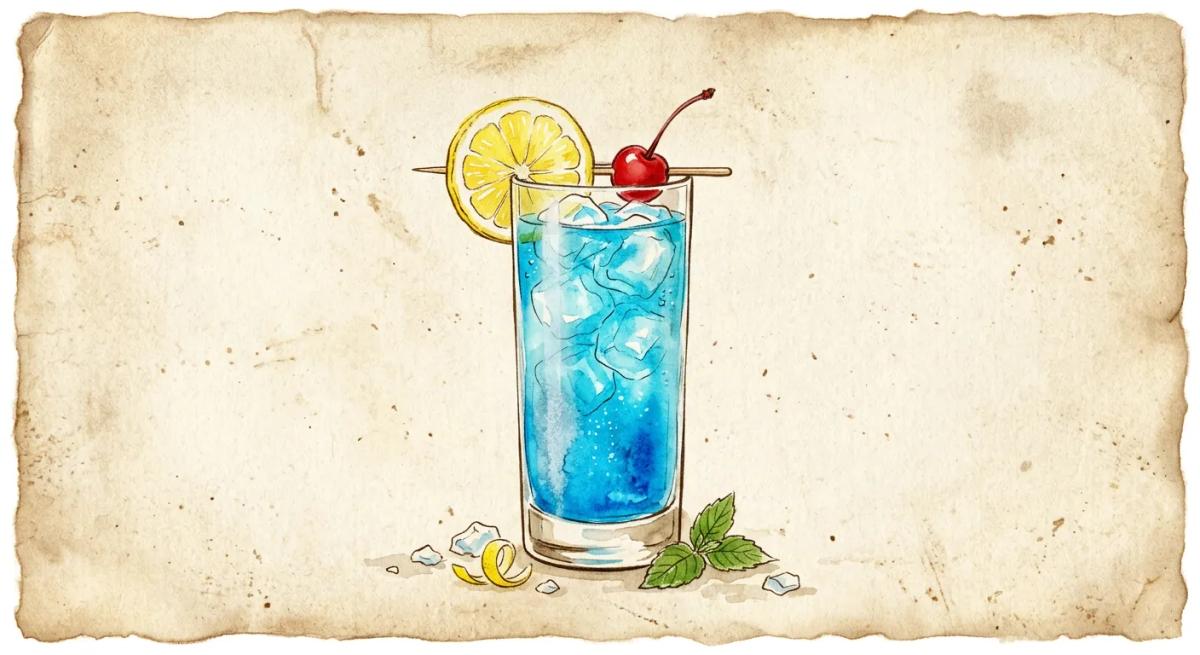
Adios Motherfucker
An AMF, short for Adios Motherfucker, is a Long Island Iced Tea turned blue. It takes 15ml each of vodka, gin, white rum, blanco tequila and blue curaçao, 25ml fresh lemon juice and 10ml sugar syrup, built over ice in a highball and topped with 60ml lemonade. Blue curaçao stands in for the Long Island’s Cointreau and lemonade for its cola, so the drink comes out bright blue instead of amber. It is strong. One glass carries about 2.7 UK units, close to three 25ml pub singles, and the lemon and lemonade hide most of it. Two things decide how it turns out. Measure every pour, because a heavy hand on any one bottle makes an AMF taste of that bottle. And use fresh lemon with clear lemonade: sour mix makes it sweet and flat, and cloudy lemonade turns it green.
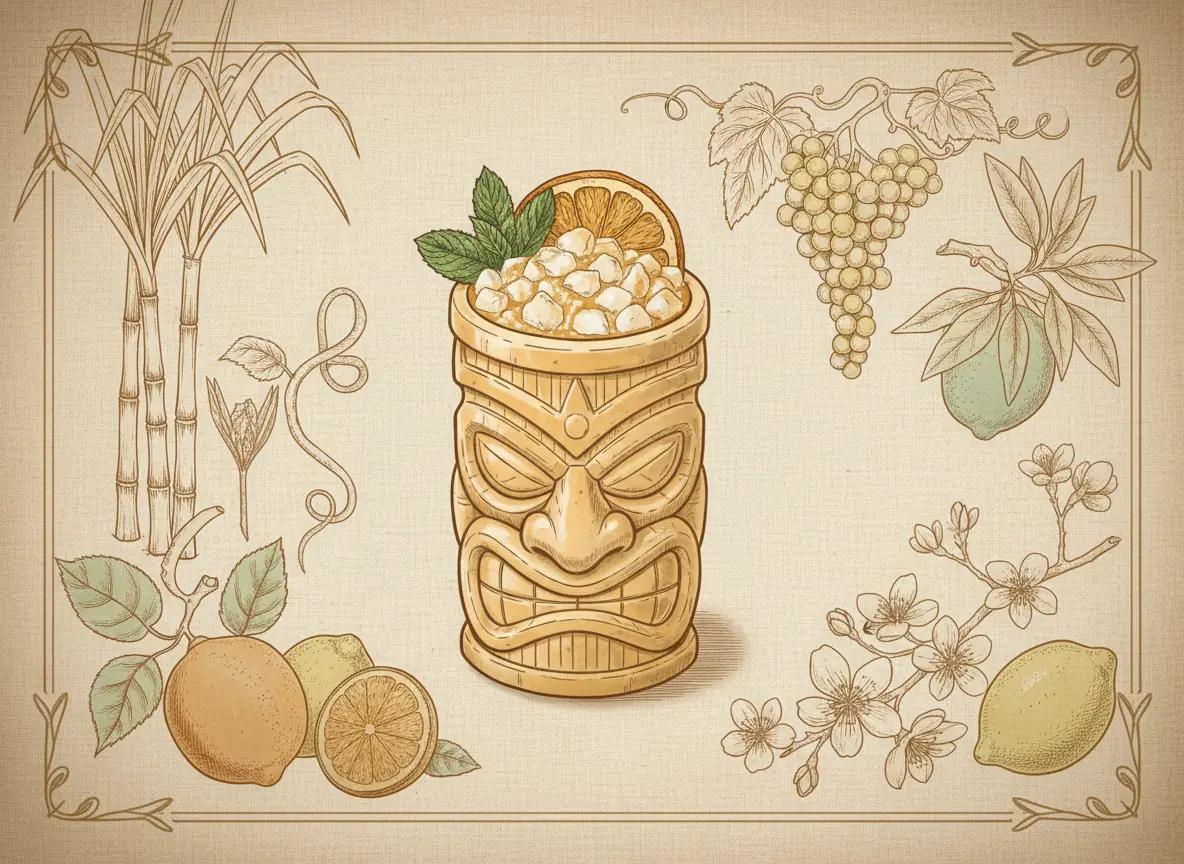
Scorpion
The Scorpion is Trader Vic’s rum and brandy sour: 45ml white rum, 22.5ml cognac, 50ml fresh orange juice, 30ml fresh lemon juice and 15ml orgeat, shaken hard and strained over crushed ice in a tiki mug or large rocks glass. The measures are adapted from Trader Vic’s Bartender’s Guide in its 1972 revised edition. Victor Bergeron, the Trader Vic of the restaurant chain, is credited with it; Punch dates his recipe to 1946, and Tasting Table traces the drink to a Honolulu punch in print by 1938. Difford’s Guide, citing Life magazine, has Vic serving the Scorpion in four-pint bowls made to serve four, and prints his 1972 recipes for a single glass and for a bowl for three or four. The single glass is the same drink at one person’s size. It comes out pale orange, almond-scented and drier than it looks, at about 2.7 UK units. Fresh orange and lemon and an orgeat made from almonds decide it. Orgeat contains nuts, which matters for anyone with an allergy.
Where this one sits
Recipe by Jerry Can Spirits · Updated 19 October 2026