Fine Mesh Strainer
A fine mesh strainer is a small, round sieve, 7cm across in Urban Bar’s own Fine Strainer and up to 9cm in the ones we use, held under a Hawthorne strainer to double strain a shaken drink. It catches the ice chips, citrus pulp and herb fragments the Hawthorne lets through, so a drink served up arrives clean. Our recipes double strain nearly every shaken drink served up, the Daiquiri and the Clover Club among them, and some poured over a large cube.
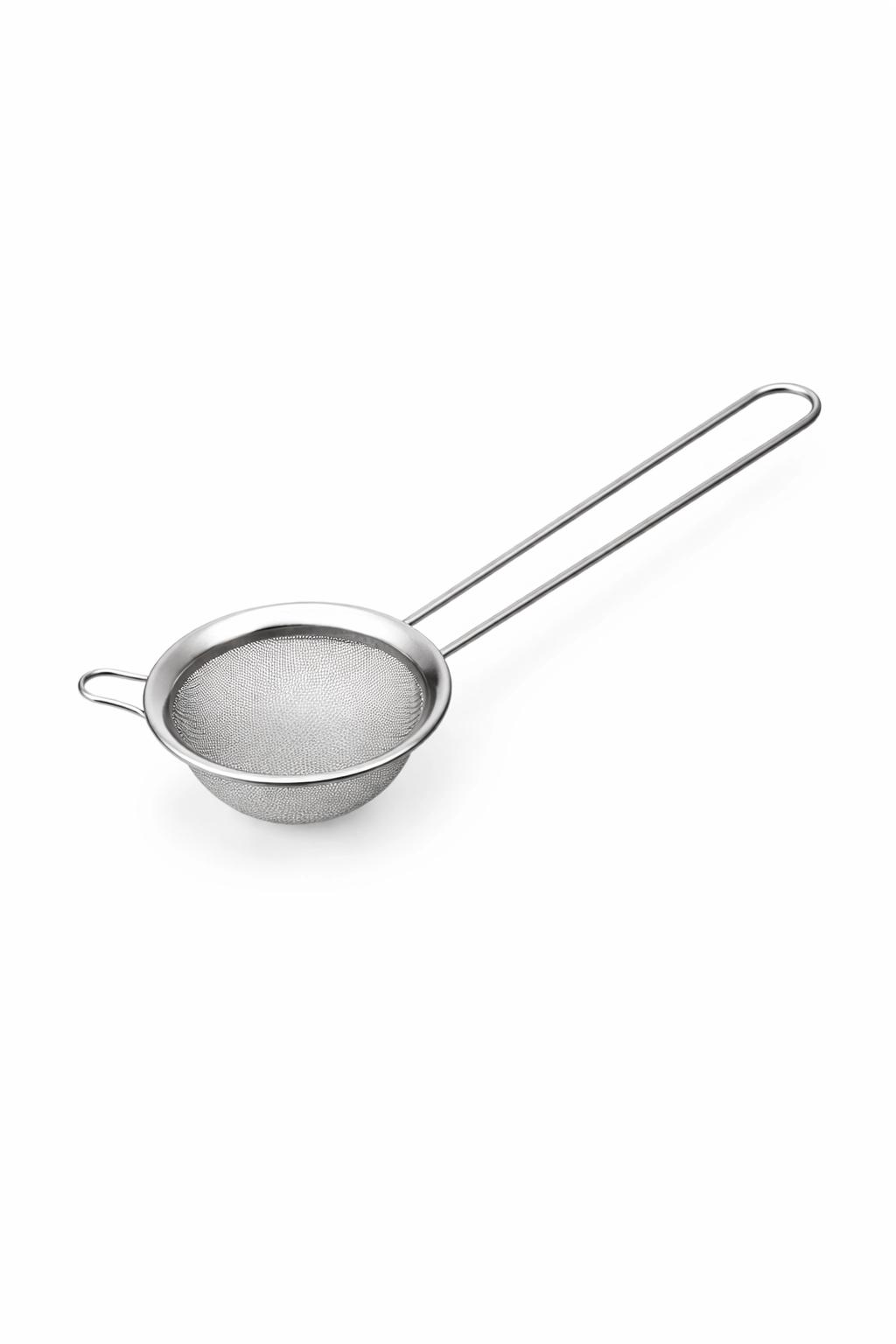
About the Fine Mesh Strainer
Two Strainers at Once
Double straining means pouring a shaken drink through the Hawthorne on the tin and a fine mesh strainer held underneath. The Hawthorne holds back the ice. The mesh catches what slips between its coils: small chips of ice, citrus pulp, shreds of mint and ginger.
Our Recipes Double Strain Most Drinks Served Up
Almost every shaken drink we serve without ice is double strained, including the Daiquiri, the Paper Plane and the Clover Club. Some poured over one large cube are too, such as the Penicillin, where chips would melt into the surface.
A drink poured over crushed ice usually skips it, since the glass is already full of small pieces of ice.
Strainers compared
Hawthorne
- Catches
- Ice and large pieces
- Used for
- Shaken drinks
- Notes
- The coil fits most tins
Fine mesh
- Catches
- Ice chips, pulp, herbs
- Used for
- Under the Hawthorne
- Notes
- 7-9cm across
Julep strainer
- Catches
- Ice
- Used for
- Stirred drinks
- Notes
- Sits inside a mixing glass
Tea strainer
- Catches
- Ice chips, pulp
- Used for
- In place of a fine mesh
- Notes
- Clogs on a large drink
| Strainer | Catches | Used for | Notes |
|---|---|---|---|
| Hawthorne | Ice and large pieces | Shaken drinks | The coil fits most tins |
| Fine mesh | Ice chips, pulp, herbs | Under the Hawthorne | 7-9cm across |
| Julep strainer | Ice | Stirred drinks | Sits inside a mixing glass |
| Tea strainer | Ice chips, pulp | In place of a fine mesh | Clogs on a large drink |
Small, Fine and Stiff
A strainer of 7 to 9cm sits neatly across a coupe or a tumbler. Look for a weave so fine the holes are hard to see, and a stiff rim that keeps the bowl round.
Hold it close to the glass and tap the rim gently as you pour. Pressing pulp through with a spoon puts it back in the drink and stretches the mesh.
Rinse It Before It Dries
Wet pulp rinses out in seconds. Pulp or egg white left to dry needs soaking and brushing, and repeated scrubbing pulls the weave out of shape.
Using the Fine Mesh Strainer
Usage
Double straining, held under a Hawthorne strainer as a shaken drink is poured. Our recipes do it for almost every shaken drink served up, such as the Daiquiri, the Paper Plane and the Espresso Martini, and for some poured over one large cube, the Penicillin and the Honey Sour among them.
Pro Tip
Pour in one steady stream and keep the strainer moving with a light tap. A stalled pour leaves a pool sitting on the mesh, and the last of the drink drips in slowly and warm.
Professional Tips
- Hold it low over the glass so the drink does not splash off the mesh.
- Tap the rim gently as you pour to keep the drink moving.
- Rinse it straight away, before pulp or egg dries in the weave.
- Use it under the Hawthorne, never instead of it.
Alternatives
Budget Alternative
A small tea strainer with a fine mesh does the same job. Avoid large kitchen sieves, which overhang the glass.
Premium Option
A heavier strainer with a reinforced rim and a tighter weave. In our experience it keeps its shape through years of daily use; the drink comes out no different.
Specifications
Material
Stainless steel mesh in a steel rim
Capacity
Not applicable
Details
A round bowl of fine woven mesh, 7cm across in Urban Bar’s own Fine Strainer (20cm overall) and up to 9cm in the ones we use, on a long handle with a small hook opposite to rest on a glass
More to explore
Common Questions
What is double straining?
When should you double strain a cocktail?
Can I use a tea strainer or kitchen sieve instead?
Does double straining take away flavour?
Why are there ice chips in my cocktail?
Should you double strain an Espresso Martini?
Do you double strain a drink with egg white?
What is the right way to clean a fine mesh strainer?
Master the Technique
Made with the Fine Mesh Strainer
Used In These Cocktails
Related Equipment
Updated 18 October 2026