Ice Bucket
An ice bucket holds ice for drinks through an evening, and the useful ones are double-walled, lidded and drained, about two to four litres by our guidance. It keeps cubes cold and dry for highballs and anything served over ice. A taller bucket of ice and water chills a bottle of wine or fino sherry in about 20 to 30 minutes.
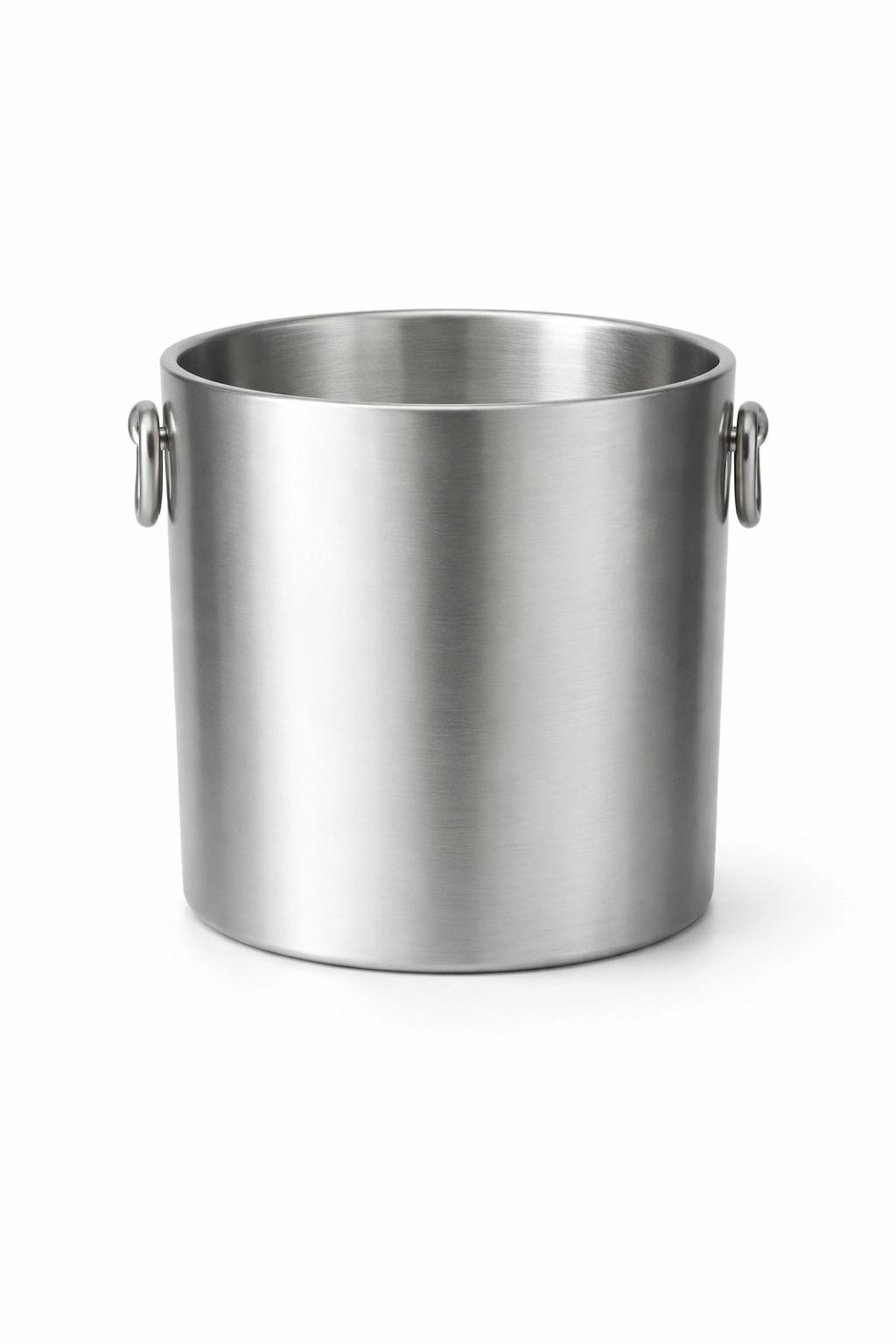
About the Ice Bucket
Double Walls and a Lid
A single-walled metal bucket passes room heat straight through to the ice, so a full load melts faster than you expect.
A double-walled bucket puts a vacuum or an air gap between the room and the ice, which slows that a great deal. A good one keeps usable ice for several hours where a thin metal bucket manages far less.
The lid matters as much. Warm air settles on the open surface of the ice, so keep the lid on between rounds.
Keep the Ice Out of Its Own Water
Water carries heat more than twenty times faster than air. Cubes sitting in meltwater at the bottom of a bucket melt faster than the dry cubes resting on them.
Once that starts, it speeds up. Within an hour or so you are lifting wet, fused lumps that dilute a drink the moment they land.
The fix is drainage: a perforated insert that lifts the ice clear, or a tap in the base. Without either, tip the water off as it collects.
Ice buckets and their alternatives compared
Single-walled metal
- Keeps ice
- Briefly
- Drainage
- Rarely
- Use it for
- Chilling a bottle in ice and water
Double-walled with a lid
- Keeps ice
- For several hours
- Drainage
- Often a perforated insert
- Use it for
- Serving ice at a party
Insulated with a drain tap
- Keeps ice
- For several hours
- Drainage
- Tap in the base
- Use it for
- Long evenings outdoors
Tall wine bucket
- Keeps ice
- Not meant for serving ice
- Drainage
- None needed
- Use it for
- Ice and water around a bottle
Cool box
- Keeps ice
- Longest
- Drainage
- Drain plug on many
- Use it for
- Reserve and bagged ice
| Type | Keeps ice | Drainage | Use it for |
|---|---|---|---|
| Single-walled metal | Briefly | Rarely | Chilling a bottle in ice and water |
| Double-walled with a lid | For several hours | Often a perforated insert | Serving ice at a party |
| Insulated with a drain tap | For several hours | Tap in the base | Long evenings outdoors |
| Tall wine bucket | Not meant for serving ice | None needed | Ice and water around a bottle |
| Cool box | Longest | Drain plug on many | Reserve and bagged ice |
Running a Party
Fill the bucket once, completely, from ice that has been in the freezer overnight rather than made that afternoon. Ice straight from a tray is barely colder than freezing point; ice that has sat at −18°C for hours has more cold to give.
Keep the lid on between rounds and lift ice with tongs or a scoop, never a glass. A glass dipped into ice can chip, and a shard is invisible among the cubes.
Rather than topping up a half-melted bucket, keep bagged ice in the freezer and swap the whole load when it runs low.
Choosing a Size
A bucket of about 3 litres holds roughly 2kg of cubes, enough to fill about ten highball glasses. If you shake drinks as well as serve over ice, plan on more; we keep a bag in reserve.
Chilling a bottle wants a different shape: tall and narrow, with the bottle at least two-thirds submerged in ice and water together, by our guidance. Water surrounds the glass and carries the cold in far faster than ice alone, and 20 to 30 minutes usually brings a room-temperature bottle down to serving temperature.
The sherry trade recommends the same for fino and manzanilla, served very cold in a sherry glass.
Using the Ice Bucket
Usage
Holding serving ice through an evening, so highballs and drinks over ice are built from cold, dry cubes. A taller bucket with ice and water chills a bottle of wine or fino in about 20 to 30 minutes.
Pro Tip
Keep reserve ice in its bag in the freezer and swap the whole bucket when it runs low. Fresh ice poured onto half-melted ice makes both melt faster.
Professional Tips
- Double walls and a lid, or the ice melts early.
- Drain the meltwater, or the ice sits in it.
- Fill it once from overnight ice; swap rather than top up.
- Lift ice with tongs or a scoop, never a glass.
Alternatives
Budget Alternative
A small cool box with a lid. It keeps ice longer than most buckets and costs little; it just looks less like a bar.
Premium Option
Double-walled stainless steel with a fitted lid and a removable perforated insert. The money buys hours of dry ice and a bucket that lasts.
Specifications
Material
Double-walled stainless steel, or insulated food-grade plastic
Capacity
About two to four litres for serving ice, by our guidance
Details
Double walls, a lid, and a perforated insert or drain tap; wine buckets are taller and narrower
More to explore
Common Questions
What makes a good ice bucket?
What size ice bucket do I need?
How do I keep ice from melting at a party?
Why shouldn’t ice sit in water?
How long does it take to chill wine in an ice bucket?
Can I put dry ice in an ice bucket?
Should I use a scoop or tongs with an ice bucket?
Made with the Ice Bucket
Used In These Cocktails
Related Equipment
Updated 18 October 2026