B-52
A B-52 is a layered shot: 15ml of coffee liqueur, then 15ml of Irish cream floated on it, then 15ml of Grand Marnier floated on that, built in a chilled shot glass and taken in one. About 1.2 UK units. The Irish cream contains milk. Difford’s Guide says a bartender named Peter Fich is most often credited with creating it in 1977 at the Banff Springs Hotel in Alberta, and that he tended to name his drinks after favourite bands, songs or albums, this one after the B-52s. Difford’s says the 1977 date fits the bar books of the time. The three settle in that order because each is lighter than the one under it. Cold bottles, a bar spoon and a slow hand are all the build needs. Drunk in one, the top layer arrives first: orange, then cream, then coffee.
Glassware: Shot Glass
Garnish: None: the layers are the show
Ingredients
15ml
Kahlúa or a similar coffee liqueur. Pernod Ricard’s brand page gives Kahlúa Original at 16% ABV and 39.3g of sugars per 100ml, the most sugar of the three, so it goes in first and stays at the bottom.
15ml
Baileys or similar. Baileys’ product page gives 17% ABV, 18g of sugars per 100ml and milk as an allergen. It floats on the coffee liqueur and holds up the orange. Leave the shot out for anyone with a dairy allergy.
15ml
Cognac and bitter orange, at 40% ABV on Difford’s Guide’s figure, and lighter than the other two, so it floats on top.
Instructions
Chill a shot glass of 50 to 60ml and all three bottles.
Pour the coffee liqueur into the glass.
Hold a bar spoon upside down against the inside of the glass, just over the coffee liqueur, and pour the Irish cream slowly onto it.
Float the Grand Marnier over the Irish cream the same way.
Serve at once, to be taken in one.
Our version
Difford’s Guide gives the B-52 as 15ml each of coffee liqueur, Irish cream and Grand Marnier or another cognac orange liqueur, the measures we use. We name Grand Marnier and measure the pour, so each band is the same depth.
Source: our own specification. Last checked 10 October 2026.
Expert Tip
Chill all three bottles and the glass. Cold liqueur pours more slowly and settles more cleanly, and warm Irish cream is the usual reason the middle layer sinks into the coffee. Pour onto the back of a bar spoon held against the inside of the glass, just over the surface of the layer already there. The spoon spreads the stream so it lands across the surface instead of punching through it. Go slower than feels necessary. Measure all three. Equal 15ml layers give three bands of the same depth, and a heavy second pour presses down into the first before it settles.
Behind the B-52
Flavour Profile
Where It Comes From
Difford’s Guide says the B-52 is most often credited to a bartender named Peter Fich, who made it in 1977 at the Banff Springs Hotel in Alberta and tended to name his creations after favourite bands, songs or albums. The band, formed in 1976, was named after a beehive hairstyle that resembled the nosecone of the B-52 bomber, so by Difford’s account the shot takes its name from the bomber by a roundabout route.
Difford’s Guide says the 1977 date fits the bar books of the era: the B-52 is missing from a barguide published that year, and the B-52, B-53 and B-54 all appear in The Bartender’s Cherry of 1987.
Why the Layers Hold
Each liqueur is less dense than the one under it. The Oxford Companion says layering exploits the different densities of the liquids, which depend on their sugar, alcohol and water content, with the sweetest liqueurs the densest. Coffee liqueur carries the most dissolved sugar and sinks: Pernod Ricard’s panel gives Kahlúa Original 39.3g of sugars per 100ml, Baileys’ panel 18g. Irish cream sits in the middle. Grand Marnier, which Difford’s Guide gives at 40% ABV against their 16% and 17%, floats on top.
Pour them in another order and the heavier liqueur falls through the lighter one, whatever the spoon is doing. The margins between them are small, which is why cold bottles and a slow pour matter.
The Pour
One movement, made twice. Hold a bar spoon upside down with the back of the bowl against the inside of the glass, just over the layer already there, and pour slowly onto the curve.
The spoon spreads the stream sideways, so the liquid arrives across the whole surface at low speed. Most failed attempts are pours that were too fast, and once two layers have marbled there is no fixing it.
The Numbered Family
The B-52 and three of its numbered variations, as Difford’s Guide lists them
B-52
- Change from the B-52
- None: coffee liqueur, Irish cream, Grand Marnier
- What it tastes of on top
- Orange
- Allergen note
- Milk
B-51
- Change from the B-52
- Frangelico in place of Grand Marnier
- What it tastes of on top
- Hazelnut
- Allergen note
- Milk, nuts
B-53
- Change from the B-52
- Sambuca in place of Irish cream
- What it tastes of on top
- Orange over anise
- Allergen note
- None of the three
B-54
- Change from the B-52
- Amaretto in place of Grand Marnier
- What it tastes of on top
- Almond
- Allergen note
- Milk; nuts, depending on the amaretto
| Shot | Change from the B-52 | What it tastes of on top | Allergen note |
|---|---|---|---|
| B-52 | None: coffee liqueur, Irish cream, Grand Marnier | Orange | Milk |
| B-51 | Frangelico in place of Grand Marnier | Hazelnut | Milk, nuts |
| B-53 | Sambuca in place of Irish cream | Orange over anise | None of the three |
| B-54 | Amaretto in place of Grand Marnier | Almond | Milk; nuts, depending on the amaretto |
The Flaming Question
The Oxford Companion says even a 40% ABV spirit burns readily if warmed above 28°C and that spirits of 55% and over burn at room temperature. Difford’s Guide lists a B-52 with a Full Payload that ends with a float of lit overproof rum. We leave ours unlit.
We leave it unlit. The flame heats the glass, which can crack, and the warmth starts the layers mixing. If you do light one, put it out before anyone drinks it, and never serve it with a straw.
How to Serve It
In a chilled shot glass, straight after it is built, in one swallow. The top layer reaches you first, so it goes orange, then cream, then coffee.
With one layer fewer, a Baby Guinness is coffee liqueur under Irish cream, and a Slippery Nipple is sambuca under Irish cream.
Make it at home
The Spirit
Coffee LiqueurCoffee liqueur is spirit flavoured with coffee and sweetened, usually bottled at 16 to 25% ABV: Pernod Ricard gives Kahlúa as 16% and Difford’s Guide gives Tia Maria as 20%, and our recipe units take 20% unless a line names the bottle. It brings roast and sugar in one pour, so it seasons and sweetens at once. It is the liqueur in the Espresso Martini, the Black and White Russian and the layered coffee shots.
More to explore
Frequently Asked Questions
How do you layer a B-52?
Why is it called a B-52?
What order do the layers go in?
Do you have to set it alight?
Why do my layers keep mixing?
Can I use Cointreau instead of Grand Marnier?
What are the B-51, B-53 and B-54?
How strong is a B-52?
Sources.
Checked between 18 October and 19 October 2026.
- Difford’s Guide, “B-52 Shot” (secondary source: Peter Fich, Banff Springs Hotel, Alberta, 1977; named after the band, which was named after a beehive hairstyle shaped like the B-52’s nosecone; 15ml each of coffee liqueur, Irish cream and Grand Marnier; the B-51, B-53 and B-54).
- Difford’s Guide, “Grand Marnier Cordon Rouge” (secondary source (product page): alc./vol 40%).
- Grand Marnier, “Grand Marnier Cordon Rouge” (maker’s page: bitter orange aromas balanced by cognac notes of hazelnuts and toffee).
- Baileys, “Baileys Original Irish Cream” (producer’s product page: 17%; 18g of sugars per 100ml; milk).
- Pernod Ricard, “Kahlúa” (owner’s brand page with the nutrition panel: Kahlúa Original 16% ABV, 39.3g of sugars per 100ml).
- The Oxford Companion to Spirits and Cocktails (Alia Akkam), “almond liqueurs” (secondary source: amaretto is generally made from apricot kernels macerated in brandy, though commonly thought of as almond-flavoured).
- Frangelico (Campari America), “Frangelico” (producer’s site: a hazelnut liqueur).
- The Oxford Companion to Spirits and Cocktails (Darcy O’Neil), “layering” (secondary source: layering exploits the densities of the liquids, sweetest liqueurs densest; the B-52 a classic example).
- The Oxford Companion to Spirits and Cocktails (Tristan Stephenson), “flaming drinks” (secondary source: 40% ABV spirits burn readily if warmed above 28°C; 55% and over burn at room temperature).
You Might Also Like
Baby Guinness
A Baby Guinness is a shot of coffee liqueur with a layer of Irish cream floated on top, so it looks like a tiny pint of stout: 30ml of cold coffee liqueur in a shot glass, then 10ml of Irish cream poured slowly over the back of a spoon. There is no Guinness in it. The name comes from the look. It is drunk in one, so the cream and the coffee arrive together. It tastes of sweet coffee and cream with little burn, because the two liqueurs are around 20%, our working figure, and 17%, the figure on Baileys’ product page, and the shot holds about 0.8 UK units. We found no documented claim to it. Punch, a secondary source, relays legends of a pub near a Dublin maternity hospital and says the shot is now a staple at bars across Ireland, and the only skill in it is the float: cold liqueur and a slow pour keep the head sharp.
Slippery Nipple
A Slippery Nipple is a layered shot of sambuca and Irish cream: 25ml of chilled white sambuca at the bottom of a shot glass and 25ml of Irish cream layered on it, poured gently over an upturned spoon. A drop of grenadine, sunk to the base before the cream goes on, is an optional extra that shows as a red dot under the clear sambuca. We found no creator or date for it, and the name was plainly chosen for the laugh at the bar. Difford’s Guide, a secondary source, calls it the infamous red, clear and brown shot, and very sweet. The drink is better than the joke: aniseed under cool cream tastes something like a liquorice sweet. It is taken in one, so both layers arrive together. A shot holds about 1.4 UK units, and the Irish cream contains milk.
Espresso Martini
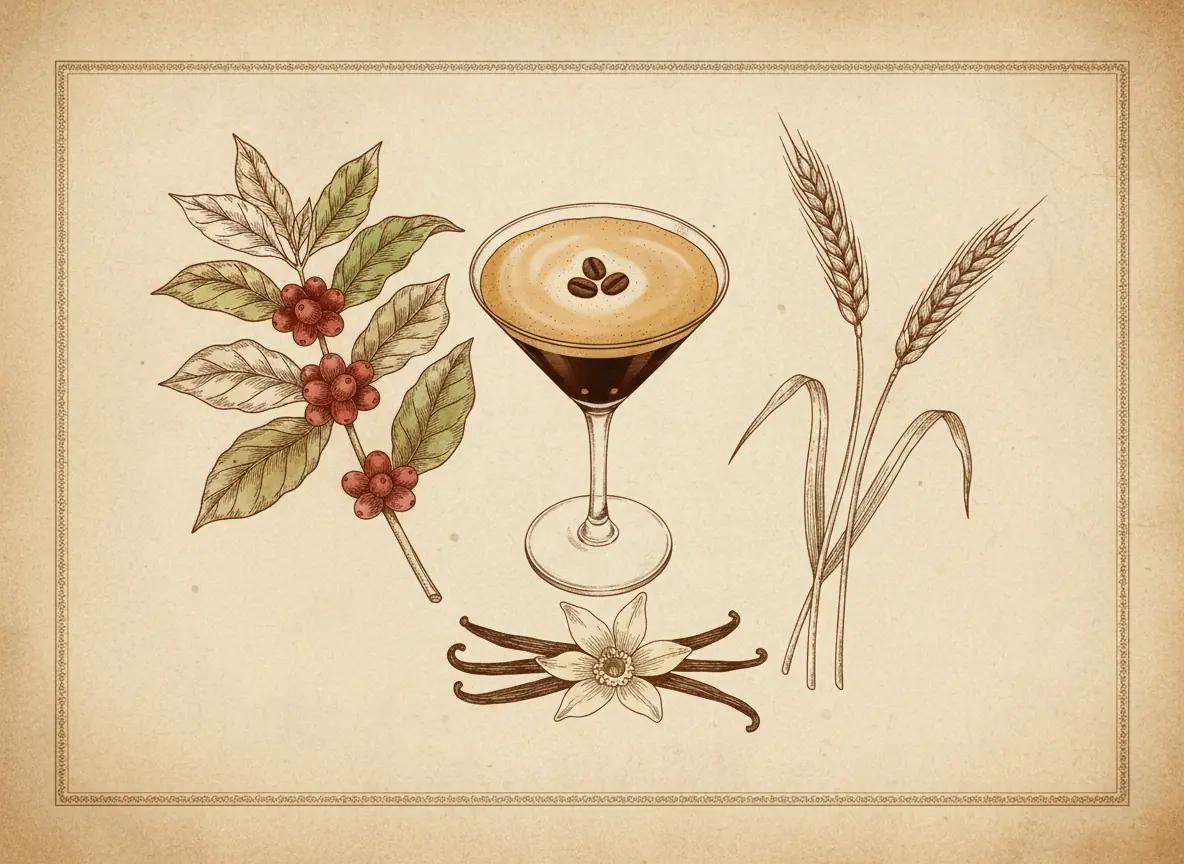
An Espresso Martini is 50ml of vodka, 30ml of Kahlúa, 10ml of sugar syrup and one freshly pulled espresso of about 30ml, shaken hard for 10 to 12 seconds and double strained into a chilled martini glass, with three coffee beans laid on the foam. About 2.5 UK units, and the caffeine of a single shot. The Oxford Companion says Dick Bradsell created it at the Soho Brasserie in London in 1983, for a famous model who asked for a drink to wake her up and then mess her up; he never said who she was. The measures are the IBA’s. Vodka gives strength and cold without flavour, so the coffee leads. The foam comes from the crema of a shot pulled moments before the shake, which is why the espresso goes in last.
Where this one sits
Recipe by Jerry Can Spirits · Updated 19 October 2026