Grateful Dead
The Grateful Dead is the Long Island Iced Tea stripped of its cola float and rebuilt with raspberry liqueur. Where the Long Island uses a short cola pour for colour, dilution and finishing sweetness, this takes Chambord at full measure, producing a drink that is more potent, more fruit-forward and considerably more striking to look at. The five-spirit base of vodka, gin, white rum, blanco tequila and triple sec is unchanged from the parent, and fresh lime juice provides the acid backbone. The switch from lemon to lime is the second structural departure: lime’s sharper acidity gives a more coherent contrast to the Chambord’s berry sweetness, so the drink lands tart and fruity rather than simply sweet and strong. The name carries the irreverence of the party drink tradition, referencing the band as a comment on strength and character rather than flavour. Built with fresh lime and accurate measures, it is coherent and considerable in equal parts.
Glassware: Highball Glass
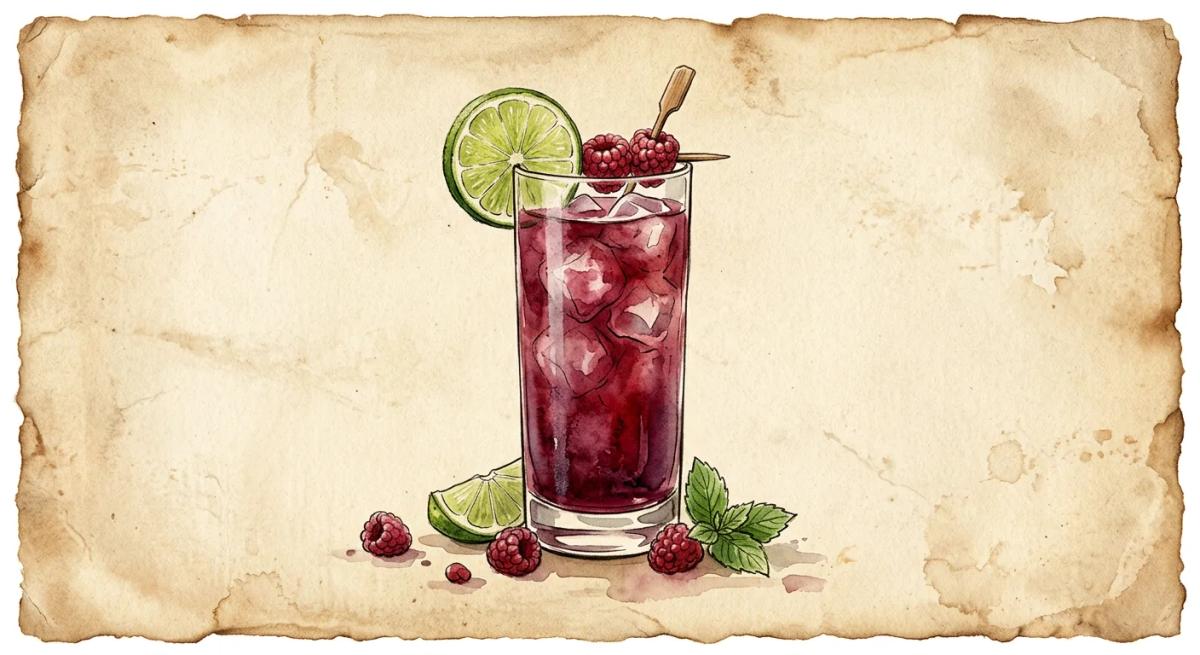
Garnish: Lime Wheel fresh and Raspberries
Ingredients
15ml
A clean, neutral vodka contributing proof and body without competing flavour. One of five equal spirit measures that together form the base of the build.
15ml
A London Dry with clear juniper. At 15ml its botanical presence is subtle, and it contributes to the complexity of the combined base rather than standing out.
15ml
A clean, lightly aged white rum providing a faint sweetness and tropical character alongside the other four spirits. Neutral column rum adds nothing here.
15ml
A quality blanco with genuine agave character. Its vegetal note is more audible against lime than it would be against lemon, which is part of why the citrus changed.
15ml
Cointreau is the benchmark. It provides clean orange sweetness that bridges the five spirits and complements the raspberry without competing with it.
22.5ml
The defining ingredient, and what separates this from a Long Island Iced Tea. Chambord brings genuine black raspberry depth; a cheap liqueur tastes immediately artificial.
22.5ml
Squeezed immediately before use. The acid backbone holding five spirits in balance, and a sharper contrast to the Chambord’s sweetness than lemon would provide.
10ml
One part sugar to one of warm water, supporting the lime without duplicating the sweetness already coming from the triple sec and the Chambord.
3 raspberries
Three, on the rim or dropped in. They reinforce the Chambord’s berry character and point at the ingredient the whole drink is built around.
Instructions
Squeeze the lime juice immediately before building the drink.
Fill a highball glass fully with large cubed ice.
Add the vodka, gin, white rum, blanco tequila and triple sec directly over the ice.
Add the lime juice and simple syrup, then pour the Chambord over the build.
Stir briefly to combine.
Rest a lime wheel on the rim, add the raspberries and serve with a straw.
Expert Tip
There is no cola and no soda here, which means no dilution beyond the ice and no carbonation to lift the drink or slow anyone down. At five equal spirit measures plus Chambord it is more concentrated and more immediately alcoholic than the Long Island Iced Tea despite using the same base, and the fruit hides that completely. Measure every spirit accurately rather than free-pouring. And do not increase the Chambord in the expectation that more raspberry makes it more interesting: at 22.5ml it is already fully audible, and past that the drink becomes a raspberry cocktail with five spirits somewhere in the background, which is a considerably less interesting proposition than the balance it was built at.
Behind the Grateful Dead
Flavour Profile
The Origin
The Grateful Dead belongs to the generation of Long Island Iced Tea variants that emerged from American bar culture through the 1980s and 1990s, a period when Chambord’s arrival in the American market in 1982 made black raspberry liqueur one of the most widely used colour and flavour additions in party cocktail building.
The name references the San Francisco band rather than any specific moment of creation, and no documented origin attributes it to a named bartender or bar. It carries the same knowing irreverence as the Adios Motherfucker: a drink entirely honest about being a high-ABV party cocktail rather than claiming refinement, which is its own kind of integrity.
The Chambord Decision
Chambord is a French black raspberry liqueur produced in the Loire Valley from black raspberries and blackcurrants with Madagascan vanilla, Moroccan citrus peel, honey and cognac, at 16.5 per cent.
That gives it a berry-forward depth and complexity that cheaper raspberry liqueurs built on artificial flavouring simply do not have. At 22.5ml it is the only flavouring element beyond the five base spirits and the lime, which makes its quality as consequential as any individual spirit in the build. An artificial product gives synthetic berry sweetness with the spirits exposed behind it, which is this drink’s failure mode exactly as sour mix is the Long Island’s.
Why Lime
The switch from the Long Island’s lemon to lime is structural rather than arbitrary. Lime’s acidity is sharper and more assertive, and the contrast it strikes against the Chambord’s berry sweetness is more pronounced and considerably more interesting than lemon would produce.
The tequila also has a natural affinity with lime that it does not have with lemon, so at 15ml its agave character stays audible where it would otherwise vanish. Squeeze it immediately before building: cut lime loses its brightness within about half an hour, and a flat acid note cannot provide the contrast the Chambord needs to stay balanced rather than overwhelming.
Concentration and Strength
The most significant departure from the Long Island is not the Chambord but the absence of a diluting extender.
The Long Island’s 30ml of cola provides colour and a small dilution that takes the edge off the five-spirit base. This has no equivalent: the Chambord adds volume and flavour but no dilution beyond the ice and no carbonation to lift the drink or slow its consumption. The result is more concentrated and more immediately alcoholic on identical spirit measures, and the fruit-forward character advertises none of it. That concentration is part of the drink’s identity and the reason for its name.
How to Serve It
Built over ice in a highball, all five spirits and the Chambord combined with fresh lime and syrup, briefly stirred, garnished with a lime wheel and fresh raspberries.
Serve it immediately and serve it cold. It is a party drink, and its concentration and colour suit late evening and celebratory occasions where the name carries its own entertainment value alongside the glass. It is not built for the pace of a Collins, and it should not be handed to somebody expecting one.
Make it at home
The Spirit
VodkaThe only major spirit whose legal definition asks for character to be taken away rather than built. UK law requires it to be distilled so that the raw material's own qualities are selectively reduced, and sets the floor at 37.5%. What is left is strength, texture, and whatever survived the process.
Master the Techniques
More to explore
Frequently Asked Questions
What is a Grateful Dead?
How does it differ from a Long Island Iced Tea?
Does the raspberry liqueur have to be Chambord?
Why is it stronger than it tastes?
You Might Also Like
Long Island Iced Tea
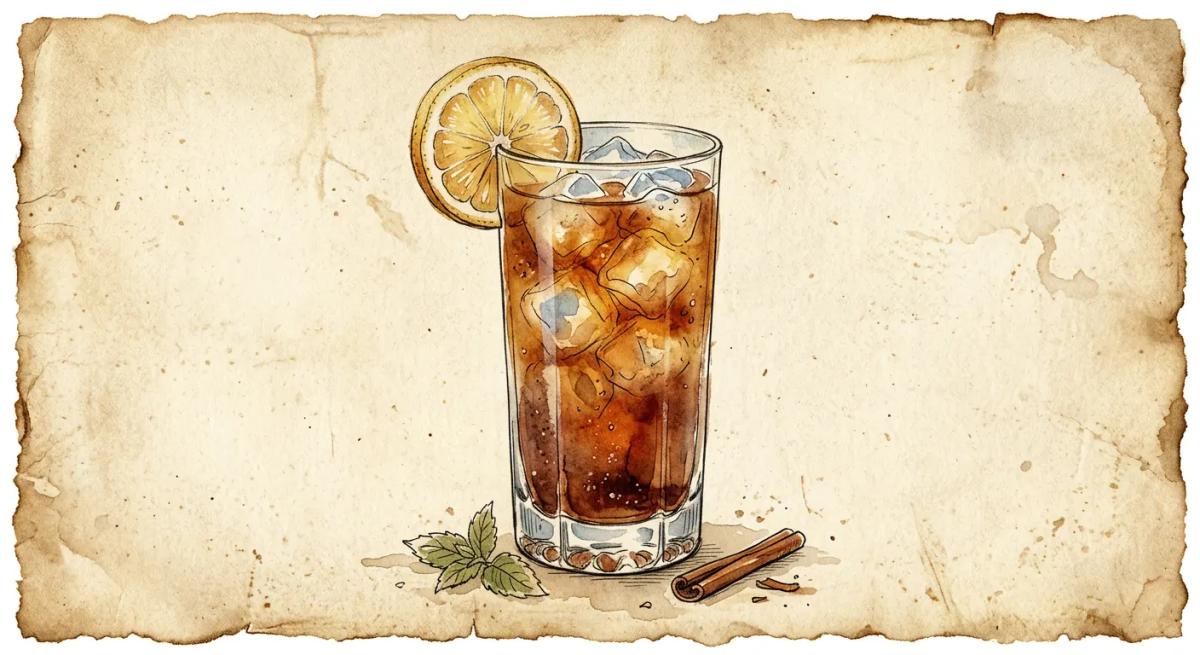
The Long Island Iced Tea is one of the most ordered cocktails in the world and one of the most misunderstood. Its reputation as a vehicle for maximum alcohol at minimum cost has obscured the fact that the original, created by Robert Rosebud Butt at the Oak Beach Inn on Long Island in 1972, was built around a genuine balance of five spirits with fresh lemon and a cola float. Five spirits at equal volume, with fresh lemon juice, a little syrup, and a short pour of cola over the surface that supplies the iced tea appearance without defining the flavour. The combination sounds chaotic and produces something coherent when every measure is accurate, because the lemon is the acid backbone that stops five spirits pulling in five directions. It fails when the spirits are poured generously rather than accurately, when the lemon is replaced with sour mix, or when the cola arrives in quantity. All three are common in high-volume service and all three are avoidable.
Adios Motherfucker
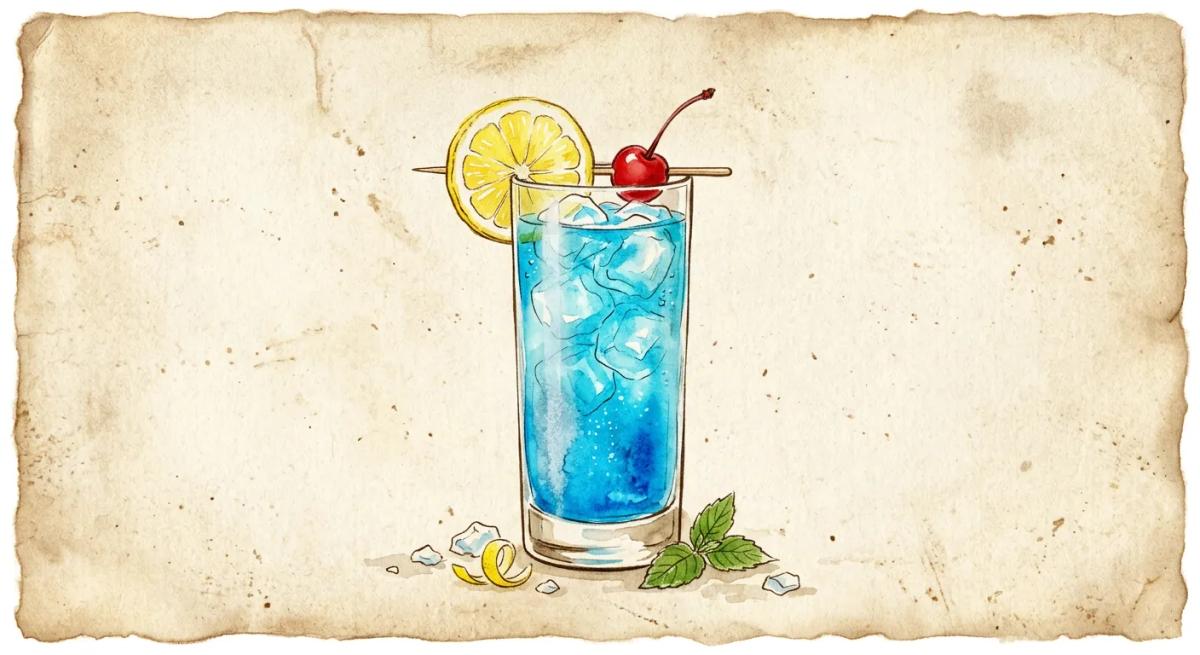
The Adios Motherfucker, known in polite company by its initialism AMF, is a direct structural descendant of the Long Island Iced Tea. Blue curaçao replaces the original's triple sec and cola, turning the drink from amber-brown to the vivid electric blue that makes it one of the most visually distinctive cocktails in the party drink canon. The name is entirely consistent with the character: loud, unapologetic, and considerably stronger than it looks. The structure follows the same five-spirit logic as the Long Island: vodka, gin, white rum, blanco tequila and blue curaçao in equal measure, with fresh lemon juice and a carbonated extender. The failure modes are identical too: generous pours of any single spirit, sour mix in place of fresh lemon juice, and too much lemonade. The AMF rewards honesty about what it is. It is not a stirred classic; it is a high-ABV, visually striking party drink built for long evenings and communal consumption. Within those terms it has a genuine balance that carelessly built versions never show.
Bramble
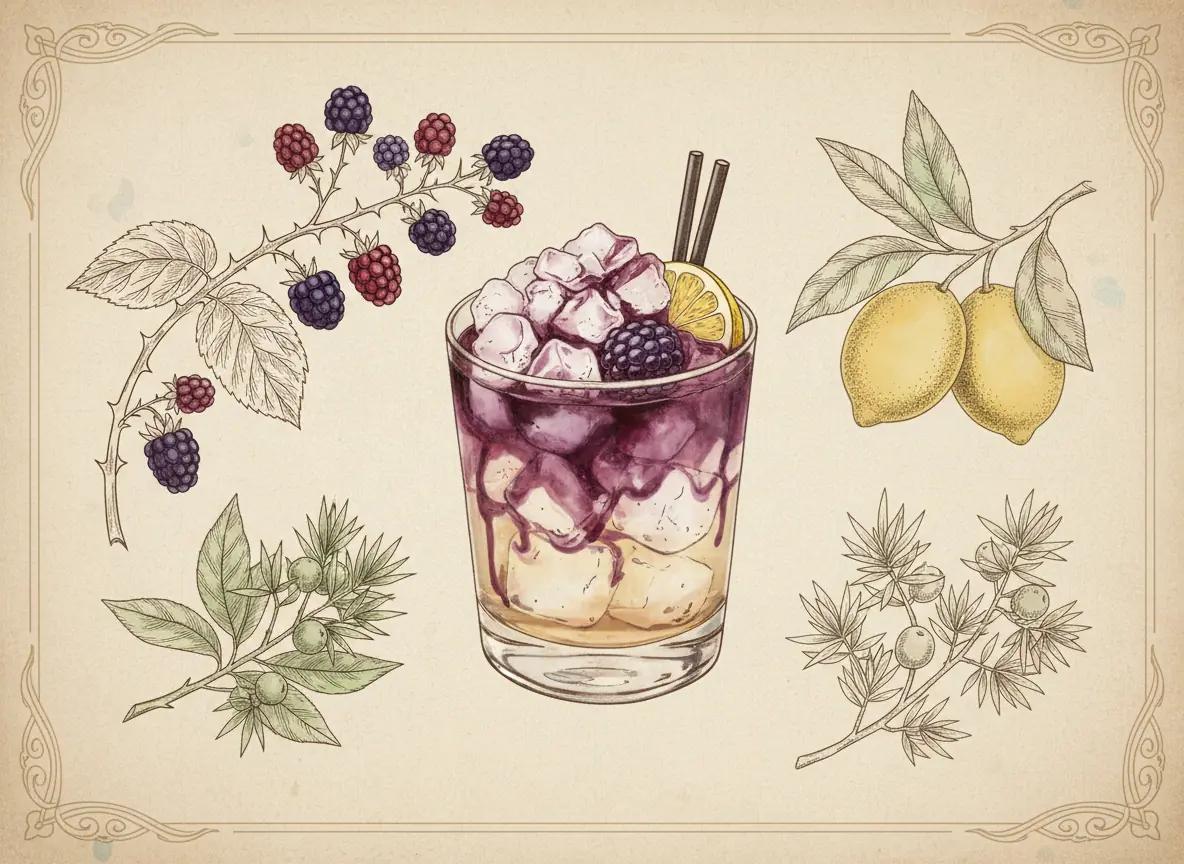
The Bramble was created by Dick Bradsell at Fred's Club in London in 1984, making it one of the few genuinely modern cocktails to hold a permanent place in the classical canon. Bradsell was the defining figure of the London cocktail revival, and the Bramble was his most enduring contribution to it. He described the inspiration as the blackberry bushes he picked from as a child on the Isle of Wight. The foundation is a simple gin sour: gin, fresh lemon juice and sugar syrup, shaken and served over crushed ice. The crème de mûre is not shaken in. It is drizzled slowly over the surface of the finished drink, bleeding down through the ice as it settles, and that is not theatre: the liqueur integrates gradually as the drink is consumed, shifting the balance from tart and juniper-forward at the first sip toward sweet and fruity by the last. The crème de mûre decides the quality. A cheap blackberry liqueur is artificially sweet and one-dimensional.
Where this one sits
Recipe by Jerry Can Spirits