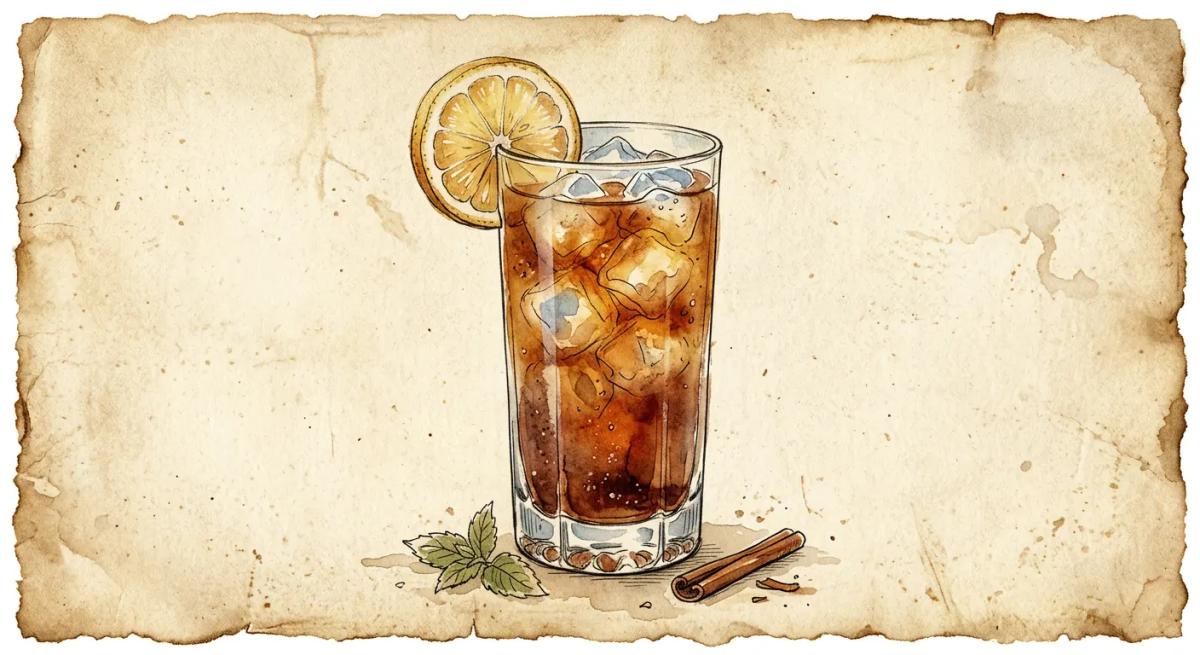
Long Island Iced Tea
The Long Island Iced Tea is one of the most ordered cocktails in the world and one of the most misunderstood. Its reputation as a vehicle for maximum alcohol at minimum cost has obscured the fact that the original, created by Robert Rosebud Butt at the Oak Beach Inn on Long Island in 1972, was built around a genuine balance of five spirits with fresh lemon and a cola float. Five spirits at equal volume, with fresh lemon juice, a little syrup, and a short pour of cola over the surface that supplies the iced tea appearance without defining the flavour. The combination sounds chaotic and produces something coherent when every measure is accurate, because the lemon is the acid backbone that stops five spirits pulling in five directions. It fails when the spirits are poured generously rather than accurately, when the lemon is replaced with sour mix, or when the cola arrives in quantity. All three are common in high-volume service and all three are avoidable.
Glassware: Highball Glass
Garnish: Lemon Wheel
Ingredients
15ml
A clean, neutral vodka contributing proof and body without competing flavour. One of five equal measures that together form the base rather than five separate drinks.
15ml
A London Dry with clear juniper. At 15ml its botanical presence is subtle, and it is one of the things separating a properly built Long Island from a carelessly assembled one.
15ml
A clean, lightly aged white rum with genuine character. It provides a faint sweetness and tropical note that rounds out the combined spirit base.
15ml
A quality blanco with real agave character. Its vegetal note is one of the elements that distinguishes this from every other multi-spirit drink on a list.
15ml
Cointreau is the benchmark. It provides sweetness and a clean orange character that bridges all five spirits and contributes to the finished drink’s colour.
25ml
Squeezed immediately before use, and the single most important ingredient here. It is the acid backbone holding five spirits in balance, and the one most often replaced by sour mix.
30ml
One part sugar to one of warm water, supporting the lemon without duplicating the sweetness the triple sec is already supplying. It is a fuller measure than the balance of the drink suggests, because five spirits at fifteen millilitres each need considerably more sweetness underneath them than any one of them would alone.
30ml
Added last as a short float over the surface. It provides the iced tea colour and a faint caramel note; more than thirty millilitres and the drink turns cola-forward.
Instructions
Squeeze the lemon juice immediately before building the drink.
Fill a highball glass fully with large cubed ice.
Add the vodka, gin, white rum, blanco tequila and triple sec directly over the ice.
Add the lemon juice and simple syrup, and stir briefly to combine.
Pour the cola gently over the surface as a short float.
Rest a lemon wheel on the rim and serve immediately with a straw.
Source: the IBA (Official IBA specification; method ours). Last checked 13 August 2026.
Expert Tip
Measure every spirit accurately, because the balance depends entirely on all five being present at the same volume. A generous pour of any one of them, which is the commonest failure in high-volume service, produces a drink that tastes of that spirit rather than of the combination the recipe was built to achieve. Use a jigger for every pour and the balance takes care of itself. The other two failures are just as avoidable: fresh lemon rather than sour mix, squeezed to order, because artificial sweetness and absent acid disrupt five spirits at once rather than one; and the cola held to thirty millilitres as a float, poured gently over the surface rather than stirred through, so it colours the drink without taking it over.
Behind the Long Island Iced Tea
Flavour Profile
The Origin
Robert Rosebud Butt created the Long Island Iced Tea at the Oak Beach Inn in 1972, entering it in a cocktail competition that called for a new drink using triple sec.
His recipe combined equal parts of four base spirits with triple sec, fresh lemon juice and a cola float that produced the appearance the drink is named for; whether the resemblance was deliberate or a happy coincidence of colour is not clearly established. It spread through the northeastern United States across the late 1970s and 1980s, accelerated by chain restaurant culture and its appetite for high-volume, high-strength cocktails.
The Five Spirit Logic
Equal-volume spirits are not simply a strategy for maximising alcohol, though they achieve that as a byproduct. Each one is contributing something specific.
Vodka provides neutral alcohol and body. Gin provides botanical complexity. White rum provides a faint sweetness and tropical character. Blanco tequila provides agave’s vegetal note. Triple sec provides orange and sweetness. Together they make a base more complex than any single spirit at the same total volume, and the lemon is the frame that makes that complexity accessible rather than chaotic. An over-poured vodka tastes of diluted vodka; an over-poured tequila tastes of a tequila sour with company.
The Cola Float
The cola sits at thirty millilitres, and the modesty of that measure is deliberate. At that level it provides the caramel colour that names the drink, a faint cola note adding depth to the finish, and a slight effervescence.
More than that and the drink moves progressively toward a spirit-laced soft drink. Pouring it gently over the surface rather than stirring it through preserves both the look and the sequence: the first sip carries a slight cola note, and the glass becomes more spirit-forward as it empties. Add it last, and resist the urge to stir it in afterwards.
The Sour Mix Problem
This is the drink most commonly ruined by pre-made sour mix, and the failure is more consequential here than in a simpler sour because the artificial sweetness and absent acid disrupt the balance of five spirits at once.
Built with sour mix it tastes of sweetened artificial lemon flavouring with spirits somewhere behind. Built with fresh lemon at twenty-five millilitres it tastes of five spirits in balance inside a clean acid frame. It is the most consequential ingredient in the build and the one that most repays the thirty seconds it takes to squeeze to order.
How to Serve It
Built over ice in a highball, all five spirits added before the lemon and syrup, cola floated gently over the surface, and a lemon wheel on the rim. Serve immediately with a straw long enough to reach the base.
It is a party drink suited to long evenings and communal drinking, and that context does not lower the standard it should be built to. Measure accurately, squeeze the lemon, float the cola with restraint, and the drink repays the precision with a consistency its reputation has rarely reflected.
Make it at home
The Spirit
VodkaThe only major spirit whose legal definition asks for character to be taken away rather than built. UK law requires it to be distilled so that the raw material's own qualities are selectively reduced, and sets the floor at 37.5%. What is left is strength, texture, and whatever survived the process.
Master the Techniques
More to explore
Frequently Asked Questions
What is a Long Island Iced Tea?
Is there tea in it?
Why does mine taste like a cheap party drink?
Does the cola have to be a float?
You Might Also Like
Tom Collins
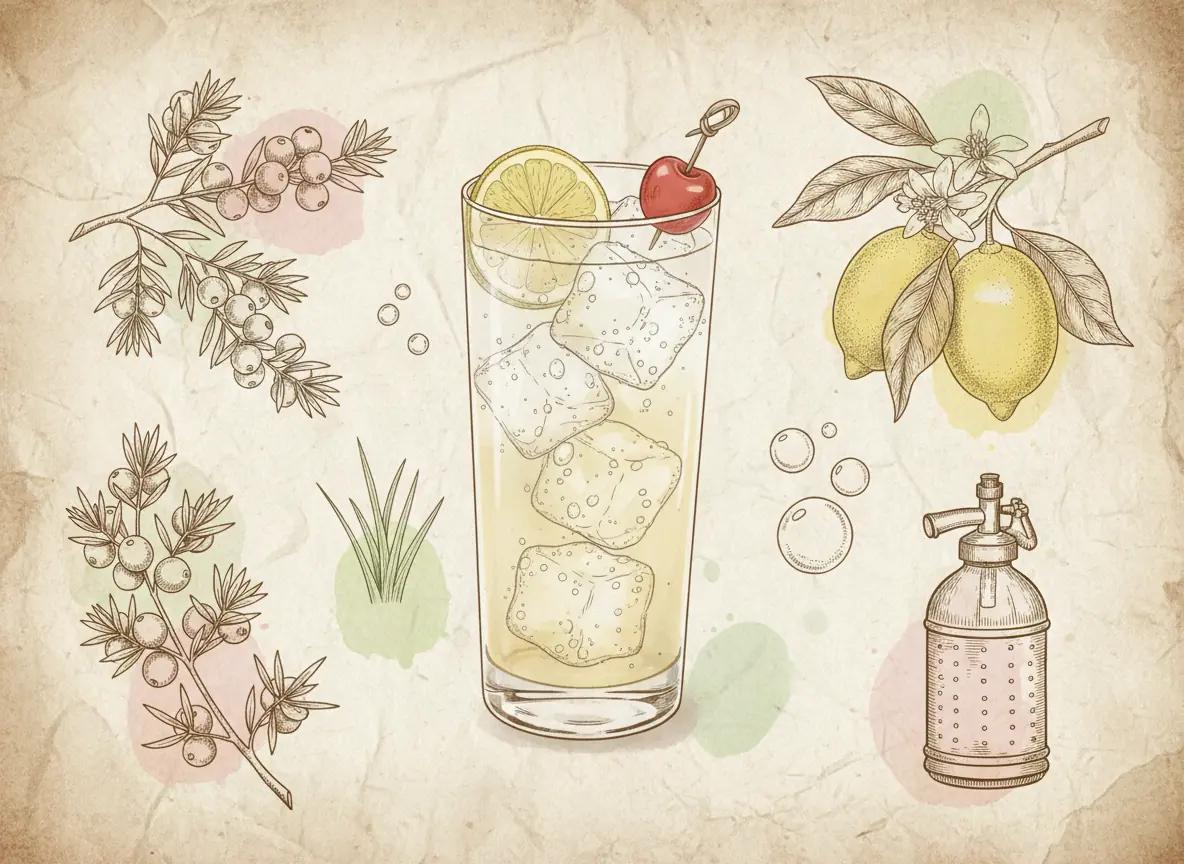
The Tom Collins is a gin sour lengthened with soda: gin, fresh lemon, sugar syrup and soda water over ice in a tall glass. The simplicity is deceptive. Built with a quality London Dry, lemon squeezed to order and well-chilled soda poured carefully, it is one of the most refreshing long drinks there is. Built with bottled juice and flat soda, it is one of the most disappointing. The name comes from one of the odder stories in the canon. The Great Tom Collins Hoax of 1874 involved telling somebody that a man called Tom Collins had been disparaging them in a nearby bar, then sending them off to find a person who did not exist. It spread across American cities fast enough that the name entered everyday speech, and a long gin drink already being served as the John Collins acquired it almost by association. Old Tom gin, the sweeter style that preceded London Dry, was the format's original base and makes a rounder, gentler drink. Both are correct.
Margarita
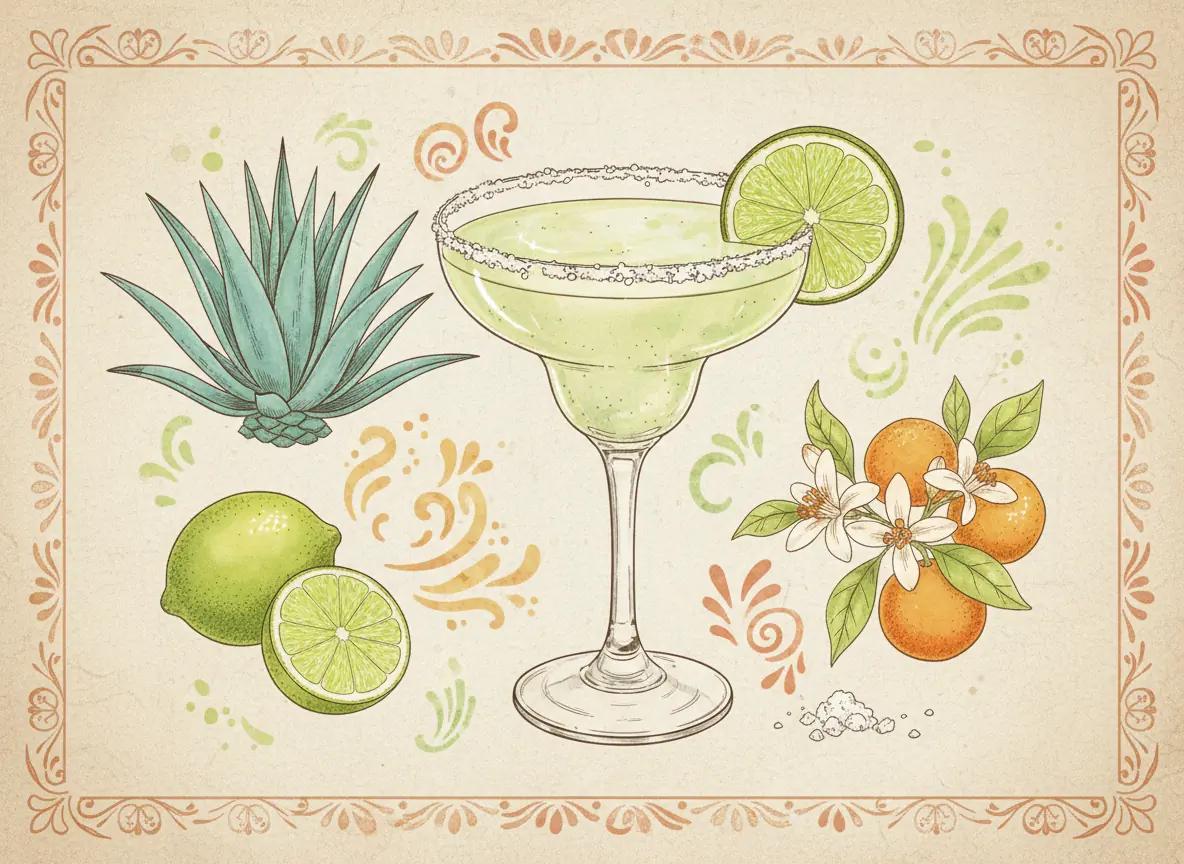
The Margarita is the most ordered cocktail in the United States, and that status has done to it what it did to the Mojito: margarita mix, bottled lime and the frozen resort serve have created a whole category of drink that carries the name without the substance. Made properly it is three ingredients: blanco tequila, fresh lime juice and orange liqueur, shaken cold with a salt rim. That is a sour at its most direct, and in a build this bare the quality of everything is immediately apparent. There is nowhere to hide a neutral tequila, a bottled lime or a cheap triple sec. The choice that matters most is not up versus rocks, which is a matter of preference. It is blanco versus reposado. Blanco is cleaner and more agave-forward and the lime meets the tequila directly; reposado is rounder, its oak putting vanilla and caramel against the lime in a different register. Both are correct, and blanco is the more coherent with fresh lime.
Mojito
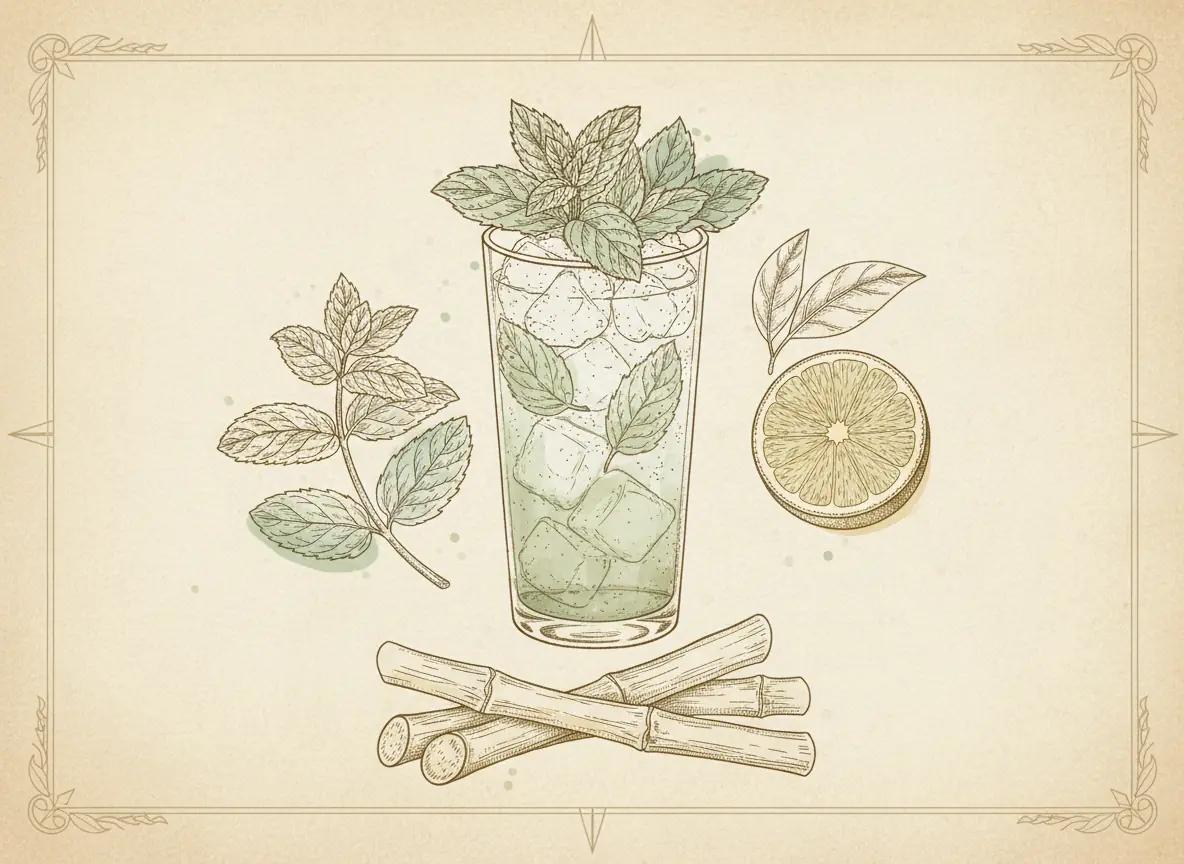
The Mojito is one of the oldest Cuban cocktails on record, its roots traced to a sixteenth-century proto-version called El Draque, named after Sir Francis Drake, whose fleet anchored off Havana in 1586. Drake’s sailors mixed local aguardiente, the rough precursor to Cuban rum, with mint, lime and sugar as a remedy for dysentery and scurvy. The combination has proved more enduring than the illness. The modern Mojito is built on white rum, with soda water extending it into a long, refreshing serve suited to the Cuban climate. Hemingway is associated with it through La Bodeguita del Medio, and whether that association is accurate or partly mythologised is debated. The drink does not need it. Technique matters here more than most high-volume bars are willing to invest in: mint pressed rather than muddled, lime squeezed fresh, sugar dissolved before the rum, and soda poured gently enough to survive into the first sip.
Where this one sits
Recipe by Jerry Can Spirits