Stout Float
A Stout Float is 250ml of Irish stout poured into a tall glass and left to settle, with a scoop of vanilla ice cream lowered in and 15ml of Irish cream drizzled over if you like. About 1.3 UK units with the Irish cream, or 1.1 without, by our calculation, taking the stout at 4.2% ABV, the figure on Guinness’s own page for Guinness Draught. It contains milk and gluten. It is a house serve rather than a classic: we have found no bar that claims it and no date for it. It works the way an affogato does. Something cold and sweet goes into something dark and bitter, and each corrects the other. The ice cream melts outward into the beer, the beer seeps into the scoop, and the last third of the glass is the richest. Dry Irish stout holds it together. Roast malt and a clean bitter finish sit naturally beside vanilla, and the beer’s soft carbonation keeps the meeting calm where a livelier beer would foam over the rim. Serve it as pudding on the seventeenth of March, spoon first.
Glassware: Collins Glass
Garnish:
Ingredients
250ml
A dry Irish stout; Guinness’s own page gives Guinness Draught at 4.2% ABV, brewed with malted and roasted barley. Roast malt, a clean bitter finish and soft carbonation keep the meeting with ice cream calm. It is brewed from barley, so it contains gluten.
1 scoop
Plain, firm and properly frozen, made with real vanilla. It contains milk, and often egg, so check the tub. A soft scoop dissolves on contact; a hard one floats and melts slowly.
15ml (optional)
Baileys’ own page gives its Original Irish Cream at 17% ABV, and it contains milk. The drizzle pushes the glass fully into pudding; without it the stout keeps more of its bitterness.
Instructions
Pour 250ml of stout into a tall glass of 40cl or more, leaving room under the rim.
Let the head settle for about thirty seconds.
Lower a scoop of vanilla ice cream into the glass rather than dropping it.
Drizzle 15ml of Irish cream over the top, if using.
Serve with a long spoon.
Our version
Our own St Patrick’s Day dessert serve: 250ml of dry Irish stout, a scoop of vanilla ice cream and an optional 15ml drizzle of Irish cream, in a tall glass. No published original.
Source: our own specification. Last checked 10 October 2026.
Expert Tip
Let the head settle before the ice cream goes in. A scoop dropped into a freshly poured stout takes the foam over the rim with it. About thirty seconds is usually enough. Use firm, properly frozen vanilla. A soft scoop dissolves on contact and muddies the glass within a minute, where a hard one rides half-proud of the beer and melts outward at the edges. Leave room under the rim. In a tall glass, 250ml of stout gives the scoop somewhere to go and the melt room to spread, and that space is the difference between a pudding and a spill.
Behind the Stout Float
Flavour Profile
A House Float, Not a Classic
The Stout Float is a house serve rather than a recovered classic. We have found no bar that claims it and no date for it, and it makes no pretence otherwise.
The logic is the affogato’s, moved from espresso to stout: something cold and sweet lowered into something dark and bitter. Ice cream alone is one note of sweetness, and a glass of stout alone is a beer. Together they make a dessert you drink.
The Stout
The BJCP style guidelines for Irish stout say that Dublin-type stouts use roasted barley and are more bitter and drier, while Cork-type stouts are sweeter, and that modern examples are almost always associated with a nitro pour, which gives the full, creamy texture and very long-lasting head. Guinness lists roasted barley and nitrogen among the ingredients of its Draught.
Each of those properties matters here. The roast reads as coffee and dark chocolate against vanilla. The soft carbonation keeps the float from foaming over when the scoop goes in. And the bitterness stops a glass of beer and ice cream collapsing into sweetness.
The Float
Lower the scoop in rather than dropping it, over a settled head, and you get a float: the ice cream riding half-proud of the beer while its edges melt outward in pale threads.
Temperature is the variable. Ice cream straight from a domestic freezer holds its shape for several minutes; ice cream left on the counter dissolves on contact and leaves a murky brown glass with no float in it.
The optional 15ml of Irish cream is the final layer. With it the drink is fully pudding. Without it the stout keeps more of its edge.
Three Ways to End the Evening
The Stout Float with and without Irish cream, beside our Irish Coffee; all rows are our recipes and the units are our calculation
Base
- Stout Float
- 250ml Irish stout
- Without Irish cream
- 250ml Irish stout
- Irish Coffee
- 50ml Irish whiskey, 120ml hot coffee
Sweetness
- Stout Float
- Scoop of vanilla ice cream
- Without Irish cream
- Scoop of vanilla ice cream
- Irish Coffee
- Teaspoon of demerara
Cream
- Stout Float
- 15ml Irish cream, drizzled
- Without Irish cream
- The melting ice cream
- Irish Coffee
- 50ml lightly whipped cream, floated
Temperature
- Stout Float
- Cold
- Without Irish cream
- Cold
- Irish Coffee
- Hot
Allergens
- Stout Float
- Gluten, milk, often egg
- Without Irish cream
- Gluten, milk, often egg
- Irish Coffee
- Milk
UK units
- Stout Float
- About 1.3
- Without Irish cream
- About 1.1
- Irish Coffee
- About 2.0
| Element | Stout Float | Without Irish cream | Irish Coffee |
|---|---|---|---|
| Base | 250ml Irish stout | 250ml Irish stout | 50ml Irish whiskey, 120ml hot coffee |
| Sweetness | Scoop of vanilla ice cream | Scoop of vanilla ice cream | Teaspoon of demerara |
| Cream | 15ml Irish cream, drizzled | The melting ice cream | 50ml lightly whipped cream, floated |
| Temperature | Cold | Cold | Hot |
| Allergens | Gluten, milk, often egg | Gluten, milk, often egg | Milk |
| UK units | About 1.3 | About 1.1 | About 2.0 |
The Irish Coffee is the other dessert drink of the evening and carries more alcohol in a smaller glass. The float is the gentler of the two, a little less than half a pint of stout, which is what most of it is.
It also has an American cousin in the root beer float, which most guests will recognise. The Irish reading swaps root beer’s candied spice for roast bitterness and comes out more grown-up than it looks.
How to Serve It
Hand it over with a long spoon and a napkin. It is an end-of-evening serve for the seventeenth of March, after dinner is done and the coffee has gone round.
For whiskey, coffee and cream served hot, make an Irish Coffee; for coffee liqueur and Irish cream in a shot glass, a Baby Guinness.
Make it at home
The Spirit
Irish CreamIrish cream is a liqueur of fresh Irish dairy cream and Irish whiskey, sweetened and held in a stable emulsion, by the GOV.UK specification for the protected name, which also requires the island of Ireland and 15% or more. Baileys Original, first made in 1974 by the Oxford Companion’s account, is 17% ABV on its maker’s site. In our recipes it floats on the Baby Guinness, B-52 and Slippery Nipple, and gives the Shaft its body.
More to explore
Frequently Asked Questions
Which stout should I use?
Do I need the Irish cream?
How should I serve and drink it?
Is a Stout Float alcoholic?
Does a Stout Float contain gluten or dairy?
Can I use another beer?
How strong is a Stout Float?
Sources.
Correct as of 19 October 2026.
- Guinness, “Guinness Draught” (maker’s own page: 4.2% ABV; hints of roasted coffee and chocolate; ingredients malted barley, barley, roasted barley, nitrogen).
- BJCP (Beer Judge Certification Program), 2021 Style Guidelines, “15B. Irish Stout” (style guidelines: Dublin-type stouts use roasted barley, are more bitter and drier; Cork-type stouts are sweeter; modern examples are almost always associated with a nitro pour; bottled beer lacks the creamy texture and very long-lasting head of mixed-gas dispense).
- Baileys, “Baileys Original Irish Cream” (maker’s own page: 17%).
You Might Also Like
Irish Coffee
An Irish Coffee is 50ml of Irish whiskey and a teaspoon of demerara sugar stirred into 120ml of hot filter coffee in a warmed glass, with 50ml of cream whipped to the texture of cold pouring custard and floated on top over the back of a warm spoon. Nothing goes on the cream, ever. About 2.0 UK units. The Foynes Flying Boat Museum dates it to the winter of 1943 at the Foynes flying-boat terminal, when the chef Joe Sheridan put Irish whiskey into the coffee of passengers whose flight had turned back; the Oxford Companion dates it to late 1944 or early 1945. KQED tells the Buena Vista Cafe’s story that its owner and the travel writer Stanton Delaplane set about copying the drink in San Francisco on 10 November 1952; the Companion gives 1953. It is drunk through the cream: hot, sweet coffee and whiskey under a cold layer, so every sip arrives warm and cool at once. The cream is dairy, so make it for milk drinkers only.
Espresso Martini
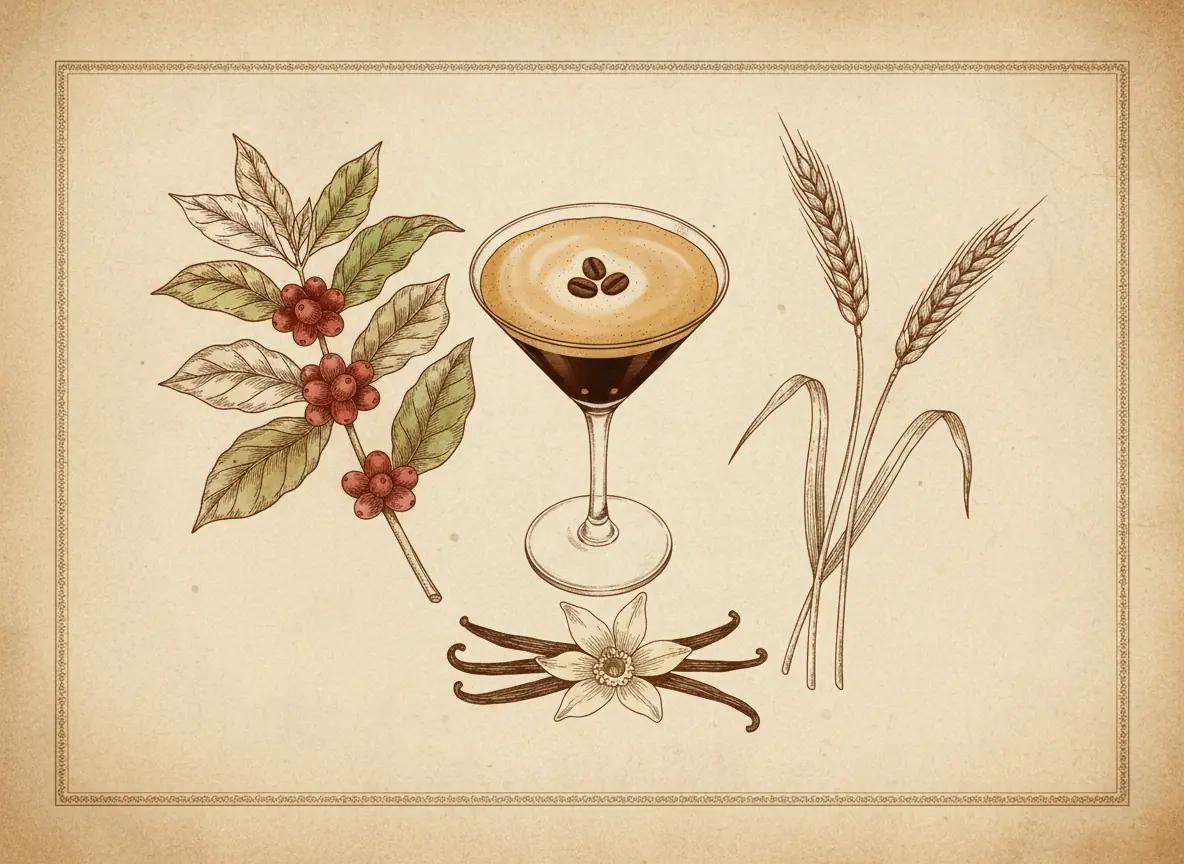
An Espresso Martini is 50ml of vodka, 30ml of Kahlúa, 10ml of sugar syrup and one freshly pulled espresso of about 30ml, shaken hard for 10 to 12 seconds and double strained into a chilled martini glass, with three coffee beans laid on the foam. About 2.5 UK units, and the caffeine of a single shot. The Oxford Companion says Dick Bradsell created it at the Soho Brasserie in London in 1983, for a famous model who asked for a drink to wake her up and then mess her up; he never said who she was. The measures are the IBA’s. Vodka gives strength and cold without flavour, so the coffee leads. The foam comes from the crema of a shot pulled moments before the shake, which is why the espresso goes in last.
Recipe by Jerry Can Spirits · Updated 19 October 2026