Alcohol-free Spritz
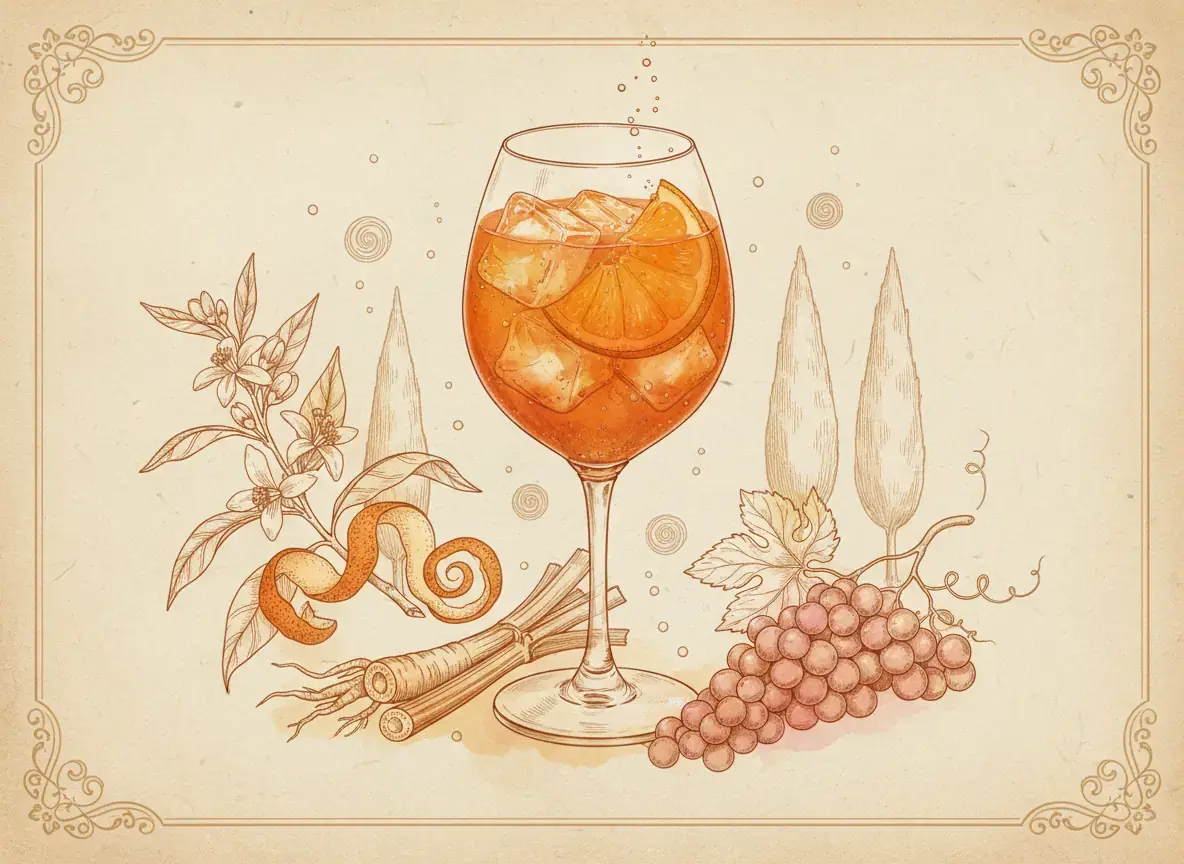
An Alcohol-free Spritz is 50ml of alcohol-free aperitif and 100ml of soda water or tonic water, built over a wine glass full of ice, with an orange slice. It is alcohol-free, and the strength of the aperitif is printed on its label, at some figure up to 0.5% ABV. It keeps the structure of an [Aperol Spritz](/field-manual/cocktails/aperol-spritz/): a bittersweet orange aperitif, a sparkling element and an orange slice in a wine glass. There is no prosecco, so the fizz comes from the soda or tonic and the proportions are our own.
Glassware: Wine Glass
Garnish: Orange slice tucked into the ice
Ingredients
Instructions
Pack a wine glass with cubed ice.
Pour in the alcohol-free aperitif.
Top with chilled soda water or tonic water, poured gently down the inside of the glass.
Lift once with a bar spoon and tuck in an orange slice.
Our version
This is a category build on the spritz pattern, not a copy of the Aperol Spritz: we use 50ml of alcohol-free aperitif to 100ml of soda or tonic because there is no prosecco to supply the fizz.
Source: our own specification. Last checked 1 November 2026.
Expert Tip
Taste the aperitif with soda before you build the drink. Sugar and bitterness vary more between bottles than between most spirits, and the per-100ml sugar figure on the label shows which way it will lean. Pack the glass with ice. It melts slowly when full, and this drink has no alcohol to cover for dilution. Open a fresh bottle of soda for each round. The drink depends on the fizz.
Behind the Alcohol-free Spritz
Flavour Profile
A spritz built on the structure, not the wine
The Aperol Spritz on this site follows the IBA: 90ml of prosecco, 60ml of Aperol and 30ml of soda. Take out the prosecco and the Aperol and what remains is a pattern: something bittersweet, something sparkling, ice and an orange slice. This drink keeps that pattern.
The aperitif here is an alcohol-free aperitif, poured at 50ml. It is a category build, so it names no brand. Pick a bottle you like the taste of with soda, because that is how it will be drunk.
Soda keeps it dry, tonic makes it sweeter and more bitter
Soda water adds fizz and nothing else, so the aperitif carries the flavour. Tonic water adds sugar and quinine bitterness. Start with soda, taste, and move to tonic if the bottle is dry or sharp. Sugar varies by aperitif, and the nutrition panel gives the figure per 100ml.
Check the label for sulphites and strength
Bases differ between bottles. A vinegar or wine base calls for a look at the list for sulphites. The strength is printed on the bottle, and the DHSC guidance sets out how the descriptors alcohol free and de-alcoholised apply.
The Alcohol-free Spritz beside two relatives
Alcohol-free Spritz
- Bittersweet part
- 50ml alcohol-free aperitif
- Fizz
- 100ml soda or tonic
- Glass and garnish
- Wine glass, orange slice
Aperol Spritz
- Bittersweet part
- 60ml Aperol
- Fizz
- 90ml prosecco, 30ml soda
- Glass and garnish
- Wine glass, orange slice
Spirit Alternative and Tonic
- Bittersweet part
- Botanical spirit alternative
- Fizz
- Tonic, 100ml and up
- Glass and garnish
- Copa glass
| Drink | Bittersweet part | Fizz | Glass and garnish |
|---|---|---|---|
| Alcohol-free Spritz | 50ml alcohol-free aperitif | 100ml soda or tonic | Wine glass, orange slice |
| Aperol Spritz | 60ml Aperol | 90ml prosecco, 30ml soda | Wine glass, orange slice |
| Spirit Alternative and Tonic | Botanical spirit alternative | Tonic, 100ml and up | Copa glass |
Next to the Spirit Alternative and Tonic, the aperitif brings bitterness and orange, where the spirit alternative brings botanicals.
Make it at home
The Spirit
Alcohol-Free AperitifAn alcohol-free aperitif is a bittersweet drink for the hour before dinner. It is built without alcohol, or with a trace, and served 50ml at a time over ice with soda or tonic. The printed ABV sits between 0.0% and 0.5%, and the label is where to find it. The base is on the ingredients list. Verjus, the pressed juice of unripe grapes, is one; tea and plant extracts are others. Where vinegar or wine is the base, check the label for sulphites. Sugar varies by bottle and is on the nutrition panel.
Master the Techniques
More to explore
Frequently Asked Questions
What is an Alcohol-free Spritz?
Is it really alcohol-free?
Soda or tonic?
Can I use Aperol?
Which glass?
Does it contain allergens?
Can I make a jug?
Sources.
Correct as of 1 November 2026.
- Department of Health and Social Care, GOV.UK, “Low-alcohol descriptors: guidance” (alcohol free (0.05%) and de-alcoholised (0.5%) thresholds; guidance is voluntary; 13 December 2018).
- legislation.gov.uk, “Regulation (EU) No 1169/2011, Annex II (as retained in UK law)” (point 12: sulphites above 10mg/kg or 10mg/litre are a declared allergen).
You Might Also Like
Aperol Spritz
An Aperol Spritz is three parts prosecco, two parts Aperol and one part soda: 90ml prosecco, 60ml Aperol and 30ml soda water, poured in that order into a large wine glass packed with ice, with an orange slice to finish. That is the International Bartenders Association’s Spritz, with its splash of soda measured. Aperol is an Italian aperitivo at 11% ABV by its maker’s FAQ, with zesty orange and herbal notes on its product page; Difford’s Guide, a secondary source, names bitter orange, gentian, cinchona bark and Chinese rhubarb among its ingredients. Aperol says Luigi and Silvio Barbieri created it in 1919, and Difford’s Guide places the company in Padua. The spritz habit in the Veneto is older; VinePair traces it to the Veneto under Austrian rule, when the Austrians added a splash of water, a spritz, to the local wine. Pour the prosecco first and the Aperol mixes as it goes in. A glass holds about 1.7 UK units.
Spirit Alternative and Tonic
A Spirit Alternative and Tonic is 50ml of spirit alternative and 100 to 150ml of chilled tonic water, built over ice in a copa glass, with a garnish chosen to suit the flavour of the bottle. It is alcohol-free. The ABV on the bottle will fall in the 0.0% to 0.5% band. It follows the build of the [Gin and Tonic](/field-manual/cocktails/gin-and-tonic/), but not its ratio: a spirit alternative has no alcohol for the tonic to dilute, so taste before you add the second measure.
Sparkling Elderflower Lemonade
Sparkling Elderflower Lemonade is 25ml of elderflower cordial and 25ml of fresh lemon juice over ice in a highball, topped with 150ml of sparkling water, stirred gently and finished with a lemon wheel. It contains no alcohol: cordial is a sugar syrup flavoured with the flowers, so there are no units to count. With three ingredients, each one shows. The cordial brings the flower and the sweetness, the lemon keeps it sharp, and the sparkling water gives it length. The Woodland Trust says the elderflower season is generally short, from late May to mid-July depending on where you live in the UK, and cordial is how the flavour lasts the rest of the year. The cordial and lemon can be mixed ahead; the water goes in at the last moment.
Virgin Mojito
A Virgin Mojito is ten mint leaves pressed gently with 25ml fresh lime juice and 20ml simple syrup in a highball, packed with crushed ice and topped with 120ml of soda water, then finished with a slapped mint sprig and a lime wheel. It contains no alcohol, so there are no units to count. It is the Mojito with the rum left out and the build kept whole. The Mojito’s flavour sits in mint, lime, sugar and soda, so taking out the rum costs it warmth and a little body rather than its character. Against the Mojito, syrup replaces the two teaspoons of sugar, because it mixes into cold lime at once, and the lime rises from 20ml to 25ml to keep the longer soda pour sharp.
Where this one sits
Recipe by Jerry Can Spirits · Updated 1 November 2026