Non-Alcoholic Cocktails
10 recipes
This Field Manual holds 10 recipes built without alcohol. Removing the spirit removes three things at once: bitterness, viscosity and the burn that tells your mouth a drink has arrived. A good one replaces all three rather than leaving juice in a nice glass.
Bitterness is the one most often missed. Non-alcoholic bitters, strong tea, grapefruit pith or a bitter soda give the drink somewhere to end, and without it a mix of juices tastes flat however good the fruit is. Acid does the lifting a spirit’s heat would otherwise do, so these recipes lean harder on citrus and vinegar than their alcoholic equivalents. Texture is the hardest to replace: a syrup, an egg white or a shrub gives the drink weight, and a Seedlip-style distillate brings aroma without body.
Difficulty Level
Arnold Palmer
The Arnold Palmer is a drink invented by its own customer. The golf legend mixed iced tea with lemonade at home through the 1960s, ordered it at a Palm Springs bar in 1960 by describing it, and a woman at the next table asked for "that Palmer drink". He confirmed the story himself, traded on it graciously for fifty years, and it carries his name on cans across America. The classic ratio is his own: three parts iced tea to one of lemonade, with the tea in charge and the lemonade sweetening and brightening from below. Bars pour it half and half, and Palmer himself corrected them for decades. Fresh-brewed tea, cooled quickly and never stewed, is the entire quality question. It is the great American porch drink and a near-perfect session mocktail: cold, dry-finishing and endlessly refillable. The spiked version answers to John Daly, another golfer entirely, and a considerably different biography.
Chocolate Orange Mocktail
The Chocolate Orange Mocktail is dessert by other means: fresh orange juice shaken with chocolate syrup and single cream until it turns silky and cold, then strained into a coupe. The pairing needs no defending. Chocolate and orange have been sold together in Britain since the 1930s, and the combination behaves in a glass exactly as it does in a wrapper, bright citrus over dark richness. The method is one hard shake. Cream and juice emulsify in the tin, the chocolate syrup binds to both, and the drink pours with a light foam that reads far more indulgent than three everyday ingredients have any right to. Syrup choice decides the outcome. One made with real cocoa gives the drink a proper bittersweet edge; the cheaper kind gives it the flavour of an ice-cream counter, which is not the same thing. Serve it after dinner, alongside pudding or in place of it, when the evening wants something rich and nobody wants another glass of wine. It is alcohol-free without ceremony, which on Valentine's Day is exactly the point.
Rose Lemonade Fizz
The Rose Lemonade Fizz is a soft drink dressed for the occasion: rose syrup and fresh lemon in a champagne flute, topped with sparkling water until it looks like something poured from a far more serious bottle. Pink, floral and sharp, it exists so that the person not drinking raises a glass matching the moment rather than apologising for it. The balance is the whole craft. Rose rewards restraint: 25ml of good syrup gives perfume and colour, and an equal measure of lemon stops the drink drifting toward Turkish delight. The syrup matters more than any other choice, and it should be made with genuine rose extract, because the artificial versions are how a drink ends up tasting of soap. Served in a flute it stands beside champagne cocktails at a toast without ever looking like the consolation prize, which is precisely the job it was written to do. Everything should be cold before it meets anything else, because a flute holds no ice and nothing in the build corrects a warm pour.
Shirley Temple
The Shirley Temple is the original mocktail, and it came with the original celebrity endorsement problem. Hollywood in the 1930s built it so the child star could toast alongside the adults at dinner; Chasen’s and the Brown Derby have both claimed the invention; and Temple herself disliked it for the rest of her life, calling it far too sweet and reportedly going to law in the 1980s to stop a bottled version trading on her name. The classic build is ginger ale over ice with grenadine poured through it and a maraschino cherry riding the top. The glass turns sunset pink, the cherry becomes the prize, and three generations of children have felt suddenly included at the table because of it. That inclusion is the recipe’s actual content. The adult version is simply honest ingredients: real pomegranate grenadine instead of neon syrup, a ginger ale with genuine bite, and a squeeze of lime for anyone who has grown into it.
Sparkling Elderflower Lemonade
Sparkling Elderflower Lemonade is what happens when a soft drink is built to bar standards: real cordial, fresh lemon squeezed to order, and proper fizz over plenty of ice. Three ingredients and thirty seconds, which is precisely why the quality of each one shows. Good elderflower cordial carries the drink, the lemon stops it tipping into sweetness, and the sparkling water gives it length and lift. Elderflower belongs in a British glass honestly. The flowers bloom in hedgerows for a few short weeks in early summer, and cordial is how that season gets bottled. Its floral, faintly grassy sweetness against sharp lemon is one of the country’s oldest soft-drink pairings, and it needs no improving. It is a warm-afternoon serve that stands just as well on a spring table. It scales to jugs without complaint, keeps its base in the fridge for days, and asks only that the fizz goes in at the last possible moment.
Vietnamese Iced Coffee (Non-Alcoholic)
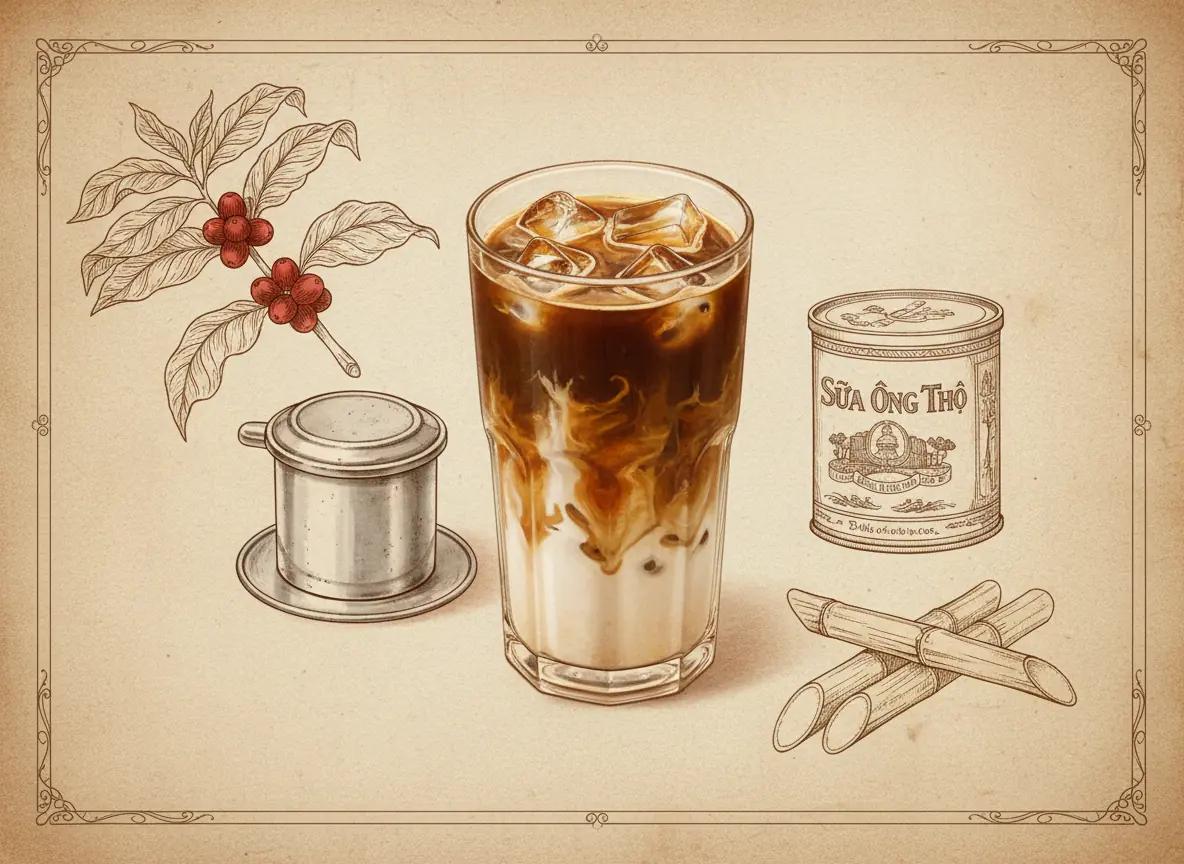
Vietnam's most beloved drink and one of the great coffee experiences in the world. The name translates simply as "iced milk coffee," but the reality is considerably more than that. Strong, dark Vietnamese coffee brewed slowly through a traditional phin filter, sweetened condensed milk stirred through the bottom, poured over a glass packed with ice. The result is intensely caffeinated, deeply sweet, and unmistakably its own thing. Vietnam is the second largest coffee producer in the world, and the character of its coffee reflects that. Robusta beans dominate, bringing a boldness and bitterness that condensed milk was always the natural answer to. Fresh milk was historically scarce and expensive in Vietnam. Sweetened condensed milk, introduced during the French colonial period, solved the problem permanently and in doing so created something irreplaceable. Cà Phê Sữa Đá is not a shortcut version of a Western iced coffee. It is its own tradition, its own technique, and its own reward. Patience is the only ingredient you cannot buy.
Virgin Colada
The Virgin Colada is the Piña Colada with the rum excused, and remarkably little is lost in the transaction. Pineapple and cream of coconut were always the body and the soul of that drink and the rum was a warm passenger. Take it out and what remains is the best-selling frozen alcohol-free drink on earth, and Puerto Rico’s national cocktail translated to every age and every afternoon without surrendering its character. The rules are the parent’s, unrelaxed. True cream of coconut and never coconut milk. Fresh pineapple juice, for the enzymes and the brightness. A short blend that stops the moment it turns smooth. The only real change is the lime, promoted from optional to structural, because its acid covers the dryness the rum used to bring. It is the standard-bearer for alcohol-free drinks that are recipes rather than apologies: the right pour for the poolside, the school holiday and the driver who still wants the umbrella.
Virgin Mojito
The Virgin Mojito is the strongest argument in the alcohol-free canon because it barely loses anything in translation: the Mojito's pleasure was always mint, lime, sugar and cold soda conspiring, with the rum as a warm background hum. Remove the hum and the conspiracy stands, which is why this is the mocktail bars sell most and apologise for least. The build is the parent's, unabridged: mint pressed gently with lime and sugar, crushed ice, soda, the works. Every rule transfers — bruise the mint rather than shred it, fresh lime only, soda poured to lift — and the result is a drink made rather than merely assembled, which is the entire difference between a mocktail and a lemonade. It serves the driver, the pregnant guest, the athlete and the Tuesday afternoon with equal grace, and it deserves the same glass, ice and garnish standards as anything else on the list: the absence of rum is a choice, not a downgrade, and the drink should read that way.
Virgin Passion Fruit Martini
The Virgin Passion Fruit Martini keeps everything people actually order a Pornstar Martini for and quietly removes the vodka. The appeal of the original was never really the spirit: it was passion fruit, sharp and perfumed, held up by vanilla and served with ceremony. All of that survives. Two whole passion fruits go into the shaker with juice, vanilla syrup and lime, and the drink comes out cold, frothy and loudly tropical. Fresh fruit is the non-negotiable part. The pulp brings seeds, texture and an aromatic sharpness that juice alone cannot fake, and a halved fruit makes the garnish. Vanilla syrup does the rounding work the vodka never did, and lime keeps the sweetness honest. The serve keeps the ritual intact: coupe in the middle, a small glass of chilled sparkling apple juice on the side standing in for the prosecco. Alternate sips exactly as the original intends. On Valentine's Day it hands the person not drinking the most theatrical glass on the table, which is the correct order of things.
Watermelon Cooler
The Watermelon Cooler asks very little of the person making it: blend ripe watermelon, strain it, sharpen it with lime and lengthen it with soda. The fruit does the heavy lifting. Ripe watermelon is mostly water and natural sugar in roughly the right proportions already, which is why the recipe carries no syrup by default. Taste the juice first and add a splash of simple syrup only if the melon was picked too keen. Fresh watermelon juice is the whole argument here. It takes a minute in a blender and a moment through a sieve, and it bears no resemblance to anything sold in a carton. The colour alone, a bright unforced pink, settles the question of whether the effort was worth it. Over ice in a tall glass with a top of soda, it is the drink for the hottest hour of the day: hydrating in fact rather than in theory, and alcohol-free without needing to mention it. The base holds in the fridge for a day, and a measure of white rum or vodka turns the same glass into an evening drink without altering the method.