Virgin Mojito
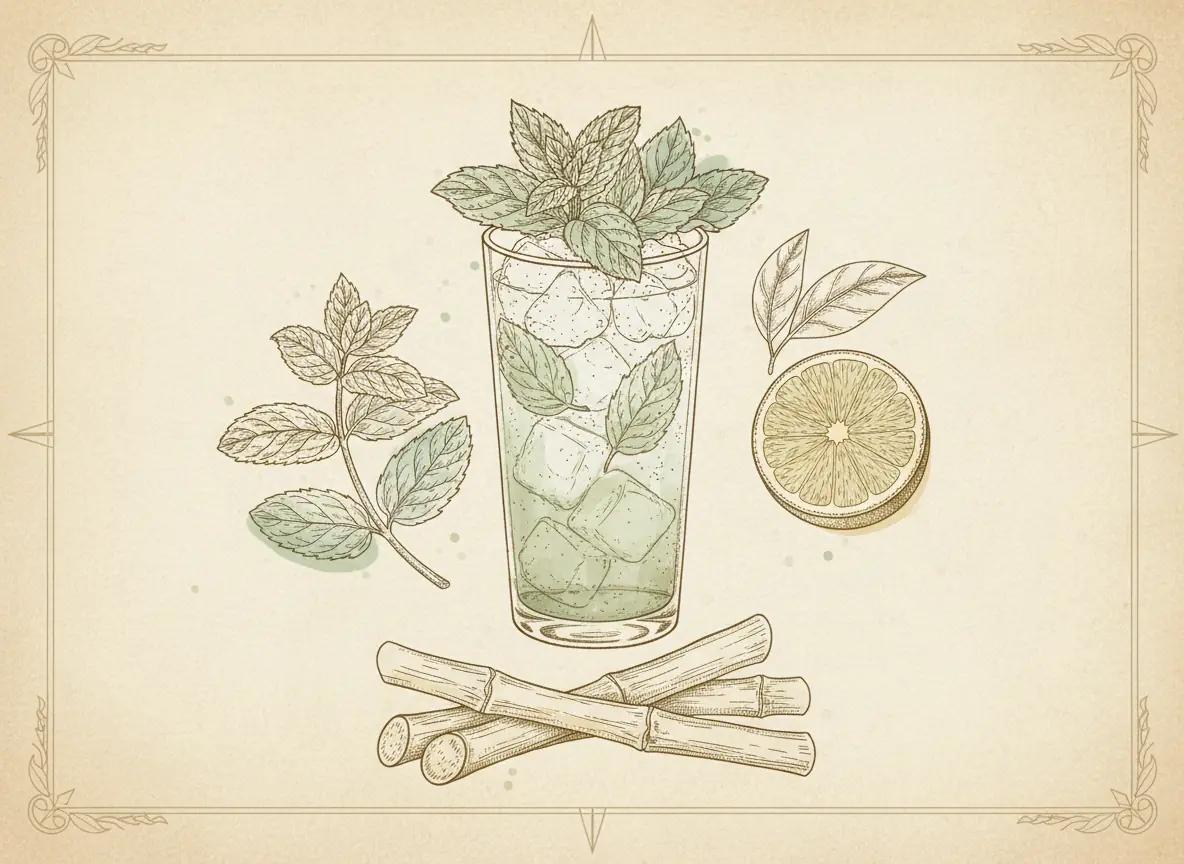
A Virgin Mojito is ten mint leaves pressed gently with 25ml fresh lime juice and 20ml simple syrup in a highball, packed with crushed ice and topped with 120ml of soda water, then finished with a slapped mint sprig and a lime wheel. It contains no alcohol, so there are no units to count. It is the Mojito with the rum left out and the build kept whole. The Mojito’s flavour sits in mint, lime, sugar and soda, so taking out the rum costs it warmth and a little body rather than its character. Against the Mojito, syrup replaces the two teaspoons of sugar, because it mixes into cold lime at once, and the lime rises from 20ml to 25ml to keep the longer soda pour sharp.
Glassware: Highball Glass
Garnish: Mint sprig and Lime wheel
Ingredients
25ml
Juiced the same day. Its 25ml, a touch over the Mojito’s 20ml, keeps the longer soda pour sharp.
20ml
Simple syrup, one to one by weight. The Mojito dissolves two teaspoons of sugar in the lime; syrup does the same job at once, with no grit left in the glass.
10 leaves
Ten fresh spearmint leaves, pressed gently so the oils come out without the bitterness. Hold a good sprig back for the garnish.
Instructions
Squeeze the lime juice the same day, ideally just before you build.
Put ten mint leaves in a highball with the lime juice and simple syrup, and press them gently with a muddler once or twice, without tearing them.
Fill the glass with crushed ice.
Pour the soda water through the middle of the ice and churn once with a bar spoon.
Top with more crushed ice.
Slap a mint sprig between your palms and plant it beside a lime wheel.
Expert Tip
Press the mint, do not shred it. Mint’s oils sit close to the skin of the leaf, so light pressure frees them; grinding rips the leaf and makes the drink bitter and grassy. Pack the glass with crushed ice before the soda goes in, and pour the soda through the middle so it lifts the mint and lime up through the glass instead of leaving them at the bottom. Use lively soda water, freshly opened. With no rum in the glass, the bubbles and the lime carry the drink.
Behind the Virgin Mojito
Flavour Profile
The Origin
It is the Mojito with the rum left out. The Oxford Companion describes the Mojito as essentially a rum Collins with muddled mint, an early-twentieth-century Cuban invention.
In our view it deserves the same care as the original.
Why It Works Without Rum
The Mojito spreads its flavour across mint oils, lime acid, sugar and carbonation. The rum adds warmth and body rather than holding the structure up, so taking it out leaves a complete drink.
Mojito and Virgin Mojito compared
Mojito
- Spec
- 45ml white rum, 20ml lime, two teaspoons sugar, mint, 75 to 100ml soda
- Strength
- About 1.8 UK units
Virgin Mojito
- Spec
- 25ml lime, 20ml simple syrup, ten mint leaves, 120ml soda
- Strength
- No alcohol
| Drink | Spec | Strength |
|---|---|---|
| Mojito | 45ml white rum, 20ml lime, two teaspoons sugar, mint, 75 to 100ml soda | About 1.8 UK units |
| Virgin Mojito | 25ml lime, 20ml simple syrup, ten mint leaves, 120ml soda | No alcohol |
The Standards
Every Mojito rule applies: gentle pressure on the mint, same-day lime, crushed ice packed to the top, soda with plenty of fizz. Serve it in the same highball with the same garnish.
What to Do About the Rum
Nothing needs to replace it. A rum alternative brings a little cane and weight for anyone who wants them, but the build stands without one.
For the version with rum, the Mojito builds it the same way with 45ml of white rum.
Serving It Properly
The same highball, the same crushed ice, the same slapped mint sprig and lime wheel. A smaller glass or a plainer garnish tells the guest the drink matters less.
It scales to a jug for a daytime table, provided the mint goes in close to serving.
More to explore
Frequently Asked Questions
Does a Virgin Mojito taste like the real one?
Does a Virgin Mojito contain alcohol?
What replaces the rum?
Are the rules the same as for a Mojito?
What changes from a Mojito?
Can I make a jug of it?
Sources.
Correct as of 19 October 2026.
- The Oxford Companion to Spirits and Cocktails (Jeff Berry), “The Mojito” (secondary source: essentially a rum Collins with muddled mint, an early-twentieth-century Cuban invention; first published recipe the Mojo de Ron in Lasa’s Libro de Cocktail, 1929; the name Mojito in print in 1931).
You Might Also Like
Mojito
A Mojito is 45ml of white rum, 20ml of fresh lime juice, two teaspoons of white cane sugar and six sprigs of mint, built in a highball. The mint is pressed gently with the sugar, the glass is filled with cubed ice, the rum and lime go in, and 75 to 100ml of chilled soda water tops it. About 1.8 UK units. Those are the IBA’s measures. The IBA only says to top up with soda, so the 75 to 100ml is ours. Press the mint once or twice and stop. Torn leaves make the drink bitter and grassy, and that, more often than the rum, is why a Mojito disappoints. The sugar grains help: they bruise the surface of the leaf as you press, and the lime then carries the oil through the glass.
Virgin Colada
A Virgin Colada is 120ml of fresh pineapple juice, 45ml of cream of coconut and 15ml of fresh lime juice, blended with a cup of crushed ice for 10 to 15 seconds and poured into a hurricane glass, with a pineapple wedge and a cherry. It is alcohol-free. It is the Piña Colada without its 50ml of white rum. The Caribe Hilton’s own history page says its bartender Ramón “Monchito” Marrero created that drink in 1954 and that it became the official drink of Puerto Rico in 1978, though Difford’s Guide records rival claims. Taking the rum out removes dryness as well as alcohol. So the pineapple goes up to fill the glass and the lime moves from a few optional drops to 15ml, to stop the drink tasting only sweet. Cream of coconut, the sweetened kind sold in tins, still decides it.
Arnold Palmer
An Arnold Palmer is 135ml of cold, unsweetened black tea and 45ml of still, cloudy lemonade, three parts to one, built over ice in a highball and stirred once, with a lemon wheel. It is alcohol-free. The tea carries some caffeine. It is named for the golfer Arnold Palmer; his official site says that after a hot day on the course he used to ask his wife Winnie to make him an iced tea with lemonade in it. AriZona’s page quotes him on how the name began: he asked for iced tea with some lemonade in it, and a lady across the aisle said she would have an Arnold Palmer. Golf Monthly says Palmer preferred one part lemonade to three parts iced tea, while the AriZona Beverage Company’s drink is half tea and half lemonade by AriZona’s own account, which is sweeter. At three to one the tea leads, and its tannin keeps the finish dry.
Where this one sits
Recipe by Jerry Can Spirits · Updated 19 October 2026