Shaft
A Shaft is 15ml each of vodka, coffee liqueur and Irish cream with 45ml of cold espresso, shaken hard with ice for 10 to 12 seconds and strained over fresh ice in a rocks glass, then drunk through a straw in one go. About 1.2 UK units. The Irish cream makes it a dairy drink, and the espresso makes it a strong coffee. It is Canadian, and two cities claim it. Difford’s Guide, a secondary source, credits Mark Smith of The Living Room in Calgary, around 2000, with an espresso shot with a splash of Kahlúa and skimmed milk, named after John Shaft of the 1971 film. Flavour Network says British Columbians credit a bartender at Hugo’s in Victoria’s Strathcona Hotel instead, and Difford’s calls the drink ubiquitous in Victoria. The espresso is the point. Coffee liqueur is already sweet coffee, and real espresso brings the acid and bitterness that stop the drink tasting like a milkshake.
Glassware: Rocks Glass
Garnish: None; served with a straw
Ingredients
15ml
Any clean vodka at 40% ABV. It is there for strength, not flavour, and nobody should taste it on its own.
15ml
Kahlúa, at 16% ABV on Pernod Ricard’s brand page, or similar; the units take 20% as our working figure. Choose one with some bitterness behind the sugar; a very sweet one pushes the drink towards dessert.
15ml
Baileys’ product page gives 17% ABV and milk as an allergen, which rules the drink out for anyone avoiding milk. We check an opened bottle first; in our experience old cream curdles against coffee.
45ml
Real espresso, brewed ahead and chilled. Its acid and bitterness balance the two sweet liqueurs. Cold brew concentrate works; instant coffee tastes thin.
Instructions
Brew the espresso ahead and chill it in the fridge.
Add the vodka, coffee liqueur, Irish cream and cold espresso to a shaker.
Fill with ice and shake hard for 10 to 12 seconds.
Strain into a rocks glass over fresh ice.
Add a straw and drink it in one continuous pull.
Expert Tip
Brew the espresso ahead and chill it. Poured hot into the shaker it melts the ice before the drink is cold, and the coffee picks up a flat, stewed taste. A jug in the fridge covers a round. We check the Irish cream before pouring a round. In our experience a bottle open for months can curdle against the acid in the coffee, and the drink arrives grainy. Smell it and taste a drop first. Shake hard for 10 to 12 seconds. That chills the drink and gives the cream a light froth; much longer and the ice starts to thin a drink that is mostly coffee already.
Behind the Shaft
Flavour Profile
Calgary or Victoria
Difford’s Guide credits Mark Smith, bartending at The Living Room in Calgary around 2000, with a built caffeinated pick-me-up shot of espresso, a splash of Kahlúa and skimmed milk. Flavour Network says Calgarians credit Smith, who served his Shaft with Kahlúa, espresso and a splash of milk as a short serve.
Victoria claims it as firmly: Flavour Network says British Columbians credit a bartender at Hugo’s bar in the Strathcona Hotel, and Difford’s Guide calls the drink ubiquitous in Victoria and thinks the vodka and Irish cream joined on the way from Calgary. The two cities have not agreed, and nothing we read settles it.
Why the Coffee Has to Be Real
Coffee liqueur is sweetened coffee and Irish cream is sweetened cream. Without espresso the glass holds two sweet things over ice. The espresso adds acid and bitterness, and the cream gets something to push against.
Brew it ahead and chill it. A hot shot pulled straight into the shaker melts the ice before the drink is cold, so it dilutes before it chills and takes on a stewed note. For a round, brew the lot at once and keep it in a jug in the fridge.
The Racing Ritual
A Shaft is drunk in one continuous pull through a straw. Taken quickly, the cream, the sugar and the bitter coffee land together. Sipped, they separate, and the melting ice turns the last third into weak iced coffee.
Difford’s Guide quotes a Victoria drinker who says it is most commonly downed in one. That ritual is why the drink is small and served over ice rather than up.
How Strong It Is
Where the alcohol in a Shaft comes from, at our working figures
Vodka
- Measure
- 15ml
- ABV
- 40%
- UK units
- 0.6
Coffee liqueur
- Measure
- 15ml
- ABV
- 20%
- UK units
- 0.3
Irish cream
- Measure
- 15ml
- ABV
- 17%
- UK units
- 0.25
Cold espresso
- Measure
- 45ml
- ABV
- None
- UK units
- 0
Total
- Measure
- 90ml before dilution
- ABV
- About 13%
- UK units
- 1.2
| Ingredient | Measure | ABV | UK units |
|---|---|---|---|
| Vodka | 15ml | 40% | 0.6 |
| Coffee liqueur | 15ml | 20% | 0.3 |
| Irish cream | 15ml | 17% | 0.25 |
| Cold espresso | 45ml | None | 0 |
| Total | 90ml before dilution | About 13% | 1.2 |
Half the glass is coffee. A round of three comes to about 3.5 units and three strong coffees, which is the part people forget.
Against the Espresso Martini
Both drinks put vodka and coffee liqueur with espresso. An Espresso Martini is shaken hard, strained up and finished with a foam head, to be drunk slowly from a stemmed glass.
The Shaft adds Irish cream, goes over ice in a rocks glass and is gone in seconds. One is a drink for the end of dinner; the other is a bartenders’ round at the end of a shift.
How to Serve It
Cold, over fresh ice, with a straw, in rounds. Make the espresso before anyone asks for one, so each drink takes a minute.
Make it at home
The Spirit
VodkaVodka is spirit made from a farmed crop, usually grain or potatoes, distilled and refined so that the taste of that crop is deliberately reduced. Under the retained Regulation (EC) 110/2008 its minimum is 37.5% ABV and it may not be given a predominant flavour, which separates it from flavoured vodka and from gin; our recipes count it at 40%. In a mixed drink it adds strength and body while the other ingredients carry the taste.
Master the Techniques
More to explore
Frequently Asked Questions
What is in a Shaft?
Where does the Shaft come from?
Why is it called a Shaft?
Why drink a Shaft in one go?
How strong is a Shaft?
Does a Shaft contain dairy?
Can I use cold brew or instant coffee?
Sources.
Correct as of 18 October 2026.
- Difford’s Guide, “Shaft” (secondary source: named after John Shaft of the 1971 film; created circa 2000 by Mark Smith at The Living Room, Calgary, as espresso with a splash of Kahlúa and skimmed milk; ubiquitous in Victoria; vodka and Irish cream added on the way).
- Flavour Network, “The History of the Shaft Cocktail” (secondary source: Calgarians credit Mark Smith of The Living Room; British Columbians a bartender at Hugo’s in the Strathcona Hotel, Victoria; popular in both cities in the early 2000s; tall, dark and cool).
- Pernod Ricard, “Kahlúa” (owner’s brand page with the nutrition panel: Kahlúa Original 16% ABV).
- Baileys, “Baileys Original Irish Cream” (producer’s product page: 17%; milk).
You Might Also Like
Espresso Martini
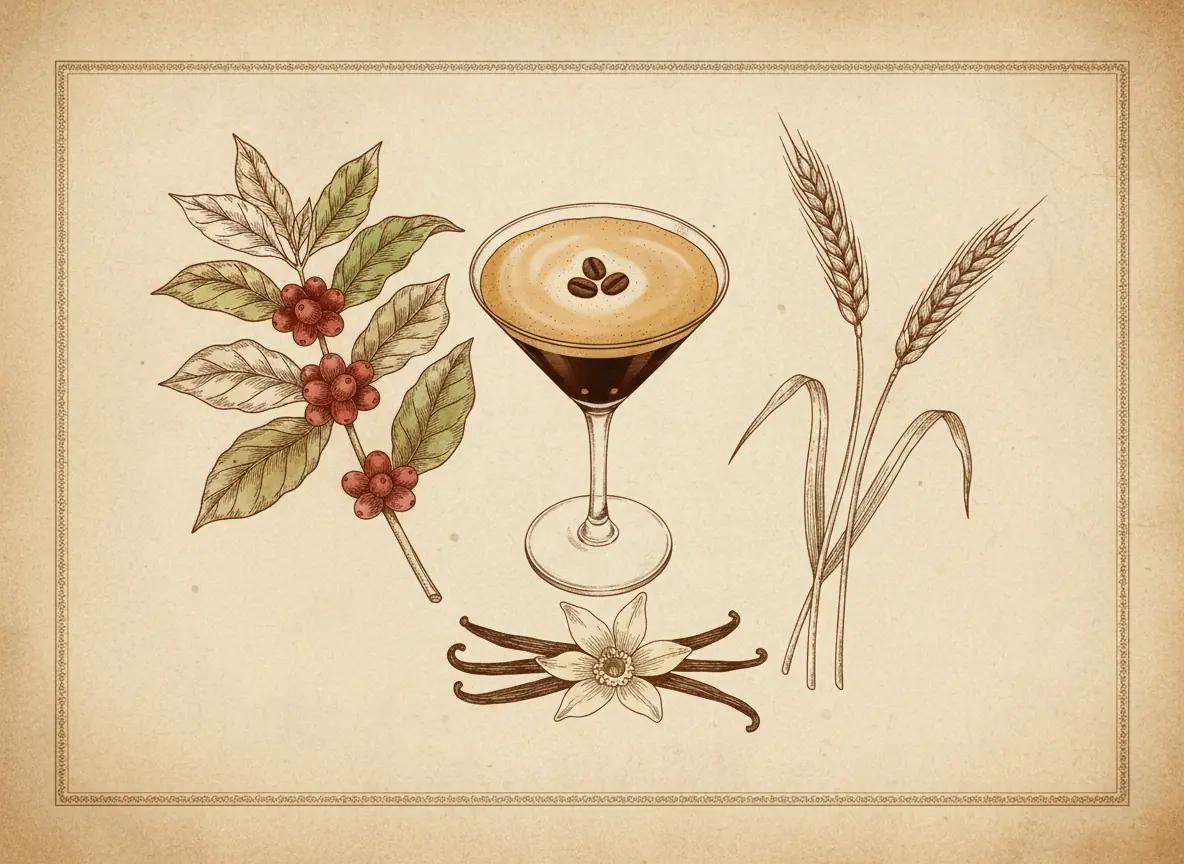
An Espresso Martini is 50ml of vodka, 30ml of Kahlúa, 10ml of sugar syrup and one freshly pulled espresso of about 30ml, shaken hard for 10 to 12 seconds and double strained into a chilled martini glass, with three coffee beans laid on the foam. About 2.5 UK units, and the caffeine of a single shot. The Oxford Companion says Dick Bradsell created it at the Soho Brasserie in London in 1983, for a famous model who asked for a drink to wake her up and then mess her up; he never said who she was. The measures are the IBA’s. Vodka gives strength and cold without flavour, so the coffee leads. The foam comes from the crema of a shot pulled moments before the shake, which is why the espresso goes in last.
Baby Guinness
A Baby Guinness is a shot of coffee liqueur with a layer of Irish cream floated on top, so it looks like a tiny pint of stout: 30ml of cold coffee liqueur in a shot glass, then 10ml of Irish cream poured slowly over the back of a spoon. There is no Guinness in it. The name comes from the look. It is drunk in one, so the cream and the coffee arrive together. It tastes of sweet coffee and cream with little burn, because the two liqueurs are around 20%, our working figure, and 17%, the figure on Baileys’ product page, and the shot holds about 0.8 UK units. We found no documented claim to it. Punch, a secondary source, relays legends of a pub near a Dublin maternity hospital and says the shot is now a staple at bars across Ireland, and the only skill in it is the float: cold liqueur and a slow pour keep the head sharp.
Screaming Orgasm
A Screaming Orgasm is 25ml of vodka with 12.5ml each of amaretto, coffee liqueur and Irish cream, shaken hard with ice for 10 to 12 seconds and strained over fresh ice in a rocks glass. No garnish. About 1.8 UK units. It contains dairy, and some amaretto contains nuts. Take out the vodka and you have a plain Orgasm, three liqueurs and no spirit; the vodka is what makes it screaming. Under the name it is a sound dessert drink. Coffee liqueur brings roast and the only bitterness in the glass, amaretto brings almond, Irish cream brings body, and the vodka adds strength without a flavour of its own.
Where this one sits
Recipe by Jerry Can Spirits · Updated 18 October 2026