Hot Toffee Apple
A Hot Toffee Apple is 50ml of bourbon and 15ml of caramel syrup in a heatproof mug, topped with 150ml of cloudy apple juice warmed until it steams and never boiled, then stirred with a cinnamon stick that stays in as the garnish. About 2.0 UK units, all from the bourbon. It is our own recipe, written for Bonfire Night and named after toffee apples, which the British Council lists among traditional Bonfire Night foods. We have found no older drink behind it. Only the juice goes on the heat. The bourbon and caramel wait in the mug, so the spirit is warmed by the juice rather than cooked. Made with an alcoholic British cider in place of the juice, it is stronger, at about 2.7 units.
Glassware: Irish Coffee Mug
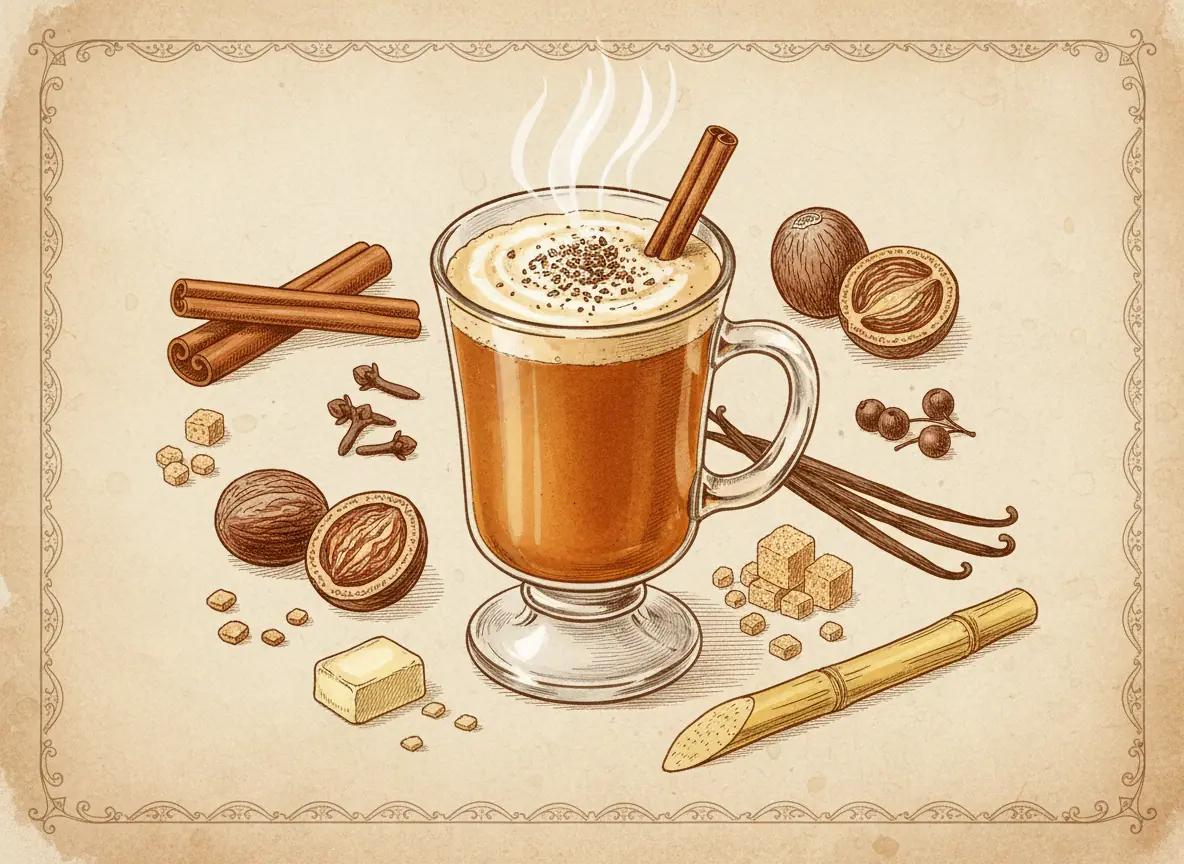
Garnish: Cinnamon stick for aroma and stirring
Ingredients
50ml
At our working 40% ABV, and the only alcohol in the mug. Its caramel and vanilla are the toffee half of the name, so it goes in cold and is warmed by the juice.
15ml
Alcohol-free. Fifteen millilitres links bourbon and apple; more tips the drink into dessert.
150ml, warmed
Pressed, not from concentrate, and alcohol-free. Warmed alone until it steams, never boiled. An alcoholic British cider can replace it, which adds about 0.8 units.
Instructions
Warm the cloudy apple juice in a pan until it steams. Do not let it boil.
Pour the bourbon and caramel syrup into a heatproof mug.
Add the hot apple juice and stir.
Add a cinnamon stick to stir with, and serve.
Our version
A house recipe written for Bonfire Night: bourbon and caramel syrup under warm cloudy apple juice. There is no older recipe behind it.
Source: our own specification. Last checked 10 October 2026.
Expert Tip
Heat the juice and nothing else. Warm it in a pan until it steams and pour it over the bourbon and caramel in the mug. Bourbon heated in the pan loses its aroma, and anything brought to the boil tastes stewed. Use cloudy pressed juice. It has the body and the sharpness of the fruit; clear juice from concentrate makes a thin, sugary mug. Outdoors, serve it warm rather than scalding, since a mug carried through a crowd in the dark should be cool enough to sip at once. Make the children’s mugs from the same pan with the bourbon left out.
Behind the Hot Toffee Apple
Flavour Profile
A Recipe Written for Bonfire Night
The Hot Toffee Apple is a house recipe with no older drink behind it. It takes its name from the toffee apples that the British Council lists among traditional Bonfire Night foods, and was built backwards from that flavour: bourbon for the dark toffee, caramel to make the link, warm apple for the fruit.
It has to work outdoors, in the dark, in a gloved hand. That is why it lives in a mug, takes minutes to make, and is stirred with the cinnamon stick it is garnished with.
Why Bourbon
27 CFR 5.143 has bourbon stored in charred new oak barrels, which in our view gives it its vanilla and caramel, so the toffee note is in the spirit before the syrup goes in. The caramel syrup joins spirit and fruit, and the juice’s acidity keeps the sweetness in check.
A softer, wheated bourbon makes a rounder mug; a high-rye bourbon adds pepper. Either works at 50ml.
Juice or Cider
Dictionary.com says that in the United States apple cider is typically made from unfiltered pressed juice, and that is the base here: pressed, unfiltered and alcohol-free. Juice from concentrate is thinner and sweeter, and the drink loses its fruit.
In Britain cider is fermented and alcoholic. A dry cider at about 5% ABV makes a sharper, stronger mug, about 2.8 units in all. Warm it gently; short of the boil, most of its alcohol stays in the mug.
Three Hot Mugs Compared
The Hot Toffee Apple beside two other hot drinks; all four rows are our recipes and the units are our calculation
Hot Toffee Apple
- Spirit
- 50ml bourbon
- Hot base
- 150ml cloudy apple juice
- Sweetener
- 15ml caramel syrup
- UK units
- About 2.0
Hot Toffee Apple with cider
- Spirit
- 50ml bourbon
- Hot base
- 150ml dry cider at 5% ABV
- Sweetener
- 15ml caramel syrup
- UK units
- About 2.8
Hot Toddy
- Spirit
- 60ml Scotch
- Hot base
- 120ml water just off the boil
- Sweetener
- 15ml honey syrup
- UK units
- About 2.4
Hot Buttered Rum
- Spirit
- 60ml dark rum
- Hot base
- 150ml hot water
- Sweetener
- Butter, brown sugar and spice batter
- UK units
- About 2.4
| Drink | Spirit | Hot base | Sweetener | UK units |
|---|---|---|---|---|
| Hot Toffee Apple | 50ml bourbon | 150ml cloudy apple juice | 15ml caramel syrup | About 2.0 |
| Hot Toffee Apple with cider | 50ml bourbon | 150ml dry cider at 5% ABV | 15ml caramel syrup | About 2.8 |
| Hot Toddy | 60ml Scotch | 120ml water just off the boil | 15ml honey syrup | About 2.4 |
| Hot Buttered Rum | 60ml dark rum | 150ml hot water | Butter, brown sugar and spice batter | About 2.4 |
Batches and Flasks
Warm all the juice in one pan, measure the bourbon and caramel into each mug, and pour the juice over as you serve, so no spirit ever sits on the heat.
For a flask, fill it with boiling water for five minutes, empty it, then fill it to the top, since a full flask holds its heat longer. Keep an alcohol-free flask for the children, and label it.
For a hot whisky drink sharpened with lemon, make a Hot Toddy; for dark rum under a butter and sugar batter, a Hot Buttered Rum; for spiced wine for a crowd, Mulled Wine.
Make it at home
The Spirit
Whiskey (Bourbon)Under the US standard 27 CFR 5.143, bourbon is an American whiskey whose mash is at least 51% corn, matured in fresh charred oak barrels and bottled at 40% ABV or higher, the figure our recipes use. The fresh charred wood gives it its vanilla, caramel and colour, and the corn gives a rounder, sweeter spirit than rye. It is the base of 26 of our recipes, more than any other whiskey.
More to explore
Frequently Asked Questions
What is in a Hot Toffee Apple?
Do I use apple juice or cider?
Can I make it alcohol-free?
Why not heat everything in the pan?
Can I make it with spiced rum?
Does it batch for a crowd?
How much alcohol is in a Hot Toffee Apple?
Sources.
Correct as of 19 October 2026.
- British Council (LearnEnglish Teens), “Bonfire Night” (the British Council’s own page: toffee apples, apples on a stick covered in sweet toffee, among traditional Bonfire Night foods).
- Dictionary.com, “Apple Cider vs. Apple Juice: What’s The Difference?” (in the United States apple cider is typically made from unfiltered pressed juice; the fermented kind is hard cider).
- Cornell Law School, Legal Information Institute, “27 CFR 5.143 Standards of identity for whisky” (primary source: bourbon whisky, fermented mash of not less than 51% corn, stored in charred new oak barrels).
You Might Also Like
Hot Buttered Rum
A Hot Buttered Rum is 60ml of dark rum poured over about 50g of spiced butter batter in a warmed mug, topped with 150ml of water just off the boil and stirred until the butter melts through, then finished with grated nutmeg and a cinnamon stick. About 2.4 UK units. The batter is butter, dark brown sugar, cinnamon, allspice, a pinch of clove and vanilla, so the drink contains milk. The Oxford Companion calls hot buttered rum a colonial-era drink once favoured for being medicinal; we have found no early recipe from then. Jerry Thomas’s 1862 bar guide prints a hot spiced rum of sugar, Jamaica rum, allspice and cloves, butter and hot water, and the Companion says a batter of butter, sugar and spices cures the slick that loose butter leaves. The batter is the method. Butter dropped into a mug alone floats in a slick; beaten first with sugar and spice, it melts evenly into the rum and water.
Hot Toddy
A Hot Toddy is 60ml Scotch, 15ml honey syrup, 15ml fresh lemon juice and 120ml water just off the boil. Stir the honey syrup, lemon and water in a warmed mug, add the whisky last, and finish with a clove-studded lemon wheel and a cinnamon stick. About 2.4 UK units. The Oxford Companion says the toddy’s origin is murky and does not appear to be linked to the South Asian palm wine of the same name, that it first appears in print in England in 1741, and that Scotland made the drink an institution, particularly the hot version. In our view, made with Scotch it is the version most tied to Scotland. Restraint is the method. Water just off the boil keeps the whisky’s aroma in the mug, and honey syrup mixes where neat honey sinks.
Where this one sits
Recipe by Jerry Can Spirits · Updated 19 October 2026