Spiced Rum Punch
Spiced Rum Punch serves about ten: 500ml of spiced rum, 750ml of cloudy apple juice, 500ml of orange juice, 100ml of fresh lemon juice and 100ml of honey, warmed with three cinnamon sticks, two star anise and four cloves until the honey dissolves, held hot but never boiled and served in heatproof mugs, just under 200ml each. That is about 2.0 UK units a mug and about 20 in the pot. It is a hot punch, and it also works cold: the same mix chilled overnight with the spices, which come out before it goes over ice. Either way, the strength does not change. The recipe is ours, written for Christmas. The spiced rum brings vanilla, cinnamon and clove to the pot before any whole spice goes in, the honey rounds it, and the lemon keeps 100ml of honey from turning the punch syrupy.
Glassware: Heatproof Mug
Garnish: Orange wheel floated on the bowl and Cinnamon stick standing in the bowl and in the mugs
Ingredients
500ml
A spiced rum at 40% ABV, the base the recipe was written for, with vanilla and clove that meet the honey. We pour Expedition Spiced Rum. Dark or white rum makes a plainer punch that needs more spice in the pot.
750ml
Cloudy pressed apple juice, alcohol-free. It is the body of the punch, and cloudy carries more apple through the heat than clear.
500ml
Freshly squeezed, or a not-from-concentrate carton. It brightens the apple; juice from concentrate tastes cooked once it is heated again.
100ml
Squeezed the same day, two or three lemons. It balances the honey, and it is the first thing to fade as the pot sits.
100ml
Runny honey, dissolved in the warm juices before the rum goes in. It rounds the spice where sugar would only sweeten.
Instructions
Pour the apple juice, orange juice, lemon juice and honey into a large pan or slow cooker and warm gently, stirring until the honey dissolves.
Add the spiced rum, cinnamon sticks, star anise and cloves.
Bring it up until it steams, never to a boil, and hold it there on the lowest heat.
Taste and adjust with a little more lemon or honey.
Ladle into warmed heatproof mugs and garnish with orange wheels and cinnamon sticks.
For the cold version, warm the juices only enough to dissolve the honey, let them cool, add the rum and spices, chill overnight, lift out the spices and serve over ice.
Our version
Our own Christmas recipe, not drawn from a published one: 500ml of spiced rum to 750ml of cloudy apple juice and 500ml of orange juice, sweetened with honey and sharpened with lemon, for about ten mugs served hot, or cold after a night in the fridge.
Source: our own specification. Last checked 10 October 2026.
Expert Tip
Dissolve the honey before the rum goes in. Stir it into the juices while the pan is only warm and it melts evenly; dropped into a hot pot in one lump, it sinks and sits on the bottom unless you keep stirring. Go lightly on the cloves. Four are enough for the pot. Clove soon dominates, and a handful pushes the punch towards medicine. Taste after an hour. The lemon fades first as the pot sits, so the usual correction late in the evening is a squeeze more lemon, not more honey.
Behind the Spiced Rum Punch
Flavour Profile
A Christmas Pot
Spiced Rum Punch was made for the weeks of December when one pot has to serve a room. Mulled wine usually takes that job. A spiced rum base moves the drink from red wine towards apple, honey and baking spice, and it holds up cold as well as hot.
Built on Spiced Rum
The recipe calls for a spiced rum because the spirit already carries vanilla, cinnamon and clove. The whole spices in the pot echo it rather than supplying everything, which is why three cinnamon sticks and four cloves are enough for ten mugs.
A dark rum in its place gives a heavier, plainer pot, and white rum disappears under the juice. Either works with more spice, but it makes a different drink.
Hot, Never Boiled
Warm the juices first and dissolve the honey in them, then add the rum and spices and bring it up until it steams. Hold it there. A boil cooks the orange and lemon and dulls both the honey and the spice.
We have not measured how much alcohol gentle heat removes, so we count the whole pot at about 20 units for the evening.
The Batch Maths
The pot comes to just under two litres, about ten mugs. Each carries about 50ml of rum, about 2.0 UK units; the pot, about 20.
Spiced Rum Punch for ten, in each mug and for twenty; our recipe and our calculation
Spiced rum, 40% ABV
- Pot for ten
- 500ml
- In each mug
- 50ml
- Pot for twenty
- 1 litre
Cloudy apple juice
- Pot for ten
- 750ml
- In each mug
- 75ml
- Pot for twenty
- 1.5 litres
Orange juice
- Pot for ten
- 500ml
- In each mug
- 50ml
- Pot for twenty
- 1 litre
Fresh lemon juice
- Pot for ten
- 100ml
- In each mug
- 10ml
- Pot for twenty
- 200ml
Honey
- Pot for ten
- 100ml
- In each mug
- 10ml
- Pot for twenty
- 200ml
Cinnamon sticks, star anise, cloves
- Pot for ten
- 3, 2 and 4
- In each mug
- In the pot
- Pot for twenty
- 5, 3 and 6
UK units
- Pot for ten
- About 20
- In each mug
- About 2.0
- Pot for twenty
- About 40
| Ingredient | Pot for ten | In each mug | Pot for twenty |
|---|---|---|---|
| Spiced rum, 40% ABV | 500ml | 50ml | 1 litre |
| Cloudy apple juice | 750ml | 75ml | 1.5 litres |
| Orange juice | 500ml | 50ml | 1 litre |
| Fresh lemon juice | 100ml | 10ml | 200ml |
| Honey | 100ml | 10ml | 200ml |
| Cinnamon sticks, star anise, cloves | 3, 2 and 4 | In the pot | 5, 3 and 6 |
| UK units | About 20 | About 2.0 | About 40 |
The Cold Version
Warm the juices only enough to dissolve the honey, let them cool, then add the rum and spices and chill overnight. We steep the fresh juice with the rum and spices, refrigerated, for up to 24 hours; on its own we use it the day it is squeezed. Lift the spices out in the morning, before the cloves take over, and serve over ice in tumblers with an orange wheel. Cold, it drinks brighter, with the lemon and orange to the front.
How to Serve It
Hot, from the pot into heatproof mugs rinsed with hot water, with an orange wheel and a cinnamon stick. Keep the pot where nobody will knock it, with the cable out of reach.
For bourbon, maple and lemon in a pot for fifteen, Fireside Punch; for red wine and brandy, Mulled Wine.
Make it at home
The Spirit
Spiced RumRum infused with spices and botanicals after distillation, which puts the whole category downstream of one choice: whole botanicals steeped in the spirit, or flavourings added to it. The label is usually the only way to tell which.
Need the Rum?
Pick up a bottle of Expedition Spiced Rum to make this cocktail.
More to explore
Frequently Asked Questions
Is Spiced Rum Punch served hot or cold?
What is in Spiced Rum Punch?
Which rum should I use?
Can I boil it to save time?
Can it be made the day before?
How do I make it for twenty?
Is there an alcohol-free version?
How strong is Spiced Rum Punch?
You Might Also Like
Fireside Punch
Fireside Punch serves about fifteen: 750ml of bourbon, 500ml of cloudy apple juice, 250ml of fresh lemon juice, 250ml of maple syrup and 500ml of water, warmed in a slow cooker with four cinnamon sticks, three star anise and an orange cut into wheels, kept at a steam and never boiled, then served by the ladle in cups of about 150ml. Each cup is about 2.0 UK units, and the pot about 30 in all. The apple is juice, not alcoholic cider. The recipe uses cider in the American sense, fresh pressed apple, which Dictionary.com defines as the juice pressed from apples, as against hard cider, the fermented kind; the cloudy apple juice in the pot is that juice. Dry cider in its place makes a stronger pot, at about 2.2 units a cup. We wrote it for Bonfire Night. The water takes a full bottle of bourbon down to a strength that lasts an evening, and the lemon keeps the maple from sitting heavy as the pot holds.
Mulled Wine
Mulled wine for six to eight is 750ml of red wine, 150ml of brandy, 100ml of fresh orange juice and 75ml of honey, warmed in a large pan with two cinnamon sticks, six cloves, two star anise and a few wide strips of citrus peel. It is held at a bare steam for fifteen to twenty minutes and never boiled. About 2.0 to 2.6 UK units a cup. Gentle heat lifts the spice into the room and takes the edge off the wine. A boil drives off alcohol and pulls bitter, stewed flavours from the clove and cinnamon, so the surface should shiver and never bubble. The brandy keeps the drink from tasting thin once the heat has softened the wine. Spiced, sweetened wine is very old. The Roman cookery collection that carries the name of Apicius opens with a spiced wine, the conditum paradoxum, and the Oxford Companion says mulled-style drinks go back to early medieval times under names such as hippocras. This is a modern British pan: brandy, honey and fresh orange.
The Expedition Punch
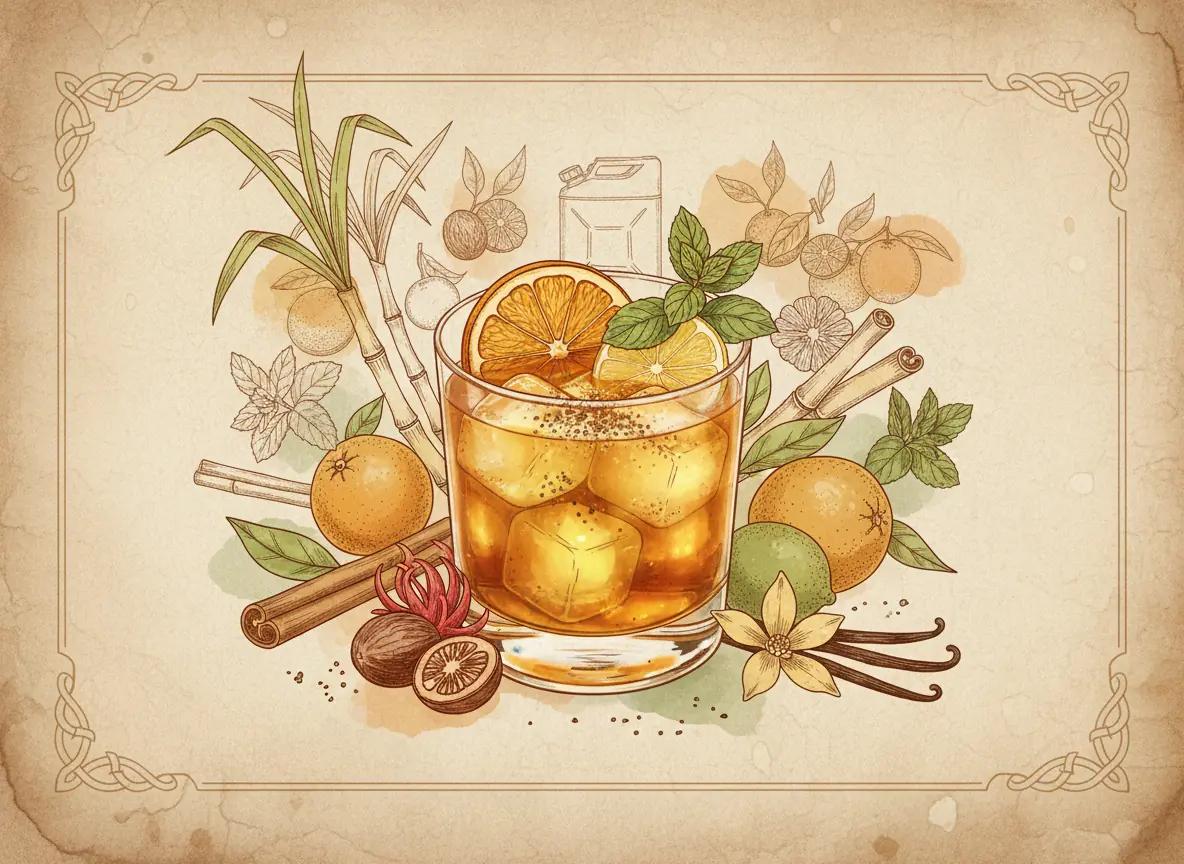
The Expedition Punch is 60ml of Expedition Spiced Rum, 20ml of fresh lemon juice, 40ml of sugar syrup and 80ml of water or cooled weak black tea, stirred gently over large cubed ice in a double rocks glass and finished with orange and lemon wheels, a mint sprig and freshly grated nutmeg. About 2.4 UK units in 200ml of drink. It follows the old punch formula of five parts: spirit, citrus, sugar, water and spice. Punch is older than the cocktail; the Oxford Companion dates the first mention of punch by name to a 1632 letter in the papers of the English East India Company. Here the rum carries much of the spice already, and the nutmeg on top completes the fifth part. The choice that changes the drink is water or tea. Water keeps it clean and lets the rum lead. Weak black tea, brewed at half strength and cooled, adds tannin and a drier edge beneath the sugar. Either way it scales from one cup to a bowl for ten without adjustment.
Where this one sits
Recipe by Jerry Can Spirits · Updated 19 October 2026