Spritz al Bitter
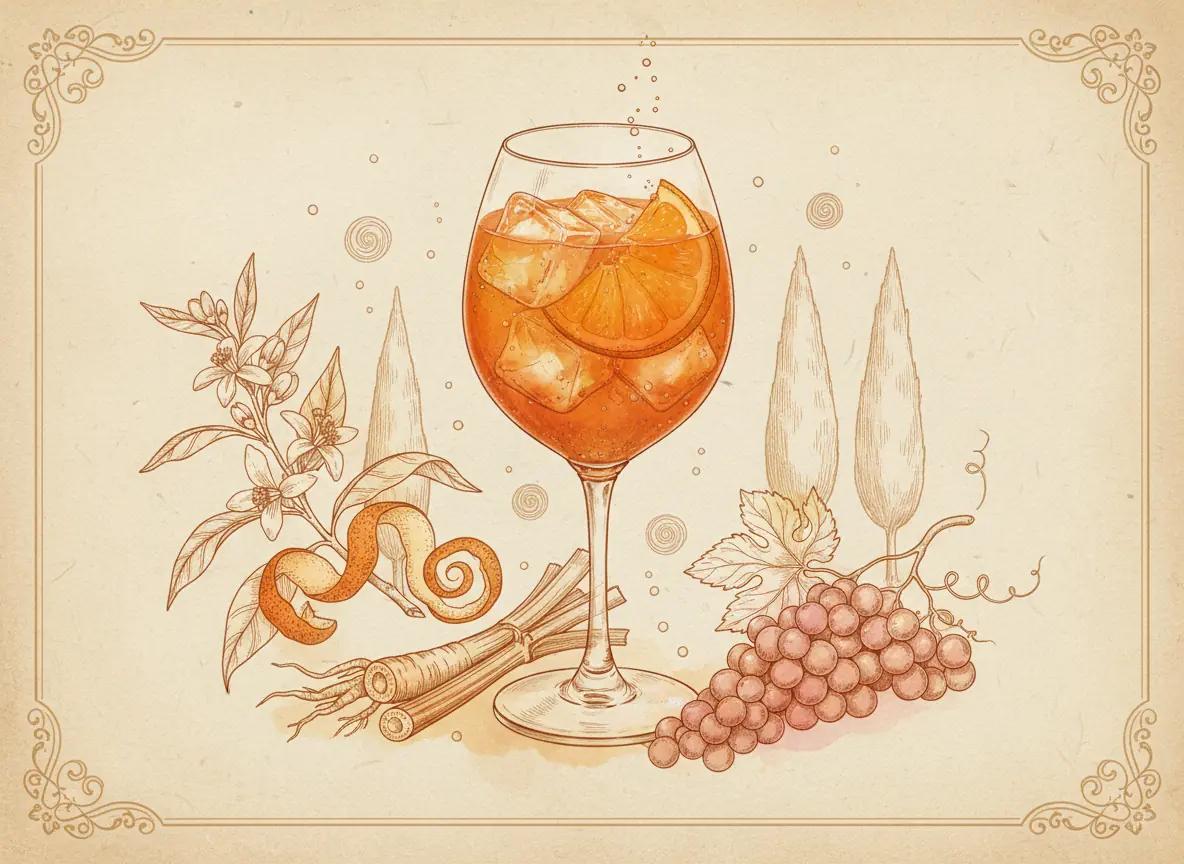
A Spritz al Bitter is 90ml of prosecco, 60ml of Campari and 30ml of soda water, poured over plenty of ice in a large wine glass and finished with an orange slice. Three parts wine, two of bitter, one of soda. About 2.5 UK units. Difford’s Guide gives Spritz al Bitter as another name for the Venetian spritz, and the Oxford Companion says the Spritz Veneziano is a spritz with some kind of bitter added, Select and Campari being the usual choices. The same glass can be built on Aperol, gentler and sweeter at 11% ABV by its maker’s FAQ, or on Select, which its own site dates to Venice in 1920 and pairs with prosecco, soda and a green olive. The ratio holds whichever bottle you pick. The name is German: spritzen means to splash or spray, and the Oxford Companion says the drink began in the 1840s as white wine and seltzer, with Austro-Hungarian soldiers in the north-east of Italy adding sparkling water to the stronger local wines. The Companion says Italians added vermouths, bitters and liqueurs early in the twentieth century, and that the Spritz Veneziano had spread across northern Italy by the 1970s.
Glassware: Copa Glass
Garnish: Orange slice or the Venetian olive
Ingredients
60ml
At 25% ABV on LWC’s UK listing: orange, herbs and wood on Campari’s product page, with a dry, lasting finish. Aperol at 11% makes a gentler drink; Difford’s Guide puts Select between Aperol and Campari.
90ml
Brut, at about 11% ABV, and cold from the fridge. A dry wine leaves the bitterness clear; extra dry prosecco is sweeter than its name suggests and softens the Campari.
30ml
Chilled, from a freshly opened bottle. Thirty millilitres lengthens the drink and takes the edge off the bitterness. The Oxford Companion gives the German Spritz as “splash” or “squirt”: the splash the drink is named for.
Instructions
Fill a large wine glass with cubed ice.
Pour in the Campari.
Add the prosecco, then the soda water.
Stir once, gently.
Garnish with an orange slice, or a green olive if you have used Select.
Our version
A spritz has no single recipe; bars change the bitter and the measures. Ours keeps the Venetian ratio of three parts prosecco, two of bitter and one of soda, measured as 90ml, 60ml and 30ml, and names Campari as the bitter.
Source: our own specification. Last checked 10 October 2026.
Expert Tip
Pack the glass with ice. A spritz is sipped slowly, and three cubes in a big glass melt within minutes, watering the drink and flattening the bubbles. Filled to the brim, it stays cold to the last mouthful. Pour the Campari first, then the prosecco, then the soda, and stir once. The wine and soda carry the bitter through the glass as they land; more stirring only knocks out the fizz. If Campari is too bitter for you, change the bottle rather than the measure. Cut to 40ml it leaves a thin, winey drink; Aperol at the full 60ml gives a softer spritz with the same shape.
Behind the Spritz al Bitter
Flavour Profile
Where the Spritz Comes From
The story most often told, which the Oxford Companion gives, is set in the nineteenth century: Austro-Hungarian soldiers based in the north-east of Italy, accustomed to beer, began adding sparkling water to the stronger local wines, and the German Spritz, “splash”, gave the habit its name.
Whether it began exactly so is not recorded, but the order of events is clear enough. The spritz started as diluted wine. The Companion says Italians began adding vermouths, bitters and liqueurs early in the twentieth century, that the Spritz Veneziano, made with Select or Campari, had reached everywhere in northern Italy by the 1970s, and that Aperol, developed in Padua in 1919, entered the Venetian spritz near the end of the century. Select’s own site dates the brand to Venice in 1920.
Three Bitters, One Ratio
Campari, at 25% ABV on LWC’s UK listing, gives the darkest, driest and most bitter spritz. Aperol, at 11% by its maker’s FAQ, is sweeter and orange-led, and Beverage Business, reporting Drinks International’s January 2019 list, has the Aperol Spritz at number nine among the world’s best-selling classic cocktails. Difford’s Guide puts Select between them, and says Aperol, Campari and Select feature heavily in every Venetian bar.
They make three different drinks on one structure, which is why the ratio does not move when the bottle does.
Why Three, Two, One Works
Ninety millilitres of prosecco carry the drink and keep it light. Sixty of bitter give it flavour, colour and enough sugar to stand up to a brut wine. Thirty of soda lengthen it and soften the bitterness without watering the wine down to nothing.
Cutting the Campari to soften the drink upsets that balance: the wine takes over and the glass tastes thin. A milder bitter at the full measure keeps the shape.
The Spritz Three Ways
Three spritzes on one ratio; the units are our calculation at Campari’s 25% on LWC’s listing, Aperol’s 11% by its maker’s FAQ, Select’s 17.5% on its own site and prosecco at our working figure of 11%
Spritz al Bitter
- Bitter
- 60ml Campari at 25% ABV
- Prosecco
- 90ml
- Soda
- 30ml
- Garnish
- Orange slice
- UK units
- About 2.5
Aperol Spritz
- Bitter
- 60ml Aperol at 11% ABV
- Prosecco
- 90ml
- Soda
- 30ml
- Garnish
- Orange slice
- UK units
- About 1.7
Venetian spritz with Select
- Bitter
- 50ml Select at 17.5% ABV
- Prosecco
- 75ml
- Soda
- 25ml
- Garnish
- Green olive
- UK units
- About 1.7
| Drink | Bitter | Prosecco | Soda | Garnish | UK units |
|---|---|---|---|---|---|
| Spritz al Bitter | 60ml Campari at 25% ABV | 90ml | 30ml | Orange slice | About 2.5 |
| Aperol Spritz | 60ml Aperol at 11% ABV | 90ml | 30ml | Orange slice | About 1.7 |
| Venetian spritz with Select | 50ml Select at 17.5% ABV | 75ml | 25ml | Green olive | About 1.7 |
Ice and the Glass
A large wine glass full of ice is part of the recipe. The spritz is a low-strength drink sipped over half an hour, and it is built on the assumption that it stays cold for that long.
With too little ice the cubes melt fast, the drink warms, the bubbles go and the last third tastes flat and sweet. A full glass of ice melts more slowly and holds the ratio to the end.
How to Serve It
Before dinner, in a large wine glass full of ice, with an orange slice.
For the gentler Aperol version, make an Aperol Spritz; for Campari with sweet vermouth and soda in place of wine, an Americano.
Make it at home
The Spirit
CampariCampari is a red Italian bitter liqueur, 25% ABV in the UK on a wholesaler’s listing, made in the style Difford’s Guide describes: an infusion of herbs and fruit in alcohol and water. Campari dates it to 1860 and Gaspare Campari; the Oxford Companion has Gaspare setting up in Novara in 1856 and moving to Milan in 1862. Its bitterness anchors the Negroni and the Americano, and lengthened with soda over ice it needs nothing else.
More to explore
Frequently Asked Questions
What is a Spritz al Bitter?
Which bitter should I choose?
How does it differ from an Aperol Spritz?
Why does the soda matter?
Why an olive with Select?
Can I make a jug of it?
How strong is a Spritz al Bitter?
Sources.
Checked between 18 October and 19 October 2026.
- The Oxford Companion to Spirits and Cocktails (Leo Leuci), “Aperol Spritz” (secondary source: the Spritzer of white wine and seltzer from the 1840s; Austro-Hungarian soldiers; the Spritz Veneziano with Select or Campari, spread across northern Italy by the 1970s; Aperol developed in Padua in 1919).
- Difford’s Guide, “Venetian Spritz (Spritz Al Bitter)” (secondary source: Spritz Al Bitter a.k.a. Spritz Veneziano).
- Difford’s Guide, “What to drink in Venice” (secondary source: Aperol on the sweet side, Campari much drier, Select between).
- Select, “Select Aperitivo” (producer’s site: born in Venice in 1920; prosecco, soda and a green olive; 17.5% alcohol by volume on the US label).
- Aperol, “Frequently Asked Questions” (producer’s FAQ: Aperol has an alcohol content of 11%).
- LWC, “Campari 70cl” (UK wholesaler listing: Alcohol By Volume 25%).
- Campari, “Campari Bitter” (producer’s product page: herbal, orange and floral notes; orange, herbs and wood on the palate).
- Beverage Business, reporting Drinks International, “Top 10 best selling cocktails” (trade press: Drinks International’s January 2019 list of the world’s best-selling classic cocktails, bartenders at 127 bars in 38 countries; Aperol Spritz at number nine).
You Might Also Like
Aperol Spritz
An Aperol Spritz is three parts prosecco, two parts Aperol and one part soda: 90ml prosecco, 60ml Aperol and 30ml soda water, poured in that order into a large wine glass packed with ice, with an orange slice to finish. That is the International Bartenders Association’s Spritz, with its splash of soda measured. Aperol is an Italian aperitivo at 11% ABV by its maker’s FAQ, with zesty orange and herbal notes on its product page; Difford’s Guide, a secondary source, names bitter orange, gentian, cinchona bark and Chinese rhubarb among its ingredients. Aperol says Luigi and Silvio Barbieri created it in 1919, and Difford’s Guide places the company in Padua. The spritz habit in the Veneto is older; VinePair traces it to the Veneto under Austrian rule, when the Austrians added a splash of water, a spritz, to the local wine. Pour the prosecco first and the Aperol mixes as it goes in. A glass holds about 1.7 UK units.
Americano
An Americano is 30ml Campari and 30ml sweet vermouth built over ice in a highball, topped with 75ml of cold soda and stirred once, with an orange slice. Bitter and sweet in equal measure, lengthened with soda: a Negroni with soda in place of the gin, at about half the alcohol. It grew out of the Milano-Torino, Campari from Milan with vermouth from Turin, which Difford’s Guide says Gaspare Campari created in the 1860s at his Caffè Campari in Milan. Difford’s adds that soda was said to have been added later, to make the Americano. The vermouth decides the result. At equal volume with the Campari it has nowhere to hide, and in our experience an opened bottle that has stood at room temperature for months will flatten the drink. Keep it in the fridge.
Milano-Torino
A Milano-Torino is 45ml of Campari and 45ml of sweet vermouth, built over large ice cubes in a rocks glass, stirred for 20 to 30 seconds and finished with an orange slice in the glass. About 1.8 UK units. There is no spirit in it: one bitter liqueur and one aromatised wine. The name gives the parts away. Campari came from Milan, vermouth from Turin. Difford’s Guide dates the pairing to the 1860s at Gaspare Campari’s Caffè Campari in Milan, and Punch says it is shortened to Mi-To; the decade is tradition rather than a dated record. Lengthen it with soda and it becomes an Americano. Add gin and it becomes a Negroni. Drink the Milano-Torino first and you taste the base both are built on: orange, herbs and wood from the Campari, as its product page has it, and vanilla, dried fruit and spice from a rich vermouth such as Carpano’s Antica Formula, as its own page has it, with nothing to stretch or strengthen either.
Where this one sits
Recipe by Jerry Can Spirits · Updated 19 October 2026