Whisky & Ginger Ale
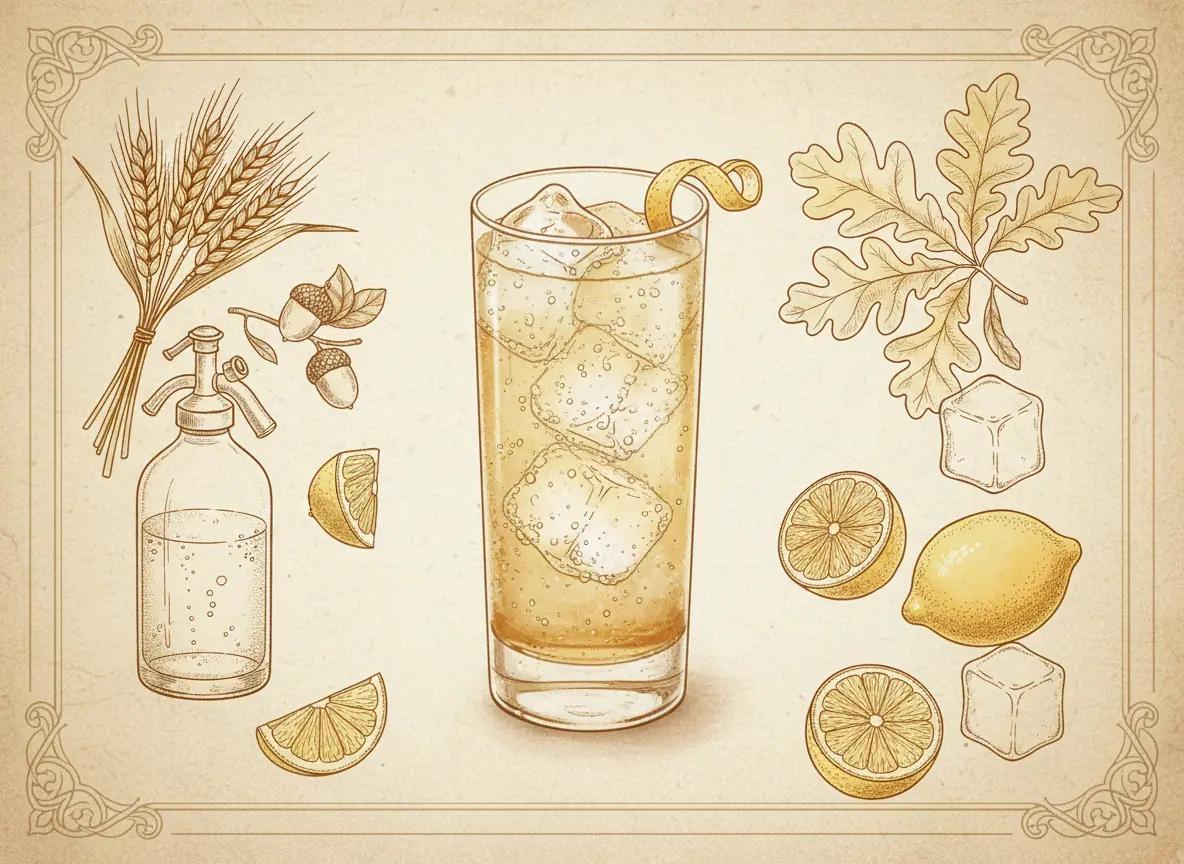
Two ingredients, one of which does most of the work. Whisky and ginger ale is the drink people reach for when they want whisky to last an hour rather than ten minutes, and the ginger ale decides whether that hour is worth having. A dry, properly gingery one sharpens the spirit and pushes the malt forward. A sweet one buries it under what tastes like flat lemonade with ambitions. The ratio here is three to one, which sounds generous to the mixer until you taste it against the two-to-one most pubs pour and notice the whisky is actually clearer at the longer measure. Orange is the garnish rather than lemon, and it is not decoration. Ginger and orange share a warm, slightly resinous note that lemon cuts straight through, so the peel oils sit with the drink instead of arguing with it. Build it in the glass, keep it cold, and do not stir it more than once.
Glassware: Highball Glass
Garnish: Orange Slice
Ingredients
150ml
The dominant flavour in the glass, so it is the decision that matters. Fever-Tree blend ginger from three origins and keep the sugar restrained, which is why the drink stays dry at this ratio. Any ginger ale that tastes sweet on its own will taste sweeter here.
50ml
A blended Scotch is the traditional choice and it suits the drink: the grain whisky gives the softness that stops the ginger from having a fight. Bourbon works and makes it rounder and sweeter. Save the single malt you actually care about — this is not the drink to lose it in.
Fill the glass
Cubed, and more than feels necessary. A full glass of ice dilutes more slowly than a half-full one, which is counterintuitive until the third mouthful of the underfilled version.
Instructions
Fill a highball glass to the top with cubed ice.
Pour in the ginger ale.
Add the whisky over the top and let it settle through.
Stir once, gently, from the bottom.
Garnish with a slice of orange.
Source: the producer's own published serve (Fever-Tree). Last checked 22 August 2026.
Expert Tip
Pour the ginger ale first, then the whisky through it. Ginger ale loses its carbonation the moment something heavier lands on top of it from a height, and a flat whisky and ginger is a genuinely miserable drink. Going in the other order lets the spirit fold down through the bubbles on its own. Fill the glass properly. A half-filled glass of ice melts faster than a full one, because there is more warm air in contact with each cube. The drink you are trying to avoid is the one that starts sharp and ends up tasting of tired water at the bottom. If the ginger ale is timid, no amount of good whisky will fix it. Buy the driest one you can find and let the spirit be the soft part.
Behind the Whisky & Ginger Ale
Flavour Profile
Where It Comes From
Whisky and ginger ale has an older and better-named ancestor: the Horse’s Neck. It began in the 1890s as a temperance drink — ginger ale, ice, and a lemon peel cut in one long spiral so it hung over the rim like a mane, which is where the name comes from. Spirit was added somewhere around 1910, and the drink kept the name.
Ginger ale earned its place as a mixer for a reason that reflects poorly on the spirits of the day. Through American Prohibition it was the mixer of choice precisely because it was assertive enough to hide what it was mixed with. The habit outlasted the need, which is the usual way with drinking habits.
The modern version drops the theatrical peel and swaps lemon for orange, and it is a better drink for it.
Why Orange, Not Lemon
Ginger carries a warm, faintly resinous character that sits close to orange peel oil on the same part of the palate. They reinforce each other. Lemon does the opposite — it is sharper and more volatile, and it cuts across the ginger rather than sitting with it.
The Horse’s Neck used lemon because it was a soft drink first and needed the lift. Once there is whisky in the glass, the drink has plenty of backbone and what it wants is width.
Three To One
Most bars pour this at two to one and the result is muddier than people expect. At three to one the whisky reads more clearly, not less, because the ginger stops competing and starts framing.
If it tastes weak at that ratio, the problem is almost always the ginger ale rather than the measure. A sweet mixer at any strength tastes like a soft drink with something in it.
More to explore
Frequently Asked Questions
Should I use ginger ale or ginger beer?
What whisky works best?
Can I make it in advance for a party?
You Might Also Like
Whiskey Highball
The Highball is one of the oldest and most debated drink formats in the canon, with origin stories placing it variously in American railroad culture, British officers’ messes, and the bars of late nineteenth century New York. The name most likely derives from the railway signal ball that indicated a clear track ahead, fitting for a drink fast to build and faster to consume. The format arrived in Japan in the early twentieth century and was adopted with a seriousness that turned a simple two-ingredient serve into a craft discipline. The Japanese Highball, whisky and soda water over ice in a tall glass, became one of the defining drinks of Japanese bar culture, and the attention given to ice temperature, glass preparation, carbonation preservation, and the ratio of whisky to soda made it the benchmark for the format. The version documented here applies those standards to a Scotch or Irish whiskey base. Two ingredients. The quality of each determines everything. A whiskey with genuine character and a well-chilled, high-carbonation soda, poured correctly over properly prepared ice, produce a drink greater than the sum of its parts; the format has nowhere to hide a characterless whiskey or a flat soda.
Moscow Mule
The Moscow Mule is the drink that taught America to drink vodka, and it was born of two business problems having lunch. In 1941 John Martin could not sell the Smirnoff brand he had recently bought, and Jack Morgan of the Cock 'n' Bull on Sunset Strip could not sell his house-made ginger beer. They solved each other over a table. The copper mug, by the best telling, came from a third party with an unsellable stock of them. Three surpluses, one immortal drink. The build is a buck at its most direct: vodka for clean strength, fiery ginger beer for everything else, lime to hold the line. Vodka's neutrality is a commercial handicap almost everywhere and the design here: nothing interferes with the ginger and lime running at full brightness. The mug turned out to be engineering as well as marketing, which nobody involved had planned and everybody has benefited from since.
Dark ’n’ Stormy
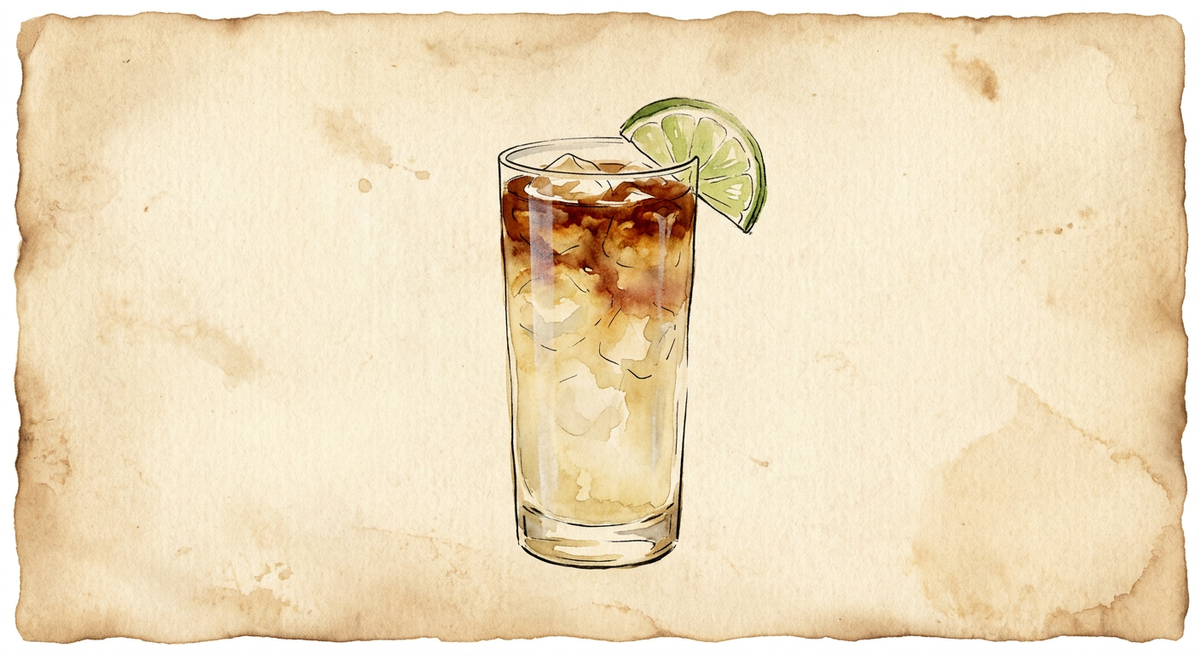
The Dark 'n' Stormy is Bermuda's national highball and one of very few cocktails with a legal department. It was born after the First World War, when ginger beer brewed at a Royal Navy officers' club on the island met Gosling's Black Seal, the local black rum, and a sailor observed that the result was the colour of a cloud only a fool or a dead man would sail under. The legal part is not decoration. Gosling's trademarked the name and has gone to court to defend it, which makes the recipe binding rather than traditional: a Dark 'n' Stormy is Gosling's Black Seal and ginger beer, and a version built on any other bottle is a dark rum and ginger beer, often excellent and differently named. The build is the whole theatre. Ginger beer first over ice, lime squeezed if the day calls for it, and the rum poured last and slowly, where its density holds it as a black weather front above the golden fizz.
Where this one sits
Recipe by Dan Freeman