Whisky & Ginger Beer
Ginger beer makes a heavier, sweeter, altogether louder drink than ginger ale does, and with Scotch it produces something that has been popular under various names for well over a century. Where ginger ale frames the whisky, ginger beer argues with it — brewed rather than flavoured, thick with fresh ginger heat, and carrying enough sugar to need the smoke and cereal weight of a blended Scotch to hold it steady. The result sits close to a mule without the lime, which is the main thing separating it from its more famous cousin. Orange rather than lime is the garnish here, and it softens the drink noticeably: the peel oil rounds off the ginger burn rather than sharpening it. This is the version to make when a whisky and ginger has felt too polite. It is not a subtle drink and it does not benefit from being treated as one.
Glassware: Highball Glass
Garnish: Orange Slice
Ingredients
150ml
The published serve specifies their Refreshingly Light version, which keeps the sugar down without losing the heat. Either works — what matters is that the ginger is brewed rather than flavoured, because a mild ginger beer leaves nothing for the Scotch to lean on.
50ml
A blend. The grain whisky softens the ginger heat and the malt gives it a cereal weight that stops the drink reading as sweet. Peated malts fight the ginger and the drink turns muddy.
Fill the glass
Cubed and to the top. Ginger beer is heavier than ginger ale and warms into something syrupy faster, so keeping the glass properly cold matters more here.
Instructions
Fill a highball glass to the top with cubed ice.
Pour in the ginger beer.
Add the Scotch over the top and let it settle through.
Stir once, gently, from the bottom.
Garnish with a slice of orange.
Source: the producer's own published serve (Fever-Tree). Last checked 22 August 2026.
Expert Tip
Use the fiercest ginger beer you can find. The difference between a brewed one and a flavoured one is not marginal in a drink this simple — a timid ginger beer with a good Scotch tastes like sweet fizzy water with whisky in it, and no adjustment to the ratio will rescue it. Add a squeeze of lime if it tastes flabby. That is the Mamie Taylor, the drink this descends from, and the acid is what its modern descendants usually lack. A quarter of a lime is enough. Blended Scotch, not single malt. The blend has grain whisky in it, which gives a softness the ginger needs to push against. Peat and ginger heat in the same glass is a fight nobody wins.
Behind the Whisky & Ginger Beer
Flavour Profile
Where It Comes From
Scotch and ginger has a proper name and a fairly well-documented origin: the Mamie Taylor. It was mixed in 1899 at a lakeside outing near Rochester, New York, reportedly for the light opera singer Mayme Taylor, who had asked for something long and cold. Scotch, ginger, and lime.
It became a genuine craze. For a few years around the turn of the century it was one of the most-ordered drinks in America, popular enough that the phrase turned up as slang and the singer herself is said to have been unimpressed at the association.
It then vanished almost completely, which is the usual fate of fad drinks. What survived is the unnamed version — Scotch and ginger, no lime — that most bars still pour.
Ginger Beer, Not Ginger Ale
Ginger ale is a flavoured carbonated soft drink. Ginger beer is brewed, historically fermented, and carries far more actual ginger. The gap between them is much wider than the shared word suggests.
In practice that means more heat, more sugar, more body and a cloudier texture. A whisky that holds its own against ginger ale can disappear underneath ginger beer, which is why the blend matters more here than it does in the lighter version.
What the Lime Was Doing
The original had lime in it and the modern version mostly does not, which is worth knowing when the drink tastes heavy. Ginger beer brings sweetness and heat but no acidity at all, and heat without acid reads as thick.
A squeeze of lime pulls the whole thing back into focus. It is not needed every time — a very dry ginger beer manages without — but it is the first thing to reach for when the drink feels like hard work.
More to explore
Frequently Asked Questions
How is this different from a Moscow Mule?
Can I use bourbon instead?
Why orange rather than lime?
You Might Also Like
Whisky & Ginger Ale
Two ingredients, one of which does most of the work. Whisky and ginger ale is the drink people reach for when they want whisky to last an hour rather than ten minutes, and the ginger ale decides whether that hour is worth having. A dry, properly gingery one sharpens the spirit and pushes the malt forward. A sweet one buries it under what tastes like flat lemonade with ambitions. The ratio here is three to one, which sounds generous to the mixer until you taste it against the two-to-one most pubs pour and notice the whisky is actually clearer at the longer measure. Orange is the garnish rather than lemon, and it is not decoration. Ginger and orange share a warm, slightly resinous note that lemon cuts straight through, so the peel oils sit with the drink instead of arguing with it. Build it in the glass, keep it cold, and do not stir it more than once.
Moscow Mule
The Moscow Mule is the drink that taught America to drink vodka, and it was born of two business problems having lunch. In 1941 John Martin could not sell the Smirnoff brand he had recently bought, and Jack Morgan of the Cock 'n' Bull on Sunset Strip could not sell his house-made ginger beer. They solved each other over a table. The copper mug, by the best telling, came from a third party with an unsellable stock of them. Three surpluses, one immortal drink. The build is a buck at its most direct: vodka for clean strength, fiery ginger beer for everything else, lime to hold the line. Vodka's neutrality is a commercial handicap almost everywhere and the design here: nothing interferes with the ginger and lime running at full brightness. The mug turned out to be engineering as well as marketing, which nobody involved had planned and everybody has benefited from since.
Dark ’n’ Stormy
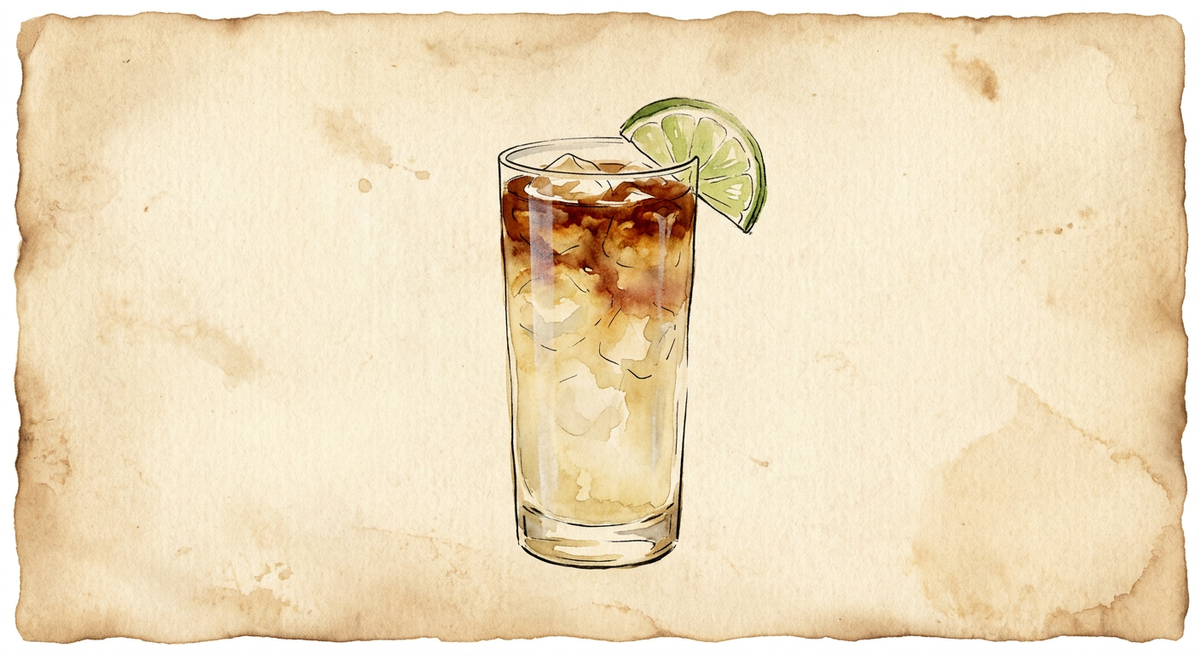
The Dark 'n' Stormy is Bermuda's national highball and one of very few cocktails with a legal department. It was born after the First World War, when ginger beer brewed at a Royal Navy officers' club on the island met Gosling's Black Seal, the local black rum, and a sailor observed that the result was the colour of a cloud only a fool or a dead man would sail under. The legal part is not decoration. Gosling's trademarked the name and has gone to court to defend it, which makes the recipe binding rather than traditional: a Dark 'n' Stormy is Gosling's Black Seal and ginger beer, and a version built on any other bottle is a dark rum and ginger beer, often excellent and differently named. The build is the whole theatre. Ginger beer first over ice, lime squeezed if the day calls for it, and the rum poured last and slowly, where its density holds it as a black weather front above the golden fizz.
Where this one sits
Recipe by Dan Freeman