Ice Tongs
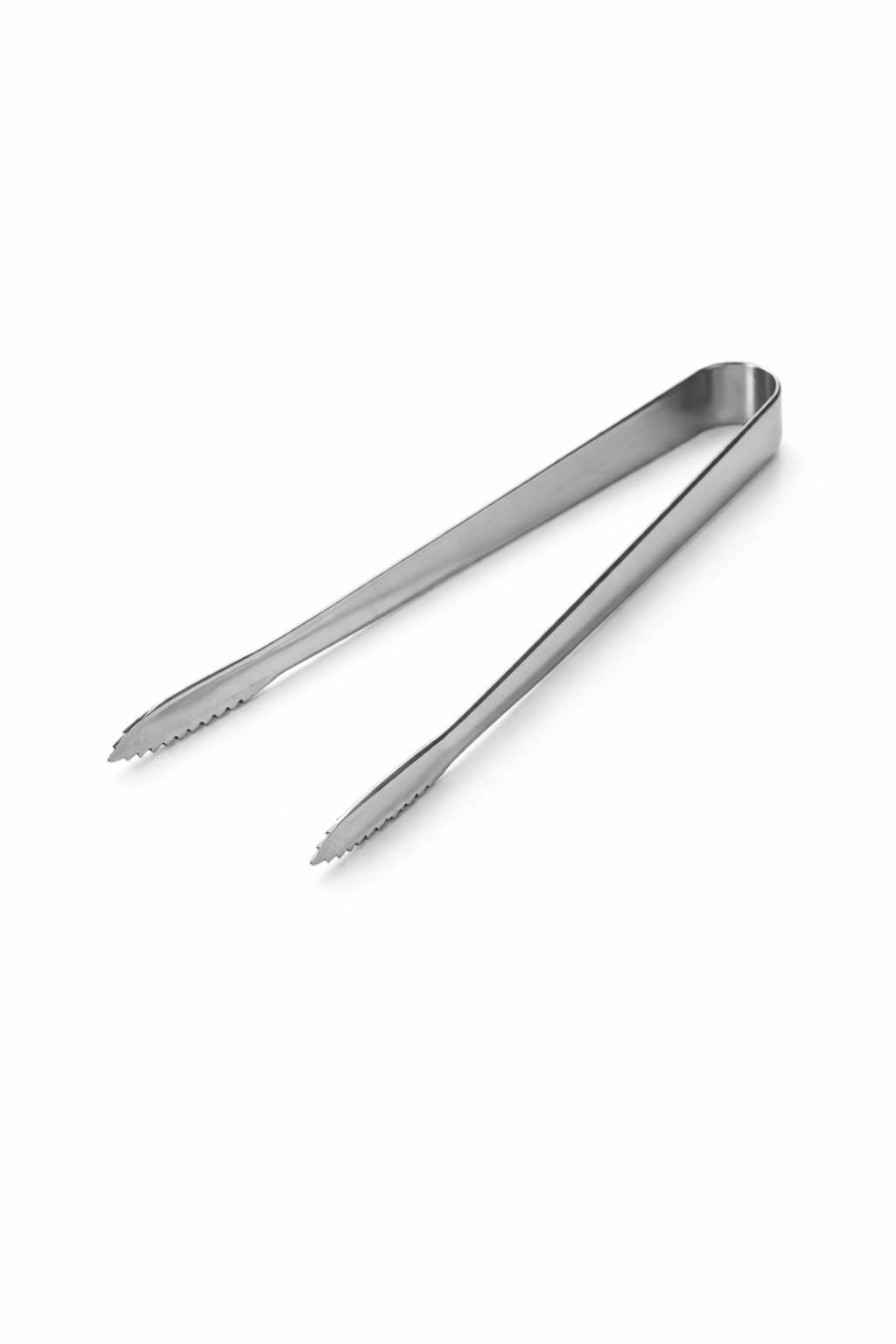
Ice tongs are sprung metal tongs, about 15 to 20cm long in the ones we use for a bucket (Urban Bar’s own small Ergo tongs are 12cm), for lifting one piece of ice at a time. They set a large cube or sphere into a rocks glass without a hand touching it and without a splash, and they keep fingers and glasses out of the ice bucket.
About the Ice Tongs
Hands Stay Out of the Ice
Ice goes into a drink that is never cooked, so whatever touches it ends up in the glass.
A hand is warm and wet. Each cube you touch starts melting where your fingers were, and the water you leave behind pools in the bucket.
A hand has also been on bottles, the bar top and a phone. Food safety guidance treats ice for drinks as a food for that reason, and tongs or a scoop keep fingers out of it.
Never Scoop With a Glass
Scooping ice with the glass you are about to fill is quick, which is why many bars ban it outright.
Glass chips in ice. A rim knocked against a frozen cube can lose a flake without a sound, the flake is invisible among the ice, and it can end up in a drink.
If a glass breaks in the bucket, all of the ice has to go, because you cannot see glass in ice.
Tongs or a Scoop
They do different jobs.
A scoop moves volume: filling a shaker, loading a highball, packing a glass with crushed ice. It is fast and holds a dozen cubes.
Tongs place a single piece: one large cube in a Penicillin or an Amaretto Sour, or in a Vieux Carré, where tipping it from a scoop would splash. They also reach into a narrow bucket without disturbing the rest.
If you buy one, buy a scoop. If you serve drinks over a single large cube, buy both.
Ways to move ice, compared
Tongs
- Good for
- One large cube or sphere, placed gently
- Problem
- Slow for volume
Scoop
- Good for
- Filling shakers and glasses quickly
- Problem
- Imprecise; can splash a built drink
Hand
- Good for
- Nothing behind a bar
- Problem
- Warms, wets and contaminates the ice
Glass
- Good for
- Nothing
- Problem
- Chips invisibly into the ice; a break loses the whole bucket
| Tool | Good for | Problem |
|---|---|---|
| Tongs | One large cube or sphere, placed gently | Slow for volume |
| Scoop | Filling shakers and glasses quickly | Imprecise; can splash a built drink |
| Hand | Nothing behind a bar | Warms, wets and contaminates the ice |
| Glass | Nothing | Chips invisibly into the ice; a break loses the whole bucket |
Choosing a Pair
Look at the tips first. Toothed or claw tips grip a wet cube; smooth flat tips slide off it. Sprung tongs, a single bow of metal that holds itself open, work in one hand.
Choose solid stainless steel rather than plated metal, which can flake with wear.
Keep them dry between uses. Damp tongs left resting in the ice freeze to it.
Using the Ice Tongs
Usage
Placing a large cube or sphere into a rocks glass for drinks such as the Penicillin, Amaretto Sour and Vieux Carré, and lifting single pieces from a bucket. Not for filling a shaker; that wants a scoop.
Pro Tip
Set the large cube in the glass before you pour or strain, and pour down the side of the glass. The cube stays put and the drink does not splash.
Professional Tips
- Grip a large cube at its corners.
- Lower the cube in; do not drop it.
- Keep them dry and out of the ice between uses.
- A scoop for volume, tongs for one piece.
Alternatives
Budget Alternative
A clean ice scoop does most of the work, and a pair of stainless kitchen tongs with toothed ends will place a large cube at home.
Premium Option
Solid stainless steel tongs with a firm spring and sharp, even teeth. The money buys a grip that holds a wet sphere without slipping.
Specifications
Material
Stainless steel
Capacity
Not applicable
Details
Sprung bow, about 15 to 20cm long in the ones we use (Urban Bar’s own small Ergo tongs 12cm), with toothed or claw tips
More to explore
Common Questions
Why use ice tongs?
Ice tongs or an ice scoop?
What tongs hold large cubes?
Are ice tongs more hygienic than hands?
How long are ice tongs?
How do you clean ice tongs?
Made with the Ice Tongs
Used In These Cocktails
Related Equipment
Updated 18 October 2026