Start here.
Angostura is Trinidad’s rum house as well as its bitters house
The House of Angostura, based at Laventille, Trinidad, sells two things under one name. Its aromatic bitters goes into cocktails by the dash. Its rum is a separate product: molasses rum, distilled in column stills and aged in bourbon casks, with no bitters in the process Angostura describes.
Angostura rum at a glance, from Angostura’s own site, Difford’s Guide and Alcademics (secondary sources)
Founded
- Angostura
- Bitters first made in 1824 in Venezuela; in Trinidad since 1875; rum from its own distillery since 1945; the Fernandes Distillery bought in 1973
Location
- Angostura
- Laventille, Port of Spain, Trinidad
Owner
- Angostura
- Angostura Limited, a subsidiary of Angostura Holdings Limited, Trinidad and Tobago
Stills
- Angostura
- Continuous column stills, distilling to between 80% and 95% ABV
Raw material
- Angostura
- Molasses; the source is not published
Casks
- Angostura
- Once-used American oak bourbon casks
Signature bottlings
- Angostura
- 1919, 1824, the 15 Year Old (launched as 1787), the 5 Year Old and the 7 Year Old
Style
- Angostura
- Light to medium column rum
| Feature | Angostura |
|---|---|
| Founded | Bitters first made in 1824 in Venezuela; in Trinidad since 1875; rum from its own distillery since 1945; the Fernandes Distillery bought in 1973 |
| Location | Laventille, Port of Spain, Trinidad |
| Owner | Angostura Limited, a subsidiary of Angostura Holdings Limited, Trinidad and Tobago |
| Stills | Continuous column stills, distilling to between 80% and 95% ABV |
| Raw material | Molasses; the source is not published |
| Casks | Once-used American oak bourbon casks |
| Signature bottlings | 1919, 1824, the 15 Year Old (launched as 1787), the 5 Year Old and the 7 Year Old |
| Style | Light to medium column rum |
The bitters came first, in Venezuela in 1824
Angostura dates its story to 1824, when Dr Johann Siegert first made the bitters. Difford’s Guide calls him a German doctor appointed Surgeon-General of a military hospital in the town of Angostura, now Ciudad Bolívar, in Venezuela, where he began experimenting with gentian root and other aromatic herbs for the settlers’ stomach complaints in 1820.
Difford’s Guide says that when Siegert died in 1870 his sons took over, and that in 1875, because of unrest in Venezuela, they moved to Trinidad; Alcademics also gives 1875.
Alcademics says Angostura bought its own distillery in 1945 and, in 1973, the neighbouring Fernandes Distillery, and Angostura’s own site says the Fernandes family sold the company to Angostura that year. Difford’s Guide describes Joseph Bento Fernandes as a master blender and the owner of Fernandes Distillery. Pusser’s own page says its 50th anniversary blend, made to the exact specification the Admiralty used when it ended the issue, is aged Trinidad and Guyana rums from five stills, three in Guyana and two in Trinidad; Black Tot Day tells how the ration ended.
Angostura distils light rum in column stills
Angostura ferments molasses and distils it continuously in column stills, to between 80% and 95% ABV. Spirit that strong keeps less of the heavier compounds than pot-still rum, so the cask does more of the shaping.
The rum ages in once-used American oak casks that held bourbon. The oldest rum in the range is 15 years old.
Trinidad rum sits at the light end of the English style
Column distillation puts Trinidad rum at the light end of the English-speaking Caribbean’s styles. The young rums carry vanilla and light oak. The age-stated bottlings add the dried fruit and toffee that time in bourbon casks gives.
The rums are named for their ages and for dates in the house’s history
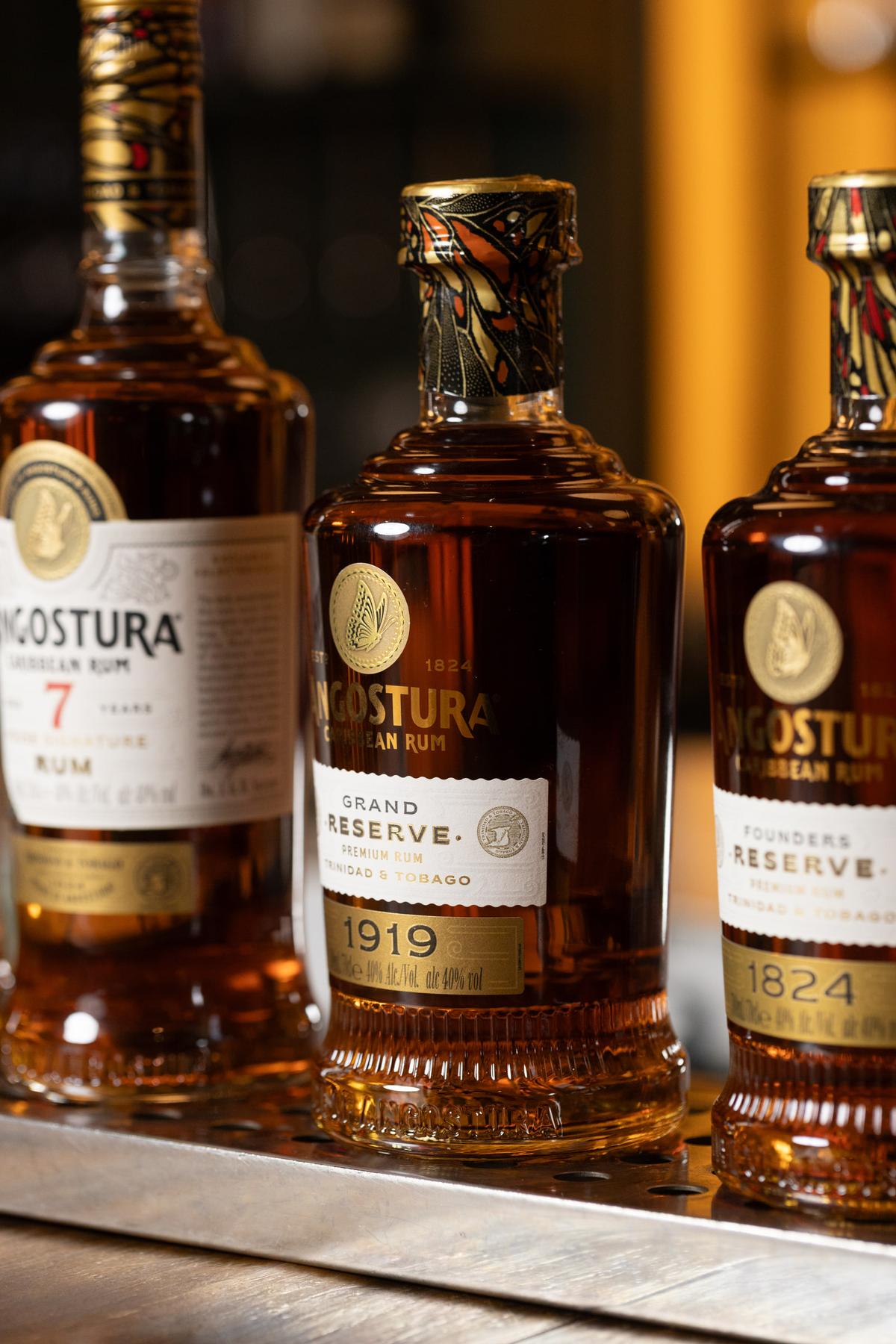
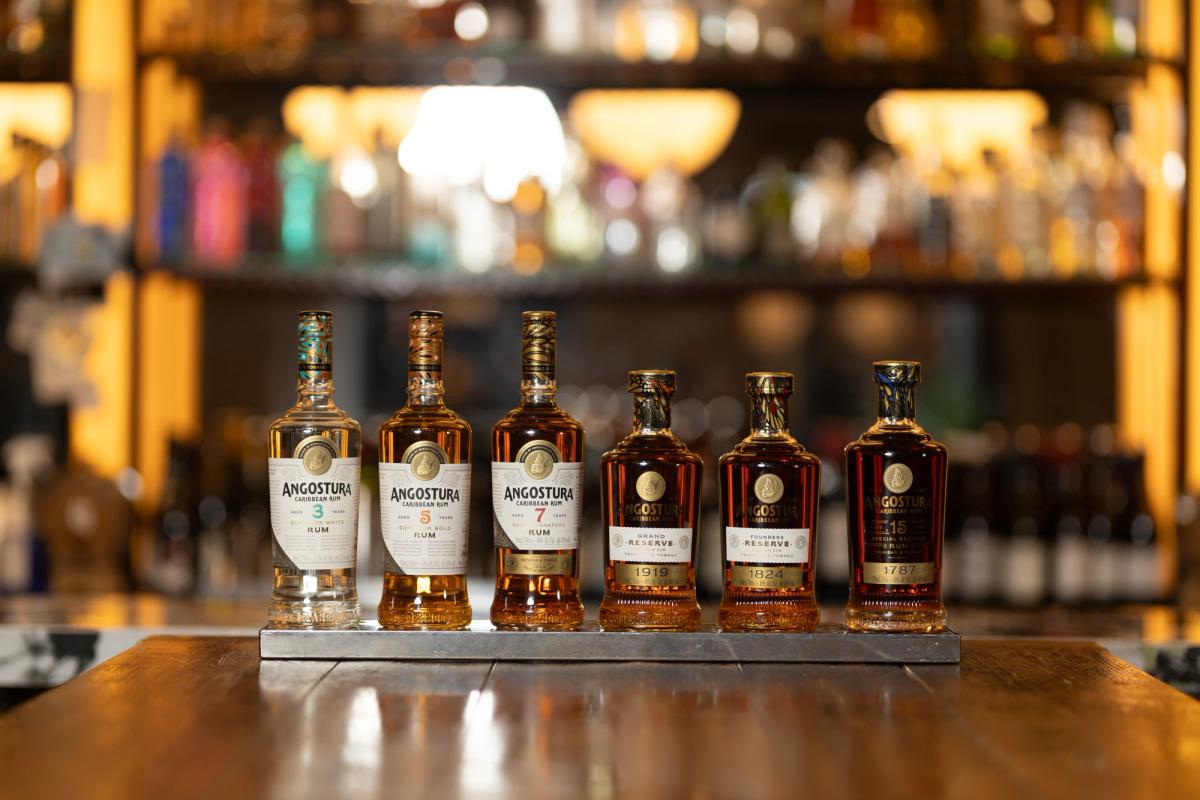
The Angostura rums named for dates and ages, from Angostura’s own site, its 2016 launch release, and Difford’s Guide (a secondary source)
Angostura 5 Year Old
- Age
- Five years
- Named for
- Its age
Angostura 7 Year Old
- Age
- Seven years
- Named for
- Its age
Angostura 1919
- Age
- No age statement
- Named for
- Rum casked in 1919 that survived a fire at the government rum bond in 1932
Angostura 1824
- Age
- 12 years
- Named for
- 1824, the year Angostura dates its story from
Angostura 1787
- Age
- 15 years; launched in 2016, now listed as the 15 Year Old
- Named for
- The first sugar mill in Trinidad, built at Lapeyrouse in 1787
| Bottling | Age | Named for |
|---|---|---|
| Angostura 5 Year Old | Five years | Its age |
| Angostura 7 Year Old | Seven years | Its age |
| Angostura 1919 | No age statement | Rum casked in 1919 that survived a fire at the government rum bond in 1932 |
| Angostura 1824 | 12 years | 1824, the year Angostura dates its story from |
| Angostura 1787 | 15 years; launched in 2016, now listed as the 15 Year Old | The first sugar mill in Trinidad, built at Lapeyrouse in 1787 |
By Difford’s Guide’s account, J.B. Fernandes, a Trinidad blender, bought casks that survived a fire at the government rum bond in 1932. The same account says some were marked 1919, the year they were filled, and that Angostura’s 1919 is a blend in the style of the one he built on them.
Angostura’s own site also lists a 3 Year Old, White Oak, Fernandes Black Label, Forres Park Puncheon and Tamboo.
The bitters seasons a drink and the rum is its base
The bitters belongs in stirred drinks by the dash: an Old Fashioned or a Manhattan. The Trinidad Sour turns that round, with 45ml of bitters as the base. The Queen’s Park Swizzle, which the Oxford Companion ties to the Queen’s Park Hotel in Trinidad, crowns Demerara rum, lime and mint with four dashes.
The rum fills the base-spirit role. A white or young Angostura rum suits a Daiquiri. The 5 Year Old and the 7 Year Old suit drinks that call for aged rum, such as the Rum Punch. They also make a variation on the Queen’s Park Swizzle, which classically takes Demerara rum. Keep 1824 and 1787 for drinking neat.
The facts come from the producer and the trade press
The stills and casks are from Angostura’s rum-making page and the range from its story page. The dates of the company are from Difford’s Guide, which gives 1875 for the move to Trinidad, and, for the rum business, from Alcademics and Angostura’s own site.
The 1919 story is from Difford’s Guide. The 1787 and its name are from Angostura’s launch announcement of September 2016. The navy blend is from Pusser’s own page, and the Queen’s Park Hotel from the Oxford Companion.
Jerry Can Spirits is an independent company: we are not affiliated with Angostura, and we do not act for or on behalf of them. This page is our own account, drawn from the sources it lists.