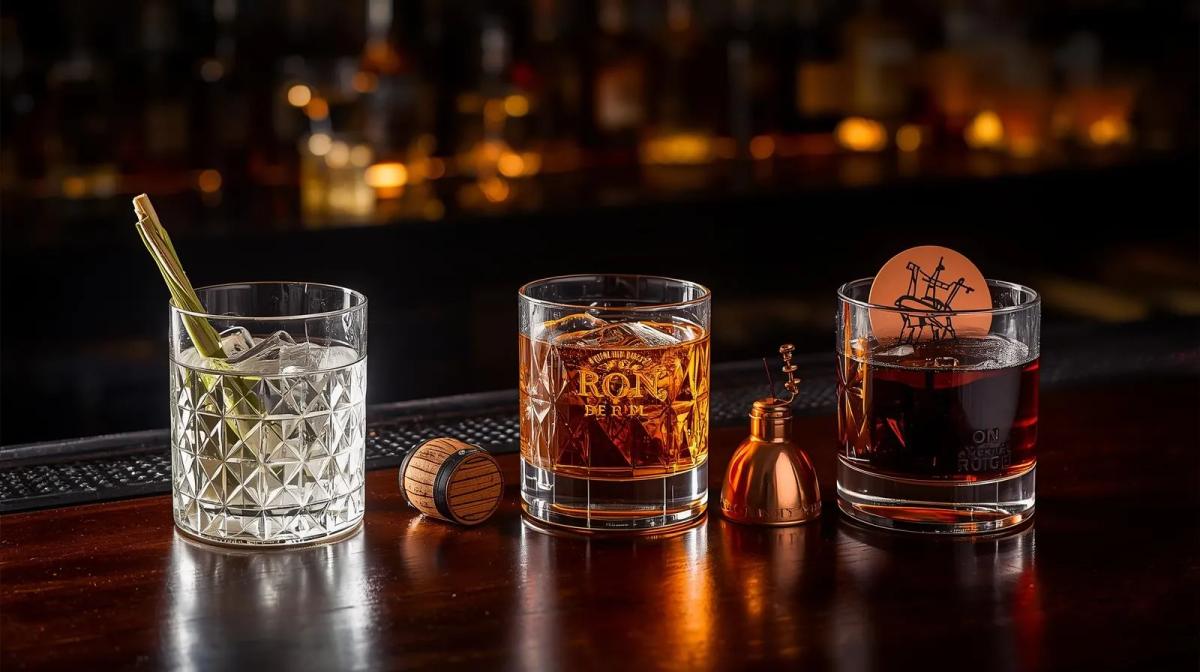
Why Rum Has Three Names
Rum's diversity traces directly to European colonialism. When Spanish, French, and English empires carved up the Caribbean and Central America from the 17th century onwards, each brought its own distilling traditions, agricultural practices, and regulatory frameworks. These different approaches, applied to the same raw material, sugarcane, produced distinct spirit traditions that persist to this day.
The names stuck because the traditions diverged. A rum from Jamaica tastes fundamentally different from a rhum from Martinique or a ron from Cuba, not just because of geography, but because of how each culture chose to grow, ferment, distil, and age their sugarcane spirit. Understanding these three traditions is the fastest way to navigate rum's enormous variety and find styles you enjoy.
A Shared Origin
All three traditions begin with sugarcane, a tall grass native to Southeast Asia that reached the Caribbean via European colonists. Sugar plantations generated vast quantities of molasses, the thick, dark by-product of sugar refining, and it was discovered that molasses could be fermented and distilled into spirit.
Barbados is generally credited with the earliest commercial rum production, dating back to the 1640s. From there, the practice spread rapidly across the Caribbean and into Central and South America. Every sugar-producing colony began making its own version of the spirit, shaped by the mother country's distilling traditions and local conditions.
By the 18th century, the three traditions had clearly diverged. English colonies favoured heavier, pot-distilled spirits. French colonies developed a preference for distilling fresh cane juice. Spanish colonies refined lighter, more elegant column-distilled expressions. These preferences became entrenched over centuries and now define how each tradition approaches rum.
More Than Language
It's tempting to dismiss the rum/rhum/ron distinction as mere translation, but the differences are substantive. The three traditions differ in raw materials (molasses vs fresh cane juice), primary distillation method (pot still vs column still), ageing philosophy (tropical vs continental, solera vs traditional), and regulatory frameworks.
Some of these differences are legally enforced. Martinique's AOC (Appellation d'Origine Contrôlée) for rhum agricole is among the strictest spirit regulations in the world, stricter than most whisky or cognac appellations. At the other end, many rum-producing nations have minimal regulation, allowing enormous variation within their borders.
The practical result: knowing whether a bottle follows the English, French, or Spanish tradition tells you more about what to expect than almost any other label information. It won't predict exactly how the spirit tastes, but it narrows the range considerably.
Rum: The English Tradition
English-style rum encompasses the broadest range of flavours in the rum world, from light and clean to extraordinarily heavy and funky. Produced historically across British Caribbean colonies (Jamaica, Barbados, Guyana, Trinidad, Antigua, Saint Lucia, and others), this tradition values character and intensity. If rhum is wine and ron is vodka, rum is whisky: diverse, opinionated, and at its best, deeply complex.
The term "English-style" refers to colonial heritage, not where the rum is made. Modern English-style rum is produced worldwide, including by a growing number of UK craft distillers who source Caribbean base rum and apply British innovation to blending and botanical infusion.
Production Characteristics
English-style rum uses molasses as its base material, the by-product of sugar refining. This is the traditional rum base and the one most people associate with the category.
Distillation varies enormously within the English tradition. Jamaica is famous for heavy, pot-distilled rum with intense ester levels that produce fruity, funky, almost overripe flavours. Trinidad produces lighter column-distilled rum better suited to mixing. Barbados blends both methods for refined, balanced expressions. Guyana's Demerara rum, produced at the legendary Diamond Distillery, ranges from light to extraordinarily rich depending on which of their historic wooden and metal stills is used.
Fermentation times tend to be longer in the English tradition, particularly in Jamaica, where some distilleries allow fermentation to run for weeks. This extended fermentation produces the high ester levels that give Jamaican rum its distinctive character: a style variously described as funky, fruity, or pungent depending on your palate and your tolerance.
The English tradition also produced navy rum: the full-bodied, high-proof blends that the Royal Navy issued as a daily ration from 1655 until 1970. That 315-year tradition left a lasting mark on British drinking culture and continues to inspire modern navy-strength expressions.
Key Regions and Styles
Jamaica produces the most distinctive English-style rum. Its pot-still-heavy approach creates spirits with high ester concentrations, sometimes exceeding 1,600 grams per hectolitre of pure alcohol, a level that would be considered a fault in most spirits but is prized in Jamaican rum for its extraordinary complexity. Lighter Jamaican rums are aromatic and fruity; heavy marks (classified by ester level) are intensely funky and primarily used for blending.
Barbados is often called the birthplace of rum. Its balanced approach, blending pot and column distillation, produces refined spirits that showcase the versatility of English-style rum. Mount Gay, established in 1703, is frequently cited as the world's oldest commercial rum distillery.
Guyana's Demerara rum comes exclusively from the Diamond Distillery on the Demerara River, which houses an extraordinary collection of heritage stills, including the last operational wooden Coffey still in the world. The range of spirits these stills produce, from light to intensely rich, makes Diamond one of the most important distilleries in rum.
Trinidad produces lighter, more delicate English-style rum, predominantly from column stills. Its approachable style makes it a popular base for blending and a good entry point for newcomers to rum.
English-Style Rum in Britain Today
Britain's relationship with rum stretches back centuries through the Royal Navy, the sugar trade, and colonial commerce. Today, a growing number of UK craft producers are continuing that tradition, sourcing quality Caribbean base rum and applying distinctive British approaches to blending, botanical infusion, and finishing.
The UK craft spirits boom, initially driven by gin, provided infrastructure, expertise, and consumer appetite for artisan spirits. Many of the same skills that produce complex botanical gin translate directly to spiced and flavoured rum production: understanding extraction rates, balancing flavour profiles, and working with quality base spirits.
British craft rum tends toward transparency and innovation. Producers frequently name their base rum sources, detail their production methods, and experiment with botanicals and finishing techniques. Spiced rum, in particular, has benefited from this approach: the category has moved well beyond the artificially flavoured, heavily sweetened expressions that once dominated supermarket shelves.
Rhum: The French Tradition
Rhum, the French spelling, represents the most tightly regulated tradition in the rum world. While the term covers all French-produced rum, the style most associated with it is rhum agricole: spirit distilled from fresh sugarcane juice rather than molasses. This single difference in raw material creates a spirit that tastes profoundly different from English or Spanish rum: grassy, vegetal, and terroir-driven in a way that has more in common with fine wine or mezcal than with conventional rum.
If English-style rum celebrates diversity and Spanish-style ron values refinement, French-style rhum prizes authenticity to place. Good rhum agricole tastes of where it was made.
Rhum Agricole vs Rhum Traditionnel
Not all French rum is rhum agricole. The distinction matters.
Rhum agricole is distilled from freshly pressed sugarcane juice: the cane is cut, crushed, and the juice fermented and distilled within hours. This preserves the grassy, vegetal character of the living plant in the finished spirit. It's a fundamentally different product from molasses-based rum, with a lighter, more aromatic profile and a pronounced sense of terroir.
Rhum traditionnel (also called rhum industriel) is made from molasses, just like English and Spanish rum. It's produced primarily in French overseas departments and tends to be lighter and more neutral than rhum agricole. Most rhum traditionnel ends up in blending or as a base for punch and mixed drinks rather than sipping.
The distinction is important because "rhum" on a label doesn't necessarily mean rhum agricole. Check for "agricole" specifically, or look for the Martinique AOC designation, which guarantees the agricole production method along with numerous other quality requirements.
The Martinique AOC
Martinique's Appellation d'Origine Contrôlée for rhum agricole, established in 1996, is the most rigorous regulatory framework in the rum world. It specifies nearly every aspect of production.
The sugarcane must be grown on Martinique, from approved varieties, and harvested during a defined season. The juice must be extracted mechanically and fermented using only naturally occurring or cultivated yeasts: no artificial accelerants. Distillation must use single-column copper stills operating within precise parameters. Even the sugar content of the cane juice is regulated.
Ageing classifications are strict:
- Blanc (white): aged for a minimum of three months in stainless steel
- Élevé sous bois: aged for at least twelve months in oak
- VO (Vieux): aged for a minimum of three years
- VSOP: a minimum of four years
- XO: a minimum of six years
- Hors d'âge: beyond the XO classification
These regulations produce a remarkably consistent style while still allowing individual distillery character to show through. The AOC system means that buying Martinique rhum agricole guarantees a certain standard and production method: a level of consumer protection rare in the rum world.
Tasting Rhum Agricole
For drinkers accustomed to molasses-based rum, rhum agricole can be a revelation, or a shock. The flavour profile is dramatically different.
Blanc (unaged) rhum agricole tastes grassy, herbaceous, and bright, with notes of fresh sugarcane, green banana, lime zest, and white pepper. It has an almost savoury quality that conventional white rum lacks entirely. In Martinique, blanc is the most consumed style, typically served in Ti' Punch (rhum, lime, and cane sugar), a deceptively simple drink that showcases the spirit's character.
Aged rhum agricole develops complexity while retaining its agricultural character. Oak ageing adds vanilla, spice, and dried fruit, but the grassy, earthy foundation remains. Fine aged rhum agricole rivals cognac in complexity and commands similar prices.
Beyond Martinique, rhum agricole is produced in Guadeloupe, Marie-Galante, French Guiana, and Réunion (in the Indian Ocean). Haiti's clairin, technically not rhum agricole but made from fresh cane juice using traditional methods, offers an even rawer, more rustic expression of the same principle.
Ron: The Spanish Tradition
Ron, the Spanish word for rum, encompasses the spirits produced across Spain's former Caribbean and Latin American colonies: Cuba, the Dominican Republic, Puerto Rico, Guatemala, Venezuela, Panama, Nicaragua, and Colombia. If English-style rum celebrates bold character and French-style rhum prizes terroir, the Spanish tradition values smoothness, elegance, and approachability.
Spanish-style ron is often the first rum that newcomers encounter and enjoy. Its lighter, more refined profile has broad appeal, and its emphasis on aged expressions has helped establish rum's status as a sipping spirit.
Production Characteristics
Spanish-style ron is typically distilled from molasses using continuous column stills, producing a lighter, cleaner base spirit than the pot stills favoured in parts of the English tradition. This lighter distillate picks up oak character more readily during ageing, which is why aged ron can develop considerable complexity despite starting from a relatively neutral base.
Many Spanish-style producers charcoal-filter their rum before or after ageing to remove harsh congeners and create a smoother drinking experience. This emphasis on smoothness is a hallmark of the tradition: where Jamaican rum might celebrate its rough edges, Spanish-style ron polishes them away.
Ageing plays a central role. Most respected Spanish-style producers offer age-statement rums, and the tradition has produced some of the world's finest aged expressions. Tropical ageing accelerates the process: rum matures roughly two to three times faster in Caribbean heat than whisky does in Scottish warehouses, so a seven-year tropical-aged ron may have the oak integration of a fifteen-year Scotch.
The Solera Question
Several prominent Spanish-style producers use the solera system, a fractional blending method borrowed from sherry production in which older and younger rums are blended in a cascading series of barrels. The system produces remarkably consistent rum with a degree of mature character, but it creates controversy around age statements.
In a solera system, the stated age typically represents the oldest rum in the system, not the average age or the youngest component. A "23-year" solera rum may contain some older rum, blended with much younger spirit. This practice is legal in many producing countries but misleading by the standards applied to Scotch or bourbon, where age statements represent the youngest spirit in the bottle.
This doesn't make Solera rum bad: some exceptional rums are produced this way, but it means age statements on Spanish-style rum require more scepticism than those on whisky. Independent reviews and trusted producers matter more than the number on the label.
The industry has faced growing criticism on this point, and some producers have responded with greater transparency. Look for brands that specify their ageing method or use terms like "aged up to" rather than implying all the liquid has spent decades in oak.
Key Regions and Styles
Cuba established the template for modern Spanish-style ron. Cuban rum is typically light, dry, and elegant, with restrained oak influence even in aged expressions. The style was perfected in the early 20th century and remains influential across the tradition.
The Dominican Republic produces some of the most popular sipping rons, often with more residual sweetness and pronounced vanilla and caramel from ageing. These accessible, approachable expressions have driven much of rum's growth as a sipping spirit.
Guatemala's ron, particularly from high-altitude ageing programmes, offers a distinctive style. Ageing at altitude (where temperatures are lower and more stable than coastal Caribbean locations) produces a slower, more controlled maturation that some producers argue creates more refined results.
Puerto Rico mandates a minimum one-year ageing period for all rum, a requirement that ensures a baseline quality level uncommon in the wider industry. Venezuelan and Panamanian rums tend toward richness and sweetness, while Colombian and Nicaraguan expressions are generally lighter and more approachable.
Beyond the Big Three
English, French, and Spanish traditions account for most of the world's rum, but they don't cover everything. Several other sugarcane spirits exist outside these categories, each with its own distinct identity. Some are legally classified as rum; others are considered separate spirit categories entirely.
Cachaça
Brazil's national spirit is made from fresh sugarcane juice, like rhum agricole, but is legally distinct from rum. Brazilian law classifies cachaça as its own category with specific production requirements, and most producers resist having their spirit lumped in with rum.
Cachaça is the world's third-most-consumed spirit, though the vast majority is consumed in Brazil. It can be unaged (prata/branca) or aged (ouro/amarela), and one of its most distinctive features is the use of native Brazilian woods for maturation (amburana, bálsamo, jequitibá, and others) rather than exclusively oak. These indigenous woods impart unique flavour characters found in no other spirit tradition.
Outside Brazil, cachaça is best known as the base of the Caipirinha: fresh lime, sugar, and cachaça, a deceptively simple cocktail that has become one of the world's most popular drinks.
Clairin and Arrack
Clairin is Haiti's cane spirit, made from fresh juice using traditional, often artisanal methods. It occupies a similar space to rhum agricole but with less regulation and more rustic, terroir-driven character. Clairin has gained significant attention in recent years as spirits enthusiasts seek authentic, unpolished expressions of sugarcane.
Arrack covers several distinct spirits across South and Southeast Asia. Batavia arrack from Indonesia is made from sugarcane molasses and red rice, creating a distinctively funky spirit that was a key ingredient in the original punches of the 17th and 18th centuries. Sri Lankan arrack is made from fermented coconut palm sap, a different raw material entirely. Neither should be confused with arak, the anise-flavoured spirit of the Middle East.
These traditions remind us that sugarcane spirits are not exclusively Caribbean. The plant originated in Asia, and the distillation of sugarcane derivatives almost certainly predates Caribbean rum by centuries.
Modern Crossover
The boundaries between rum's three traditions are becoming less rigid. Producers increasingly borrow techniques across traditions: English-style distillers experimenting with cane juice, Spanish-style brands adopting pot-still methods, and French producers exploring molasses-based blends alongside their agricoles.
The UK craft spirits scene reflects this crossover. British rum producers typically source Caribbean base rum (in line with English tradition) but apply techniques and philosophies drawn from gin distilling, whisky blending, and broader botanical expertise. The result is a distinctly modern approach that doesn't fit neatly into any single historical category but draws on all three.
For drinkers, this blurring of boundaries is largely positive. It means more variety, more innovation, and more opportunities to find rum that suits your palate, regardless of whether the bottle says rum, rhum, or ron.
Comparing rum's three major traditions: English (rum), French (rhum), and Spanish (ron)
Primary raw material
Typical distillation
Flavour profile
Key regions
Regulation
Ageing approach
Historical influence
Best known for
| Characteristic | Rum (English) | Rhum (French) | Ron (Spanish) |
|---|---|---|---|
| Primary raw material | Molasses | Fresh sugarcane juice (agricole) or molasses (traditionnel) | Molasses |
| Typical distillation | Pot still, column still, or both | Single-column copper still (agricole AOC) | Continuous column still |
| Flavour profile | Diverse: light to heavy, clean to funky | Grassy, vegetal, terroir-driven | Smooth, elegant, refined |
| Key regions | Jamaica, Barbados, Guyana, Trinidad | Martinique, Guadeloupe, Haiti, Réunion | Cuba, Dominican Republic, Puerto Rico, Guatemala |
| Regulation | Varies widely by country | Strict (Martinique AOC) | Moderate: varies by country |
| Ageing approach | Traditional barrel ageing | AOC-defined minimums (3-6+ years) | Solera blending common alongside traditional |
| Historical influence | Royal Navy, sugar trade, British Empire | French colonial agriculture, wine tradition | Spanish colonial refinement, sherry tradition |
| Best known for | Character and diversity | Terroir and authenticity | Smoothness and approachability |
Frequently Asked Questions
What is the difference between rum, rhum, and ron?
They represent three distinct traditions shaped by colonial history. Rum (English tradition) is typically made from molasses using pot or column stills, producing diverse, characterful spirits. Rhum (French tradition) is often made from fresh sugarcane juice, creating grassy, terroir-driven spirits. Ron (Spanish tradition) favours smooth, elegant column-distilled expressions with emphasis on ageing. The differences go beyond language: they affect raw materials, distillation, and flavour.
What is rhum agricole?
Rhum agricole is rum distilled from fresh sugarcane juice rather than molasses. This preserves the grassy, vegetal character of the living cane in the finished spirit. It is primarily produced in the French Caribbean, particularly Martinique, where it is governed by strict AOC regulations. Rhum agricole tastes dramatically different from molasses-based rum: lighter, more herbaceous, and with a strong sense of place.
What does ron mean on a rum bottle?
Ron is the Spanish word for rum and indicates a spirit from the Spanish rum tradition, typically produced in Cuba, the Dominican Republic, Puerto Rico, Guatemala, Venezuela, or other Spanish-speaking nations. Spanish-style ron tends to be smoother and more refined than English-style rum, often produced using column stills and with emphasis on aged expressions.
What is English-style rum?
English-style rum refers to rum produced in former British Caribbean colonies: Jamaica, Barbados, Guyana, Trinidad, and others. It encompasses the widest range of flavours in the rum world, from light and clean to intensely funky. The tradition includes both pot and column distillation and has a strong connection to the Royal Navy rum ration, which ran from 1655 to 1970. Modern UK craft rum continues this tradition.
Is cachaça the same as rum?
No. Cachaça is Brazil's national spirit, made from fresh sugarcane juice (like rhum agricole), but it is legally classified as a separate category. Brazilian law defines specific production requirements that distinguish it from rum. Cachaça can also be aged in native Brazilian woods like amburana rather than just oak, giving it flavour characteristics found in no other spirit tradition.
Try These Cocktails
Continue Reading
The Complete Guide to Rum
Everything you need to know about rum: origins, production, styles, and how to drink it. Your comprehensive guide from Jerry Can Spirits.
Rum GuidesThe Complete Guide to Spiced Rum
Everything you need to know about spiced rum: how it's made, what spices are used, how to drink it, and which bottles to try. Your complete guide.
Rum GuidesThe Botanicals Behind Expedition Spiced Rum
Seven real spices, two natural sweeteners and bourbon oak define Expedition Spiced Rum. Why each ingredient was chosen and where it comes from.