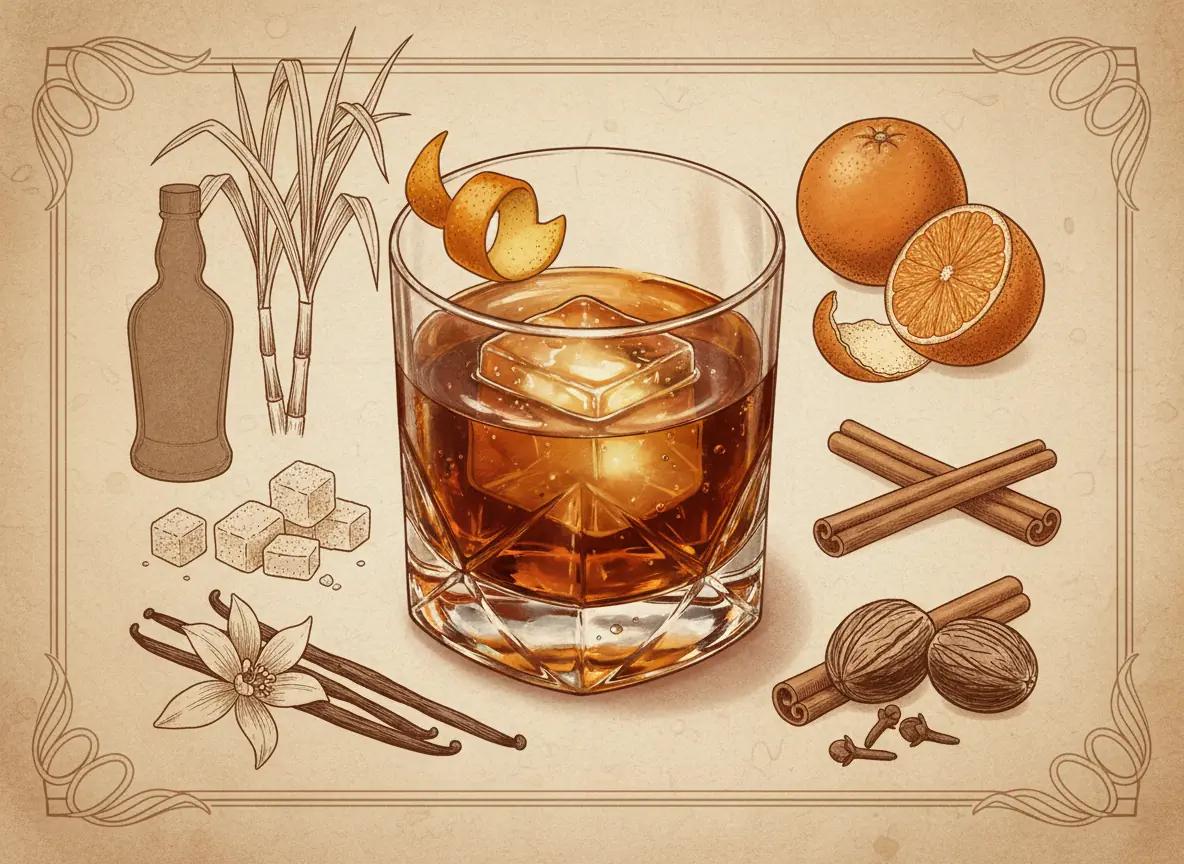
The Old Standard
The Old Standard is 50ml of Expedition Spiced Rum, 10ml of demerara syrup, two dashes of Angostura and one of orange bitters, stirred in a mixing glass for 20 to 30 seconds and strained over a single large cube or fresh cubed ice in a rocks glass, with a wide strip of orange peel expressed over the top. About 2.1 UK units: 2.0 from the rum and about 0.1 from the bitters. It is our rum Old Fashioned. The format is spirit, sugar, water and bitters, the parts in the first definition of a cocktail known to be an alcoholic drink, which the Oxford Companion dates to a Hudson, New York, newspaper of 1806, and with nothing else in the glass it shows the spirit plainly. Two changes follow from the rum. Demerara syrup replaces white sugar, because its caramel meets the vanilla and oak. Orange bitters join the Angostura, to lift the orange peel already in the rum at the nose. Everything else is the Old Fashioned, measured.
Glassware: Rocks Glass
Garnish: Orange peel
Ingredients
50ml
Seven real spices, two natural sweeteners, and bourbon oak over a Caribbean rum base, at 40% ABV. With nothing else to share the glass, its vanilla, clove and orange peel are the flavour of the drink.
10ml
Two parts demerara sugar dissolved in one part warm water. Demerara is a less refined cane sugar, and its caramel and toffee suit the rum’s vanilla and oak where white sugar would only sweeten.
2 dashes
Two dashes. Angostura’s own page describes its aromatic bitters as a bouquet of herbs, fruits and spices, which sit beside the same spice notes in the rum; four would bury them.
1 dash
One dash, for a brighter orange at the nose than the peel in the rum gives in the body of the drink. The expressed peel on top does the same job from outside the glass.
Instructions
Add the demerara syrup, Angostura bitters and orange bitters to a mixing glass.
Stir briefly to combine the syrup and the bitters.
Add the Expedition Spiced Rum and a scoop of large cubed ice.
Stir for 20 to 30 seconds, until well chilled and properly diluted.
Strain over a single large cube or fresh cubed ice in a rocks glass.
Cut a wide strip of orange peel, express the oils over the surface, and rest the peel in the glass.
Our version
We build the Old Fashioned on Expedition Spiced Rum, sweeten it with demerara syrup in place of a sugar cube for its caramel, and add a dash of orange bitters to the two of Angostura to lift the orange peel already in the rum.
Source: our own specification. Last checked 9 October 2026.
Expert Tip
Stir the syrup and bitters together before the rum goes in. Demerara syrup is thick, and a few turns in the empty mixing glass spread it through the drink instead of leaving it at the bottom. Two dashes of Angostura, not four. The rum already carries clove and cinnamon, and a heavy hand stacks more of the same spice on top until the drink tastes of bitters rather than rum. Use one large cube if you have it. It melts slowly, so the drink stays close to the strength it left the mixing glass at, where small cubes keep diluting it while you drink.
Behind the The Old Standard
Flavour Profile
The Format
The Old Fashioned keeps the cocktail’s earliest shape: spirit, sugar, water and bitters, the parts that defined a cocktail in a newspaper in Hudson, New York, in 1806. There is no citrus, no liqueur and no mixer to share the work, so the spirit carries the drink.
That is a hard test for a spiced rum, which is usually treated as a mixer. In an Old Fashioned it has to hold the glass alone. Expedition Spiced Rum is designed for slow sipping, and its vanilla, spice and oak give the format something to show.
The Demerara Decision
Demerara is a less refined cane sugar with large golden crystals.
In a three-part drink the sweetener is a third of the flavour. White sugar adds sweetness only. Demerara adds caramel and a little toffee, and against a rum carrying vanilla, cassia and oak those notes have something to meet. The drink reads deeper, not sweeter.
Make it two parts sugar to one part warm water, stirred until clear. We keep it about a fortnight in the fridge.
The Bitters Logic
Angostura, which its own page describes as a bouquet of herbs, fruits and spices, sits beside the clove and cinnamon already in the rum. Two dashes reinforce them and give the drink its bitter frame. Four start to compete, and the spice turns medicinal.
The orange bitters come at the rum’s orange peel from the other side. The peel in the rum gives a warm, rounded orange in the body of the drink; one dash of orange bitters puts a brighter one at the nose. The expressed peel adds a third, the oils on the surface.
Beside the Old Fashioned
The Old Standard beside the IBA Old Fashioned
Spirit
- The Old Standard (ours)
- 50ml Expedition Spiced Rum
- Old Fashioned (IBA)
- 45ml bourbon or rye
Sweetener
- The Old Standard (ours)
- 10ml demerara syrup
- Old Fashioned (IBA)
- One sugar cube, muddled with a few dashes of water
Bitters
- The Old Standard (ours)
- Two dashes Angostura, one dash orange
- Old Fashioned (IBA)
- A few dashes Angostura
Method
- The Old Standard (ours)
- Stirred in a mixing glass 20 to 30 seconds, strained
- Old Fashioned (IBA)
- Built in the glass and stirred gently
Ice
- The Old Standard (ours)
- One large cube or fresh cubes
- Old Fashioned (IBA)
- Ice in the glass
Garnish
- The Old Standard (ours)
- Orange peel, expressed
- Old Fashioned (IBA)
- Orange slice or zest, and a cocktail cherry
UK units
- The Old Standard (ours)
- About 2.1
- Old Fashioned (IBA)
- About 1.9 with two dashes
| Part | The Old Standard (ours) | Old Fashioned (IBA) |
|---|---|---|
| Spirit | 50ml Expedition Spiced Rum | 45ml bourbon or rye |
| Sweetener | 10ml demerara syrup | One sugar cube, muddled with a few dashes of water |
| Bitters | Two dashes Angostura, one dash orange | A few dashes Angostura |
| Method | Stirred in a mixing glass 20 to 30 seconds, strained | Built in the glass and stirred gently |
| Ice | One large cube or fresh cubes | Ice in the glass |
| Garnish | Orange peel, expressed | Orange slice or zest, and a cocktail cherry |
| UK units | About 2.1 | About 1.9 with two dashes |
The whiskey original is the Old Fashioned.
How to Serve It
Stirred in a mixing glass for 20 to 30 seconds, strained over one large cube or fresh cubed ice in a rocks glass, with a wide strip of orange peel expressed over the surface and rested in the glass. No straw and no other garnish.
It is a drink for after dinner, made one at a time and taken slowly.
Make it at home
The Spirit
Jerry Can Spirits Expedition Spiced RumA spiced rum built for balance. Madagascan vanilla leads, with Ceylon cinnamon, ginger and cassia through the middle and bourbon oak on the finish. 40% ABV, designed to work neat, over ice, and across classic and modern cocktails.
Need the Rum?
Pick up a bottle of Expedition Spiced Rum to make this cocktail.
More to explore
Frequently Asked Questions
What is the Old Standard?
How does it differ from a whiskey Old Fashioned?
Why demerara rather than white sugar?
Can I use a sugar cube instead?
How strong is the Old Standard?
Can you drink spiced rum straight?
Why is it called the Old Standard?
Sources.
Checked between 18 October and 19 October 2026.
- The Oxford Companion to Spirits and Cocktails (David Wondrich), “Cock-Tail” (secondary source: the first unambiguous appearance of the name and formula together, in a Hudson, New York, newspaper of 1806: “a stimulating liquor, composed of spirits of any kind, sugar, water, and bitters”).
- House of Angostura, “Aromatic Bitters” (producer’s own page: nose “Aromatic Bouquet of herbs, fruits and spices”).
- IBA, “Old Fashioned” (official specification: 45 ml bourbon or rye, one sugar cube, few dashes of Angostura and of plain water, stirred gently; orange slice or zest and a cocktail cherry).
You Might Also Like
Old Fashioned
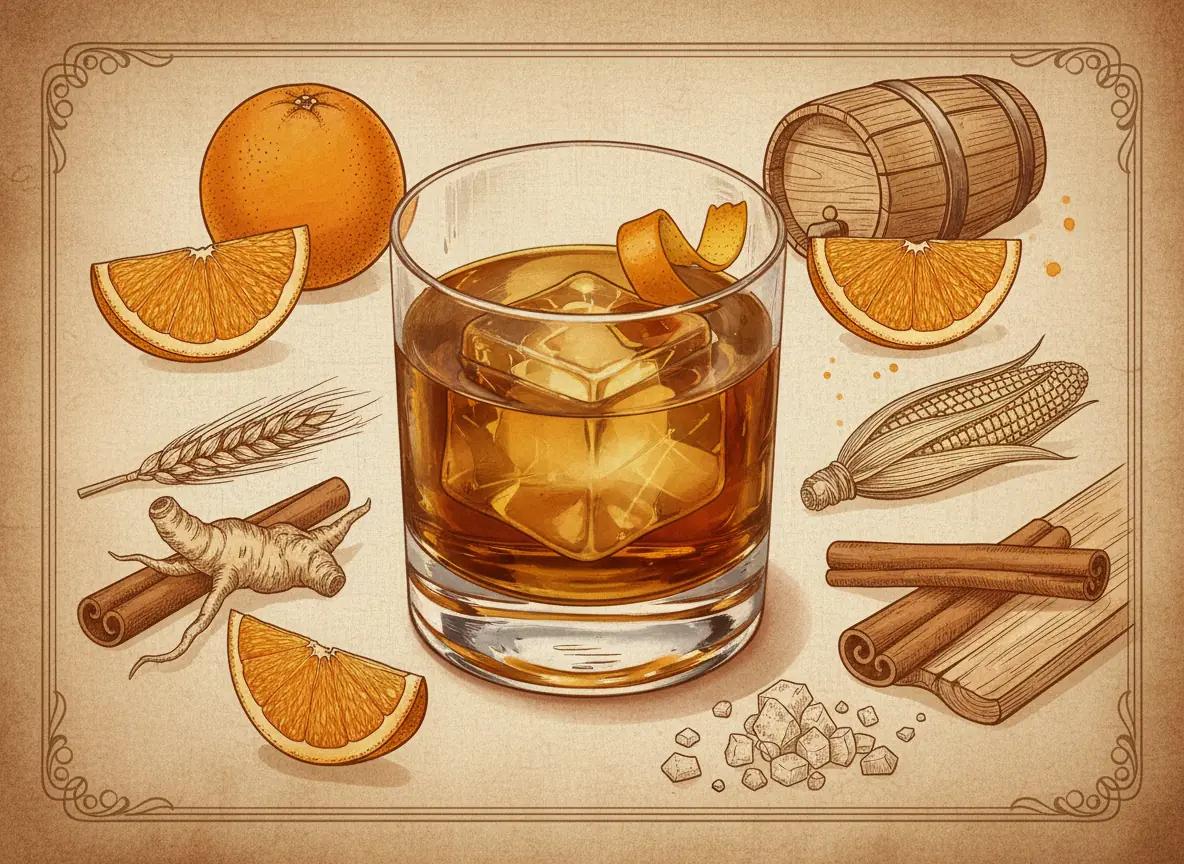
The IBA’s Old Fashioned is 45ml of bourbon or rye whiskey, one sugar cube, a few dashes of Angostura bitters and a few dashes of water; we use bourbon and two dashes. The sugar and bitters are muddled in a rocks glass until the cube dissolves, then ice goes in, the bourbon goes over it and the drink is stirred for 15 to 20 seconds. Orange peel is expressed over the top. About 1.9 UK units. Only the sugar and bitters are muddled: no orange flesh, no cherry. The recipe predates the name. The Oxford Companion says that when a newspaper in Hudson, New York, defined the cocktail in 1806, it described “spirits of any kind, sugar, water, and bitters”. The name came later in the century: the Companion has people ordering Old-Fashioneds in Chicago in 1880, as bartenders added liqueurs to the format and drinkers who wanted it plain asked for one made the old-fashioned way.
Jerry Can Julep
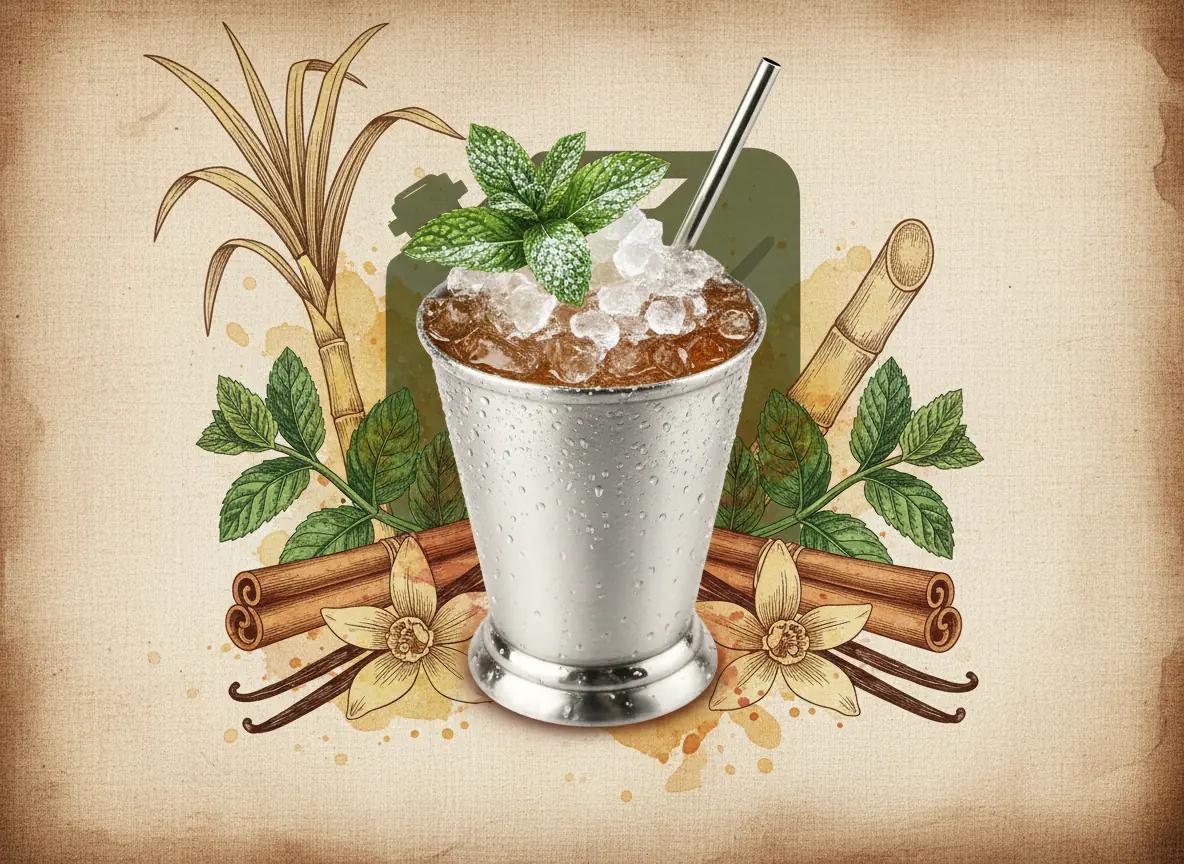
The Jerry Can Julep is 60ml of Expedition Spiced Rum, eight to ten fresh mint leaves pressed lightly with 10ml of simple syrup, and a dash of Angostura over a glass packed with crushed ice, finished with a mint bouquet and, if you like, an expressed orange peel. About 2.4 UK units. It is our julep. The Mint Julep is usually bourbon, but the format is older and looser than that, and the Oxford Companion describes nineteenth-century juleps made with French brandy, peach brandy, wines and Dutch gin as well as whisky. Spirit, sugar, mint and a great deal of crushed ice is all it asks. Expedition Spiced Rum suits it because its vanilla and cinnamon are warm where mint is cool. The syrup stays at 10ml because the rum brings sweetness of its own, and the Angostura goes on top of the ice, where it meets the mint at the nose.
Storm & Spice
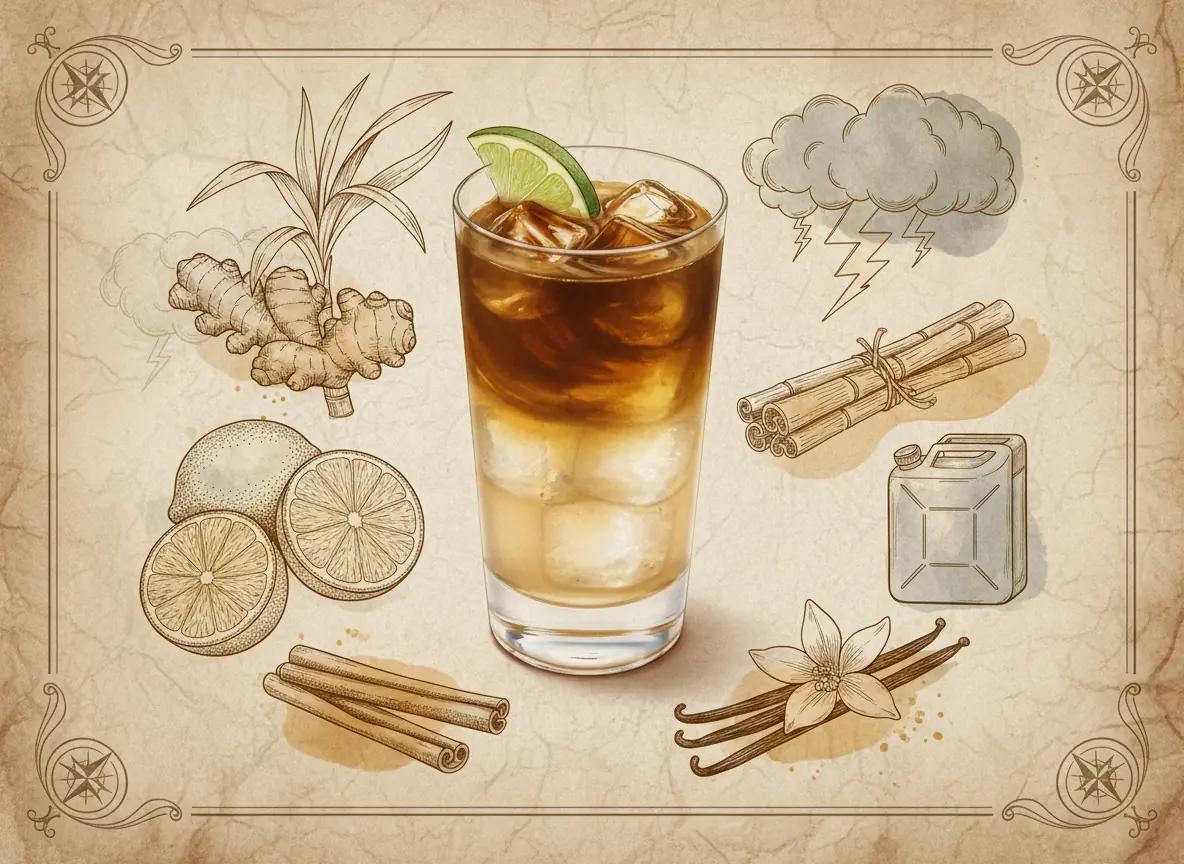
Storm & Spice is 50ml of Expedition Spiced Rum floated over 150ml of ginger beer and 15ml of fresh lime juice in a highball full of cubed ice, with two dashes of Angostura on top, a lime wedge and crystallised ginger. About 2.0 UK units from the rum at 40% ABV; the bitters add less than 0.1. It is our spiced-rum answer to the Dark ’n’ Stormy, the Bermudian highball of black rum and ginger beer. Gosling’s own site writes the name Dark ‘n Stormy® with the registered symbol and calls Black Seal Rum its essential ingredient, so this is a different drink on the same frame. A black rum brings weight and dark sugar. Expedition Spiced Rum brings vanilla, cinnamon and clove, which gives the ginger more to catch hold of. The build is the point. Ginger beer goes in first, then the rum is poured slowly over the back of a spoon so it sits dark over the pale ginger. Left layered, the first sips lead with rum. Stirred, the two run together.
Where this one sits
Recipe by Dan Freeman · Updated 19 October 2026