Bitter Giuseppe
A Bitter Giuseppe is 60ml of Cynar, 30ml of sweet vermouth, 7.5ml of fresh lemon juice and 3 dashes of orange bitters, stirred over a strip of lemon peel until the glass frosts and strained over one large cube in a rocks glass. About 1.5 UK units, from a Cynar at 16.5% ABV and a vermouth at 16%. Stephen Cole created the drink at The Violet Hour in Chicago in 2007, and Difford’s Guide prints an adapted version of his recipe. Punch calls it a cult favourite among modern amaro cocktails and counts it among the modern drinks that are stirred despite carrying fresh lemon juice. The spirit is an amaro. Cynar is bitter, herbal and faintly savoury, light enough that the drink sits well below a Manhattan in strength. The vermouth rounds the edges, and the lemon is a lift, a measure so small it reads as brightness rather than sourness.
Glassware: Rocks Glass
Garnish: Lemon twist expressed over the drink and dropped in
Ingredients
60ml
A carciofo amaro at 16.5% ABV, the style Difford’s names; Punch uses Cynar itself. The whole spirit load of the drink, so the bottle has to be one you like neat over ice.
30ml
Both sources name Carpano Antica Formula. A thin, light vermouth leaves the Cynar bare, while a richer one gives it body.
7.5ml
Squeezed the same day and measured exactly; a heavier hand turns the drink into a sour.
3 dashes
Difford’s prints three dashes of Angostura Orange. Punch prints six of Regans’, so the count depends on the brand.
1 swath
Cut a wide strip with little pith. Its oils are squeezed into the mixing glass before anything else goes in.
Instructions
Chill a rocks glass. Juice the lemon the day you serve.
Cut two strips of lemon peel. Squeeze the oils of one strip into a mixing glass and drop it in.
Add the Cynar, sweet vermouth, lemon juice and orange bitters, then fill the glass with ice.
Stir for about 25 seconds, until the mixing glass frosts.
Strain into the chilled rocks glass over one large cube of ice.
Express the second strip over the drink and drop it in.
Source: Difford's Guide (recipe 4856, measures, method and garnish as printed (Difford’s says it is adapted from Stephen Cole’s 2007 recipe); Punch prints 6 dashes of Regans’ orange bitters where Difford’s prints 3 of Angostura Orange). Last checked 1 November 2026.
Expert Tip
Work the peel into the glass before the liquid. Oils squeezed onto bare glass and then stirred with the drink spread through all of it, while a twist added at the end only perfumes the surface. Start with three dashes of bitters and taste. Difford’s and Punch disagree on the count because their bitters differ, so judge by the drink and not by the number. Use the largest cube you have. A drink that is nearly all amaro and vermouth is made for slow sipping, and small ice would water it by the halfway point.
Behind the Bitter Giuseppe
Flavour Profile
A Chicago amaro drink from 2007
Difford’s Guide says the Bitter Giuseppe is adapted from a recipe Stephen Cole created in 2007 at The Violet Hour in Chicago. Punch, which prints its own version, describes it as a cult favourite of the modern amaro canon and says it can be served before dinner or after.
That second claim shapes how to serve it. It is bitter enough to open an appetite and sweet enough to close a meal. Difford’s review points to the first.
Why a drink with lemon is stirred
Shaking is the rule for citrus. Here the lemon is 7.5ml against 97.5ml of everything else, so it behaves as seasoning. Stirring keeps the drink clear and silky, and the amaro and vermouth, both syrupy, do not need aeration to blend.
The peel does more of the citrus work than the juice. Its oils go into the mixing glass first, then a second strip is expressed over the finished drink, so lemon arrives through the nose before the tongue.
Cynar and the vermouth
Cynar is a carciofo amaro, the term Difford’s uses for the artichoke style, and it is happy to be the only spirit. Sweet vermouth at half the amaro’s volume adds wine and spice. Both sources name Carpano Antica Formula, which Difford’s classes as a vanilla-style rosso. See vermouth explained for the styles.
Where it sits among stirred bitter drinks
Four stirred or amaro-led drinks compared
Bitter Giuseppe
- Main ingredient
- 60ml Cynar
- Supporting
- 30ml sweet vermouth, 3 dashes orange bitters
- Citrus
- 7.5ml lemon
- Method
- Stirred, over one large cube
Negroni
- Main ingredient
- 30ml gin
- Supporting
- 30ml Campari, 30ml sweet vermouth
- Citrus
- None
- Method
- Stirred
Manhattan
- Main ingredient
- 50ml rye whiskey
- Supporting
- 20ml sweet vermouth, 1 dash Angostura
- Citrus
- None
- Method
- Stirred, served up
Paper Plane
- Main ingredient
- 30ml bourbon
- Supporting
- 30ml Aperol, 30ml Amaro Nonino
- Citrus
- 30ml lemon
- Method
- Shaken
| Drink | Main ingredient | Supporting | Citrus | Method |
|---|---|---|---|---|
| Bitter Giuseppe | 60ml Cynar | 30ml sweet vermouth, 3 dashes orange bitters | 7.5ml lemon | Stirred, over one large cube |
| Negroni | 30ml gin | 30ml Campari, 30ml sweet vermouth | None | Stirred |
| Manhattan | 50ml rye whiskey | 20ml sweet vermouth, 1 dash Angostura | None | Stirred, served up |
| Paper Plane | 30ml bourbon | 30ml Aperol, 30ml Amaro Nonino | 30ml lemon | Shaken |
Where the Negroni and the Manhattan lean on a base spirit, the Bitter Giuseppe has none, and it is the only one of the four that is stirred and still carries lemon.
Make it at home
The Spirit
CynarCynar is a 16.5% ABV Italian bitter liqueur, made since 1952 from 13 herbs and plants, the artichoke the one the maker names, by VinePair’s account; Difford’s Guide dates it to 1949. It tastes bitter, herbal and faintly savoury rather than of vegetables. Light for an amaro, it is often drunk long with soda, and it supplies the bitterness in the Brazilian Rabo de Galo.
Master the Techniques
More to explore
Frequently Asked Questions
Who created the Bitter Giuseppe?
Why is it stirred when it has lemon juice in it?
How strong is a Bitter Giuseppe?
Can I use another amaro?
Can I make a batch of Bitter Giuseppe?
Which glass is right?
Sources.
Correct as of 1 November 2026.
- Difford’s Guide, “Bitter Giuseppe” (recipe 4856: 60ml Cynar or other carciofo amaro, 30ml Carpano Antica Formula, 7.5ml lemon juice, 3 dashes orange bitters, regal stir, rocks glass; history: adapted from a recipe created in 2007 by Stephen Cole at The Violet Hour, Chicago).
- Punch, “Bitter Giuseppe” (secondary source: 2oz Cynar, 1oz sweet vermouth (Carpano Antica Formula), 1/4oz lemon juice, 6 dashes Regans’ orange bitters, stirred, rocks glass over a large cube; cult favourite of modern amaro cocktails, aperitivo or digestivo).
- NHS, “Calculating alcohol units” (the 14-units-a-week guidance and the units calculation).
You Might Also Like
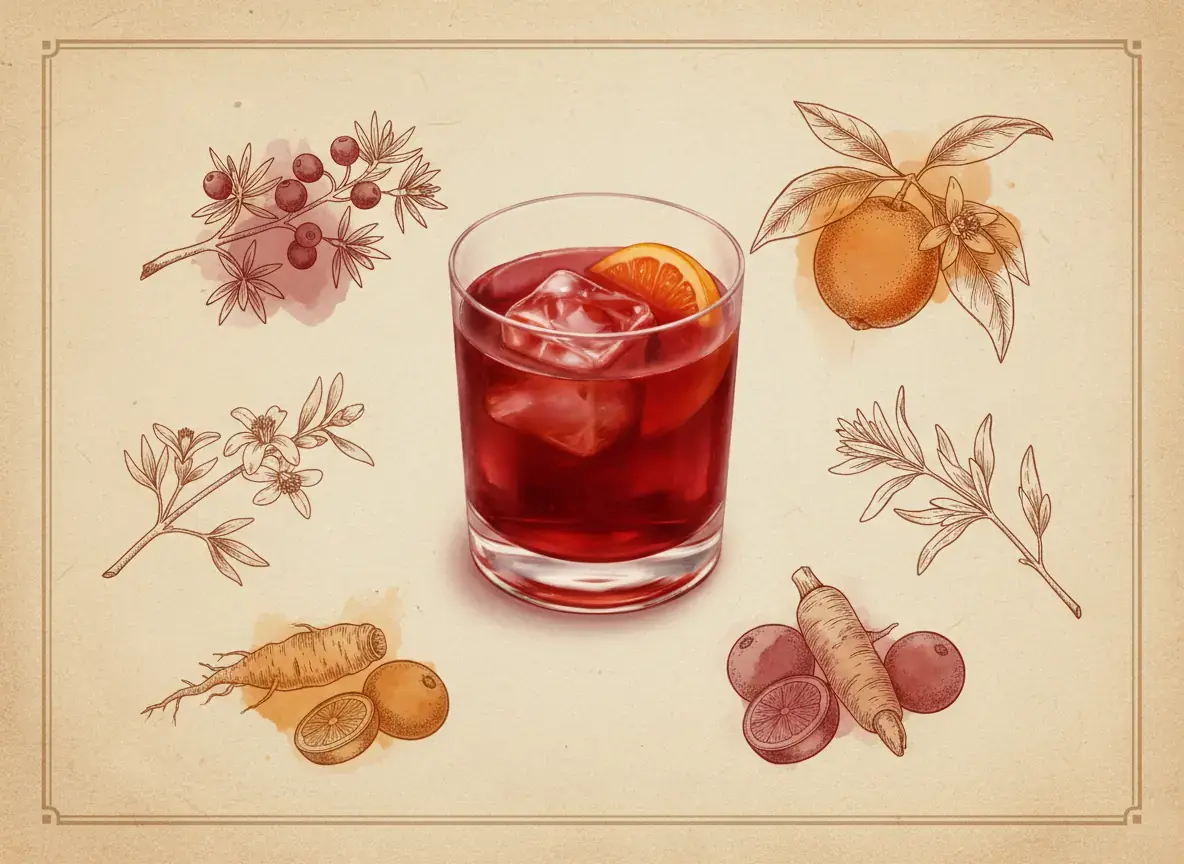
Negroni
A Negroni is 30ml each of gin, Campari and sweet vermouth, stirred with ice for 20 to 30 seconds and strained over fresh ice in a rocks glass, with an orange peel expressed over the top. About 2.4 UK units. The measures are the IBA’s; the IBA builds the drink in the glass and garnishes it with half an orange slice. Difford’s Guide gives the most widely reported account: Florence in 1919, at the Casoni Bar, where the bartender Fosco Scarselli is said to have replaced the soda in Count Camillo Negroni’s Americano with gin. The Oxford Companion has the drink named in a surviving letter of October 1920 and then absent under that name until 1947. A French book of 1929 by Alimbau and Milhorat, in the Internet Archive’s scan, gives equal parts of the three as the Campari Mixte. Each third has a job. Gin gives strength and juniper, the red bitter gives bitterness and orange, and the vermouth gives body and sugar. With no juice or soda in the glass, a tired vermouth shows at once.
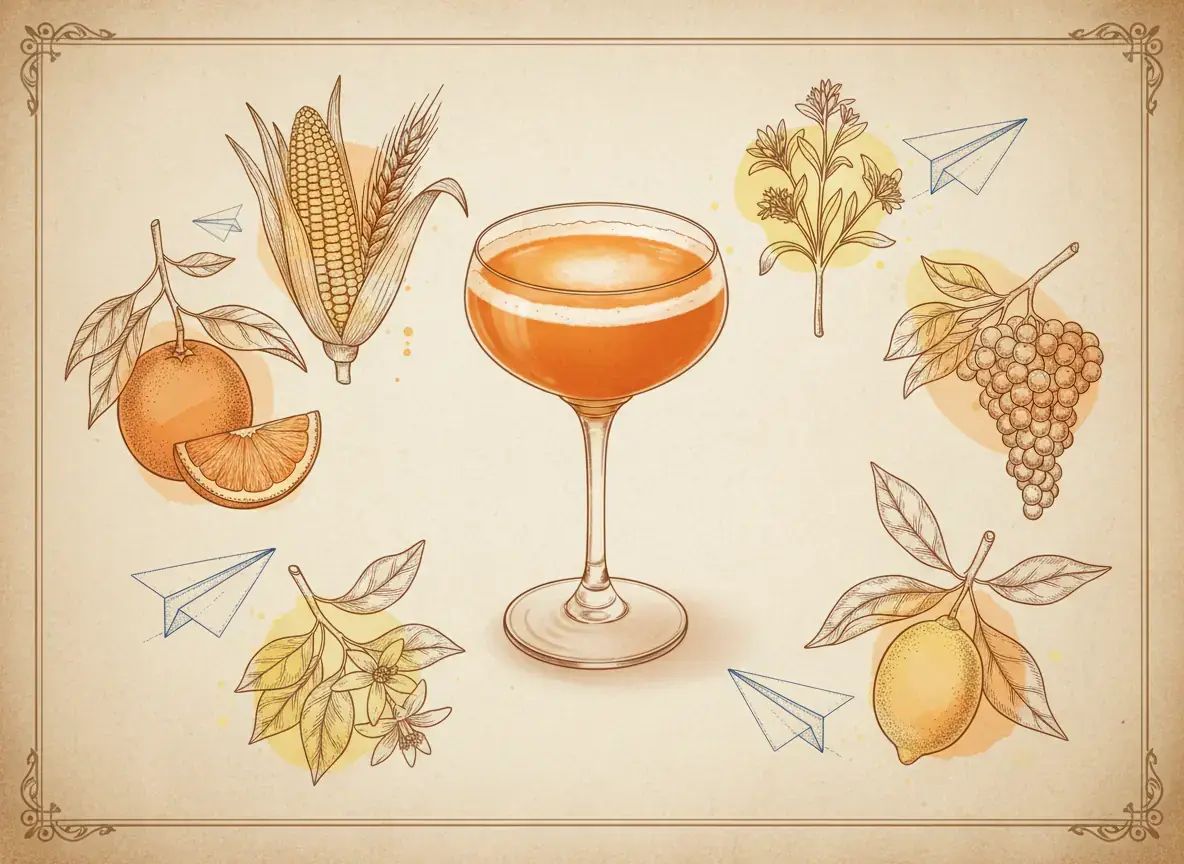
Paper Plane
A Paper Plane is 30ml each of bourbon, Aperol, Amaro Nonino and fresh lemon juice, shaken hard and double strained into a chilled coupe. Four equal parts, which is the IBA specification: bitter orange, herbs and lemon over bourbon, at about 2.6 UK units. Punch, a secondary source, says Toby Maloney, who helped open The Violet Hour in Chicago, asked Sam Ross to create a drink for the bar, and that it was on the menu there in the summer of 2008. Ross named it after the M.I.A. song Paper Planes. The first version used Campari; Punch quotes Ross finding it slightly too bitter and short of sweetness, and he moved to Aperol. Equal parts leaves nowhere to hide. Squeeze the lemon the same day and use Nonino, not a cheaper amaro, because each ingredient is a quarter of the drink.
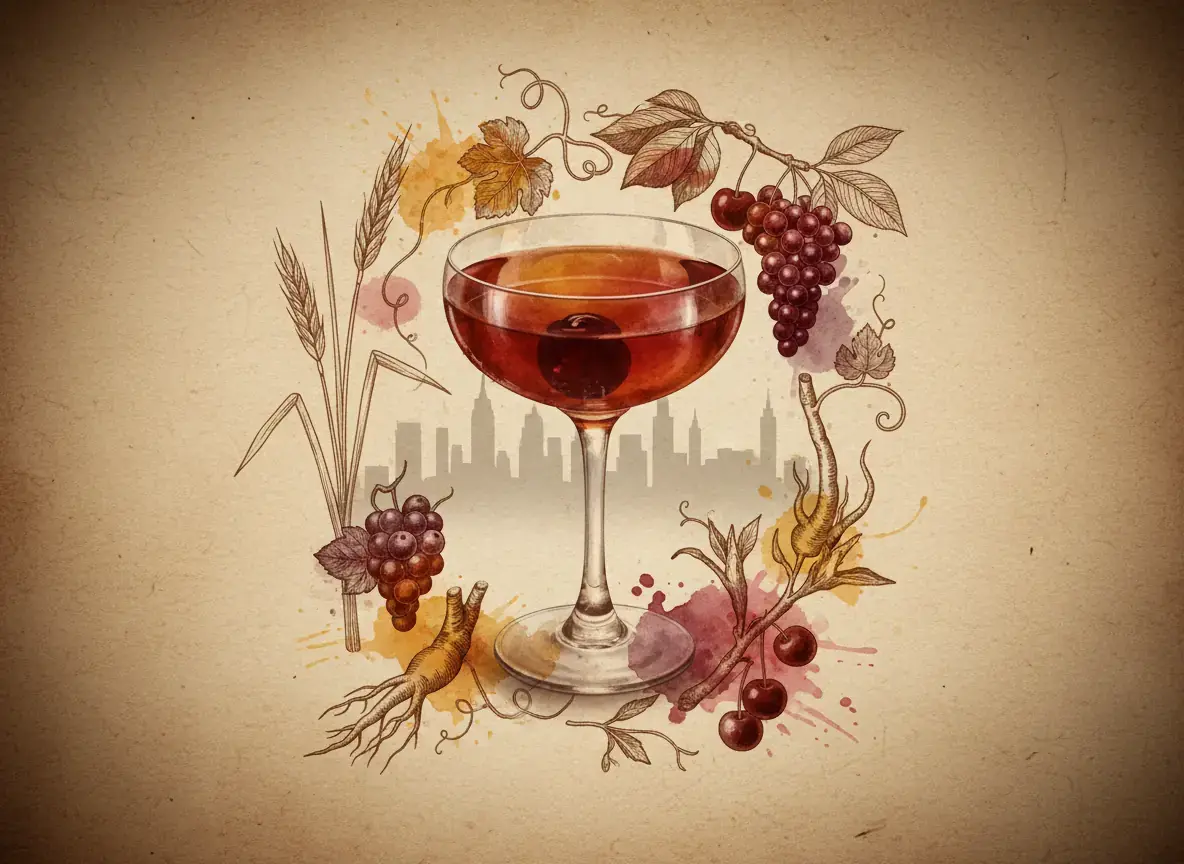
Manhattan
The IBA specifies 50ml of rye whiskey, 20ml of sweet vermouth and a dash of Angostura bitters, strained into a chilled glass with a cocktail cherry; we stir it over ice for 20 to 30 seconds and serve it in a coupe. That is five parts whiskey to two of vermouth. About 2.3 UK units. The Oxford Companion says the most commonly told story puts it at New York’s Manhattan Club on 29 December 1874, at a testimonial dinner for Samuel J. Tilden, later retold with Jennie Jerome, Lady Randolph Churchill, as host or inspiration, and calls that story simply not true: she had given birth to Winston Churchill in Oxfordshire less than a month earlier. The Companion names O. H. Byron’s Modern Bartenders’ Guide among the bar books that printed the drink in 1884, and we read Byron’s and Charlie Paul’s books of that year in the Internet Archive scans. With so little in the glass, the vermouth decides it. Twenty millilitres is over a quarter of the drink, and a bottle opened months ago tastes flat and sour against the rye. We keep it in the fridge and replace it within about four weeks.
Hanky Panky
A Hanky Panky is 45ml of London Dry gin, 45ml of sweet vermouth and 7.5ml of Fernet-Branca, stirred with ice for 20 to 30 seconds and strained into a chilled coupe, with an orange twist expressed over the top and dropped in. About 2.8 UK units. The measures are the IBA’s. Ada Coleman made it at the American Bar of the Savoy, where, the Oxford Companion says, she rose to head bartender before Harry Craddock displaced her in January 1926. The Companion quotes her telling The People in 1925 that she spent hours experimenting until she invented a new cocktail for the actor Charles Hawtrey, who had come in complaining of overwork. He either called it “the real hanky panky” on the spot or came in the next day asking for “that hanky panky stuff”, and the name stuck. Craddock put it in The Savoy Cocktail Book, in the Internet Archive’s scan. Equal gin and sweet vermouth make a sweet Martini. The Fernet-Branca, a bitter Italian amaro, adds menthol and dark herbs, cools the finish and keeps the vermouth from tasting syrupy.
Where this one sits
Recipe by Jerry Can Spirits · Updated 1 November 2026