
Manhattans

20 recipes

This Field Manual holds 20 recipes in the manhattan family. A manhattan is whiskey, sweet vermouth and bitters, stirred and served up. The martini’s sibling, built on a spirit that does not need protecting.

Rye is the traditional choice because its pepper cuts the vermouth’s sweetness, and bourbon makes a rounder, softer drink. The vermouth is the variable that matters most: it is wine, it oxidises, and a bottle open for a month makes a flat manhattan out of a good whiskey. Change the ratio towards the vermouth and you are moving towards a perfect manhattan, then towards a Rob Roy if the whiskey turns Scotch.

Base Spirit

Difficulty Level

Affinity

The Affinity is Scotch and both vermouths in equal thirds, with Angostura. Thirty millilitres of each, stirred, up. Equal thirds is the part worth noticing. A Rob Roy is Scotch with a single vermouth at roughly half the spirit measure, and even a perfect Manhattan, which splits its vermouths, keeps whisky as the clear majority. Here two thirds of the glass is wine, and the whisky is a partner rather than the subject. That changes what the drink is for. It lands lighter, wetter and considerably lower in strength than any Rob Roy, closer in weight to an aperitif than to a Manhattan. It is a drink you can have before dinner rather than after. It comes from the Edwardian books, when splitting the vermouths was the fashionable way to make a drink look considered, and no creator is recorded. The name is the recipe's own description: an affinity is a natural attraction between things, and the claim is that these three have one.

Algonquin

The Algonquin carries the name of the hotel where the Round Table sharpened its knives. Dorothy Parker, Robert Benchley, Alexander Woollcott and the rest of the Vicious Circle lunched there through the 1920s, and the drink borrowed both the address and the literary pedigree, even though Prohibition means the hotel bar cannot have been openly pouring it at the time. Rye, dry vermouth and pineapple juice: a Manhattan gone tropical without leaving midtown. The pineapple is the surprise and the argument. Fresh juice against rye’s spice and dry vermouth’s herbs, with the fruit’s acidity doing the rounding work sweet vermouth would otherwise do, by considerably stranger means. It is shaken despite its stirred-drink bones, because the pineapple wants the foam, and it lands drier than the fruit promises. The Round Table would have enjoyed the joke: a cocktail named for the wits’ hotel that the wits themselves, drinking through the dry years, could only order in code.

Black Manhattan

The Black Manhattan asks a simple heretical question: what if the vermouth were replaced entirely by amaro? Todd Smith posed it at Bourbon and Branch in San Francisco in 2005, chose Averna, and produced one of the defining drinks of the modern era. Rye and Sicilian amaro at the classic ratio, both bitters, one cherry, and a drink the colour of its name. The swap works because Averna is built like a vermouth that kept going: wine-adjacent sweetness, herbs and citrus peel, but darker, denser and bittersweet where vermouth is fresh. The Manhattan’s architecture survives intact while every surface of it changes, and the two dashes of bitters now read as accents in an already bitter landscape. It sits with the Hanky Panky and the Toronto in the small family of drinks that taught amari to speak cocktail, and it has moved more bottles of Averna than any of them.

Blackthorn

The Blackthorn is a Manhattan built on sloe gin instead of whiskey. Sloe gin, sweet vermouth and orange bitters, stirred cold and served up. The sloe brings plum and almond where rye would bring spice, and the vermouth doubles the fruit rather than cutting against it. What arrives has a Manhattan's shape and about half its strength. Several drinks answer to Blackthorn. The old manuals also carry an Irish whiskey version built with dry vermouth and absinthe, and the two share a name rather than a recipe. Both take it from the blackthorn bush, which is where sloes come from. This is the sloe one. The low proof is the whole character. Sloe gin pours at around 25%, so the drink lands gentler than its silhouette suggests. That makes it a genuine second drink of the evening, where a Manhattan would end one. It also makes your choice of bottle matter more than usual: with only vermouth and bitters alongside it, the sloe gin is most of what you taste.
Blood & Sand

Blood & Sand

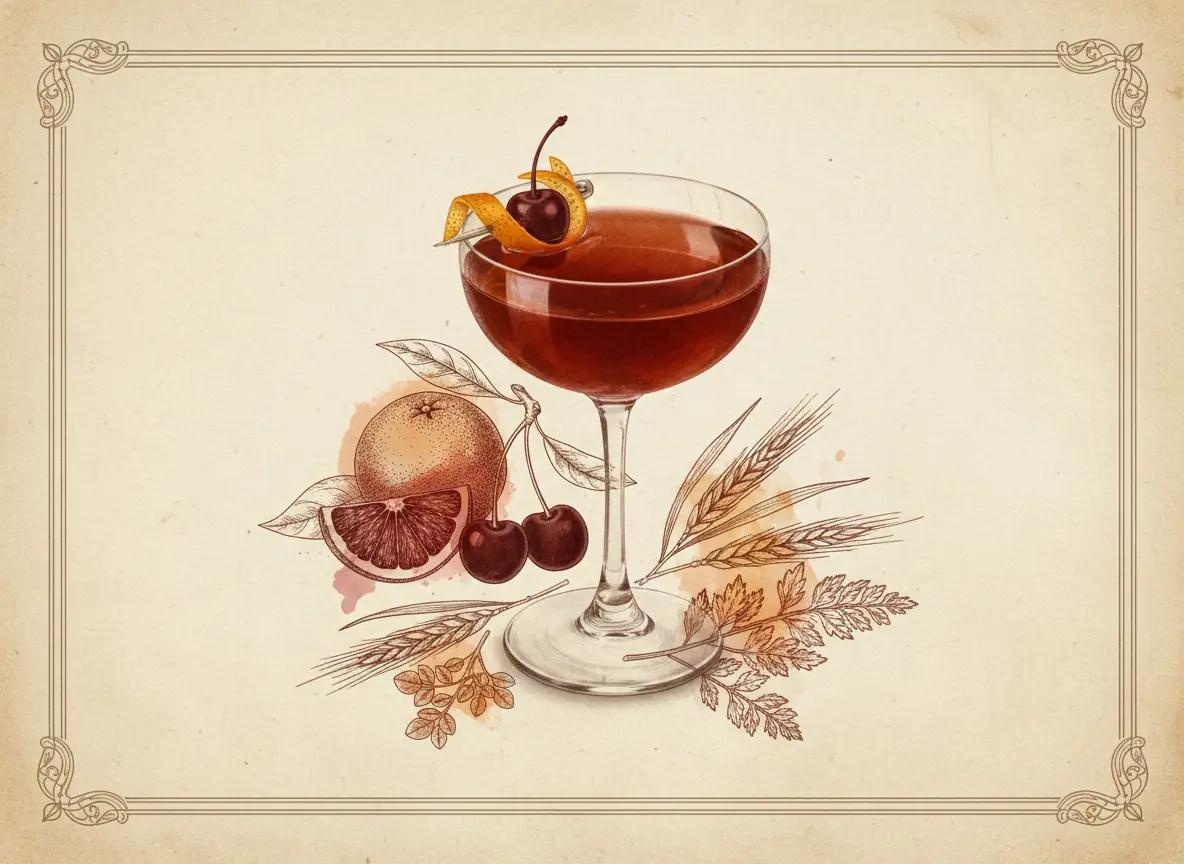
The Blood & Sand was created to coincide with the 1922 Rudolph Valentino film of the same name and appeared in Harry Craddock’s Savoy Cocktail Book in 1930. It is one of a very small number of classic cocktails that puts Scotch whisky against fresh citrus, a combination that sounds improbable and performs considerably better than it has any right to. The equal-parts structure is unforgiving. Scotch, sweet vermouth, cherry liqueur and fresh orange juice in identical measure, shaken and served cold, with every ingredient fully visible and no dominant spirit hiding the quality of the others. It is a drink that divides opinion, which is usually a sign of something genuinely interesting happening. Anyone who finds Scotch and orange juice an uneasy pairing has almost always met a poorly balanced version. Built correctly, the smoke sits against the cherry’s sweetness and the orange’s acid in a way that feels considered rather than accidental.

Bobby Burns

The Bobby Burns is the Rob Roy with a library card: Scotch and sweet vermouth as before, seasoned with a barspoon of Bénédictine, the honeyed herbal liqueur of the Norman abbeys, which rounds the drink into something warmer and more bookish than either parent. Harry Craddock, printing it in the Savoy Cocktail Book in 1930, called it one of the very best whisky cocktails ever made. Whether it honours Robert Burns the poet or a Robert Burns who sold cigars near the bar is one of those arguments the canon keeps for company. What is certain is the structure: a Manhattan template moved to Scotland, with the Bénédictine doing quietly what fernet does loudly in the Hanky Panky, its close cousin from the same hotel. It is also the rare classic with a date in its diary. Burns Night, the 25th of January, is its annual argument for existing, and a Bobby Burns after the haggis beats most speeches.

Brooklyn

The Brooklyn is a dry Manhattan with two seasonings: a barspoon of maraschino and a barspoon of Amer Picon. Jacob Grohusko printed it in Jack's Manual in 1908, and it is the drink that gave the borough its cocktail identity, eventually producing the Red Hook, the Greenpoint, the Bensonhurst and a dozen more. The problem is the Picon. It was a French bitter orange aperitif at high proof, reduced and reformulated through the twentieth century, so the bottle the recipe assumed no longer exists in any obtainable form. Every modern Brooklyn is therefore a reconstruction, and it is more honest to say so than to pretend a substitution is the original. This version uses Averna with two dashes of orange bitters, which is the accessible route: the amaro supplies the bitterness and the body, the bitters supply the orange. Bigallet China-China is closer to the original voice if you can find a bottle of it.
Corpse Reviver No.1

Corpse Reviver No.1

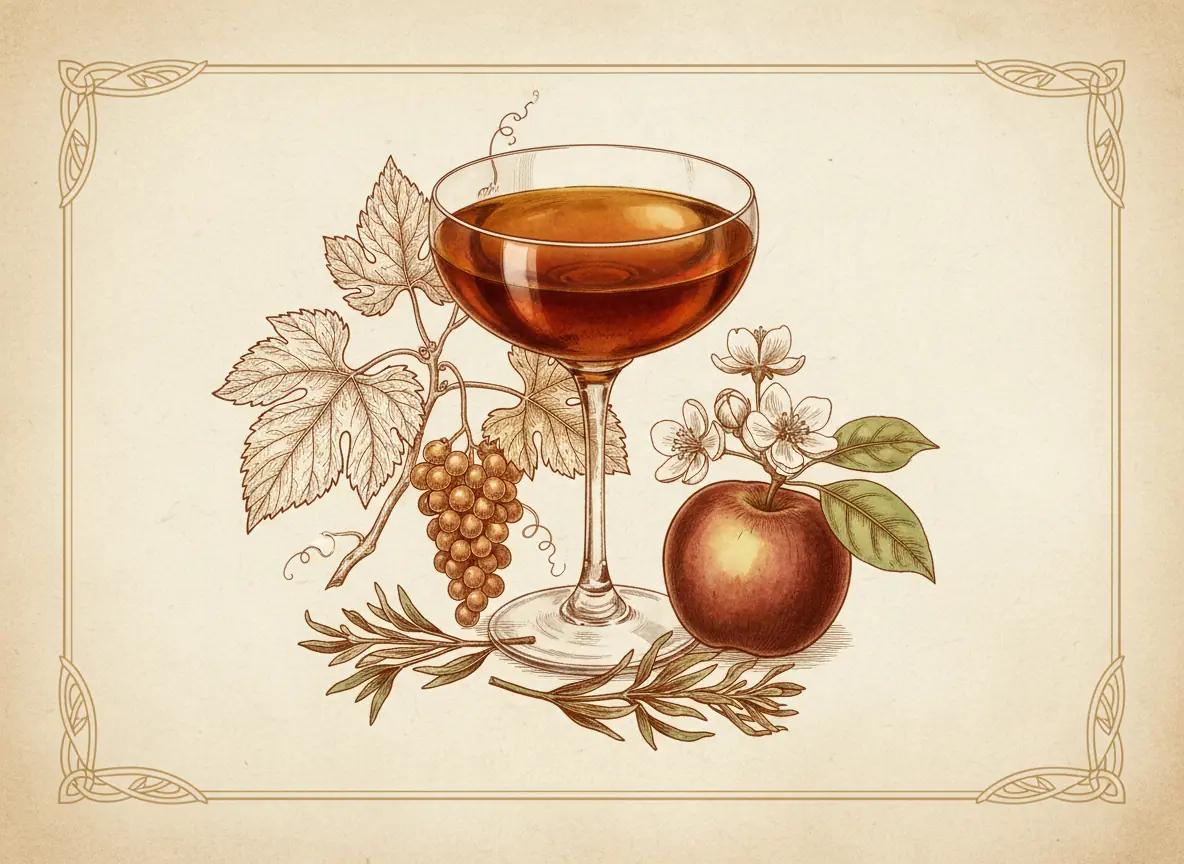
The Corpse Reviver No. 1 appeared in Harry Craddock's Savoy Cocktail Book in 1930, presented alongside its more famous sibling as part of a loosely connected family of restorative drinks designed, at least in name, to address the consequences of the night before. Where the No. 2 went on to become one of the most ordered classic cocktails in contemporary bartending, the No. 1 retreated into relative obscurity. That obscurity is undeserved. Three ingredients: cognac, Calvados, and sweet vermouth in equal parts. The combination of two aged fruit spirits alongside vermouth produces a drink that is richer, warmer, and considerably more complex than its short ingredient list suggests. The cognac provides the backbone. The Calvados brings apple, dried fruit, and a faint earthiness that shifts the drink away from anything a straight cognac build could achieve. The vermouth binds and softens both. It is a stirred drink in the Manhattan family, built for slow consumption rather than quick service. Those who order it expecting something bright and citrus-driven because of the name will be surprised. Those who approach it as a serious, spirit-forward after-dinner drink will find it entirely at home in that role.

Diamondback

The Diamondback is three strong bottles and nothing else: rye, calvados and yellow Chartreuse, stirred and served up. There is no citrus, no sugar and no soda. Whatever softening the drink gets, it gets from the ice. The structure is the Widow's Kiss with the hierarchy inverted. That 1895 drink leads on calvados with yellow Chartreuse behind it; here the rye takes the spine and the apple brandy drops to second, with the Chartreuse unchanged in its supporting role. Tasting the two in sequence is the clearest lesson available in how much a chord changes when you decide which note leads. What arrives is autumn with its collar up: orchard fruit and rye spice under the honeyed saffron of the Chartreuse, which supplies the drink's only sweetness and a good deal of its character. It is strong, and it is meant to be. This is a one-per-evening drink, and the snake it is named after is fair warning.
El Presidente

El Presidente

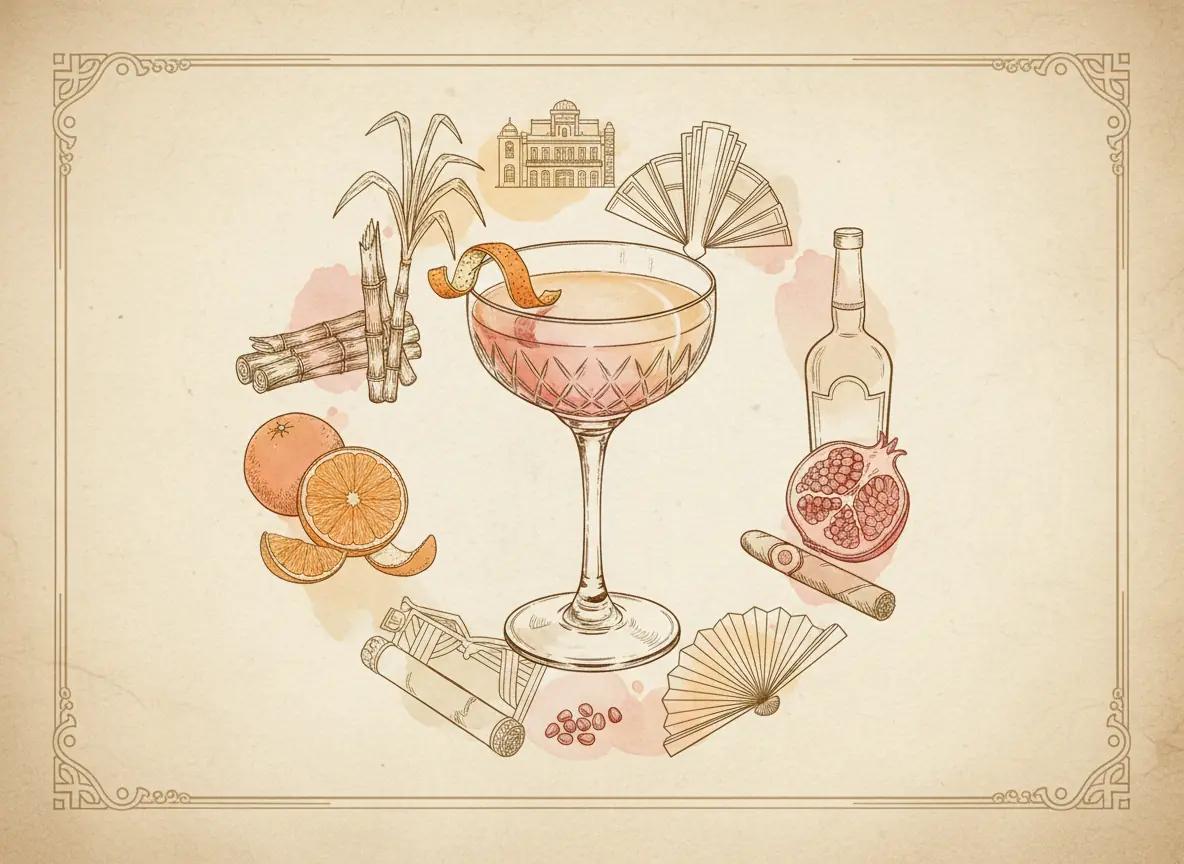
El Presidente was created in Havana during the 1910s or 1920s, most likely at the Vista Alegre bar, and named in honour of Mario García Menocal, President of Cuba in that era. It emerged from the same scene that produced the Daiquiri and the Mojito, shaped by Prohibition-era American tourists who arrived with money, time and a thirst their own country was legally denying them. It is a stirred rum drink in the Manhattan tradition: white rum and dry vermouth as the base, orange curaçao as the sweetening modifier, and a small measure of grenadine that adds colour, a faint pomegranate depth and a sweetness rounding the drier components. The result is spirit-forward and elegant rather than tropical, and one of the most underappreciated drinks in the classical canon. The dry vermouth determines the quality of the finished glass more than anything else. At this volume alongside the rum, a stale bottle defines the drink for the wrong reasons before the rum can make its case.

Harvard

The Harvard belongs to the 1890s fashion for naming Manhattan variations after universities: the drink appears in George Kappeler’s 1895 Modern American Drinks alongside its classmates the Yale and the Princeton, and it has outlasted both by being the best of the year group. It is a Manhattan that swapped its rye for cognac and lightened its step accordingly. The structure sits between two classics: sweet vermouth and bitters as a Manhattan demands, cognac where the whiskey stood, and a short splash of soda in the classic spec that opens the drink like a window. The grape base makes it rounder and softer-spoken than its whiskey parent, closer in temperament to fortified wine than to bourbon. It is the drink to hand a Manhattan loyalist who claims not to like brandy: same bones, same bitters, and a finish that argues cognac’s case better than any tasting note. The nearby Champs-Élysées and Sidecar complete cognac’s classic trio; the Harvard is the stirred, civilised corner of it.
La Louisiane

La Louisiane

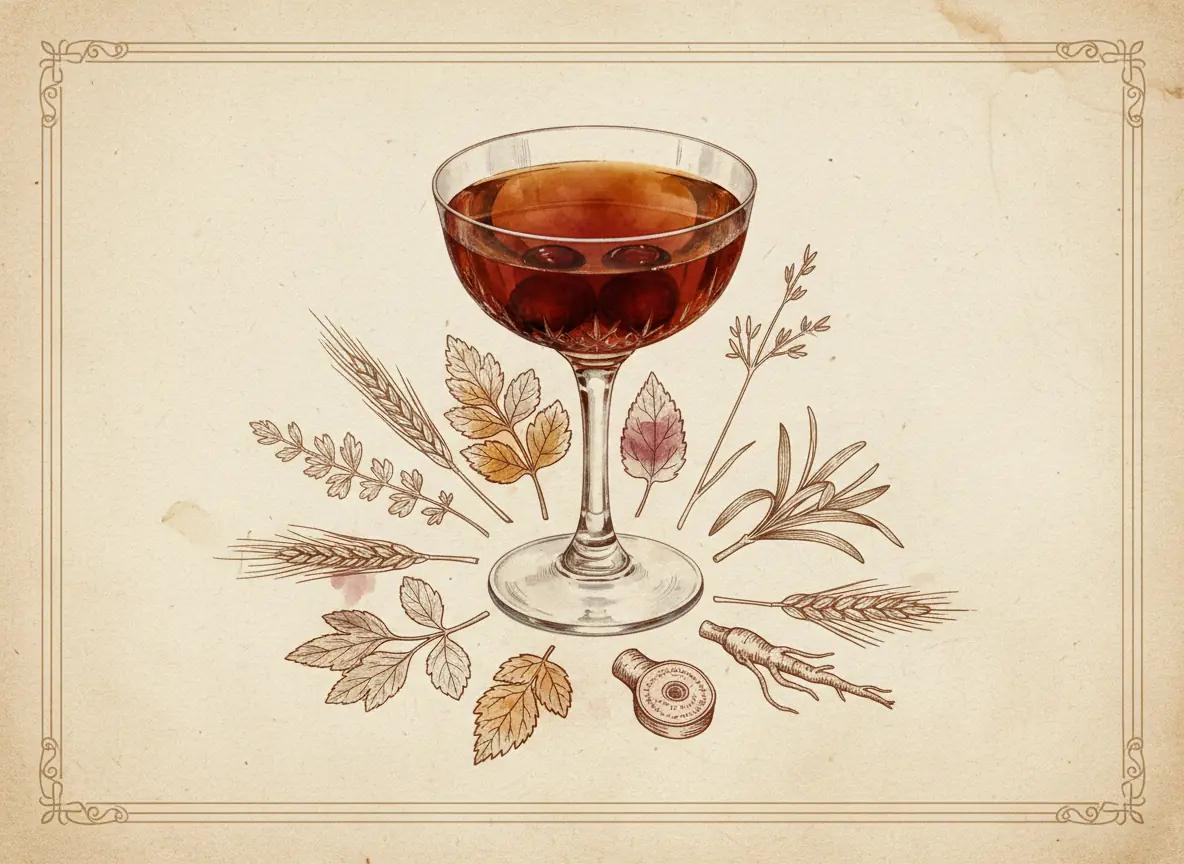
La Louisiane was the house cocktail of Restaurant La Louisiane, one of New Orleans' most storied dining establishments, and appeared in Stanley Clisby Arthur's 1937 guide "Famous New Orleans Drinks and How to Mix 'Em." It is a Manhattan variation in structure, rye whiskey and sweet vermouth as the foundation, with Bénédictine replacing the conventional sweetener and absinthe adding an aromatic undercurrent that marks it unmistakably as a product of New Orleans drinking culture. It is a drink of considerable depth for something built in a mixing glass with no citrus and no theatre. The Bénédictine brings honey, herbal complexity, and a warmth that simple syrup or even a standard liqueur cannot replicate. The absinthe is a seasoning, not a feature. Too much and it dominates. The correct amount is the one you can sense but cannot isolate. Like many New Orleans classics, La Louisiane rewards slow consumption and a quality vermouth. This is not a drink to build with a vermouth that has been open for three months. Treat it as a perishable ingredient and the drink will tell you why immediately.
Manhattan

Manhattan

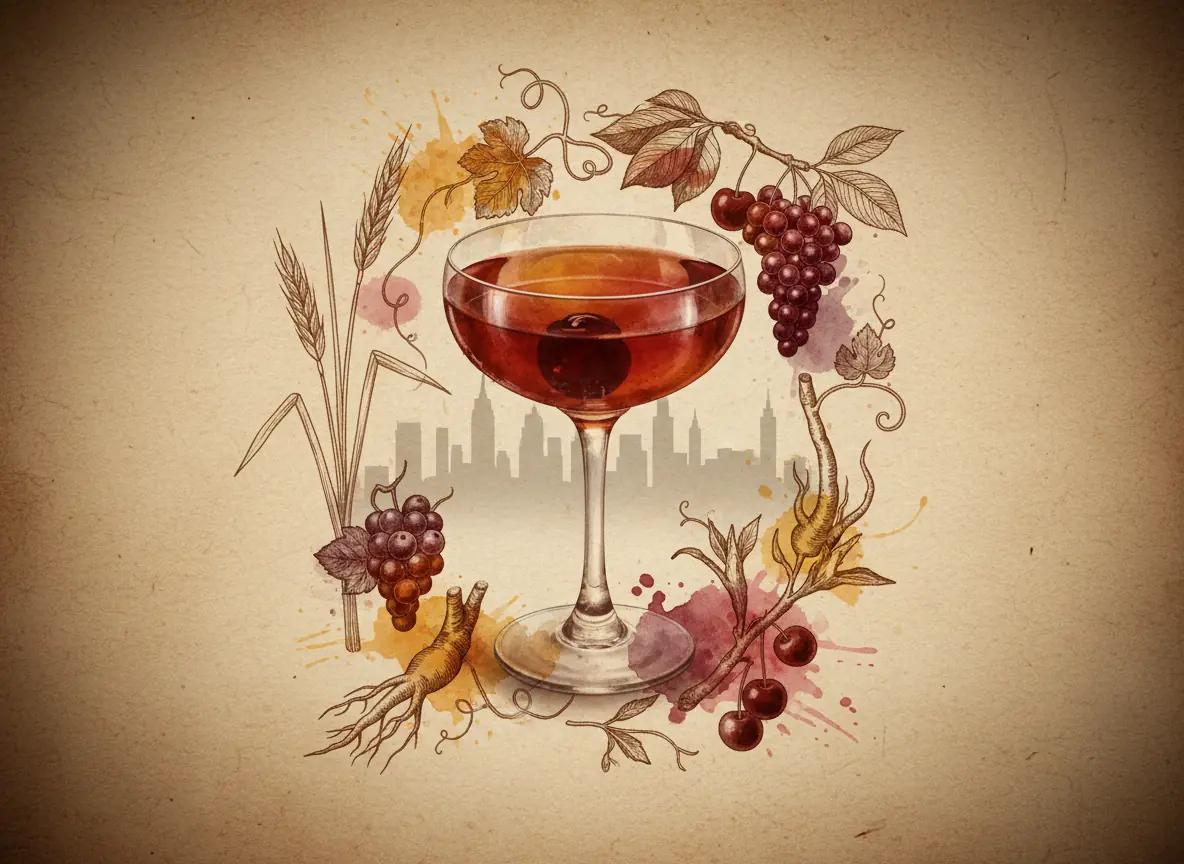
The Manhattan is the oldest documented whiskey cocktail in the American canon and the template for every stirred, spirit-forward classic that followed. It appeared in bar guides of the 1880s already described as an established drink, suggesting an origin in the 1870s. The most commonly cited account places its creation at the Manhattan Club in New York, at a banquet hosted by Lady Randolph Churchill in honour of presidential candidate Samuel Tilden; the account is disputed, Lady Churchill being documented elsewhere on the date in question, but the Manhattan Club association remains the most plausible origin available. Rye whiskey, sweet vermouth, and Angostura bitters, stirred and served cold with a cherry. The structure is the foundation of the Vieux Carré, the Boulevardier, the Rob Roy, and every other stirred whiskey drink that followed, and understanding it is the most direct route into that entire family. The sweet vermouth is the variable that most determines the finished drink. A stale or poorly chosen vermouth does not simply diminish the Manhattan; it defines it. The drink’s simplicity leaves the vermouth nowhere to hide.

Red Hook

The Red Hook is a Brooklyn that can actually be made. The original calls for Amer Picon, a French bitter orange aperitif that stopped reaching America decades ago and was reformulated at home as well, so every Brooklyn recipe arrives with an argument attached about what to use instead. Enzo Errico's answer, built at Milk & Honey in 2003, was to stop substituting and start rebuilding. Punt e Mes is a sweet vermouth with a bitter edge already in it, so it covers the vermouth and the missing amer in one bottle. The maraschino then doubles from the Brooklyn's barspoon to a full fifteen millilitres, which gives the cherry something to say rather than leaving it as a trace. Three bottles, one stir, no arguments. It also started a genre: Greenpoint, Bensonhurst, Carroll Gardens and a dozen more take this frame and change one bottle, and the borough-naming habit of the 2000s begins here.

Remember the Maine

Remember the Maine comes with a war correspondent attached. Charles H. Baker Jr. recorded it in The Gentleman’s Companion in 1939, having drunk it in Havana in 1933 with machine-gun fire in the streets outside, and his instruction survives alongside the spec: stir it briskly, and treat it “with the respect it deserves”. The name reaches back further still, to the battleship Maine, whose sinking in Havana harbour in 1898 lit the Spanish-American War under the headline the drink borrows. What Baker wrote down is a Manhattan that has been somewhere. Rye and sweet vermouth as expected, then cherry liqueur deepening the vermouth’s fruit into something darker, and a quarter-teaspoon of absinthe threading anise through all of it. Baker’s books are better literature than they are bartending, and a good many of his recipes need editing before they are drinkable. This one he transcribed straight, and it needs no correction: one of the great named Manhattans, with the rare quality of tasting like its own history.
Rob Roy

Rob Roy

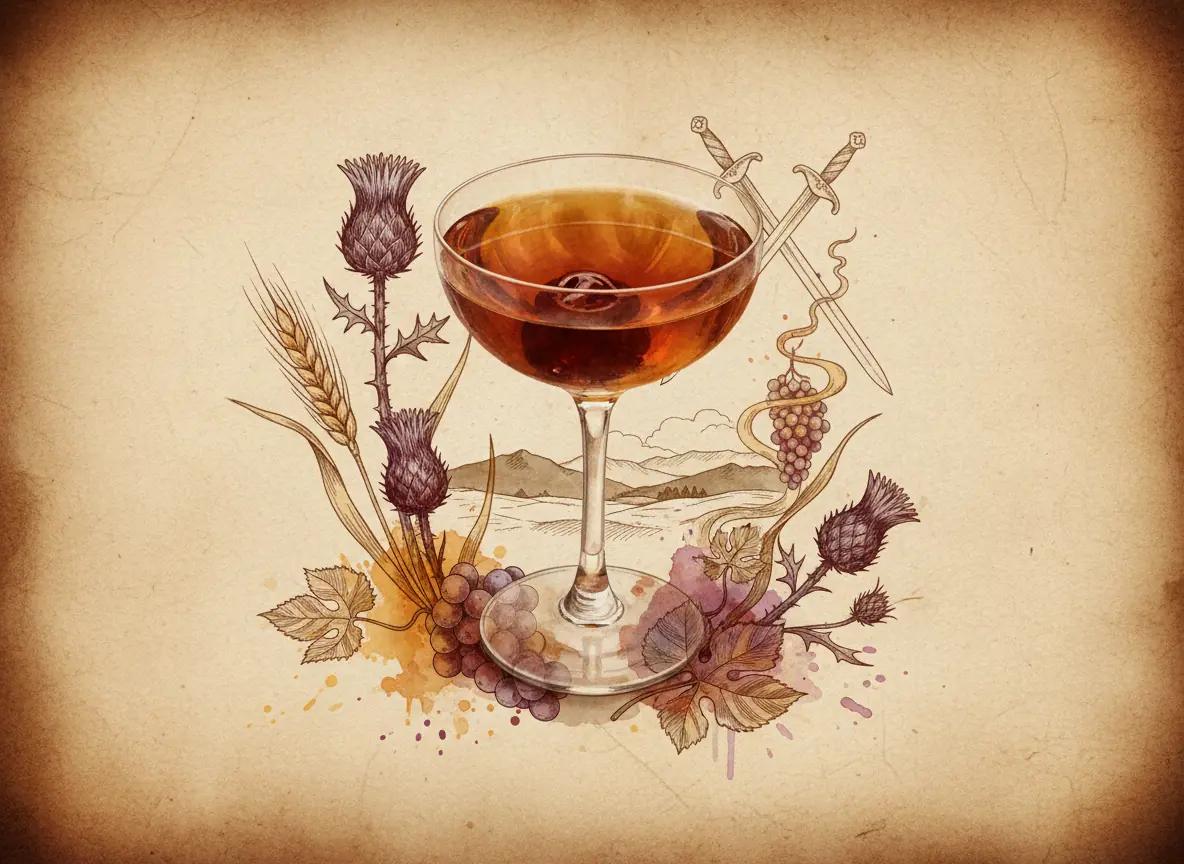
The Rob Roy was created at the Waldorf Astoria in New York in 1894, named after the premiere of a comic opera based on the life of the Scottish folk hero Robert Roy MacGregor. It is a Manhattan built on Scotch rather than rye or bourbon, and that single substitution changes the drink more thoroughly than the swap suggests. The choice of Scotch matters more here than in a Manhattan, because Scotch encompasses a far wider range of styles than either American whiskey category. A lightly peated Highland or Speyside malt produces something elegant and fruit-forward. A heavily peated Islay malt produces something aggressive and divisive. A well-chosen blend produces a consistent, approachable result without sacrificing quality. The Perfect Rob Roy, splitting the vermouth between sweet and dry, suits the more assertive expressions particularly well. Both versions are correct, and the choice properly belongs to the bottle in front of you rather than to habit.

The Emerald

The Emerald is the Manhattan carried across the Atlantic: Irish whiskey over sweet vermouth with orange bitters, stirred cold and strained into a coupe under a lemon twist. It was in print by 1914, when Jacques Straub listed it in his pocket manual Drinks, and the name follows the Manhattan’s own logic. If the original is named for an island, the Irish reading takes the Emerald Isle. The swap changes more than the flag. Rye’s pepper and bourbon’s char step aside for Irish whiskey’s soft orchard fruit, and the drink turns gentler without turning slack. The bitters do the second half of the work: where Angostura pulls a Manhattan toward clove and cinnamon, orange lifts the citrus peel already sitting in the vermouth and lets the whiskey’s honeyed edge through. Sixty millilitres of whiskey, half that of vermouth, three dashes of bitters. The ratio is the family’s; the accent is Ireland’s.

Tipperary

The Tipperary is Irish whiskey, sweet vermouth and green Chartreuse, and it is the boldest thing Irish whiskey does anywhere in the classic canon. Everything else the spirit appears in trades on its gentleness. This one puts it in front of a hundred and thirty herbs at 55 per cent and asks it to hold its ground. Hugo Ensslin printed it in Recipes for Mixed Drinks in 1916, by which point It's a Long Way to Tipperary had been the marching song of the war for two years and was playing on both sides of the Atlantic. The name needed no explaining to anyone reading the book. Ensslin's version is equal thirds, which is a genuinely fierce drink. Most modern specs pull the Chartreuse back to fifteen millilitres so that it seasons rather than leads, and that is the version worth learning first. The original is worth one respectful visit afterwards.
Vieux Carré

Vieux Carré

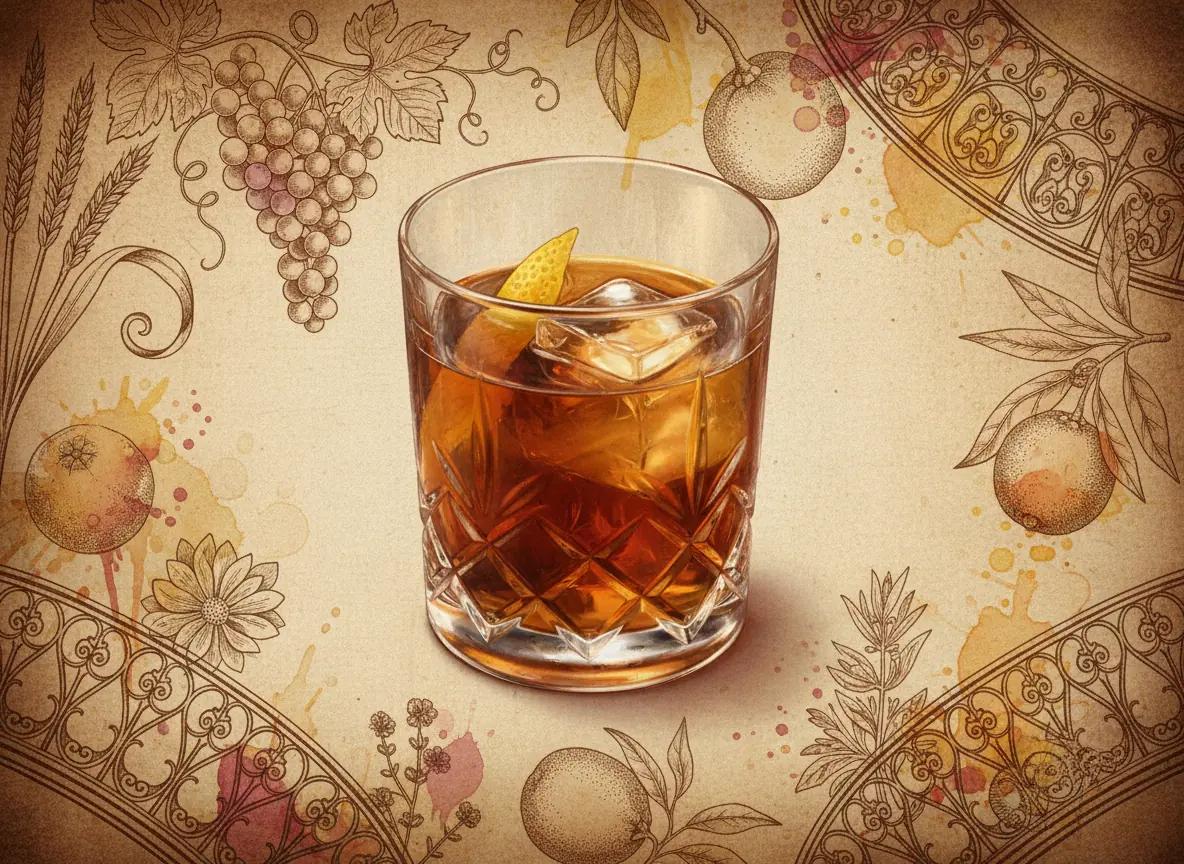
The Vieux Carré was created by Walter Bergeron, head bartender at the Hotel Monteleone in New Orleans, in the 1930s. The name means old square in French, for the French Quarter in which the hotel has sat since 1886. It is one of the most complex stirred drinks in the classical canon, built on a split base of rye whiskey and cognac with sweet vermouth and Bénédictine. That it is less widely known than the Sazerac or La Louisiane is a question of exposure rather than quality. The split spirit base is the structural decision that most defines the drink. Rye provides spice, grip, and a dry backbone; cognac provides dried fruit, warmth, and a roundness the rye alone could not achieve; at equal parts they produce a base more layered than either spirit at full volume. The bitters are where the versions part company. The official specification lists Peychaud's alone, where its anise and floral character sit directly against the Bénédictine. Bergeron's own build carried Angostura alongside it, in the New Orleans split-bitters tradition that also produced the Sazerac, and that version is below.

Widow’s Kiss

The Widow's Kiss is autumn in a coupe and one of the oldest sophisticated drinks in the American canon. George Kappeler printed it in Modern American Drinks in 1895: calvados wrapped in the two great French monastery liqueurs, yellow Chartreuse and Bénédictine, with Angostura holding the seams. It has never needed updating. The engineering is a study in herbal layering. The calvados brings orchard fruit and a spirit spine; the Bénédictine answers with honeyed spice; the yellow Chartreuse, softer and more saffron-lit than its green sibling, threads the two together; and the bitters keep the sweetness from settling into syrup. Every component predates the recipe, which is why the drink tastes coherent rather than assembled. It is rich by design, a dessert-hour drink in the truest sense, and it rewards a small pour and some patience. It opens as it warms, the way an old Sauternes does, which is fitting for the only cocktail regularly compared to one.