Russian Spring Punch
A Russian Spring Punch is 25ml of vodka, 25ml of fresh lemon juice, 15ml of crème de cassis and 10ml of sugar syrup, stirred over ice in a collins glass and topped with 60ml of brut champagne, with a lemon wheel. About 1.9 UK units. The measures are the IBA’s, which leave the wine as a top; we give it as 60ml. Difford’s Guide, a secondary source, records Dick Bradsell saying he created it in London in the 1980s for two friends, Rebecca du Pont de Bie and Peter Kent. By his own account to Difford’s in 2015 he was at the Zanzibar at the time, or possibly Fred’s, and it was before 1988. He named it for the vodka, which is Russian, and for its shape: a Collins or a Fizz, which he called a spring drink. Under the champagne it is a sour, with the cassis supplying most of the sugar and all of the colour. The wine adds acid as well as bubbles, so the drink is drier than its colour suggests.
Glassware: Collins Glass
Garnish: Lemon wheel and Blackcurrant sprig if you have one
Ingredients
25ml
A clean vodka at 40% ABV. It adds strength without flavour and leaves the cassis and champagne to carry the taste; gin’s juniper would compete with the blackcurrant.
15ml
Blackcurrant liqueur, usually 15 to 20% ABV. A good Dijon cassis tastes of the fruit, with a leafy edge; a cheap one tastes of boiled sweets. It brings most of the sugar and all of the colour.
25ml
Squeezed the same day. It is the sour backbone, and with the champagne’s acid it keeps the drink dry.
10ml
Sugar and water, 1:1 by weight, kept short because the cassis carries most of the sweetness.
60ml
Brut champagne at about 12% ABV, well chilled, or a good crémant. Wine contains sulphites, which matters to anyone sensitive to them.
Instructions
Fill a collins glass with cubed ice.
Add the vodka, lemon juice, crème de cassis and sugar syrup.
Stir for 15 to 20 seconds.
Top with 60ml of chilled champagne.
Lift once, gently, with a bar spoon.
Garnish with a lemon wheel, and a sprig of blackcurrants if you have them.
Source: the IBA (Official IBA measures; built and stirred in the glass where the IBA shakes the base, 60ml of champagne for its top of sparkling wine, lemon wheel garnish; method ours). Last checked 9 October 2026.
Expert Tip
Build it in the glass. The IBA shakes the base and strains it over ice; stirring it in the glass keeps more sparkle once the champagne goes in, and it is how Bradsell served it at the party he made it for, with glasses of the mix set out for each guest’s bottle. Keep the syrup at 10ml. It looks short against 25ml of lemon, but the cassis is sweet and carries most of the sugar. Match the lemon with syrup and the drink turns to cordial. Use a dry brut champagne or crémant. It is the largest single measure in the glass, and a sweet sparkling wine takes away the acid that keeps the drink dry.
Behind the Russian Spring Punch
Flavour Profile
Where It Comes From
A Sour Under the Champagne
Take the champagne away and a sour remains: vodka, a full 25ml of lemon, a short 10ml of syrup, and cassis carrying most of the sweetness.
That is why it works where many champagne drinks do not. A sweet base under sparkling wine starts pleasant and turns cloying; here the base is dry, and the champagne adds more acid.
Built and lifted once, the drink stays slightly layered: the first sips lead with champagne and the last with cassis.
Ours and the IBA’s
The Russian Spring Punch as the IBA gives it and as we pour it
Vodka
- IBA
- 25ml
- Ours
- 25ml
Fresh lemon juice
- IBA
- 25ml
- Ours
- 25ml
Crème de cassis
- IBA
- 15ml
- Ours
- 15ml
Sugar syrup
- IBA
- 10ml
- Ours
- 10ml
Sparkling wine
- IBA
- Top up
- Ours
- 60ml brut champagne
Method
- IBA
- Base shaken, strained over ice
- Ours
- Built over ice, stirred, topped and lifted once
Glass
- IBA
- Chilled tall tumbler
- Ours
- Collins glass
Garnish
- IBA
- Blackberries, lemon slice optional
- Ours
- Lemon wheel, blackcurrants if you have them
UK units
- IBA
- Depends on the top
- Ours
- About 1.9
| Element | IBA | Ours |
|---|---|---|
| Vodka | 25ml | 25ml |
| Fresh lemon juice | 25ml | 25ml |
| Crème de cassis | 15ml | 15ml |
| Sugar syrup | 10ml | 10ml |
| Sparkling wine | Top up | 60ml brut champagne |
| Method | Base shaken, strained over ice | Built over ice, stirred, topped and lifted once |
| Glass | Chilled tall tumbler | Collins glass |
| Garnish | Blackberries, lemon slice optional | Lemon wheel, blackcurrants if you have them |
| UK units | Depends on the top | About 1.9 |
The Cassis
Crème de cassis is blackcurrants steeped in spirit and heavily sweetened, usually at 15 to 20% ABV. Cheap versions taste of boiled sweets; a good Dijon cassis tastes of the fruit, with a leafy edge.
At 15ml it does three jobs: most of the sweetening, all of the colour and much of the flavour. It is the ingredient a poor bottle cannot hide.
Why the Vodka Stays Quiet
Vodka adds strength without flavour. Leave it out and the drink is a cassis and lemon spritz at wine strength; use gin and the juniper competes with the blackcurrant.
How to Serve It
Tall, over cubed ice in a collins glass, with a lemon wheel. It suits a party: the base can be set out in glasses ahead, as Bradsell did, and topped with champagne as each one is handed over.
For cassis and champagne without the spirit, make a Kir Royale; for another Bradsell drink, the Bramble.
Make it at home
The Spirit
VodkaVodka is spirit made from a farmed crop, usually grain or potatoes, distilled and refined so that the taste of that crop is deliberately reduced. Under the retained Regulation (EC) 110/2008 its minimum is 37.5% ABV and it may not be given a predominant flavour, which separates it from flavoured vodka and from gin; our recipes count it at 40%. In a mixed drink it adds strength and body while the other ingredients carry the taste.
More to explore
Frequently Asked Questions
What is a Russian Spring Punch?
Who created the Russian Spring Punch?
Why is it called a Russian Spring Punch?
Why is it built rather than shaken?
Can I use prosecco instead of champagne?
Does the cassis brand matter?
How strong is a Russian Spring Punch?
Sources.
Correct as of 18 October 2026.
- Difford’s Guide, “Russian Spring Punch” (secondary source quoting Bradsell (2015): Rebecca du Pont de Bie and Peter Kent, the 1980s, Zanzibar or Fred’s, before 1988; the name; the party and the glasses).
- Difford’s Guide, “Dick Bradsell” (profile: Zanzibar Club, Fred’s Club, the Atlantic and Dick’s Bar; the Bramble and Espresso Martini).
- IBA, “Russian Spring Punch” (official recipe: 25 ml vodka, 25 ml lemon juice, 15 ml crème de cassis, 10 ml sugar syrup, top up with sparkling wine; chilled tall tumbler).
You Might Also Like
Bramble
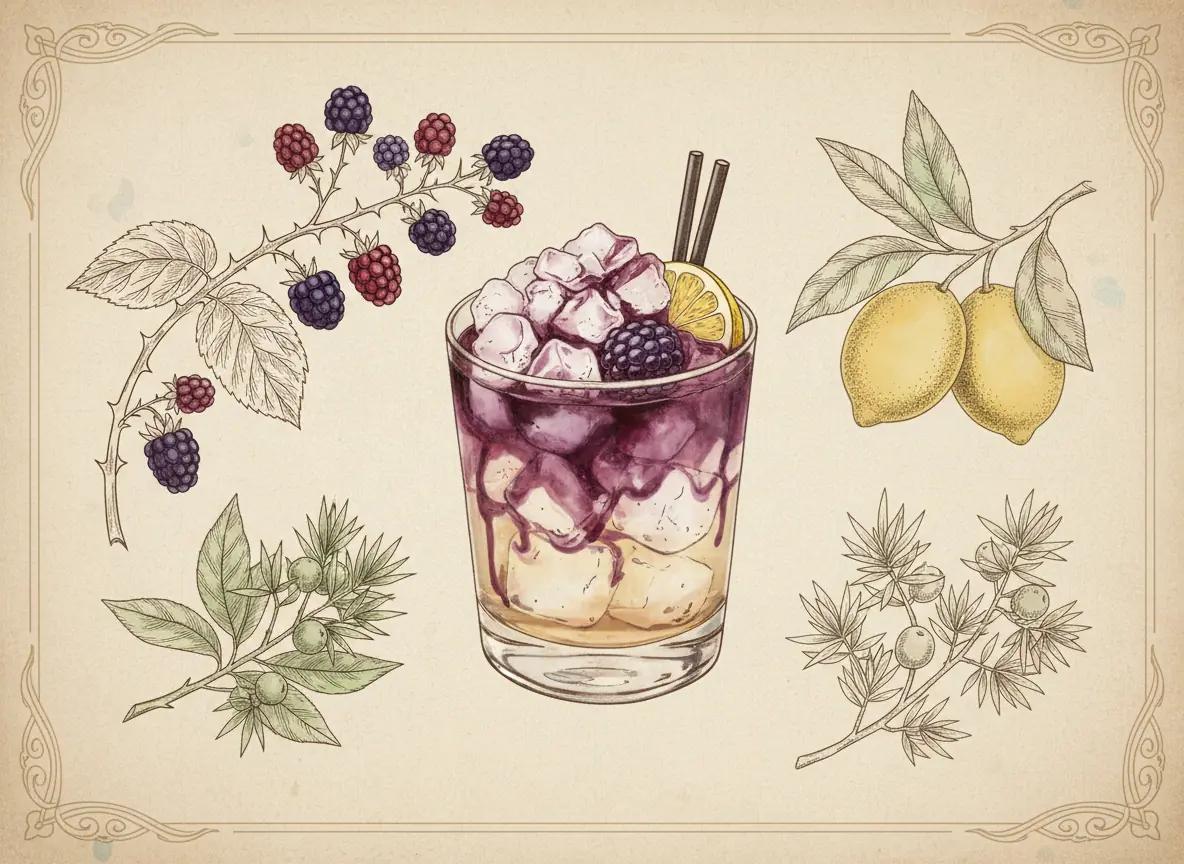
A Bramble is 50ml London Dry gin, 25ml fresh lemon juice and 12.5ml sugar syrup, shaken hard and strained over crushed ice in a rocks glass, with 15ml of crème de mûre poured over the top so it bleeds down through the ice. A lemon slice and blackberries finish it. About 2.2 UK units. These are the IBA’s measures. Dick Bradsell created it at Fred’s Club in Soho: Punch dates it to 1984, Bradsell’s own account in Difford’s Guide says the mid-eighties or thereabouts, and the Oxford Companion says 1989. He wanted a British cocktail, and he took the idea from going blackberrying as a child on the Isle of Wight. Bramble is the everyday name for the blackberry bush. Underneath, it is a gin sour. The liqueur on top makes it change as you drink: tart and sharp at first, darker and fruitier towards the bottom of the glass.
Kir Royale
A Kir Royale is 10ml of crème de cassis in a chilled flute, topped slowly with 90ml of cold brut champagne and not stirred. No garnish is needed. About 1.2 UK units. These are the IBA’s Kir measures, with champagne in place of white wine as the IBA’s own note directs. The Oxford Companion says the Kir is named after Félix Kir, the priest who was mayor of Dijon from 1945 to 1968, and that the drink, known as the Blanc Cassis, took his name only after his election. Difford’s Guide says he popularised it by promoting regional products at official functions. The Royale is the same idea with champagne. One part cassis in ten keeps it dry: the liqueur colours the wine and rounds its acidity without making it sweet. Difford’s Guide calls for six parts of wine to one of cassis, and the Oxford Companion gives 15ml to 100ml. Champagne contains sulphites.
Old Cuban
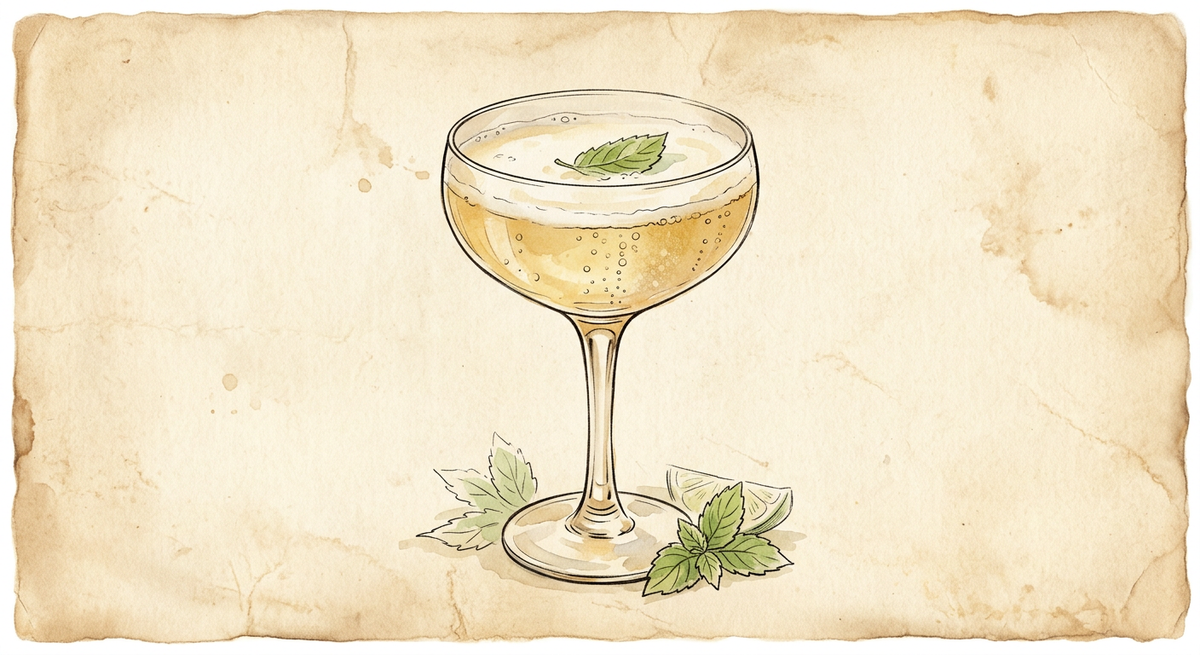
An Old Cuban is 45ml aged rum, 22.5ml fresh lime juice, 30ml simple syrup, two dashes of Angostura and six to eight mint leaves, shaken hard, double strained into a chilled coupe and topped with 60ml of brut champagne. That is the IBA specification, at about 2.5 UK units. Audrey Saunders created it: Punch, a secondary source, dates its debut to 2001, Imbibe to 2002 and Difford’s Guide to 2004. Punch says she opened Pegu Club in New York in 2005 and that it ran for fifteen years. The IBA lists the Old Cuban among its New Era cocktails. It reads as a Mojito dressed for an occasion: aged rum for white, champagne for soda, a coupe for a highball, and Angostura, which the IBA’s Mojito specification does not have. Shake the mint rather than muddle it, and strain it out.
Where this one sits
Recipe by Jerry Can Spirits · Updated 18 October 2026