Vodka Collins
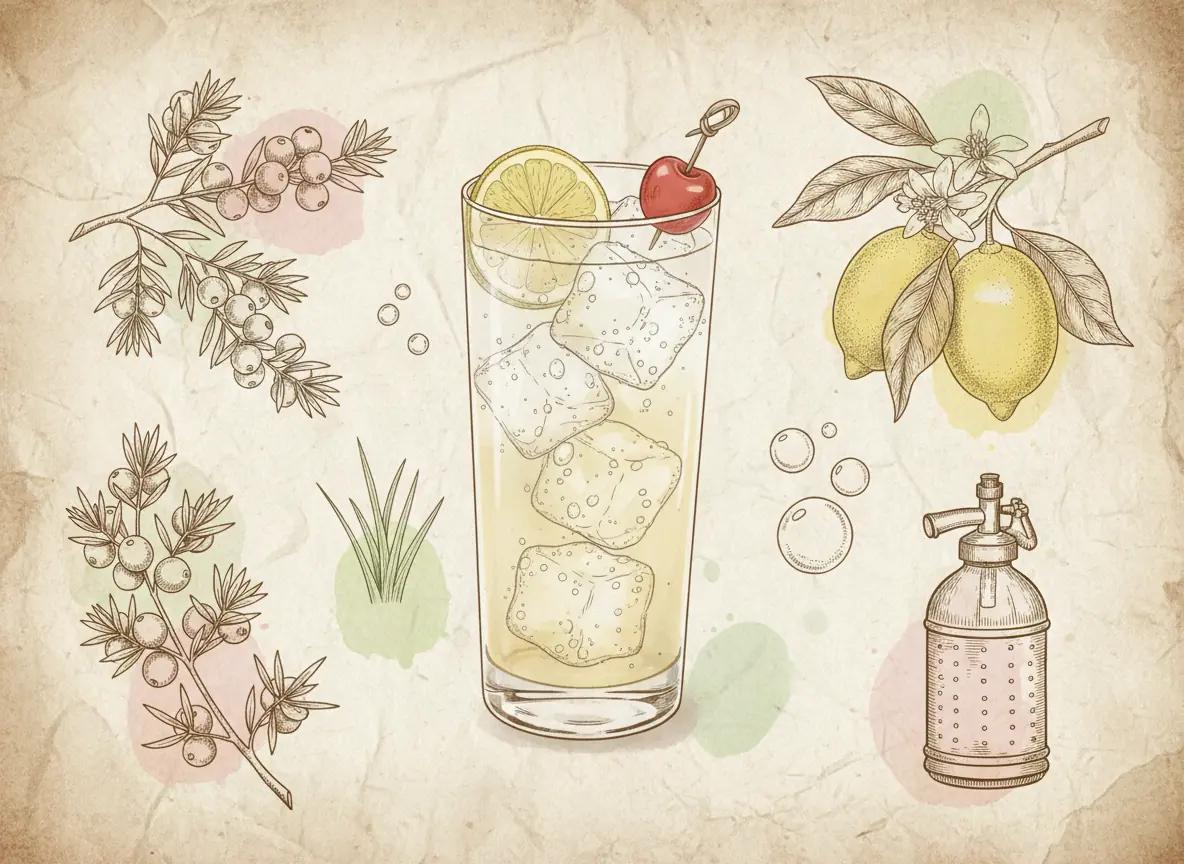
A Vodka Collins is 50ml of vodka, 25ml of fresh lemon juice and 20ml of sugar syrup, shaken hard for 10 to 12 seconds, strained over fresh ice in a collins glass and topped with 90ml of soda water, with a lemon wheel and a cherry. About 2.0 UK units. It is the Tom Collins with vodka in the place of gin. The Oxford Companion traces the Collins to Limmer’s Hotel in London, says the Old Tom version reached New York in 1872 and split into the John Collins and the Tom Collins, and says the Vodka Collins began to emerge in the 1930s and became ubiquitous in the 1950s. Harry Johnson printed a John Collins and a Tom Collins in 1882. Vodka adds strength and little flavour, so the lemon, sugar and soda carry the drink. That makes it a plain, clean long drink, and a useful control beside a Tom Collins: the only real change is the spirit.
Glassware: Collins Glass
Garnish: Lemon wheel and Maraschino cherry
Ingredients
50ml
At our working 40% ABV. It brings strength and little flavour, which leaves the lemon, sugar and soda to carry the drink. Choose one you would drink cold on its own.
25ml
Squeezed the same day. It is most of the flavour in the glass, so a tired lemon shows.
20ml
One part sugar to one part water, by weight. Twenty millilitres balances an average lemon; taste the juice first.
90ml
Cold and freshly opened, poured last. It lengthens the drink and lifts the lemon to the nose.
Instructions
Squeeze the lemon juice the same day.
Fill a collins glass to the top with cubed ice.
Add the vodka, lemon juice and sugar syrup to a shaker.
Fill with cubed ice and shake hard for 10 to 12 seconds.
Strain into the collins glass over the fresh ice.
Top with the soda water, poured down the side, and stir once.
Garnish with a lemon wheel and a cherry.
Our version
We have found no fixed historical measure for the Vodka Collins. Ours pours 50ml of vodka, 25ml of lemon and 20ml of syrup, shaken and topped with 90ml of soda: a little sweeter than our Tom Collins, to suit a spirit with no botanicals.
Source: our own specification. Last checked 9 October 2026.
Expert Tip
With no botanicals or barrel in the glass, the lemon carries the drink. Squeeze it the same day and taste the juice before you shake, because lemons vary and the syrup is set for an average one. Strain onto fresh ice rather than tipping in the shaker’s contents. The shaken ice is chipped and part-melted, and it waters the drink down within minutes. Fill the glass to the top with ice; a full glass keeps the drink colder and each cube lasts longer. Pour the soda last, down the side, and stir once. More stirring flattens it.
Behind the Vodka Collins
Flavour Profile
Where It Comes From
The Oxford Companion’s entry on the Collins says the family has its origin at Limmer’s Hotel, at the corner of Conduit and George streets in London, where John Collin was head waiter and bar manager from 1807 through the 1830s and his Gin Punch is attested as early as 1834. Its entry on the Tom Collins calls the drink an extra-large glass of Gin Punch lengthened with soda water and ice. In Harry Johnson’s manual of 1882 the scan shows a John Collins on Holland gin (no. 58) and a Tom Collins on Old Tom (no. 121), and a Thomas Bar-Tender’s Guide dated 1876 in the Internet Archive already prints Tom Collins recipes.
The Oxford Companion says the Vodka Collins began to emerge in the 1930s and became ubiquitous in the 1950s. We have found no primary record of the first one.
What Vodka Contributes
Strength and length, and little flavour. Every other Collins sets its spirit against the lemon: juniper in a Tom, malt and oak in a whiskey Collins.
With vodka, the lemon, sugar and bubbles are heard at their own volume. It drinks like a sharp, lightly sweetened lemonade with a spirit underneath.
The Collins Family
The Vodka Collins beside the Tom Collins and the John Collins; the John Collins row follows the IBA, the others are our recipes, and the units are our calculation
Vodka Collins (ours)
- Spirit
- 50ml vodka
- Lemon
- 25ml
- Syrup
- 20ml
- Soda
- 90ml
- UK units
- About 2.0
Tom Collins (ours)
- Spirit
- 60ml London Dry gin
- Lemon
- 30ml
- Syrup
- 15ml
- Soda
- 90ml
- UK units
- About 2.4
John Collins (IBA)
- Spirit
- 45ml gin
- Lemon
- 30ml
- Syrup
- 15ml
- Soda
- 60ml
- UK units
- About 1.8
| Drink | Spirit | Lemon | Syrup | Soda | UK units |
|---|---|---|---|---|---|
| Vodka Collins (ours) | 50ml vodka | 25ml | 20ml | 90ml | About 2.0 |
| Tom Collins (ours) | 60ml London Dry gin | 30ml | 15ml | 90ml | About 2.4 |
| John Collins (IBA) | 45ml gin | 30ml | 15ml | 60ml | About 1.8 |
The Control Glass
Because vodka adds so little, the Vodka Collins is the plainest way to learn the frame: how much acid a Collins carries, how sweet it should be, and what the soda does to both.
Make one beside a Tom Collins and the gin is the difference you taste. The lemon measures differ slightly, 25ml against 30ml, so match them if you want a strict comparison.
How to Serve It
Tall and cold, in a collins glass full of ice, with a lemon wheel and a cherry. It is a long, slow drink for a warm afternoon.
Made with gin it is a Tom Collins; served short, without the soda, a Vodka Sour.
Make it at home
The Spirit
VodkaVodka is spirit made from a farmed crop, usually grain or potatoes, distilled and refined so that the taste of that crop is deliberately reduced. Under the retained Regulation (EC) 110/2008 its minimum is 37.5% ABV and it may not be given a predominant flavour, which separates it from flavoured vodka and from gin; our recipes count it at 40%. In a mixed drink it adds strength and body while the other ingredients carry the taste.
More to explore
Frequently Asked Questions
What is a Vodka Collins?
How is it different from a Tom Collins?
Where does the Collins come from?
How much ice should go in the glass?
Should a Vodka Collins be shaken or built?
Why make it if vodka adds so little?
How strong is a Vodka Collins?
Sources.
Correct as of 19 October 2026.
- The Oxford Companion to Spirits and Cocktails (David Wondrich), “The Collins” (secondary source: Limmer’s Hotel, Conduit and George streets, London; John Collin, head waiter from 1807; Gin Punch attested as early as 1834; Delmonico’s, New York, 1872; the genever version the John Collins, the Old Tom version the Tom Collins).
- The Oxford Companion to Spirits and Cocktails (Robert Simonson), “Tom Collins” (secondary source: an extra-large glass of Gin Punch lengthened with soda water; the 1874 Tom Collins hoax; the Rum Collins from the 1930s; the Vodka Collins emerged in the 1930s and was ubiquitous in the 1950s).
- Harry Johnson (1882), Internet Archive, “Harry Johnson’s New and Improved Bartenders’ Manual” (primary source: 58 John Collins (a wine glass of Holland gin) and 121 Tom Collins (a wine glass of Old Tom gin), soda poured in).
- IBA, “John Collins” (official specification: John Collins, a gin drink).
You Might Also Like
Tom Collins
A Tom Collins is 60ml London Dry gin, 30ml fresh lemon juice and 15ml sugar syrup built over ice in a collins glass, topped with 90ml of cold soda and stirred once, with a lemon slice and a cherry. It is a collins in the plainest sense: spirit, citrus and sugar, topped with soda. Difford’s Guide, a secondary source, reports one account that traces the name to the Great Tom Collins Hoax of 1874, in which people in New York were told that a man called Tom Collins had been insulting them and could be found in a bar some distance away. It also gives accounts of a real Mr Collins. The drink the name attached to may be older: Difford’s credits John Collins, head waiter at Limmer’s Hotel on Conduit Street in London, with the Collins. Early recipes used Dutch genever, and Old Tom gin came into them later; the IBA still specifies Old Tom for a Tom Collins. This version uses London Dry for a drier, sharper drink, and the Old Tom version follows as a variation.
Vodka Sour
A Vodka Sour is 60ml of vodka, 25ml of fresh lemon juice and 20ml of simple syrup, shaken hard with ice for 10 to 12 seconds and strained over fresh ice in a rocks glass, with a lemon wheel and a cherry. About 2.4 UK units. With an egg white it needs a dry shake first, for 10 to 15 seconds, and goes into a chilled coupe. Vodka adds alcohol and almost no taste, so the drink is all lemon and of sugar set against acid. That makes it the plainest sour to learn on: every mistake shows. It follows the sour pattern of spirit, citrus and sugar, which the Oxford Companion dates to the 1850s, made with vodka, which the Companion calls relatively flavourless, colourless and odourless.
Screwdriver
A Screwdriver is 50ml of vodka and 120ml of fresh orange juice, built over cubed ice in a highball, stirred once and finished with an orange slice. About 2.0 UK units. It is not on the IBA’s current list. Older IBA lists gave 50ml of vodka to 100ml of orange juice; our extra 20ml of juice makes a longer, softer drink. The Oxford Companion, in an entry by Robert Simonson, calls the drink a product of the Second World War, when American troops and technicians in places such as China and Turkey cut neutral spirit with orange juice, and says the name first turns up in Ankara in 1943, apparently coined by interned American airmen. The usual explanation, that someone stirred the drink with a screwdriver for want of a spoon, has no source attached. With two ingredients, the juice decides the drink. Squeeze it the same day. Carton juice is heat-treated and loses much of the fresh fruit’s scent, and there is nothing else in the glass to make up for it.
Where this one sits
Recipe by Jerry Can Spirits · Updated 19 October 2026