Vodka Sour
A Vodka Sour is 60ml of vodka, 25ml of fresh lemon juice and 20ml of simple syrup, shaken hard with ice for 10 to 12 seconds and strained over fresh ice in a rocks glass, with a lemon wheel and a cherry. About 2.4 UK units. With an egg white it needs a dry shake first, for 10 to 15 seconds, and goes into a chilled coupe. Vodka adds alcohol and almost no taste, so the drink is all lemon and of sugar set against acid. That makes it the plainest sour to learn on: every mistake shows. It follows the sour pattern of spirit, citrus and sugar, which the Oxford Companion dates to the 1850s, made with vodka, which the Companion calls relatively flavourless, colourless and odourless.
Glassware: Rocks Glass
Garnish: Lemon wheel and Maraschino cherry
Ingredients
60ml
A plain, unflavoured vodka at 40% ABV. It adds strength and little flavour, so the lemon and sugar carry the drink. A flavoured vodka makes a different drink.
25ml
Squeezed the same day. With nothing to hide behind, tired or bottled juice makes the drink taste flat and slightly metallic.
20ml
Sugar and water, 1:1 by weight. The full measure suits an average lemon; taste the juice and take it down a little if the lemon is mild.
1 (about 30ml), optional
Optional. It adds no flavour, only a soft foam, and needs the dry shake. Raw. The NHS says hen eggs with the British Lion stamp can be eaten raw, including in pregnancy, while other hen eggs should be eaten well cooked; pasteurised carton white is the alternative. Contains egg: leave it out, or use aquafaba, for anyone allergic.
Instructions
Squeeze the lemon juice the same day.
Add the vodka, lemon juice and simple syrup to a shaker, with the egg white if you are using it.
With egg white, dry shake without ice for 10 to 15 seconds.
Fill with ice and shake hard for 10 to 12 seconds.
Strain over fresh ice in a rocks glass, or double strain into a chilled coupe for the egg white version.
Garnish with a lemon wheel and a cherry.
Expert Tip
Taste the lemon before you measure the syrup. Lemons vary through the year, and with a spirit that adds no flavour of its own, the balance is the whole drink. A sharp lemon takes the full 20ml; a mild one needs a little less. With egg white, dry shake for 10 to 15 seconds before the ice goes in, then shake hard for 10 to 12 seconds with ice. Skip the dry shake and the foam stays thin. Double strain the egg version through a fine strainer. It catches any stringy white and leaves a smoother foam.
Behind the Vodka Sour
Flavour Profile
Where It Comes From
The sour is older than vodka’s place in Western bars. The Oxford Companion dates the sour to the 1850s, with its first appearance in print a casual reference in the New York Times of 1857, and says Jerry Thomas described it in 1862 as the fix with all fruits omitted except a small piece of lemon.
The Oxford Companion says the Moscow Mule became one of the first popular uses of vodka in American bars, and that vodka, a relatively flavourless, colourless, odourless spirit, is the basis for all manner of cocktails.
Why the Plainness Is Useful
In a Whiskey Sour or a Gin Sour the spirit adds a flavour of its own, oak or juniper. Vodka adds almost none, so what you taste is the balance itself: acid against sugar, how cold the drink is and how much water the shake added.
That makes it a good drink to learn the sour on. Get the balance right here and it carries over to the others.
The Lemons
Lemons change through the year in acid and sweetness. Try a drop of the juice first: a sharp lemon takes the full 20ml of syrup, and a mild one needs a little less, or the drink turns sweet and soft.
The Egg White
The white adds no flavour. It lays a soft foam over the drink and slows how the acid arrives, so the sourness lands later and gentler.
It needs the dry shake: 10 to 15 seconds with no ice, so the foam builds before the cold sets in, then 10 to 12 seconds hard with ice. Double strain it into a chilled coupe.
With or Without Egg
The Vodka Sour two ways
Shake
- Without egg white
- 10 to 12 seconds hard, with ice
- With egg white
- Dry shake 10 to 15 seconds, then 10 to 12 seconds hard with ice
Strain
- Without egg white
- Over fresh ice
- With egg white
- Double strained
Glass
- Without egg white
- Rocks glass
- With egg white
- Chilled coupe
Texture
- Without egg white
- Sharp and direct
- With egg white
- Silky, with a foam
Allergen
- Without egg white
- None
- With egg white
- Egg
UK units
- Without egg white
- 2.4
- With egg white
- 2.4
| Element | Without egg white | With egg white |
|---|---|---|
| Shake | 10 to 12 seconds hard, with ice | Dry shake 10 to 15 seconds, then 10 to 12 seconds hard with ice |
| Strain | Over fresh ice | Double strained |
| Glass | Rocks glass | Chilled coupe |
| Texture | Sharp and direct | Silky, with a foam |
| Allergen | None | Egg |
| UK units | 2.4 | 2.4 |
One Step From Others
A dash of bitters shaken in darkens and dries it; the same build with gin is, as Difford’s Guide lists it, a Fitzgerald. Trade the lemon for lime and you are near a Vodka Gimlet. A sugared rim and some orange liqueur make a Lemon Drop, in our experience.
Make it at home
The Spirit
VodkaVodka is spirit made from a farmed crop, usually grain or potatoes, distilled and refined so that the taste of that crop is deliberately reduced. Under the retained Regulation (EC) 110/2008 its minimum is 37.5% ABV and it may not be given a predominant flavour, which separates it from flavoured vodka and from gin; our recipes count it at 40%. In a mixed drink it adds strength and body while the other ingredients carry the taste.
More to explore
Frequently Asked Questions
What is in a Vodka Sour?
Should a Vodka Sour have egg white?
Why does my Vodka Sour taste flat?
How strong is a Vodka Sour?
Is raw egg white a problem?
How do I make a vegan Vodka Sour?
What drinks are close to a Vodka Sour?
Sources.
Correct as of 19 October 2026.
- The Oxford Companion to Spirits and Cocktails (David Wondrich), “The sour” (secondary source: an American drink of the 1850s; first in print in a New York Times reference of 1857; Thomas’s sour as the fix omitting all fruits except a small piece of lemon).
- The Oxford Companion to Spirits and Cocktails (Mark L. Schrad), “vodka” (secondary source: a relatively flavourless, colourless, odourless spirit, the basis for all manner of cocktails).
- Difford’s Guide, “Fitzgerald” (secondary source: a gin sour with Angostura bitters and no egg white; from Dale DeGroff’s early-1990s recipe).
- NHS, “Foods to avoid in pregnancy” (official page: hen eggs with the British Lion stamp (or from the Laid in Britain scheme) can be eaten raw, partially cooked or well cooked; other hen eggs only well cooked).
- The Oxford Companion to Spirits and Cocktails (Paul Clarke), “The Moscow Mule” (secondary source: one of the first popular uses of vodka in American bars).
You Might Also Like
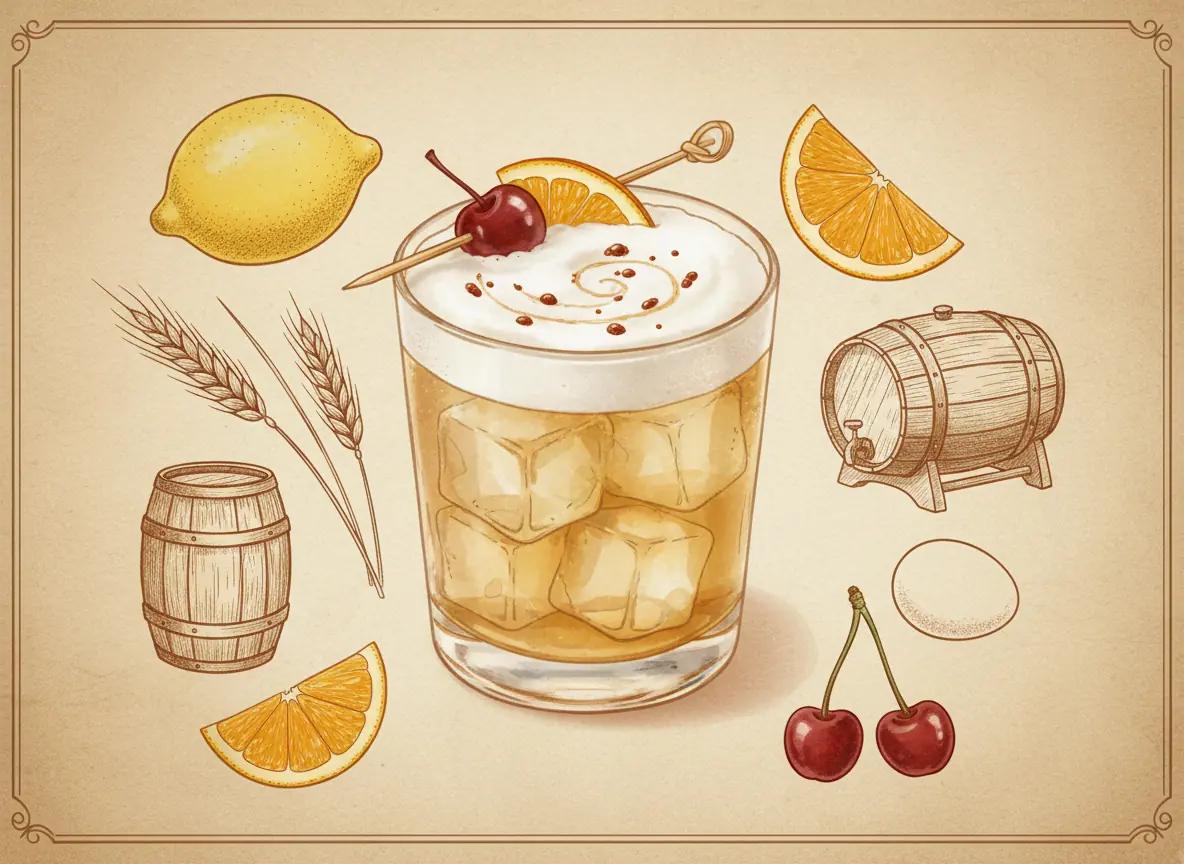
Whiskey Sour
A Whiskey Sour is 45ml of bourbon, 25ml of fresh lemon juice and 20ml of sugar syrup, shaken hard with ice, then poured through a strainer onto fresh cubes in a rocks glass, with half an orange slice and a cherry. Add 15ml of egg white, dry shaken first, and dot the foam with Angostura. About 1.8 UK units. The measures are the IBA’s. The IBA’s egg white is optional and only a few drops; we use 15ml, about half a white, because that is what a full foam takes. The bitters are not in the IBA recipe, and they only go on when there is foam to hold them. The name is in print by 1870, in a Wisconsin newspaper, and the sour is older still: Jerry Thomas printed brandy, gin and rum sours in 1862. Difford’s Guide lists a Boston Sour as bourbon soured with lemon juice and smoothed by egg white.
Vodka Collins
A Vodka Collins is 50ml of vodka, 25ml of fresh lemon juice and 20ml of sugar syrup, shaken hard for 10 to 12 seconds, strained over fresh ice in a collins glass and topped with 90ml of soda water, with a lemon wheel and a cherry. About 2.0 UK units. It is the Tom Collins with vodka in the place of gin. The Oxford Companion traces the Collins to Limmer’s Hotel in London, says the Old Tom version reached New York in 1872 and split into the John Collins and the Tom Collins, and says the Vodka Collins began to emerge in the 1930s and became ubiquitous in the 1950s. Harry Johnson printed a John Collins and a Tom Collins in 1882. Vodka adds strength and little flavour, so the lemon, sugar and soda carry the drink. That makes it a plain, clean long drink, and a useful control beside a Tom Collins: the only real change is the spirit.
Gold Rush
A Gold Rush is 60ml bourbon, 22.5ml fresh lemon juice and 22.5ml honey syrup, made with twice as much honey as warm water. Shake it hard for 10 to 12 seconds, strain it onto a single big cube in a rocks glass and finish with a lemon twist. About 2.4 UK units. Punch credits T.J. Siegal, at Milk & Honey in New York, with the idea sometime in 2000, and VinePair dates the drink to 2001. T.J. Siegal, a friend of the owner, Sasha Petraske, ordered his usual Whiskey Sour and asked for it without the egg white and with honey syrup in place of sugar. The change stuck, and the drink became a modern standard. Honey does more than sweeten. It tastes faintly of flowers and wax, gives the drink weight that sugar syrup cannot, and sits comfortably with the vanilla and caramel in bourbon. With no egg and no bitters, the Gold Rush is plainer and heavier than a Whiskey Sour, and quicker to make.
Where this one sits
Recipe by Jerry Can Spirits · Updated 19 October 2026