Toffee Apple Sour
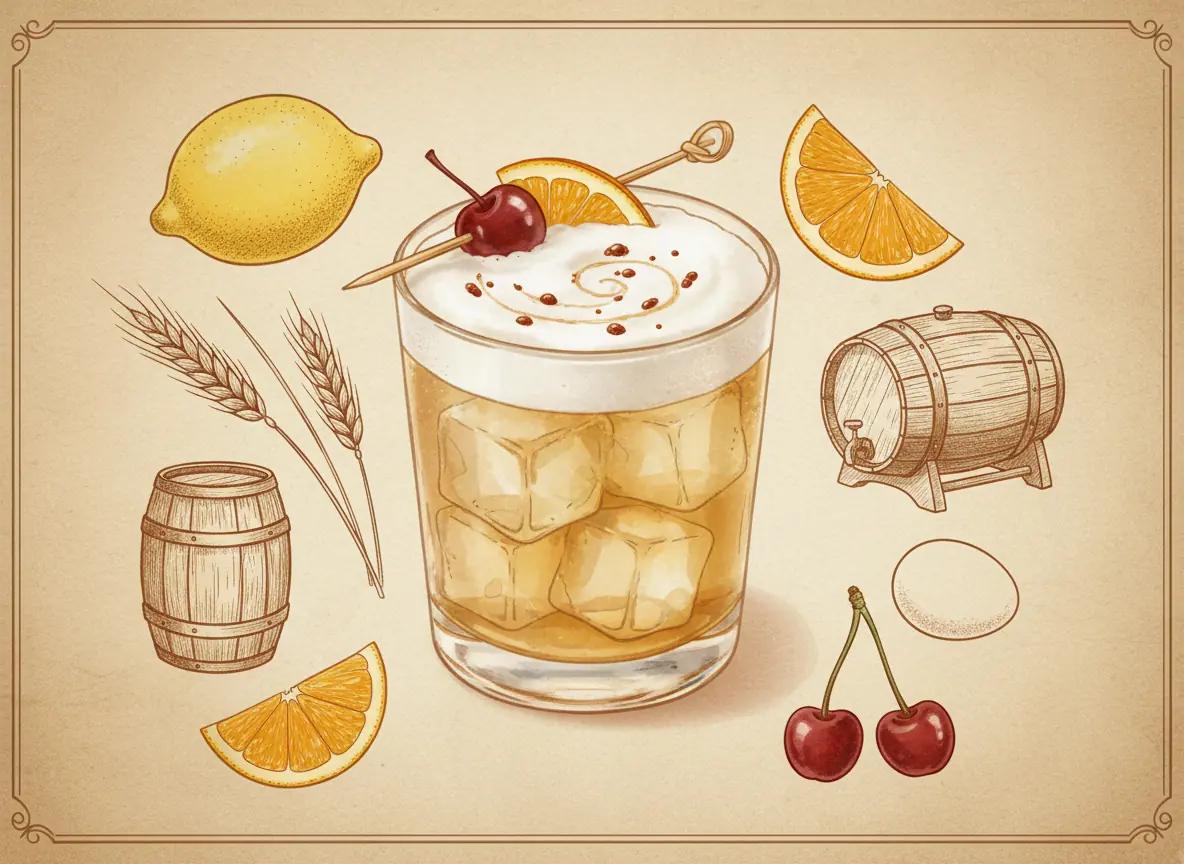
The Toffee Apple Sour is 45ml of bourbon, 25ml of fresh lemon juice, 20ml of cloudy apple juice, 15ml of caramel syrup and 15ml of egg white, dry shaken for 10 to 15 seconds, shaken hard with ice for 10 to 12 and strained over fresh ice in a rocks glass. About 1.8 UK units, all from the bourbon. It is our house recipe for Bonfire Night: the Whiskey Sour, with the flavours of a toffee apple. The apple is cloudy apple juice, which is alcohol-free; there is no cider in it. The egg white is optional and goes in raw. It makes the foam that holds a thread of caramel on top. Without it the drink is a sharper, clearer bourbon sour with apple.
Glassware: Rocks Glass
Garnish: Caramel syrup drizzled over the foam (optional)
Ingredients
45ml
Bourbon at 40% ABV. Its vanilla and caramel from new charred oak sit under the syrup and do part of the toffee’s work.
20ml
Pressed cloudy apple juice, alcohol-free. It brings fruit and body; clear juice from concentrate is mostly sweetness.
15ml
A pourable caramel syrup of the kind made for coffee. A caramel sauce made with butter or cream is thicker and contains milk.
15ml (optional)
About half a white, raw. It builds the foam. Use British Lion eggs or pasteurised white, and leave it out for anyone allergic to egg.
Instructions
Add the bourbon, lemon juice, apple juice, caramel syrup and egg white to a shaker.
Dry shake without ice for 10 to 15 seconds.
Add cubed ice and shake hard for 10 to 12 seconds.
Strain into a rocks glass over fresh ice.
Drizzle a little caramel syrup over the foam, if you like.
Our version
Our Bonfire Night recipe on the Whiskey Sour frame: cloudy apple juice and caramel syrup in place of plain syrup, with optional egg white, dry shaken.
Source: our own specification. Last checked 10 October 2026.
Expert Tip
Dry shake for 10 to 15 seconds before any ice goes in. Without ice the egg white whips into foam; the second shake, 10 to 12 seconds with ice, chills and dilutes it. Skip the first and the foam stays thin. Use cloudy pressed apple juice, not clear juice from concentrate. Cloudy juice tastes of apple and adds body; clear juice adds mostly sugar to a drink the caramel already sweetens. The egg white is raw. Use British Lion eggs, which the NHS says can be eaten raw, including in pregnancy, or pasteurised white from a carton, and leave it out for anyone allergic to egg.
Behind the Toffee Apple Sour
Flavour Profile
A House Sour for the Fifth of November
This is our recipe, written for Bonfire Night, and it claims no history. The frame is the Whiskey Sour: bourbon, lemon and sugar, with egg white for foam. Cloudy apple juice and caramel syrup stand in for plain sugar syrup.
The flavour it aims at is the toffee apple, an apple set in hard caramel and sold at bonfires and fairs. For a hot drink on the same idea, the Hot Toffee Apple warms the bourbon and caramel in cloudy apple juice.
Why It Balances
Caramel syrup and apple juice both bring sugar, so the lemon has to be generous: 25ml against 35ml of sweet ingredients. That keeps the drink a sour and stops it becoming a pudding.
Bourbon helps. Its vanilla and caramel from new charred oak sit under the syrup, so 15ml of caramel is enough to read as toffee.
The Foam
Fifteen millilitres of egg white, about half a white, makes a full foam. Dry shake it first for 10 to 15 seconds, then shake with ice for 10 to 12.
The foam does a second job: it holds a thin drizzle of caramel on top, where a plain sour would let it sink to the bottom.
Three Bourbon Drinks for Autumn
The Toffee Apple Sour beside the Whiskey Sour and the Hot Toffee Apple
Toffee Apple Sour
- Bourbon
- 45ml
- Sweetener
- 15ml caramel syrup
- Other
- 25ml lemon, 20ml cloudy apple juice, optional egg white
- Served
- Cold, over ice
- UK units
- About 1.8
Whiskey Sour
- Bourbon
- 45ml
- Sweetener
- 20ml sugar syrup
- Other
- 25ml lemon, optional egg white
- Served
- Cold, over ice
- UK units
- About 1.8
Hot Toffee Apple
- Bourbon
- 50ml
- Sweetener
- 15ml caramel syrup
- Other
- 150ml cloudy apple juice
- Served
- Hot, in a mug
- UK units
- About 2.0
| Drink | Bourbon | Sweetener | Other | Served | UK units |
|---|---|---|---|---|---|
| Toffee Apple Sour | 45ml | 15ml caramel syrup | 25ml lemon, 20ml cloudy apple juice, optional egg white | Cold, over ice | About 1.8 |
| Whiskey Sour | 45ml | 20ml sugar syrup | 25ml lemon, optional egg white | Cold, over ice | About 1.8 |
| Hot Toffee Apple | 50ml | 15ml caramel syrup | 150ml cloudy apple juice | Hot, in a mug | About 2.0 |
How to Serve It
Over fresh ice in a rocks glass, with a thread of caramel across the foam if you like. Outdoors on a cold night the ice melts slowly, so the drink holds its balance longer than it would indoors.
Without the apple and caramel it is a Whiskey Sour; for the hot version, a Hot Toffee Apple; for bourbon with honey and lemon, a Gold Rush.
Make it at home
The Spirit
Whiskey (Bourbon)Under the US standard 27 CFR 5.143, bourbon is an American whiskey whose mash is at least 51% corn, matured in fresh charred oak barrels and bottled at 40% ABV or higher, the figure our recipes use. The fresh charred wood gives it its vanilla, caramel and colour, and the corn gives a rounder, sweeter spirit than rye. It is the base of 26 of our recipes, more than any other whiskey.
More to explore
Frequently Asked Questions
What is in a Toffee Apple Sour?
Is there cider in a Toffee Apple Sour?
Do I need the egg white?
Why shake without ice first?
Which bourbon should I use?
Can I make Toffee Apple Sours for a crowd?
How strong is a Toffee Apple Sour?
Sources.
Correct as of 19 October 2026.
- NHS, “Foods to avoid in pregnancy” (official page: hen eggs with the British Lion stamp (or from the Laid in Britain scheme) can be eaten raw, partially cooked or well cooked; other hen eggs only well cooked).
You Might Also Like
Whiskey Sour
A Whiskey Sour is 45ml of bourbon, 25ml of fresh lemon juice and 20ml of sugar syrup, shaken hard with ice, then poured through a strainer onto fresh cubes in a rocks glass, with half an orange slice and a cherry. Add 15ml of egg white, dry shaken first, and dot the foam with Angostura. About 1.8 UK units. The measures are the IBA’s. The IBA’s egg white is optional and only a few drops; we use 15ml, about half a white, because that is what a full foam takes. The bitters are not in the IBA recipe, and they only go on when there is foam to hold them. The name is in print by 1870, in a Wisconsin newspaper, and the sour is older still: Jerry Thomas printed brandy, gin and rum sours in 1862. Difford’s Guide lists a Boston Sour as bourbon soured with lemon juice and smoothed by egg white.
Gold Rush
A Gold Rush is 60ml bourbon, 22.5ml fresh lemon juice and 22.5ml honey syrup, made with twice as much honey as warm water. Shake it hard for 10 to 12 seconds, strain it onto a single big cube in a rocks glass and finish with a lemon twist. About 2.4 UK units. Punch credits T.J. Siegal, at Milk & Honey in New York, with the idea sometime in 2000, and VinePair dates the drink to 2001. T.J. Siegal, a friend of the owner, Sasha Petraske, ordered his usual Whiskey Sour and asked for it without the egg white and with honey syrup in place of sugar. The change stuck, and the drink became a modern standard. Honey does more than sweeten. It tastes faintly of flowers and wax, gives the drink weight that sugar syrup cannot, and sits comfortably with the vanilla and caramel in bourbon. With no egg and no bitters, the Gold Rush is plainer and heavier than a Whiskey Sour, and quicker to make.
Where this one sits
Recipe by Jerry Can Spirits · Updated 19 October 2026