Piña Verde
A Piña Verde is 45ml of green Chartreuse, 45ml of pineapple juice, 22.5ml of cream of coconut and 15ml of lime juice, shaken until chilled and strained over pebble ice, with a mint sprig. Close to 2.5 UK units, all of it from the Chartreuse at 55% ABV. Erick Castro of San Diego is the creator. Punch says it grew out of his habit of adding green Chartreuse to Piña Coladas, until he dropped the rum altogether. Staff at Polite Provisions nicknamed it the Greenya Colada. It keeps the shape of a Piña Colada and replaces the rum with an herbal liqueur. There is no base spirit at all.
Glassware: Rocks Glass
Garnish: Mint sprig slapped lightly against the palm before it goes in
Ingredients
45ml
At 55% ABV it is the whole spirit load of the drink, so measure it exactly. Punch prints no other spirit.
45ml
Punch does not specify fresh. Fresh juice gives a brighter, more acidic drink than a carton.
22.5ml
Punch prints Coco Lopez. A sweetened cream of coconut is essential, and coconut milk makes a thin, unsweet drink.
Instructions
Fill a rocks glass with pebble ice and leave it to chill.
Squeeze the lime the day you serve.
Add the green Chartreuse, pineapple juice, cream of coconut and lime juice to a shaker with ice.
Shake hard until the tin is frosted, about 10 to 12 seconds.
Strain over the pebble ice.
Slap a mint sprig against your palm and drop it into the drink.
Source: its creator's published specification (Erick Castro, published at Punch (punchdrink.com/recipes/pina-verde/), which names him as creator; measures, method and garnish as printed there (1 1/2oz green Chartreuse, 1 1/2oz pineapple juice, 3/4oz Coco Lopez, 1/2oz lime juice, shaken, rocks glass over pebble ice, mint sprig; blender method in the editor’s note)). Last checked 1 November 2026.
Expert Tip
Stir the cream of coconut before measuring. It separates, and the thick top and thin bottom pour differently, which changes the sweetness. Pebble ice does the dilution at the table, so shake without worrying about a long dilute. Crushed or cracked ice from a bag also works. If you blend it, start with less ice than you think. Punch suggests five or six cracked cubes and building up, because too much ice cuts the Chartreuse to nothing.
Behind the Piña Verde
Flavour Profile
A Piña Colada without the rum
Punch says the Piña Verde was inspired by Erick Castro’s habit of putting green Chartreuse into his Piña Coladas. He wanted a drink rich in herbal flavour. Rum did not do it, nor did gin, so he removed the spirit and increased the liqueur to fill the gap. The staff at Polite Provisions nicknamed it the Greenya Colada.
Why the Chartreuse can carry it
Green Chartreuse is 55% ABV and strongly herbal, with enough sweetness to stand in for a base. Against it, pineapple juice adds acidity and fruit, and cream of coconut adds sweetness and body. The lime keeps the sweetness in check.
Punch prints Coco Lopez, the sweetened cream of coconut that is a staple of the Piña Colada, so the drink stays tethered to the original. Cream of coconut is sweetened, unlike coconut cream or coconut milk, and the recipe depends on that sugar.
Shaken over pebble ice, or blended
The method is a hard shake and a strain over pebble ice. Punch adds that the drink can be blended. Add everything to a blender with five or six cracked ice cubes, start with less ice and add more until the texture suits you, then pour into a glass or a tiki mug.
The Piña Verde beside three tropical drinks
Piña Verde
- Base
- 45ml green Chartreuse
- Juice
- 45ml pineapple, 15ml lime
- Coconut
- 22.5ml cream of coconut
- Method
- Shaken, or blended
Piña Colada
- Base
- Rum
- Juice
- Pineapple
- Coconut
- Cream of coconut
- Method
- Blended or shaken
Painkiller
- Base
- Rum
- Juice
- Pineapple and orange
- Coconut
- Cream of coconut
- Method
- Shaken
Jungle Bird
- Base
- Rum
- Juice
- Pineapple and lime
- Coconut
- None
- Method
- Shaken
| Drink | Base | Juice | Coconut | Method |
|---|---|---|---|---|
| Piña Verde | 45ml green Chartreuse | 45ml pineapple, 15ml lime | 22.5ml cream of coconut | Shaken, or blended |
| Piña Colada | Rum | Pineapple | Cream of coconut | Blended or shaken |
| Painkiller | Rum | Pineapple and orange | Cream of coconut | Shaken |
| Jungle Bird | Rum | Pineapple and lime | None | Shaken |
Set it next to the Piña Colada and the Painkiller and the rum is the only change. Compare the Last Word for another drink built around green Chartreuse.
Make it at home
The Spirit
Green ChartreuseGreen Chartreuse is a herbal liqueur from the French Alps, made from 130 plants at 55% ABV on its maker’s product page, which credits its colour to those plants. Chartreuse’s own history says it is made close to the Grande Chartreuse monastery, where the only two people who know the formula live. It is strong enough to lead any drink it is in, as it does in the Last Word, the Bijou and the Chartreuse Swizzle.
More to explore
Frequently Asked Questions
Who created the Piña Verde?
Is there any rum in a Piña Verde?
How strong is a Piña Verde?
Can I use yellow Chartreuse?
What is cream of coconut?
Can I blend a Piña Verde?
Can I make a Piña Verde in a batch?
Sources.
Correct as of 1 November 2026.
- Punch, “Piña Verde” (recipe and history: Erick Castro, San Diego; 1 1/2oz green Chartreuse, 1 1/2oz pineapple juice, 3/4oz Coco Lopez, 1/2oz lime juice, shaken, rocks glass over pebble ice, mint sprig; nickname Greenya Colada at Polite Provisions; blender variation).
- NHS, “Calculating alcohol units” (the 14-units-a-week guidance and the units calculation).
You Might Also Like
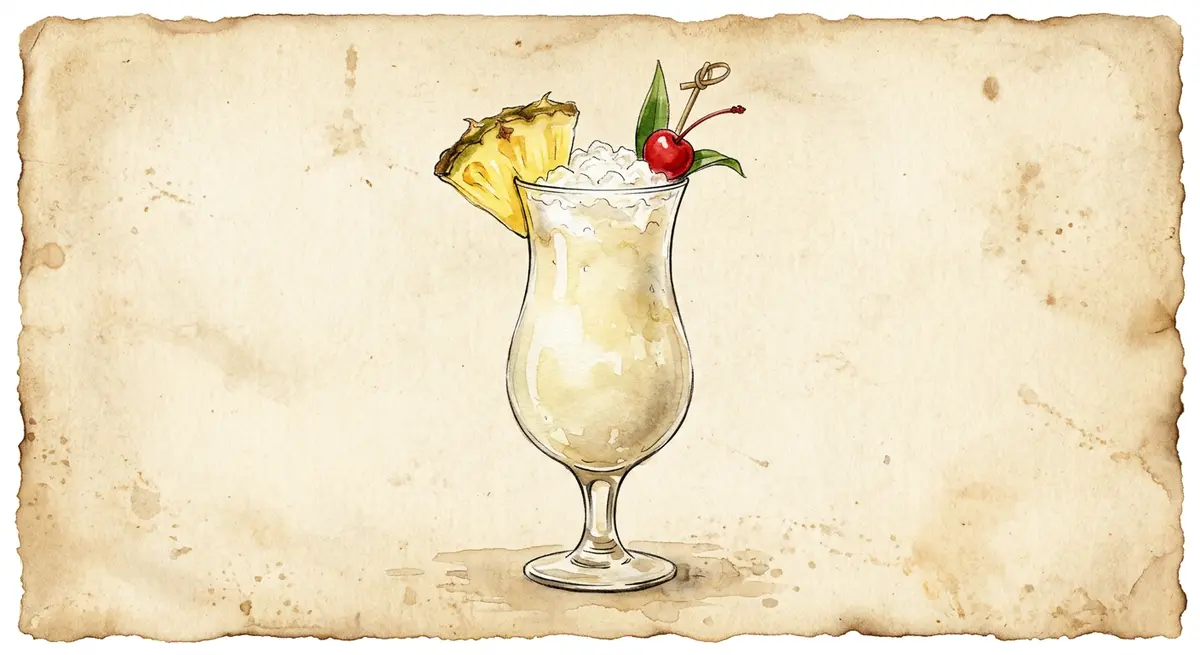
Piña Colada
A Piña Colada is white rum, pineapple and cream of coconut blended with ice: 50ml white rum, 50ml fresh pineapple juice and 30ml cream of coconut, blended for 10 to 15 seconds with a cup of crushed ice and poured into a hurricane glass, with a pineapple wedge and a cherry. The measures are the IBA’s own. A few drops of lime are optional, to correct a sweet batch. The Caribe Hilton in San Juan credits its bartender Ramón “Monchito” Marrero with the drink in 1954, as Difford’s Guide reports; Difford’s adds that Marrero himself claimed 15 August 1952. It depends on Coco López, the sweetened cream of coconut Ramón López Irizarry developed in 1949, by Imbibe’s account. There are rivals: Ricardo García, also at the Caribe Hilton, claims to have invented it, with 1954 the year Punch gives, and the Barrachina restaurant, by its own account, names Ramón Portas Mingot in 1963. Punch says the Piña Colada was declared Puerto Rico’s national drink in 1978. Cream of coconut is the ingredient that decides it: thick, sweet and rich in fat, never coconut milk. Each one carries about 2.0 UK units.
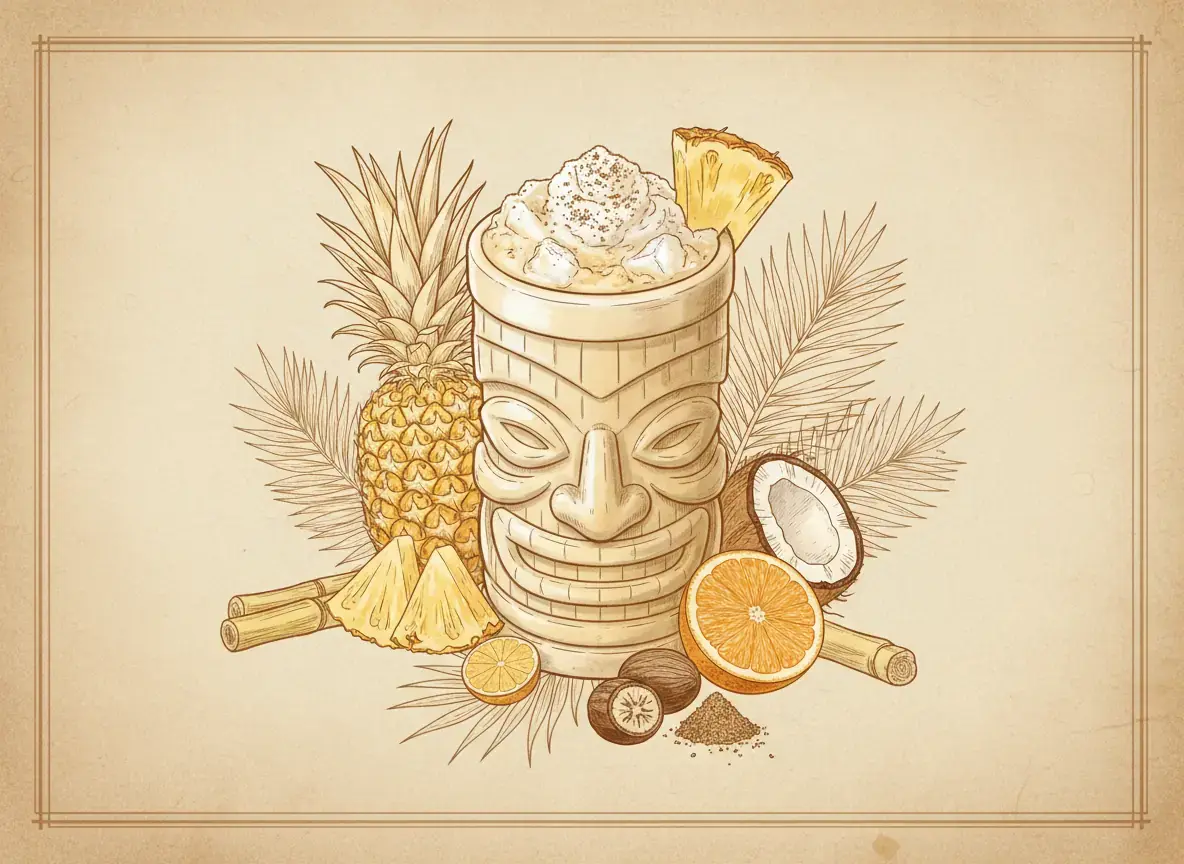
Painkiller
A Painkiller is 60ml of Pusser’s Rum, 120ml of pineapple juice, 30ml of fresh orange juice and 30ml of cream of coconut, given a hard 10 to 12 second shake and strained onto cubed ice in a tiki mug or a big glass, with fresh nutmeg grated on top. About 2.4 UK units. Cream of coconut is coconut and sugar, usually with no dairy, but check the label. The name belongs to Pusser’s. Pusser’s prints the name with the registered symbol on its own Painkiller page, and the Oxford Companion says the company owns the trademark for the Pusser’s Painkiller cocktail. The recipe here is its own: four parts pineapple, one of cream of coconut and one of orange, with Pusser’s to suit. Difford’s Guide says it trademarked the name in the United States and the UK in 2003 and in 2010 forced a New York bar called Painkiller to rename itself PKNY. Pusser’s traces the drink to Daphne Henderson’s Soggy Dollar Bar on Jost Van Dyke, in the British Virgin Islands.
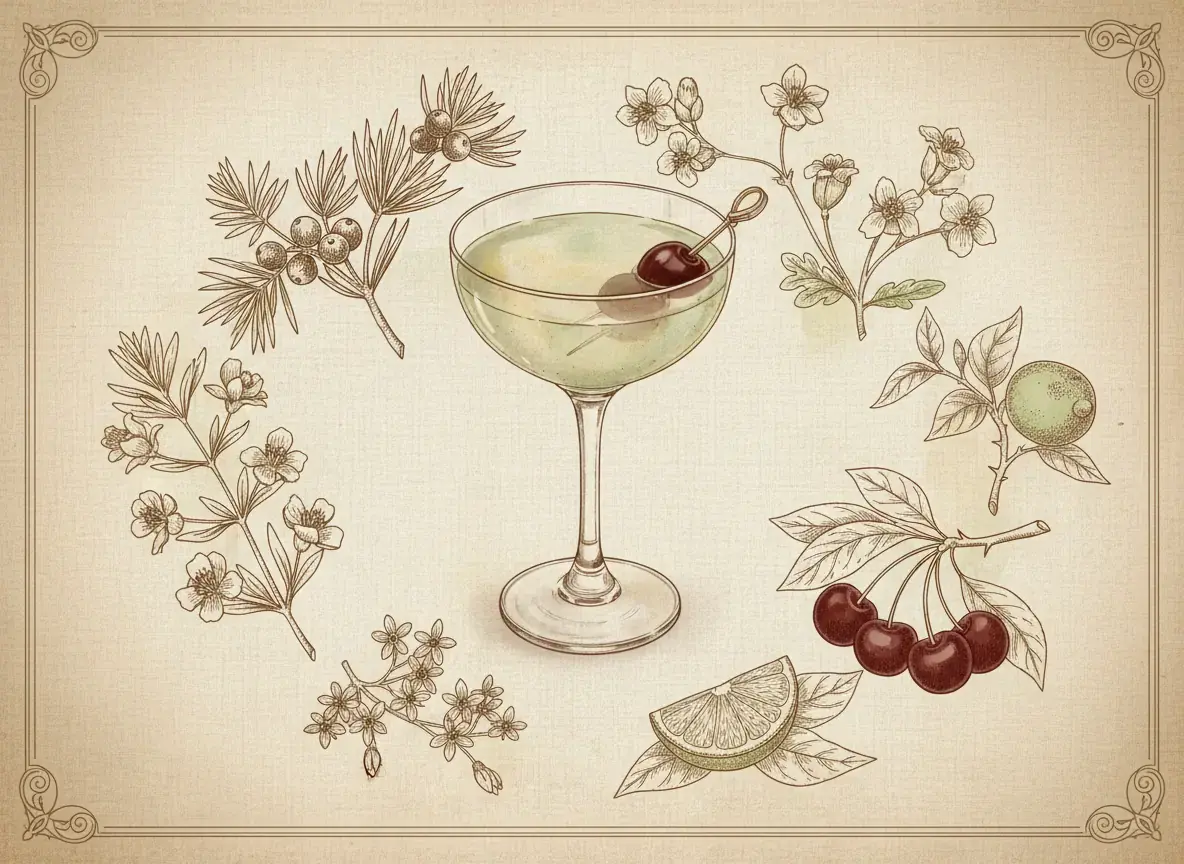
Last Word
A Last Word is 22.5ml each of gin, green Chartreuse, maraschino liqueur and fresh lime juice, shaken hard for 10 to 12 seconds and double strained into a chilled Nick & Nora or coupe. About 2.9 UK units. The measures are the IBA’s; the cherry or lime twist is ours. The Oxford Companion says the drink first appears in print in the Detroit Athletic Club News in 1916, on a menu at 35 cents, a high price then. Ted Saucier’s Bottoms Up of 1951 prints the recipe, quoting a club source who says Frank Fogarty, a vaudeville monologist, introduced it there about thirty years earlier. In 2003 Murray Stenson put it on the menu at the Zig Zag Café in Seattle, from where it spread, the Companion says. Four strong flavours at equal volume, and none takes over. Chartreuse brings herbs and heat, maraschino cherry and a bitter almond edge, lime the acid, and gin holds them together.
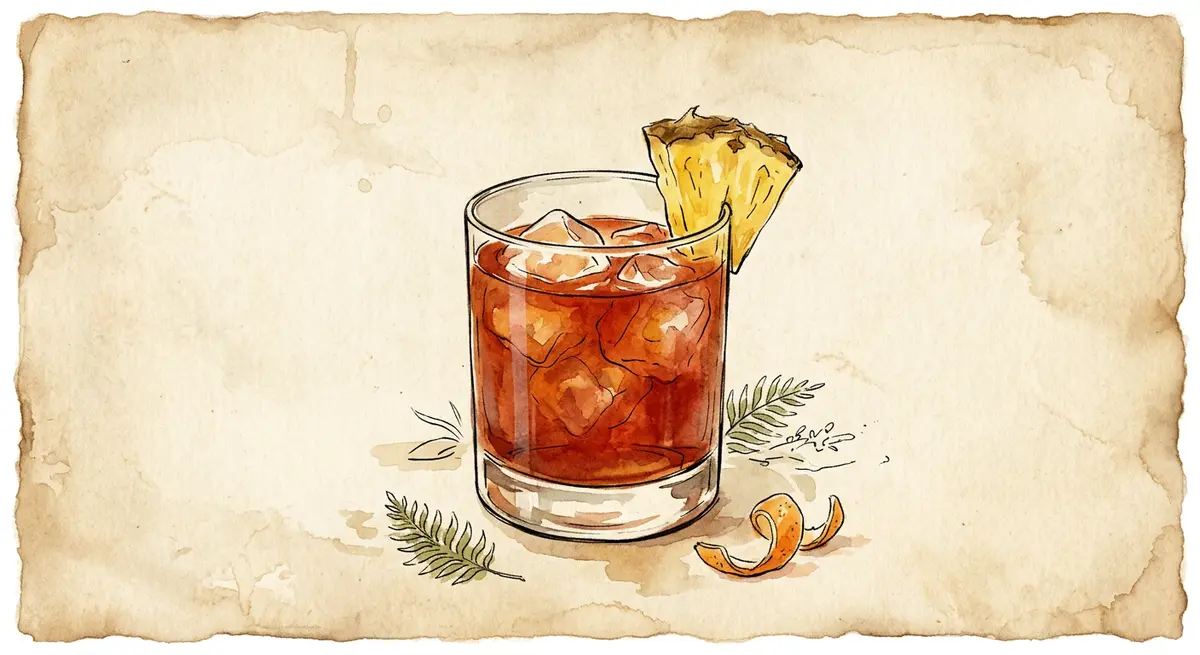
Jungle Bird
A Jungle Bird is 45ml of blackstrap rum, 22.5ml of Campari, 45ml of fresh pineapple juice, 15ml of fresh lime juice and 15ml of demerara syrup, shaken hard for 10 to 12 seconds and strained over fresh ice in a double rocks glass, with a pineapple wedge. About 2.4 UK units. These are the IBA’s measures. It is credited to Jeffrey Ong, beverage manager at the Aviary Bar of the Kuala Lumpur Hilton, where it was poured as a welcome drink for guests; Difford’s Guide dates it to the hotel’s opening on 6 July 1973. The recipe reached print in John J. Poister’s New American Bartender’s Guide in 1989. Campari is what sets it apart. Pineapple has the body and sugar to carry the bitterness, and a heavy rum underneath holds both.
Where this one sits
Recipe by Jerry Can Spirits · Updated 1 November 2026