Tia Mia
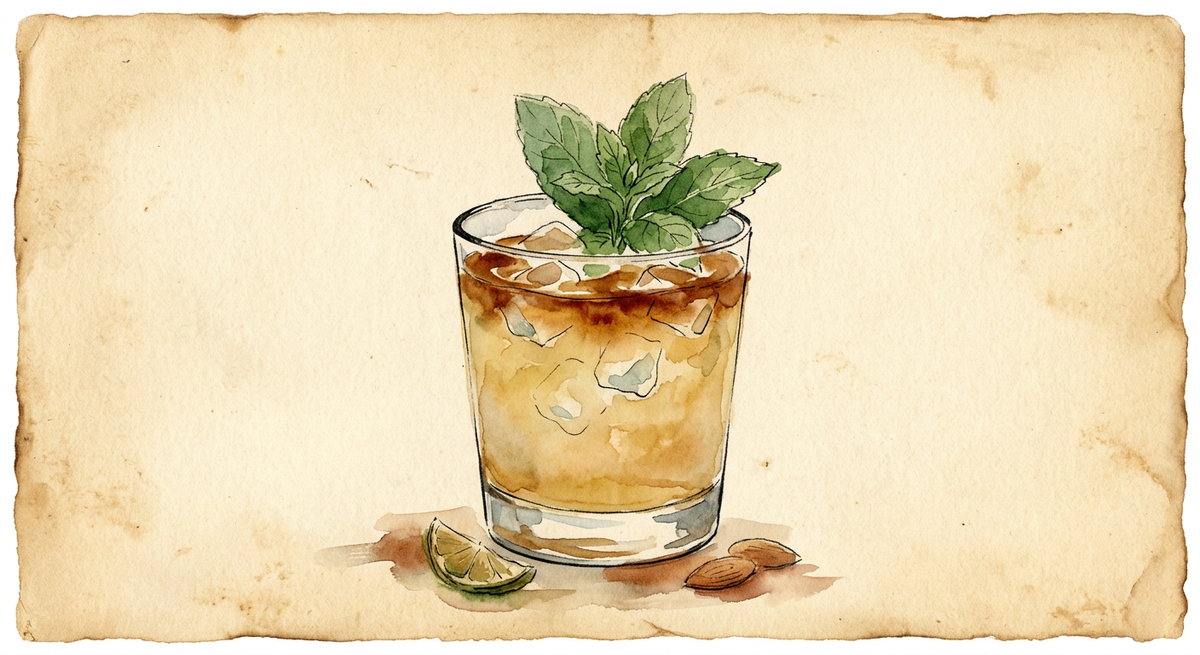
A Tia Mia is 30ml of mezcal, 30ml of aged Jamaican rum, 22.5ml of fresh lime juice, 15ml of orgeat and 15ml of dry orange curaçao, shaken hard, then strained onto crushed ice in a double rocks glass, with a lime wheel and a sprig of mint. About 3.0 UK units. The orgeat is made from almonds: this drink contains nuts. By VinePair’s account, Ivy Mix created it in 2010 at Lani Kai, Julie Reiner’s short-lived tiki bar in Manhattan, by putting espadín mezcal where Reiner’s Mai Tai had rhum agricole. VinePair says that in 2015, three years after Lani Kai closed, it went on the opening menu at Leyenda, the Brooklyn bar Mix opened with Reiner. VinePair calls Tia Mia an anagram of Mai Tai, and Elevated Craft says in Spanish tía mía means my aunt. Mezcal smoke and Jamaican funk are both loud, wild flavours, and neither drowns the other. The orgeat and curaçao hold them together, as they hold two rums in the original.
Glassware: Rocks Glass
Garnish: Lime wheel, Mint sprig slapped and Edible orchid if you have one
Ingredients
30ml
Espadín, the agave most mezcal is made from, at 40 to 45% ABV. Its smoke is present without the intensity of the wild varieties, which would be wasted under orgeat and lime.
30ml
An aged Jamaican rum, the style Ivy Mix uses, heavy with fruit and funk. A clean, light rum leaves the smoke with nothing to meet.
22.5ml
Squeezed the same day. At 22.5ml against 30ml of orgeat and curaçao together, it keeps the drink tart.
15ml
Almonds, sugar and usually orange flower water, which puts nuts in the glass. A good one pours thick and gives body as well as sweetness.
15ml
A dry curaçao at around 40% ABV. Its bitter orange bridges smoke and funk; a sweet triple sec adds sugar and little else.
Instructions
Squeeze the lime juice the same day.
Fill a double rocks glass with crushed ice.
Add the mezcal, rum, lime juice, orgeat and curaçao to a shaker with cubed ice.
Shake hard for 10 to 12 seconds.
Strain over the crushed ice.
Garnish with a lime wheel and a slapped sprig of mint, and an edible orchid if you have one.
Expert Tip
Keep the split even. All mezcal buries the orgeat under smoke; all rum is a Mai Tai. At 30ml each, both spirits stay audible. Use real orgeat, made with almonds and a little orange flower water. A thin almond-flavoured syrup tastes of marzipan and nothing else, and the orgeat is what binds the smoke to the funk. Shake with cubed ice for 10 to 12 seconds, then strain over fresh crushed ice. Crushed ice keeps melting as you drink, so the first sip is strong and the last is longer and softer.
Behind the Tia Mia
Flavour Profile
The Origin
Why Mezcal Works Here
Smoke is usually kept to its own drinks, on the view that it drowns everything else. The Tia Mia gives it half the base instead, next to a spirit loud enough to hold its ground.
Jamaican rum and espadín mezcal are more alike than they look: both carry big, wild flavours. The orgeat and curaçao already balance two strong rums in a Mai Tai, so they can balance this pair too.
The Mai Tai Underneath
Outside the base, the drink keeps the Mai Tai’s structure: lime, orgeat and dry orange curaçao, shaken and served over crushed ice.
The Tia Mia beside the Mai Tai
Base
- Tia Mia
- 30ml mezcal, 30ml aged Jamaican rum
- Mai Tai
- 30ml aged Jamaican rum, 30ml Martinique rum
Lime juice
- Tia Mia
- 22.5ml
- Mai Tai
- 30ml
Orgeat
- Tia Mia
- 15ml
- Mai Tai
- 15ml
Orange curaçao
- Tia Mia
- 15ml, dry
- Mai Tai
- 15ml
Sugar syrup
- Tia Mia
- None
- Mai Tai
- 7.5ml
UK units
- Tia Mia
- About 3.0
- Mai Tai
- About 3.0
| Element | Tia Mia | Mai Tai |
|---|---|---|
| Base | 30ml mezcal, 30ml aged Jamaican rum | 30ml aged Jamaican rum, 30ml Martinique rum |
| Lime juice | 22.5ml | 30ml |
| Orgeat | 15ml | 15ml |
| Orange curaçao | 15ml, dry | 15ml |
| Sugar syrup | None | 7.5ml |
| UK units | About 3.0 | About 3.0 |
The parent is the Mai Tai. The Tia Mia carries less lime and no sugar syrup, so it lands a little rounder and less sharp.
Choosing the Mezcal
Espadín is the working choice. Most mezcal is made from it, and its smoke leaves room for the rum to be heard.
Tobalá, tepeztate and other wild agaves are made in small amounts and taste of the plant. Under orgeat and lime, most of that is lost.
How to Serve It
Strained over crushed ice in a double rocks glass, with a lime wheel and a slapped sprig of mint whose scent arrives first.
At about 3.0 UK units it is as strong as a Mai Tai, and the crushed ice and almond hide that. One is the right serving.
Make it at home
The Spirit
MezcalMezcal is distilled in Mexico from cooked agave hearts, always 100% agave under Mexico’s standard, NOM-070, at 35 to 55% ABV, and counted at 40% in our recipes. Artisanal mezcal, cooked in pit or masonry ovens, is where the smoke usually comes from. Espadín is the common agave, poured from a split base under tequila in an Oaxacan Old Fashioned to a full 60ml in a Mezcal Margarita.
Master the Techniques
More to explore
Frequently Asked Questions
Who created the Tia Mia?
What does Tia Mia mean?
Why does mezcal work in a Mai Tai?
Can I make it all mezcal?
How strong is a Tia Mia?
Which mezcal should I buy?
Does a Tia Mia contain nuts?
Sources.
Correct as of 18 October 2026.
- VinePair, “The Story Behind The Tia Mia” (Mix, 2010, Lani Kai (closed 2012), Reiner’s Mai Tai with the rhum agricole swapped for espadín; Leyenda opening menu, three years later; anagram of Mai Tai).
- Elevated Craft, “Tia Mia” (Tia Mia is Spanish for “my aunt”; around 2010).
You Might Also Like
Mai Tai
A Mai Tai is aged rum, lime, orange curaçao and orgeat: 30ml amber Jamaican rum, 30ml Martinique molasses rum, 30ml fresh lime juice, 15ml orange curaçao, 15ml orgeat and 7.5ml sugar syrup, shaken hard and strained over crushed ice in a double rocks glass, with a spent lime shell and a sprig of mint. This is the IBA specification. There is no pineapple or orange juice in it. Victor “Trader Vic” Bergeron said he created it in 1944 and gave the first two to friends from Tahiti, one of whom said “Mai tai roa ae”, which gave it the name, as Famous Hotels quotes him. The Oxford Companion places his restaurant in Oakland and adds that Donn Beach’s widow, Phoebe, wrote in 2002 that he made a Mai Tai in 1933, though the Companion finds good reason to doubt that Vic copied it. Orgeat is almond syrup, so the drink contains nuts. A glass holds about 3.0 UK units.
Oaxacan Old Fashioned
An Oaxacan Old Fashioned is 45ml of reposado tequila, 15ml of mezcal, 5ml of agave syrup and two dashes of Angostura bitters, built in a rocks glass over one large ice cube and stirred for 15 to 20 seconds, with a flamed orange twist. About 2.5 UK units. Punch dates it to 2007, at Death & Co. in Manhattan, with the bartender Phil Ward and the owner David Kaplan. It keeps the shape of the Old Fashioned, spirit, sugar, bitters and orange, and moves each part it can to agave. Splitting the spirit is the whole idea. Reposado brings body and a little oak for the sugar and bitters to sit on; 15ml of mezcal lays smoke over the top without taking over. Ward’s recipe, as Punch prints it, is built and stirred in the glass, and that is how we give it.
Naked and Famous
A Naked and Famous is 22.5ml each of mezcal, yellow Chartreuse, Aperol and fresh lime juice, shaken hard for 10 to 12 seconds and double strained into a chilled coupe, with no garnish. About 2.1 UK units. These are the IBA’s measures. Difford’s Guide says it was adapted from a recipe Joaquín Simó created in 2011 and is best known for its early appearance at Death & Co in New York. It takes the shape of the Last Word, four equal parts with fresh citrus, and shares Aperol with the Paper Plane. VinePair says Phil Ward’s Division Bell, which predates it, had already put mezcal with Aperol. Each part has one job. Mezcal brings smoke, yellow Chartreuse sweetness and spice, Aperol a soft bitter orange and lime the acid. Use yellow Chartreuse, not green: Chartreuse’s own pages give 43% ABV against 55%, so yellow is gentler, and the balance depends on it.
Where this one sits
Recipe by Jerry Can Spirits · Updated 18 October 2026